
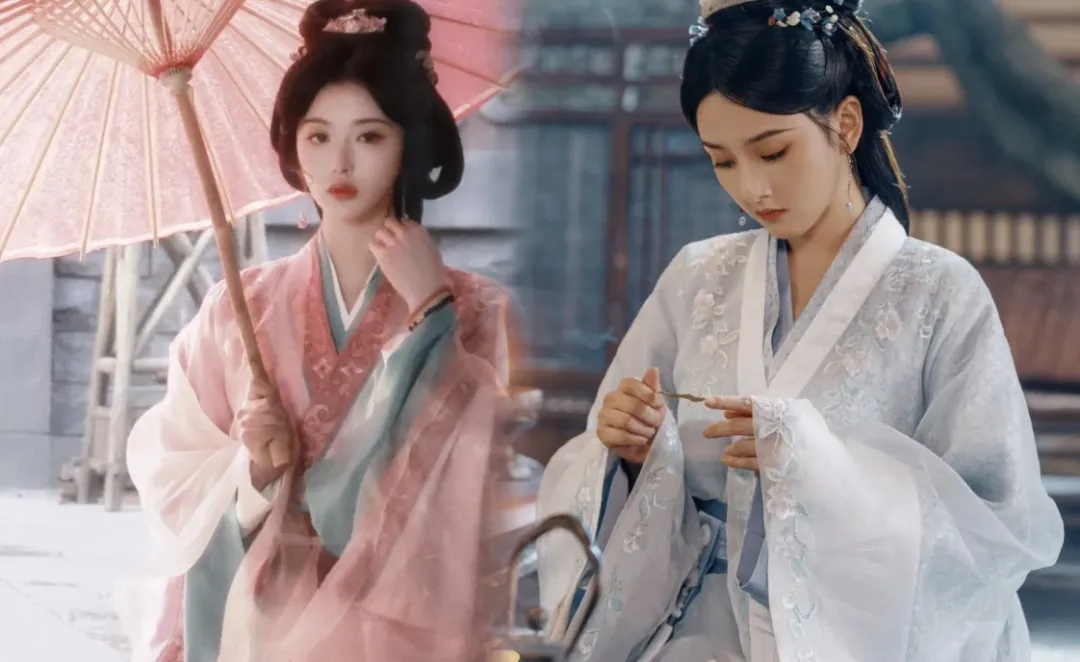
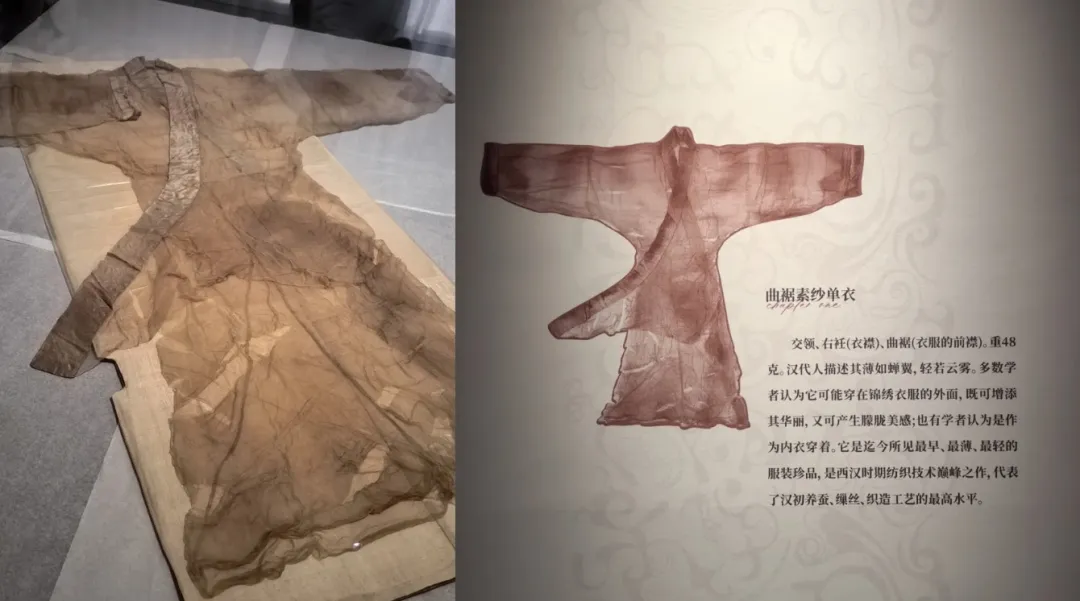
In the ancient cdrama "The Prisoner Of Beauty", the female characters wear Han - style clothing and sometimes drape a transparent gauze dress over it. Through the hazy layer, one can faintly see the lines of the inner clothing. Is this an ancient people's dressing preference? Let's start with the conclusion. This style inevitably makes people think of the "Plain Gauze Zen Robe" unearthed from the No. 1 Han Tomb at Mawangdui in Changsha. The Zen robe, also called a "single - layer robe", is a single - layer garment. The two plain gauze Zen robes unearthed from Mawangdui weigh 48g and 49g respectively, and can be folded and stored in a matchbox.
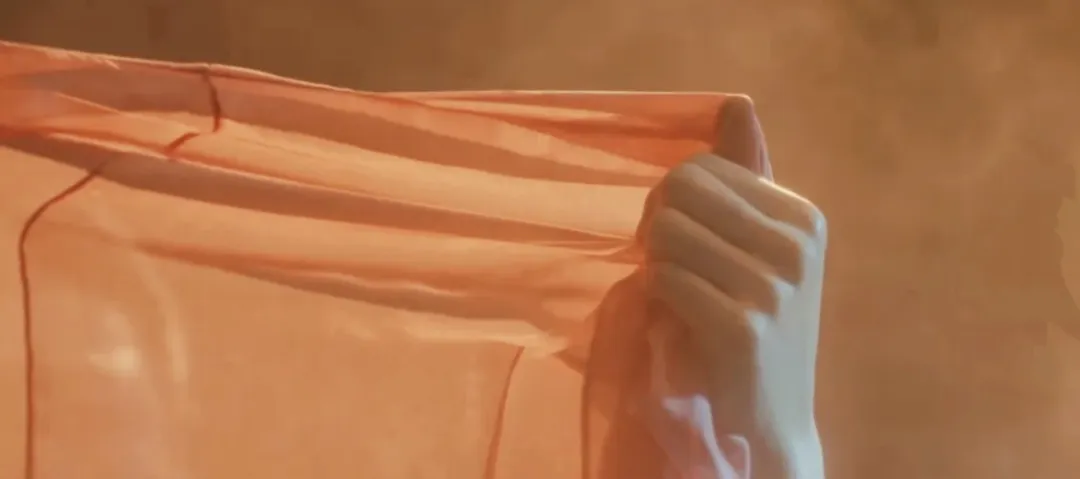
The unearthed plain gauze Zen robe belonged to Xin Zhui, the wife of Li Cang, the prime minister of the Changsha Kingdom. Except for the collar and cuffs decorated with brocade, the whole robe is made of plain gauze, without lining and color. So it's called the plain gauze Zen robe in the unearthed inventory. This gauze dress is very light, reflecting the Han Dynasty clothing dressing style of layering a light gauze dress over a brocade robe. Through the 49 - gram plain gauze, the patterns of the inner gorgeous clothing are faintly visible. This not only enhances the hierarchical beauty of the clothing but also subtly sets off the elegant temperament of the noble clothing. This "seeing the flowers in the fog" dressing wisdom shows the superb aesthetic taste of the Han Dynasty nobles.
How light is it? The Western Han Dynasty craftsmen mastered delicate silkworm - rearing and silk - reeling techniques and reached amazing craftsmanship levels in weaving and tailoring. Interestingly, reproducing this cultural relic today is a technical challenge. Since modern silkworms are fatter than ancient ones, the silk they produce is coarser and heavier, making it difficult to reproduce the ancient craftsmanship. So experts improved the silkworm - rearing technology to control the size of the silkworms. It took 13 years to successfully reproduce a replica weighing nearly 49.5 grams.
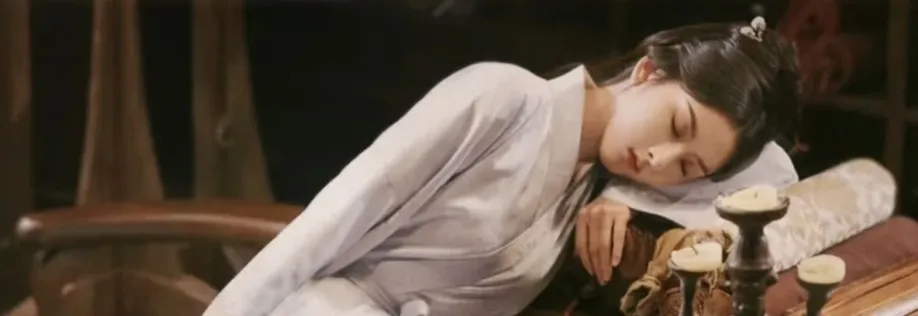
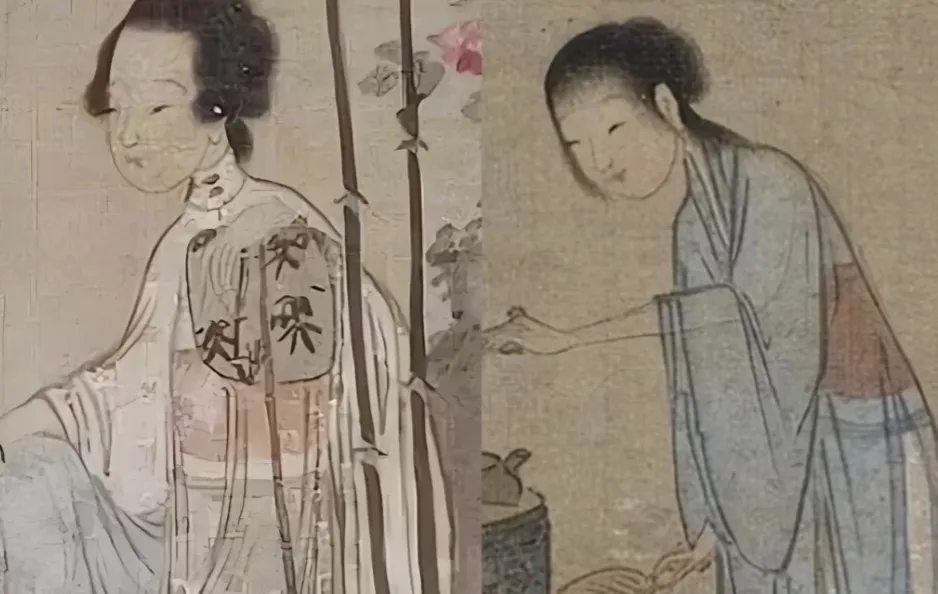
Some scholars suggest that this gauze dress can be worn alone as summer clothing. In Ming Dynasty paintings, we can see women wearing transparent gauze dresses alone in private settings, which can be a reference. Some people also believe that the "single - layer robe" style is usually worn either outside or as an inner layer, presenting the layered beauty of a "base layer" or an "outer cover". So it's speculated to be a light single - layer robe, which can show the layered collar shape and be used as a breathable inner layer without violating etiquette.
Therefore, whether this gauze dress is worn outside, as summer clothing, or as an inner layer, its specific dressing structure still can't be fully verified. We can only see a characteristic of Hanfu layering from the Han Dynasty female figurines and draw one possible dressing conclusion. However, this dressing style of layering with different depths, hazy effects, and substantial layers is still popular today. It shows that although Hanfu is flat - cut, it can present another kind of "three - dimensional" beauty through different materials and layering methods. This is the aesthetic treasure left by our ancestors!
