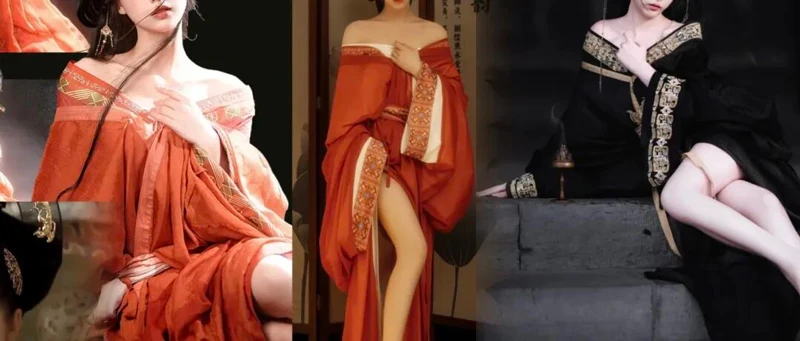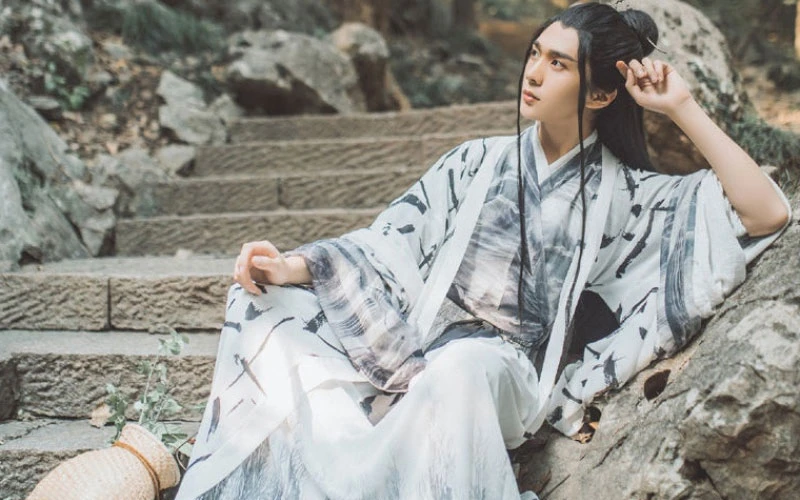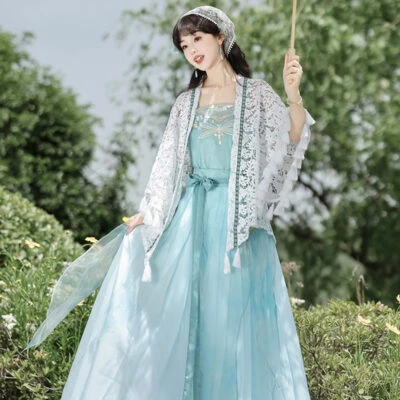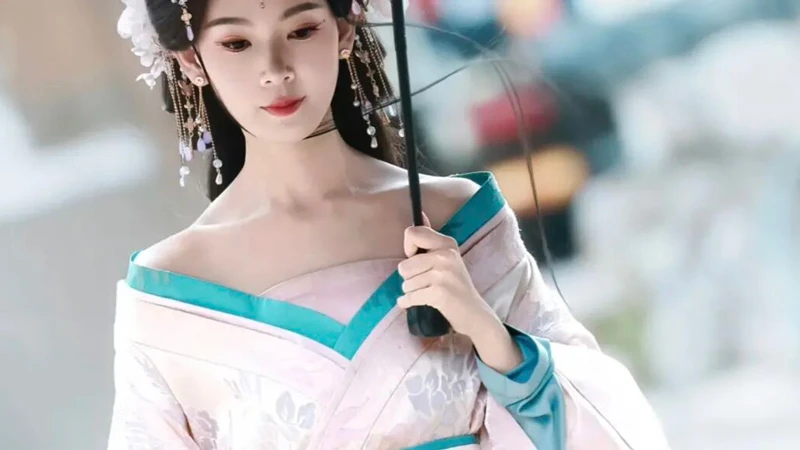
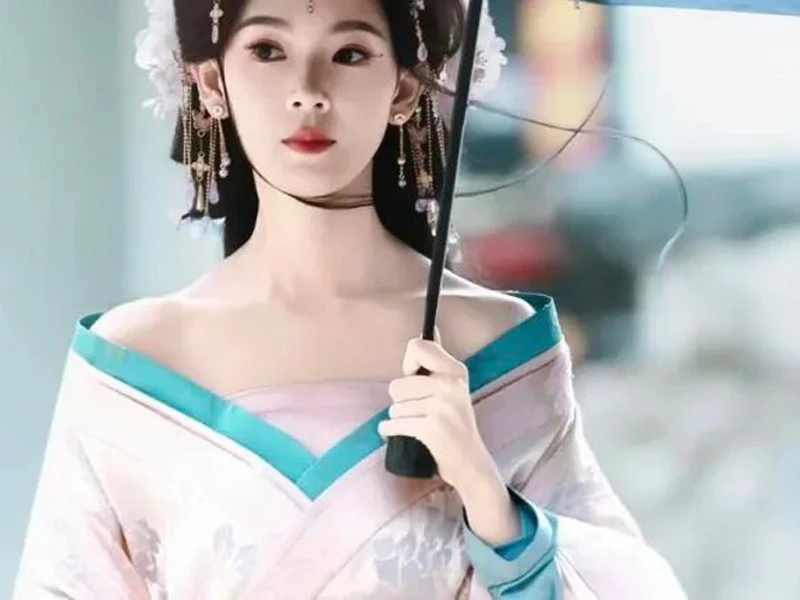
Recently, Chen Yao (陈瑶) appeared in a new costume drama, and her neckline did more talking than the plot. The robe sits open, low, and wide, showing collarbones and an inner wrap. Online, some call it bold; others call it off-key. The look feels familiar because photo studios have sold a similar version for years: pull the collar apart, drop it down, and let skin do the rest. Is this really how people dressed in early China?
Or is television borrowing a historical shape and stripping away its rules? The answer sits somewhere between garment structure, dynastic change, and screen habit. This article follows the collar across tomb finds and studio sets, and asks why a modified neckline keeps returning.
Old Collars, New Noise
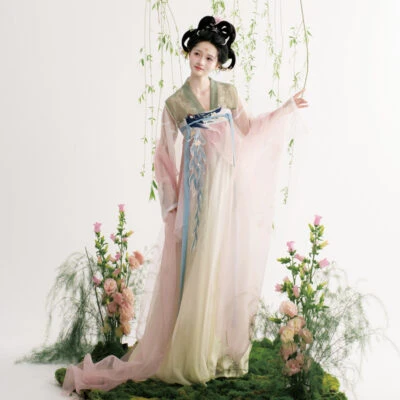
What viewers see on screen is not simply a wide collar. It is a staged opening. Costume designers lower the front, loosen the sides, and let the inner layer become a visual accessory. In photo studios, the same trick appears with even less restraint. Robes are yanked flat across the shoulders, chest wraps are exposed, and the pose is sold as ancient elegance. The result borrows the language of historical dress but aims at modern attention. That does not mean wide necklines never existed. It means the way they are worn today often ignores the logic that once kept them dignified.
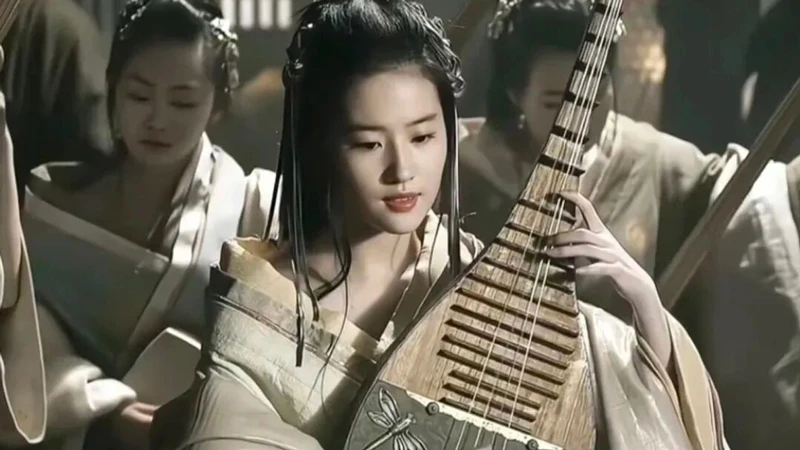
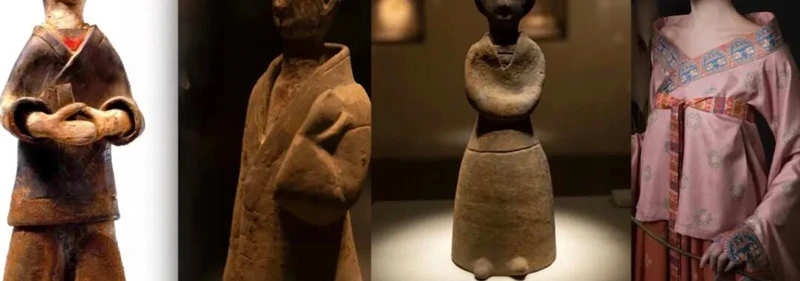
In the Qin and Han dynasties, wide collars did exist. A straight-front robe from the Mashan Chu Tomb (马山楚墓), known as N10, had a side neckline reaching about 43 centimeters. That is genuinely broad. Yet wearers did not treat it as a simple invitation to bare skin. The robe could serve as an outer layer over several inner garments, with each collar peeking out in order. Or the fabric was pulled down and back so the robe could wrap correctly. The final silhouette stayed controlled, formal, and covered. The opening was part of construction, not a shortcut to exposure.
Later, during the Southern and Northern Dynasties, wide collars appeared with upper and lower garments, especially skirt-and-jacket sets. An inner round-collar piece or a chest wrap usually filled the space. This was a transitional look, as cross-collars moved toward the open-front styles of the Tang Dynasty. By the Sui Dynasty, chest-high skirts changed the balance again. Even then, the rule mattered: separate pieces allowed this play; one-piece robes did not. Television often ignores that distinction and mixes eras into one convenient silhouette.
Tang Styles, Studio Copies
The screen version has its own trail. Early open-collar costumes showed up in Tang-style films and television from Hong Kong and Taiwan. Later, the same cut traveled into Qin and Han stories, then into almost any dynasty. It became a stock image: easy to recognize, easy to photograph, easy to sell. Earlier Qin and Han dramas often handled shape better. Fabric choices and finishing were limited, but the cut followed a clear structure. Robes looked upright and orderly. The body was not forced into a modern pose. That older restraint makes today’s free-for-all look less like invention and more like repetition.
Now the market copies the screen version and labels it as truth. Online shops attach phrases like “restored style,” “orthodox Hanfu,” or “Warring States robe” to garments that never followed those rules. Buyers who do not know the forms are easily misled. Worse, the physical garment suffers. Hanfu is cut with generous fabric, so it can be pulled and pinned into strange shapes, but the neckline is not a drawstring. Forcing it open distorts the chest, twists the hem, and creates a top-heavy outline. A proper robe turns into a loose bathrobe with antique decoration. The past becomes a backdrop, not a pattern.
Personal style should stay free. Anyone can wear what they like, and no one needs a permission slip from history. But freedom does not require calling every screen look accurate. Costume drama is art, commerce, and fantasy; it is not a museum catalog. If someone wants to understand real Hanfu, they should compare tomb evidence, cut, layers, and dynasty. They should ask whether an opening belongs to a separate skirt set or a one-piece robe, whether an inner layer is present, and whether the shape supports the body or simply exposes it. So what do you think of this mutated neckline: playful reinvention, or historical noise?