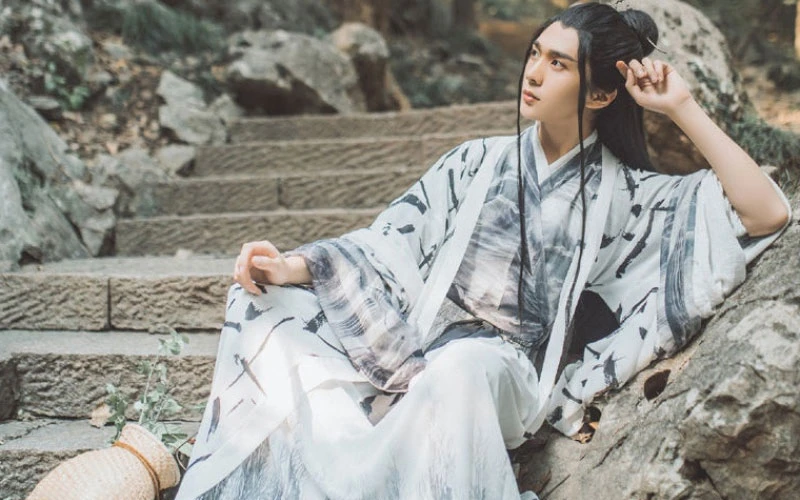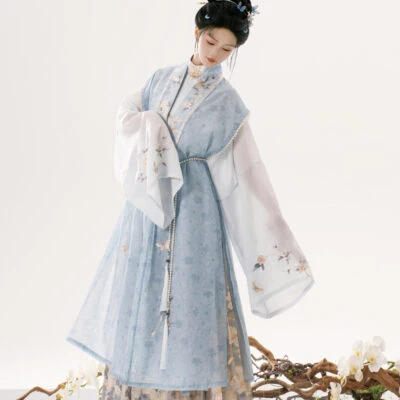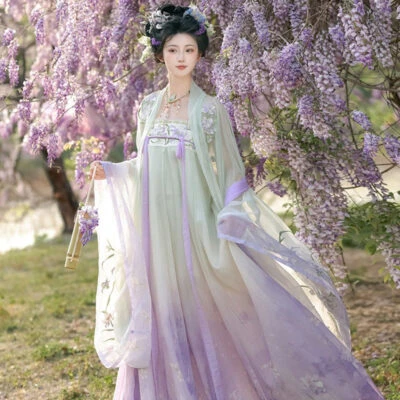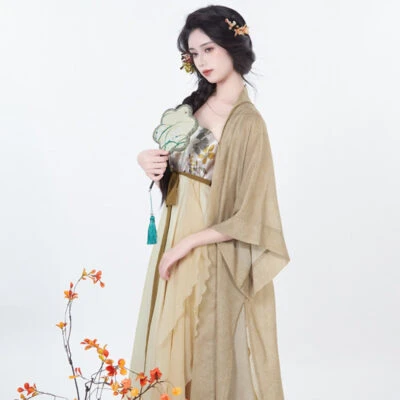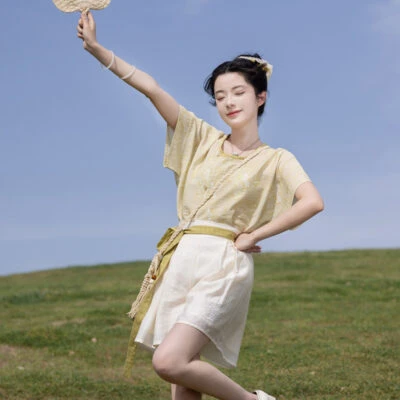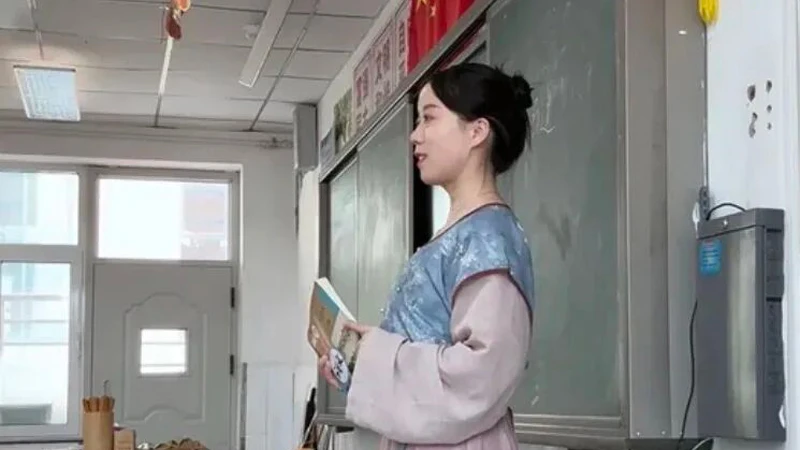
In Chinese classrooms, a teacher in traditional dress can draw cheers and frowns at once. A language teacher in a Song (宋) dynasty style robe reads Prelude to Water Melody (水调歌头); a craft teacher in a narrow-sleeve dress leads tie-dye; a young homeroom teacher in a Mamian Qun (马面裙) walks in, and phones rise. Is this empty show or living culture? The answer depends less on the cloth than on the moment. Hanfu is not one costume but a long family of Han Chinese clothing: ceremonial robes, daily jackets, skirts, trousers. Its common mark is Jiaoling Youren (交领右衽), a crossed collar with the right lapel closing inward. Sleeves vary: wide for ritual, narrow for work. The “inconvenient” label misses practical short cuts. When teachers wear it, they bring culture into sight, but they also step into debate.
Why the Buzz?
Teachers choose Hanfu for different reasons. Some love the shapes, colors, and hair styling; wearing them feels personal and shares a hobby. Others teach poetry, calligraphy, or dyeing, and the clothing makes the lesson vivid. Students often cheer because the room feels less flat. Parents split. One group says teaching is the job, and flashy dress steals attention. Another says clothes are clothes, and teachers have freedom. Both sides have a point. The real question is not whether Hanfu belongs in school at all, but whether the choice fits the class, the subject, and the teacher’s movement. Clothing has no moral grade by itself. Context gives it meaning. A costume can invite curiosity; it can also pull eyes away from algebra. The line is thin, and it moves with the room.
Much confusion comes from one wrong idea: Hanfu equals wide sleeves and floor-length robes. History is wider. Early pre-Qin robes and top-and-skirt sets, Tang dynasty Qixiong Shanqun (齐胸衫裙), Song dynasty Beizi (褙子), Ming dynasty Mamian Qun—each form changed across thousands of years. Narrow sleeves, short jackets, and practical skirts existed for farming, riding, and household work. So a teacher can wear Hanfu and still write on a whiteboard, pass out papers, and crouch beside a desk. The problem is not tradition; it is poor planning. A heavy ceremonial look can be beautiful in a ritual, yet clumsy in a forty-minute math lesson. When people argue about “should,” they often mean “how.” That shift makes the conversation more useful and less personal.
Parents split partly because they imagine different risks. One side fears that a teacher becomes a performer, using class time for self-display. The other side sees a harmless choice, maybe even a quiet lesson in confidence. Neither fear nor praise should be the main guide. Ask simple questions: Does the outfit help students focus? Does it let the teacher move, write, and speak naturally? Does it match the subject and the school’s rules? If yes, Hanfu can be another teaching tool, like a map or a lab coat. If no, it becomes a distraction, no matter how lovely. The goal is not to win a culture war. It is to keep the classroom clear, lively, and respectful. That standard protects teachers and students alike.
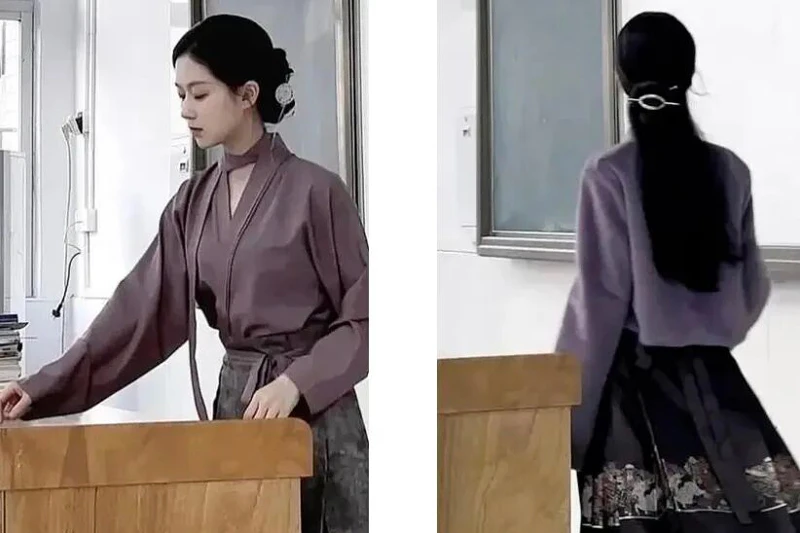
How to Wear
Practical choices solve most complaints. First, keep colors and styles calm. Old schools valued serious ceremony, and modern classrooms still need a steady mood. A simple Hanfu-inspired top with soft colors can feel special without shouting. Save grand red robes and heavy hairpieces for ceremonies like the shuxiu (束脩) ritual, where formality has a clear place. Second, choose working shapes. Narrow cuffs make board writing easier. An ankle-length skirt or tidy trousers prevents trips. A teacher must move between rows, bend over homework, and reach the top of the board. If clothing blocks any of that, it fails the job. Beauty should not cost basic function. When form follows function, the outfit stops being a stunt and starts being normal.
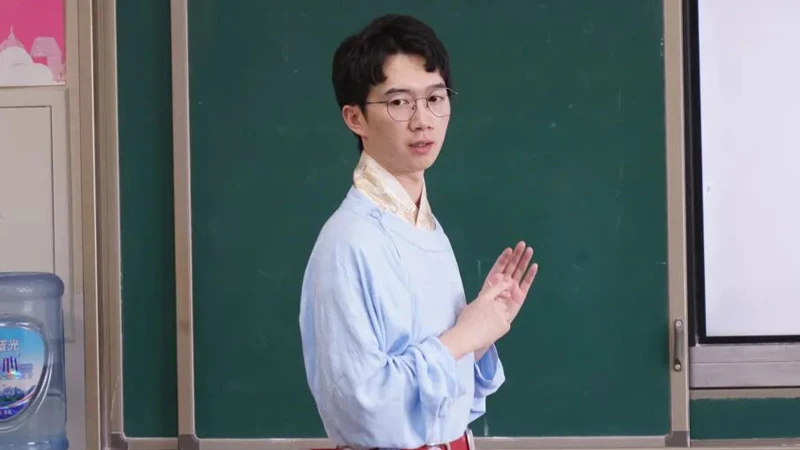
Teachers can also involve students in the thinking. A short explanation—why the collar crosses right, why sleeves changed, why a skirt has that name—turns clothing into a mini lesson. Students see that culture is not locked in a museum case. It is chosen, adjusted, and worn in real life. That does not mean every subject needs a Hanfu day. It means a teacher can use dress as one more way to make ideas concrete. The best moments are often small: a history teacher points to a lapel; a literature teacher reads a poem in a plain robe; a student asks where to buy a similar jacket. Learning happens in those questions. The clothing is not the teacher. It is a door.
On Teacher’s Day, the debate matters less than the people in front of the class. Whether a teacher wears Hanfu, a shirt, or a tracksuit, the real impression comes from careful preparation and patient explanation. Students remember who helped them understand a hard problem and who treated them with respect. A beautiful outfit can add joy, but it cannot replace attention. So support teachers who wear Hanfu with thought, and support those who do not. Ask not only “Should teachers wear Hanfu to class?” but “What helps this class learn today?” The answer will change with the lesson, the room, and the person. That is not a weakness. It is good teaching.