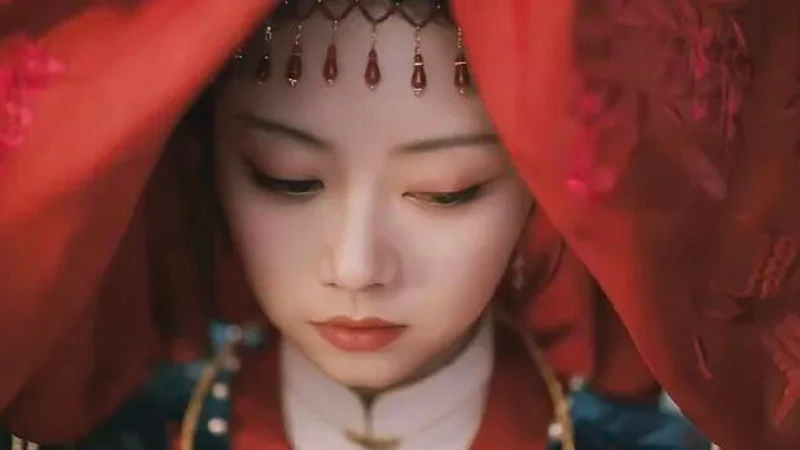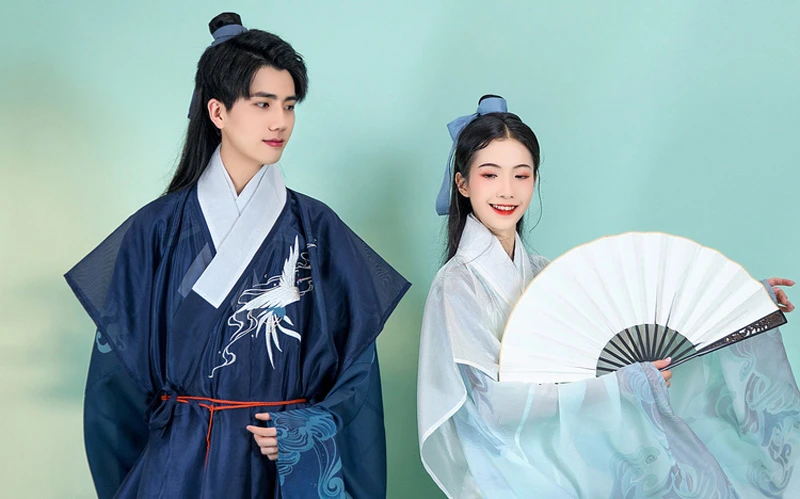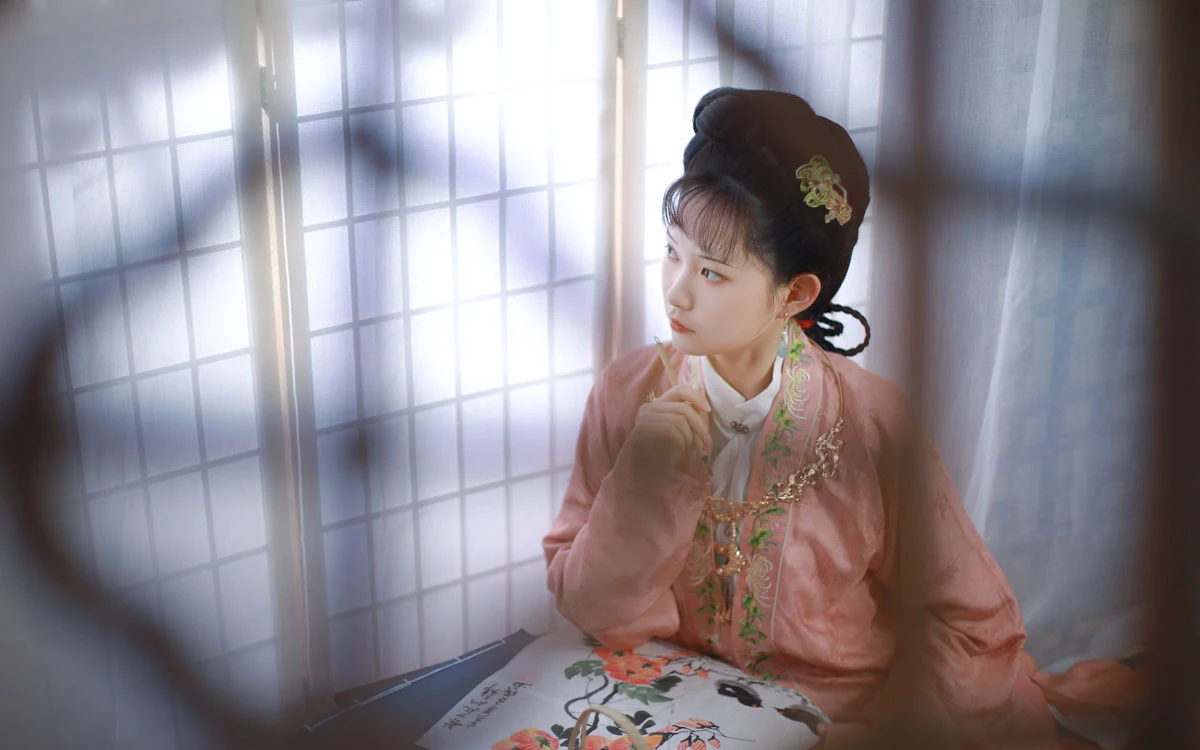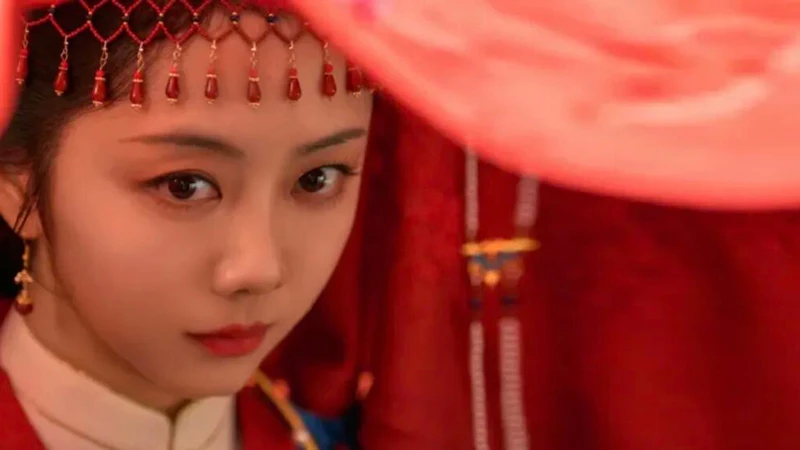
When stills from Tan Songyun (谭松韵) and her upcoming costume drama Against the Current Endures (兰香如故) appeared, viewers spotted something odd. Above her forehead sat a delicate net-like piece. It looked like a prop from an older drama, not a fresh design. The question spread fast: why does this styling feel so familiar and distant at once?
The answer is not simple nostalgia. It is a real historical accessory with a long name and a longer life. The hanging ornament belongs to a family called Luosuo (络索). When worn around a bun, it becomes Weiji (围髻). Its story moves through Song and Ming wardrobes, and that is why modern screens rarely show it with such clarity.
What Is That?
First, the “net” is not a net. It is a curved metal bar punched with tiny holes. From those holes hang pearls, stones, and bead strings. In Chinese dress, this hanging style is called Luosuo. At its root, the word meant connected rope. Old texts describe linked cords as a kind of net. Over time, the meaning shifted from rope to ornament. A Song poem by Huang Geng (黄庚) mentions “golden Luosuo with coral pendants,” showing that the look already carried beauty and weight. By the time it reached court paintings, it had become a sign of careful dressing.
When the piece wraps a hair bun, it is called Weiji. In the Song period, a related form was the curtain comb, or Lianshu (帘梳). “Curtain” named the hanging part; “comb” named the fixing piece. Early versions were shorter and lighter. By the Ming period, the idea became more formal. Paintings show fringes falling only to the brow, never covering the eyes. That small choice matters. It keeps the face open while adding motion. The ornament frames the forehead instead of hiding it. For a costume designer, this is gold: a detail that reads clearly on camera and still feels true to history.
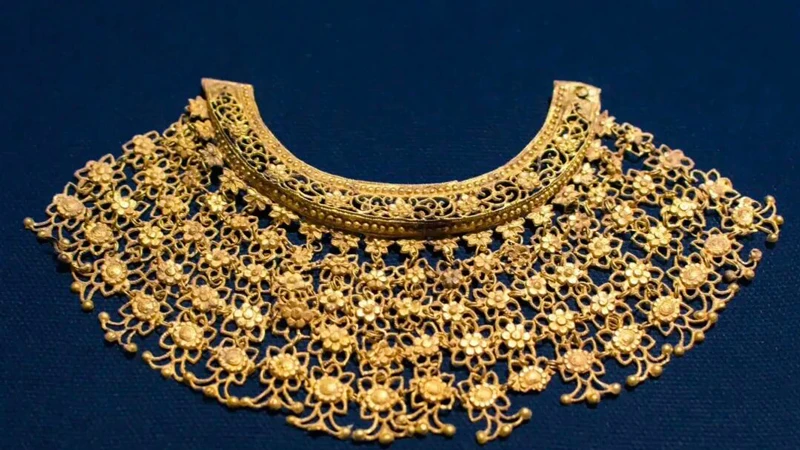
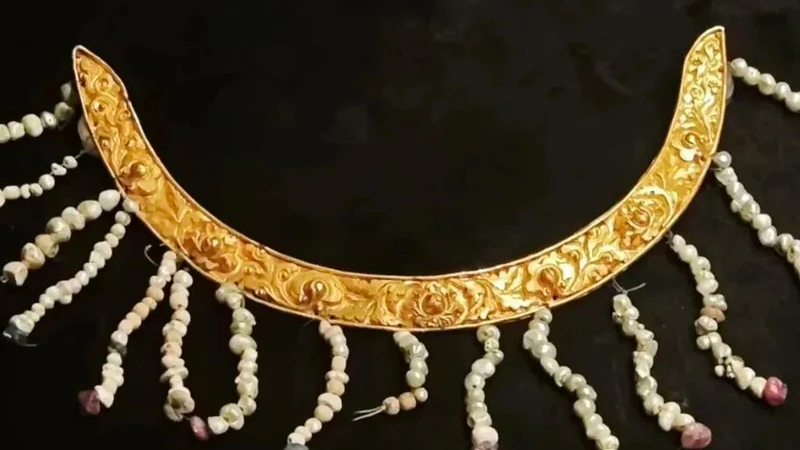
The structure is clever. A crescent or half-moon bar curves over the forehead. Common metal was silver or silver-gilt. Wealthy women chose gold and fine filigree. Some used knotted bead cords. Small holes along the bar held pearls, stones, and bead strings. High-end pieces carried engraved peonies, clouds, or other lucky patterns. The result is precise, not messy. It looks fragile, yet it follows a clear rule. Nothing is random. Each string has a place, and each swing has a rhythm. That balance is why the accessory can look both old and new. It softens the head while drawing the eye upward.
How was it worn? One standard method pressed the bar against the bottom of the bun, just above the hairline. It wrapped the forehead horizontally. The bar followed the bun’s shape. Bead strings fell freely, usually ending between the forehead and eyebrows. This hid stray hairs at the hairline and softened a tall bun. When the wearer walked, the beads swayed. That slight movement gave grace and calm. It is a key reason Ming styling can feel gentle. The piece does not shout. It whispers, then moves. On screen, that quiet motion can make a character seem more alive than any heavy crown.
Rank and Style
A second method placed the ornament behind the bun, near its lower edge. It could hide loose hair or simply decorate. Movement made it lively. But Weiji was not free of rules. In the Ming period, it marked status. Ordinary women often wore plain silver or copper-gilt versions. Patterns stayed simple; bead strings were sparse. These pieces suited daily life, clean and modest. They did not try to dazzle. They helped a woman look neat and composed. In a crowded street, such an ornament would not announce wealth. It would only say that she cared about order, neatness, and small daily beauty.
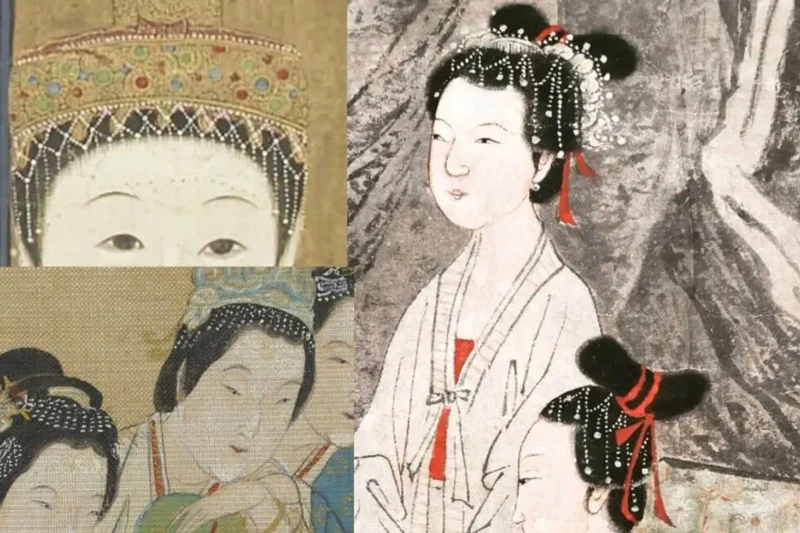
Court consorts and noble wives wore another level. Their Weiji used filigree, repoussé, inlaid gems, and pearls. Patterns grew dense and solemn. The ornament belonged to formal headwear and appeared at ritual events. The richer the work, the clearer the wearer’s rank. This was not just fashion. It was a visual language of order. A small hairpiece could say what a title could say. A plain silver arc and a gem-covered gold arc may share the same shape, but they do not speak the same sentence. The gap between them is the gap between a quiet room and a palace hall.
So why does Tan Songyun’s look feel “ancient”? Because it borrows from a real system, not a random costume box. The net-like fringe is a Luosuo-style Weiji. It hides the hairline, frames the face, and moves with each step. The style survived from Song elegance to Ming ceremony. It also explains why viewers pause: the piece is rare on modern screens. We are used to heavy crowns, long hairpins, and bright jewels. This ornament is quieter, but it carries a whole history. Do you like this kind of hair ornament? Would you wear one if it appeared in a modern street style?