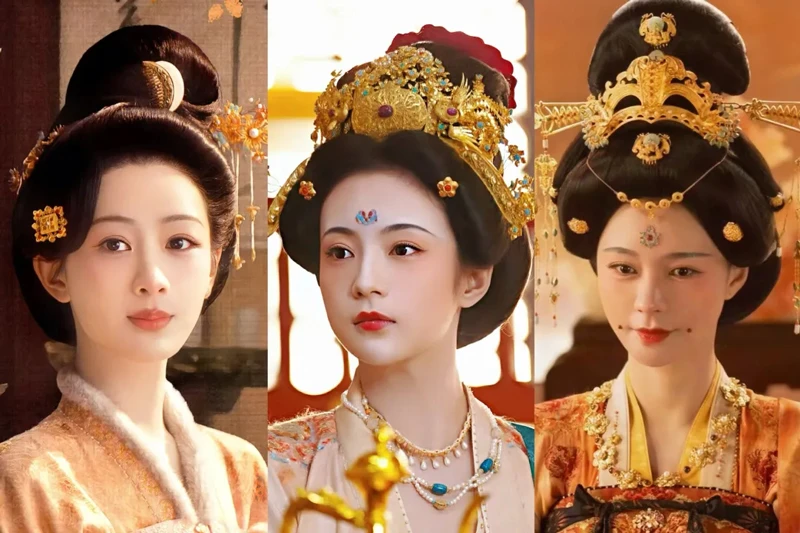
Turn on a historical drama set in the Tang Dynasty, and you may see women carrying hair like a small tower. Huge false buns. Layers of pearls. Gold pins stuck in every direction. After enough shows, this becomes the mental image: Tang beauty meant weight. But daily life was not a costume parade. In three centuries, taste shifted. Early Tang and Wu Zhou styles were crisp, tall, and practical. High Tang loved fullness and wealth. Mid-to-late Tang grew more ornate. Context mattered most.
A grand ceremony allowed splendor; a normal morning asked for speed. Recent series such as Flourished Peony (国色芳华), and The Long Ballad (长歌行) have begun to show cleaner Tang looks. They remind us that simple hair was not a failure of imagination. It was real life.
Daily Looks
For most women, the everyday answer was a single bun or double buns. Hair was combed up, tied, and coiled once or twice. No mountain of padding. No forest of pins. This worked for cooking, weaving, carrying water, selling goods, and walking through Chang’an (长安). It kept hair off the neck and out of the way. Paintings and figurines sometimes show richer shapes, but they also show plain, tight coils. The giant “head wrapping face” style existed, yet it was not the uniform of every woman. Ordinary life favored clean lines. A neat bun could be elegant without being heavy, and it could be finished before the sun rose.
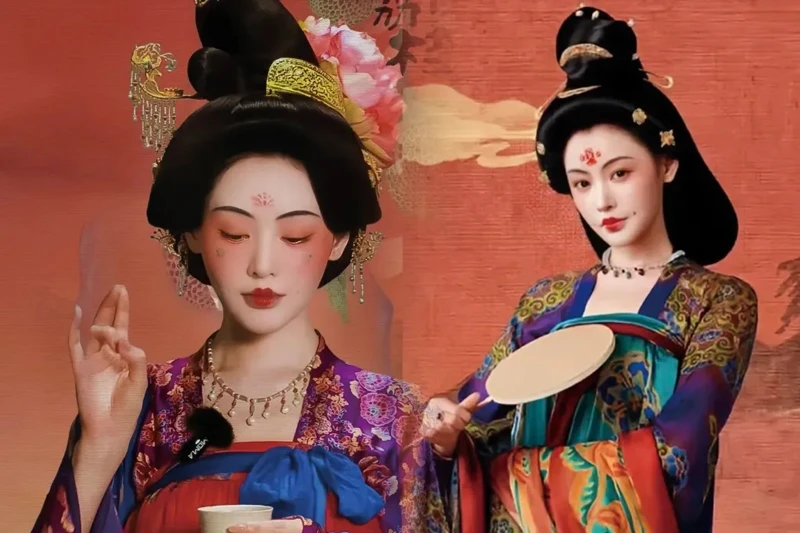
Elite women also had light choices. Early Tang fashion included a reverse-coiled bun for outings. Wu Zhou (武周) artwork often shows heart-centered buns, with two soft loops drawn toward each other. These styles did not demand piles of fake hair. One jade pin or a small comb could be enough. They allowed movement: riding, chatting, drinking tea, visiting gardens. A woman could look refined without feeling buried. This matters because luxury is not always loud. Sometimes the most confident choice is a shape that lets the face speak first. The hair supports the person; it does not swallow her.
Tang bun names alone show amazing range: half-flipped, leisurely-outing, sorrow-coming, lily, tilted, Wuman (乌蛮), thrown-home, and double-ring immortal-watching. Some were airy. Some were playful. Some sat high; others leaned low. Women added gold or jade hairpins, horn combs, fresh flowers, or tiny ornaments. A simple bun did not mean dull. One pin placed well could change the whole outline of a face. A comb could catch light. A flower could soften a strict line. The style system was flexible, not a single template copied by everyone. Choice, not clutter, made the look.
Fashion also circled back. A shape loved in one decade could return later. Palace trends spread like celebrity looks; folk styles grew from daily need and local habit. No bun belonged only to one reign. Popularity rose and fell. A style could be common in early Tang, fade, then appear again in a different form. Women watched each other, borrowed ideas, and adapted them. That is why the era feels alive. It was not a frozen painting. It was a busy street, a quiet courtyard, a festival, a workday. Each place gave hair a different job.
Screen vs Reality
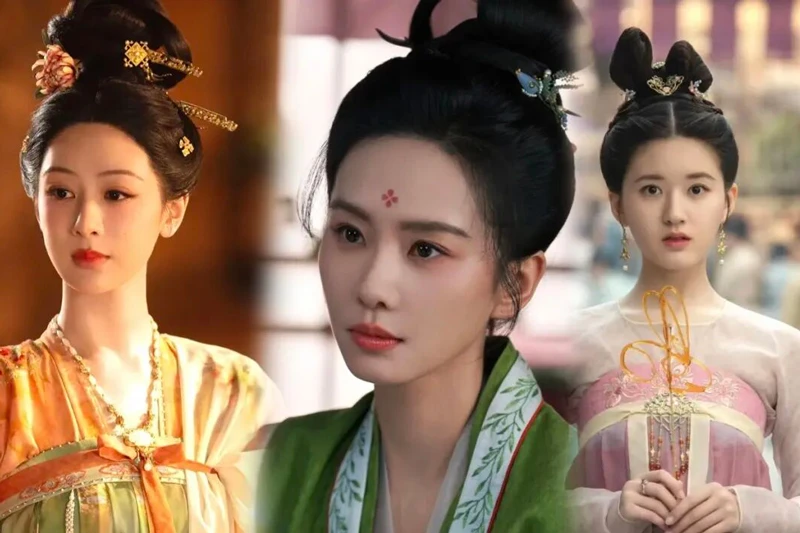
Modern dramas are slowly catching up. Song Zuer (宋祖儿) in The Demon Hunter’s Romance wears clean coils and soft colors. Yang Zi (杨紫) in early Flourished Peony. Their faces stay visible. The mood feels lived-in, not like a museum display. These looks do not try to win a contest for size. They win by balance. A clean hairline, a gentle curve, a small ornament: that is often enough. When a show trusts simplicity, the audience can finally see the character, not just the wig.
Face shape matters. Song, Liu, and Yang have delicate features. A mountain of false hair can crush that delicacy. It makes the head heavy and the body thin. Compare Liu’s thick stage look with her light bun in Palm of the Hand (掌心): the second lets her calm warmth breathe. A good stylist reads the face, not just the era. The same rule applied in Tang times. Women knew how to hide weaknesses and show strengths. They did not blindly copy the heaviest court fashion. If a style made them look top-heavy, they changed it. Hair was a tool, not a cage.
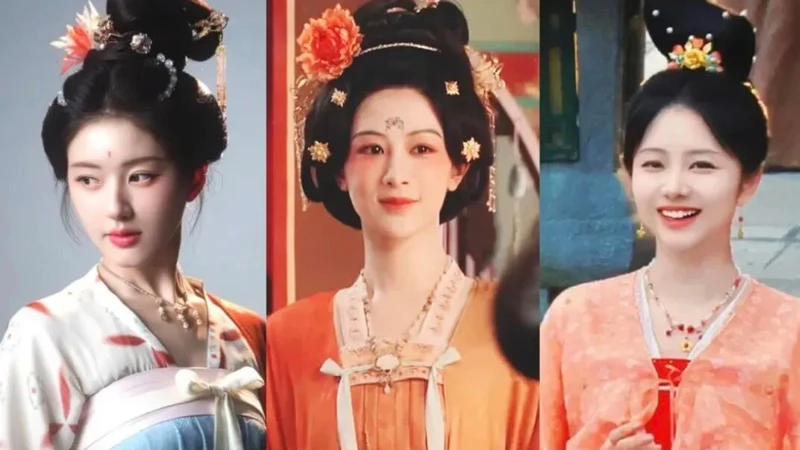
So the real Tang code was fit. Grand rites and banquets allowed splendor. A palace feast could sparkle with gold, pearls, and high piles. Daily life asked for speed and comfort. High Tang richness was a peak, not an everyday uniform. Simple lightness was the smoke of ordinary mornings. Neither is fake. Both are Tang. The best look is the one that suits the person and the moment. Step past the “big head” cliché, and Tang beauty becomes wider, sharper, and far more interesting. It invites us to enjoy history with clear eyes, not just repeat what television taught us.