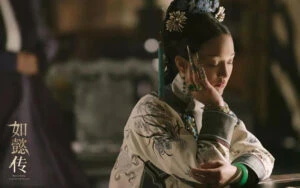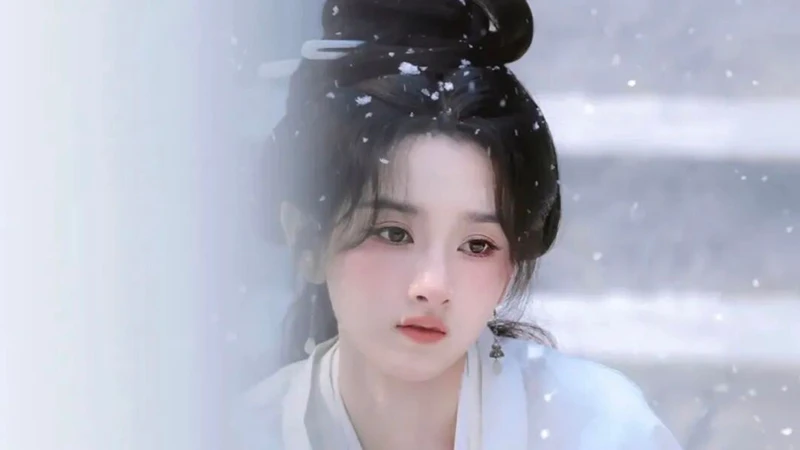
Song Zuer (宋祖儿), also known as Sun Fanqing (孙凡清), recently drew attention in the costume drama Si Gong Ling (司宫令). In a snowy scene, her hair looks almost bare. There is no heavy crown, no jeweled bridge, and no forest of gold flowers. Just one large pin shaped like a safety pin or a U-clip. That small object has become the talk of fashion watchers. It seems too plain to matter.
Yet the same shape sits in museums, labeled as a classic hair ornament used for centuries. Why does a simple U-shaped pin feel so striking on screen? The answer lies less in celebrity glamour and more in old Chinese design sense. It solves a real problem, holds hair beautifully, and still looks calm.
The Ancient U-Clip
The pin’s old name is folded-prong hairpin. In Liu Xi’s (刘熙) Shiming: Explaining Names (释名), written in the Han dynasty, a single stick is called zan (簪), while a two-pronged fork is called chai (钗). Today’s U-clip continues that fork idea. It is not a modern office supply borrowed by stylists. It is a compact version of a very old hair tool. Its shape looks minimal, but the bend creates tension. That tension is exactly why ancient women trusted it. The fork does not need to be fancy to work. It only needs the right curve, the right length, and the right pressure. That quiet logic has survived for good reason.
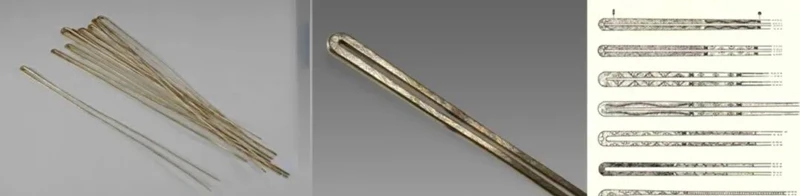
Materials changed with craft. Early examples from pre-Qin and earlier times were often bone or nephrite, practical and quiet. Later, jadeite became prized in other jewelry, but early chai mostly used softer stone or bone. When metalwork improved, gold, silver, and bronze versions became common. Stronger metal held heavier buns, so two-pronged chai grew popular. In the Tang dynasty, metal styles gained confidence. In the Song dynasty and Ming dynasty, glass pins added a light, glossy feel. A plain U-clip may be plastic today, but its logic is old: choose a material that is light, strong, and kind to hair.
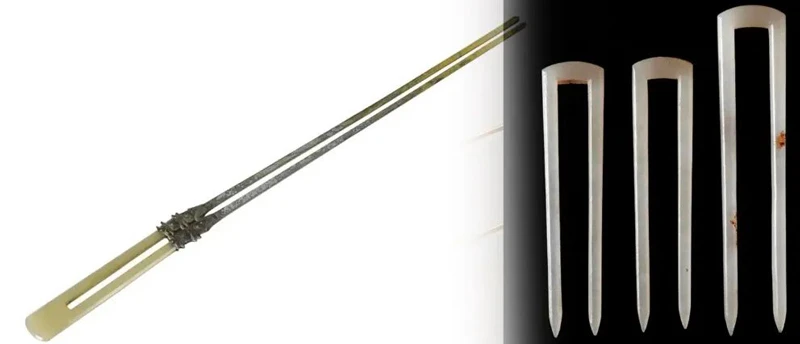
Its main job was never decoration alone. High buns and layered updos easily loosen. A straight pin can slip. A folded U-shape grips the root of the bun from two directions, locking the mass in place. With thick false hair or a complex crown, several pins can be placed at different angles. The style stays steady all day. That practical strength made it a daily need for women, not a rare luxury. It also explains why the shape appears again and again in tomb finds, paintings, and poems. People did not keep it because it was showy. They kept it because it worked. The best tools often disappear into the routine, yet their design remains.
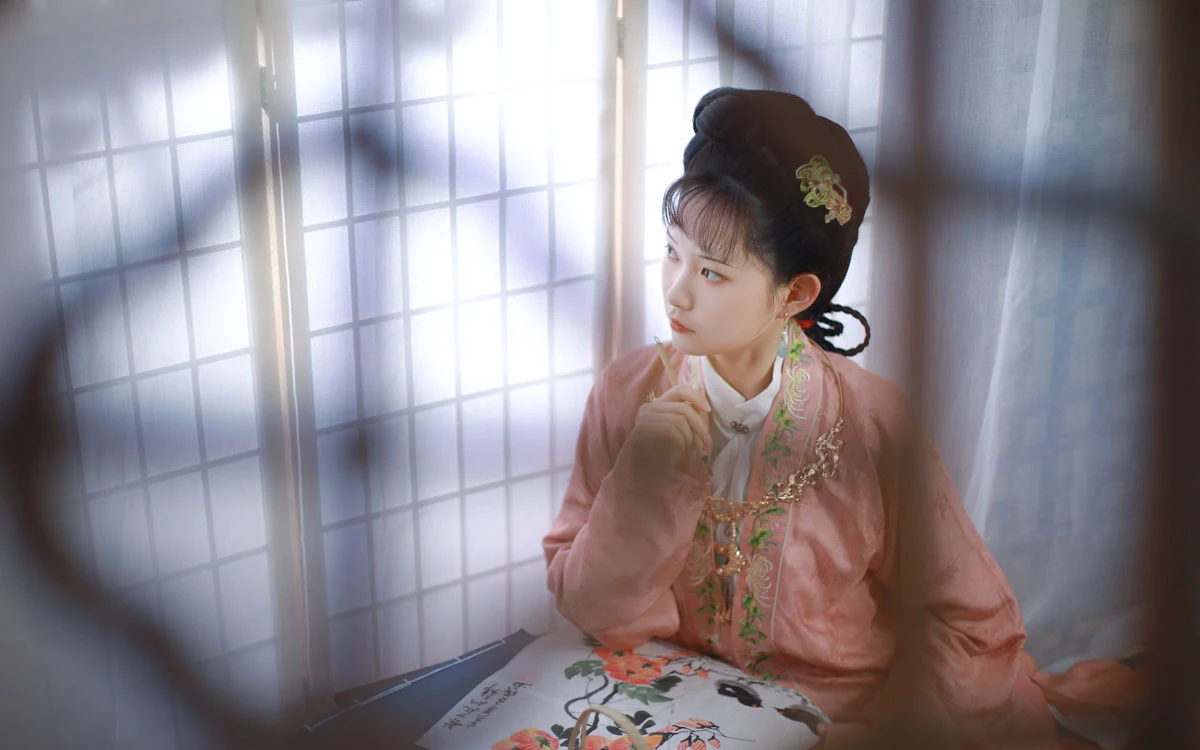
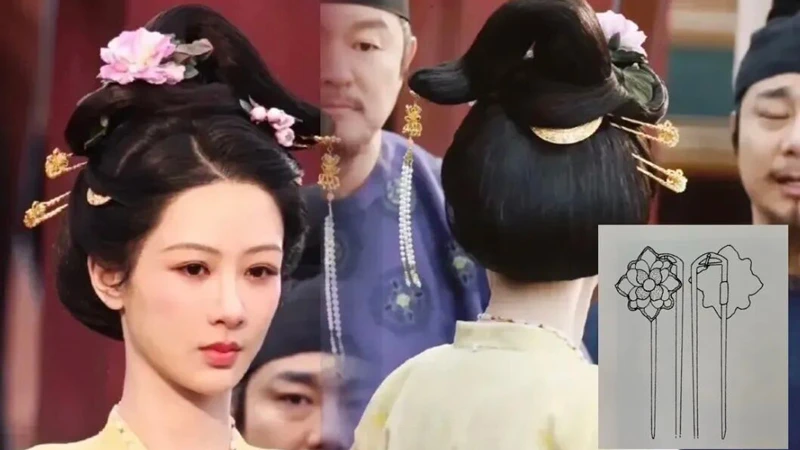
Over time, plain forms gained detail. In the Song dynasty, bamboo-joint pins carved ridges into the shaft. The texture added friction and visual rhythm. In the Tang dynasty, dian-tou pins placed tiny flower ornaments at the head. In Flourished Peony (国色芳华), Yang Zi (杨紫) as He Weifang (何惟芳) and Zhang Yaqin (张雅钦) as a county princess wear similar pieces. Far away, they look like simple U-shapes; up close, they reveal fine work. Some pins were carved with bamboo nodes. Some carried small blossoms, beads, or filigree. The added detail did not erase the base shape. It simply gave the eye more to enjoy while the pin did its quiet work.
Everyday to Palace
The folded-prong hairpin fits almost any setting. Worn in pairs, it looks formal and balanced. Tilted to one side, it feels relaxed and elegant. A plain version can hold a simple home bun without stealing attention. A carved, gem-set, or filigree version lifts a banquet look. It can act as a support frame for tall styles, or as a quiet accent that sharpens the whole outfit. Few hair tools move so easily between duty and display. That range made it useful for servants, scholars’ wives, court ladies, and performers. The same basic shape could be humble or refined, depending on material and finish. It never demanded a single identity.
Old paintings show how flexible it was. In Court Ladies Adorning Their Hair with Flowers (簪花仕女图), from the late Tang and Five Dynasties, women wear several folded pins in symmetrical rows. The pins steady large, rounded buns and also shape the head’s outline. They soften the face and make the silhouette neat. This was not random decoration. It was engineering with taste. Even a basic bun can gain a classical mood when two or three pins are added. The placement matters. A pair near the crown creates order. A single pin set at an angle adds movement. The eye reads balance before it understands the method.
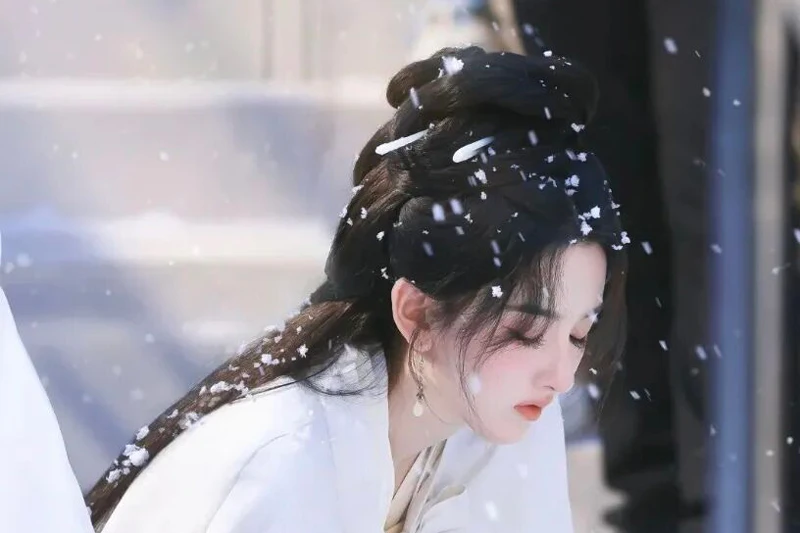
Compared with flowered chai or buyao (步摇), which shimmer at grand events, the folded-prong pin is more versatile. It does not demand a stage. It works in daily life and formal halls. This range explains its long life. The same object can be humble or refined, depending on material and finish. Ancient users did not treat it as a minor tool. They gave it variation, proportion, and rhythm, turning a simple binding device into part of the language of dress. A pin could signal age, rank, taste, or simply mood. That is a lot of meaning for two bent legs and a curve.
Modern U-clips are smaller because modern hair is often simpler. That does not make them ordinary. Look again at the pin on a desk or in a bathroom drawer: it carries a long idea about pressure, balance, and restraint. The old makers started with use and added beauty without losing function. That is why a snowy scene and one plain pin can still make people pause. It is not nostalgia for a lost world. It is respect for a smart solution that never needed to shout. Do you like this kind of U-shaped hairpin? Which museum piece would you choose to see?