
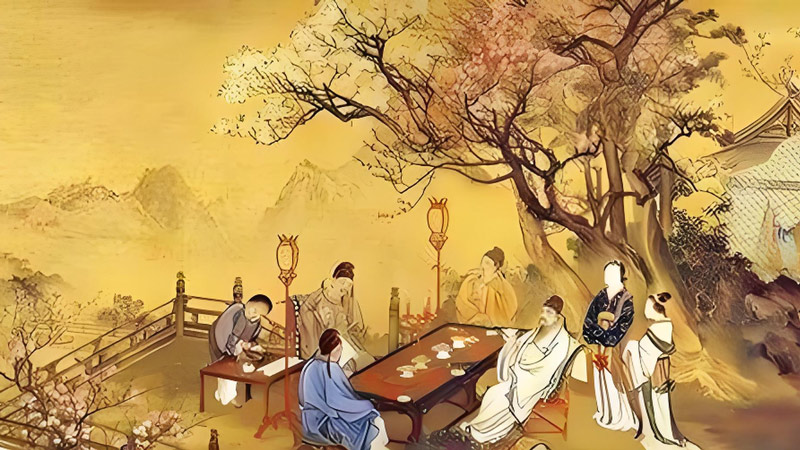
The high-stakes examination season is a universal modern anxiety. Yet, for over a millennium in China, the keju (科举) system held that same power of destiny. When the results were posted, they didn't just determine a career; they triggered a meticulously choreographed series of rituals. These were not mere parties, but a profound transformation of identity, turning a humble scholar into a recognized gentleman and, eventually, a state official. Let’s step into the shoes of a successful candidate and explore the spectacular, rule-bound, and deeply symbolic celebrations that defined "graduation" in ancient times.
1. Beating Drums
Before any feast or parade, there was the desperate wait. In the Tang and Song dynasties, the state formalized a system to break the tension. Official messengers, accompanied by a raucous troupe of drummers and gong-players, would race through the streets. Holding high red flags, they would shout the joyous news at the top of their lungs. This wasn't a subtle notification; it was a public announcement designed to broadcast the family's new fortune to the entire neighborhood.
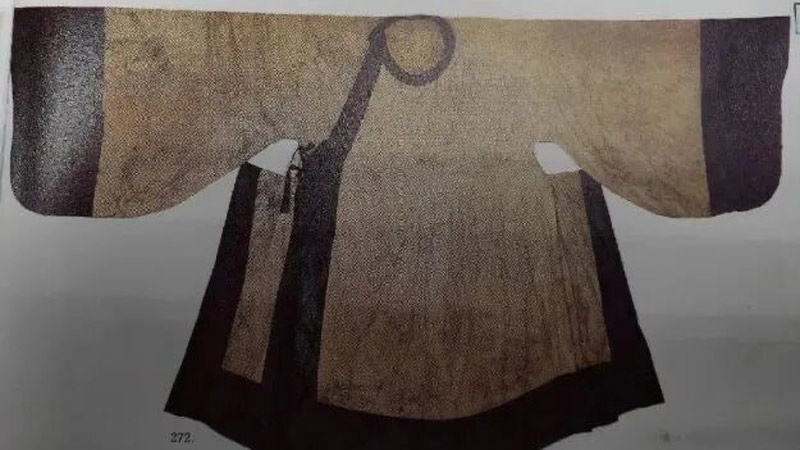
For the successful candidate, this moment triggered an immediate and powerful act of social reinvention. He would quickly shed his humble hemp-fiber garment, the standard attire for commoners and impoverished scholars. In its place, he donned the lan-shan (襕衫), a distinctive round-collared robe with a horizontal seam at the hem, symbolizing ancient ritual principles. This was his uniform of the educated class. For the first time in his life, he wasn't just a student; he was recognized as a gentleman. It was his first official act of separation from his former life, a visible declaration of his new status.
2. Parading
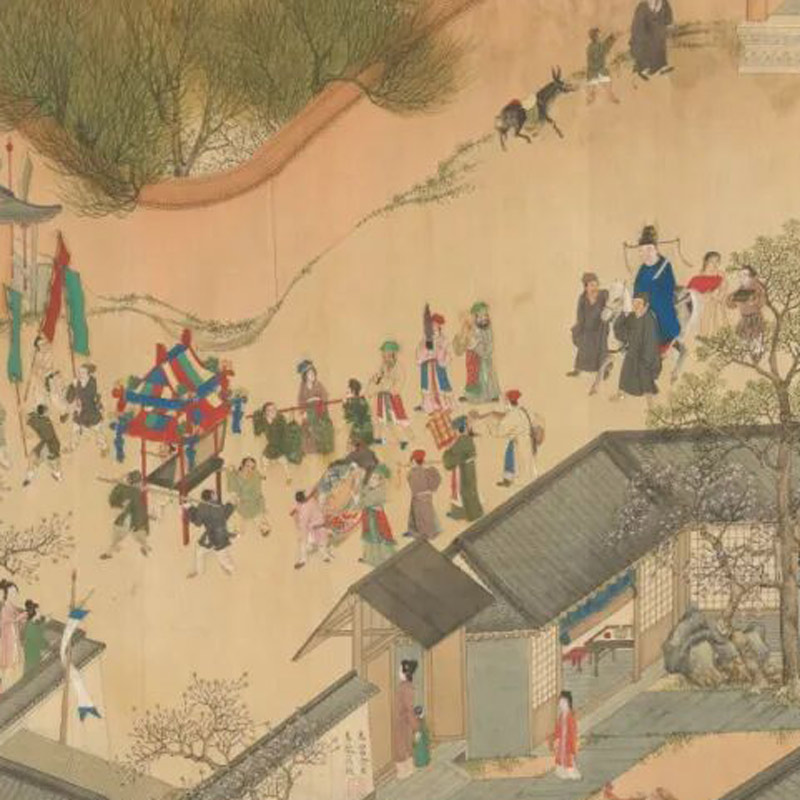
With the new robe came new privileges. The most visual of these was the "parade" through the capital. Meng Jiao (孟郊), a Tang dynasty poet, immortalized this feeling with a line that every student knew: "With the spring wind blowing, my horse's hooves fly, I see all the flowers of Chang'an in one day." It perfectly captures the youthful exuberance and pride of a successful candidate making his way through the city.
While modern imagination often paints this in vibrant red, the reality of the Ming dynasty was more understated but no less significant. A surviving painting shows a triumphant scholar wearing a deep blue, Confucian-style robe trimmed in green, a stark contrast to the flamboyant red of opera. He would have worn a special hat, the jinshi jin (进士巾), which was a rectangular-topped headpiece, clearly differentiating him from a round-capped official. He was still a scholar, not yet a bureaucrat, but he was proudly displaying his unique position in the imperial hierarchy.
This procession was a civic event, a public spectacle that validated the state's meritocratic system and allowed families to bask in reflected glory. It was the triumphant march of a man who had proven his worth through sheer intellect and determination.
3. Drifting Cups
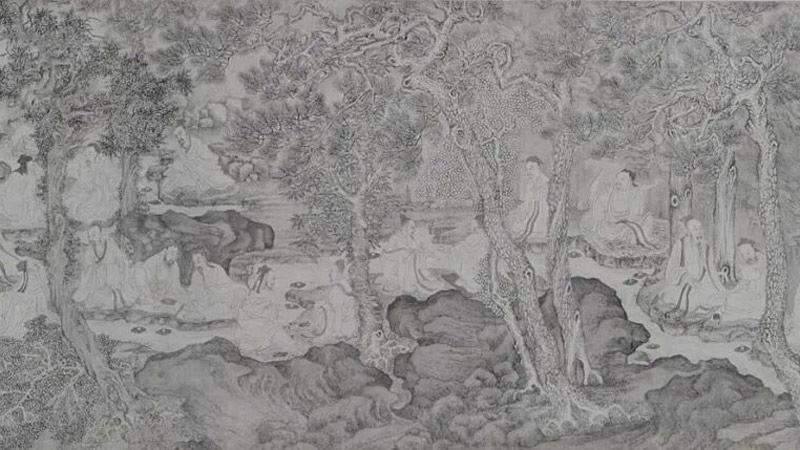
Once the public displays were over, the scholarly community retreated to its own intimate and refined celebrations. One of the most famous was the "Winding Stream Gathering." This wasn't just a banquet but a game of poetry. The newly-minted graduates would sit along a winding, artificial stream in the imperial gardens. Cups of wine were set afloat, and when one stopped in front of a participant, they were required to drink and then compose an impromptu poem.
It was a test of wit and composure, a way to bond with peers and showcase literary elegance. In the year 800 AD, a 27-year-old Bai Juyi (白居易) was the youngest to pass. He inscribed his achievement on the Wild Goose Pagoda with a famous boast, celebrating his unique success among his peers. This gathering was a celebration of literary merit, a moment where they could enjoy the company of equals and compete in the very skill that had elevated them.
4. Inscribing
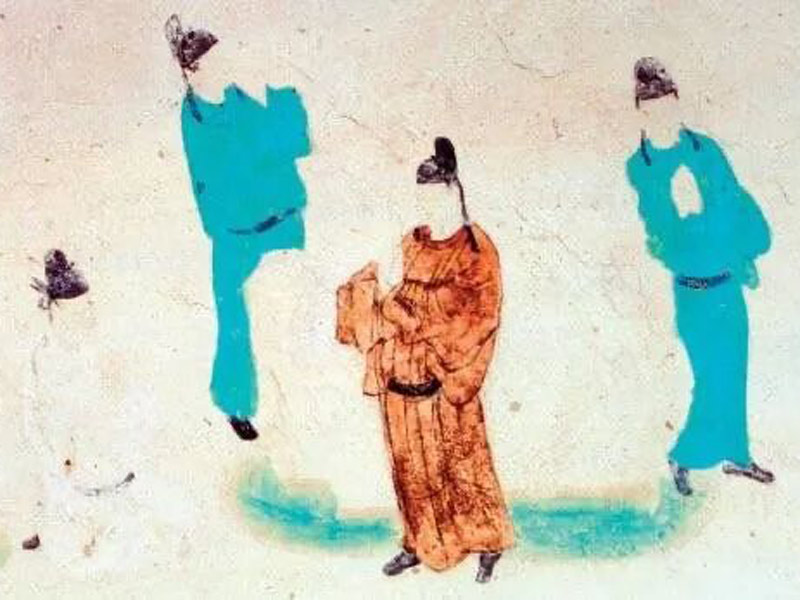
The desire to leave a permanent mark led to another crucial ritual: inscribing names on the wall of the Wild Goose Pagoda. This "Wild Goose Pagoda Inscription" became a symbol of ultimate academic success. For centuries, successful candidates would etch their names, hometowns, and dates into the stone.
This act was more than just signing a register. It was an act of historical permanence, placing the scholar's name alongside the greats who had come before. It connected the individual to a lineage of state service and intellectual achievement. The surviving fragments of these inscriptions, now housed in the Xi'an Forest of Steles, offer a unique historical record, with names of luminaries like Du Mu (白居易) and Li Shangyin (李商隐) still visible. It was a public, eternal declaration that "I was here, and I succeeded."
For this occasion, attire often shifted. In the Ming dynasty, candidates would wear their formal blue robes to show respect, reinforcing that this was an official and sacred duty, not just a social celebration. They were connecting themselves to the past and the state's hallowed halls of history.
5. Feasting
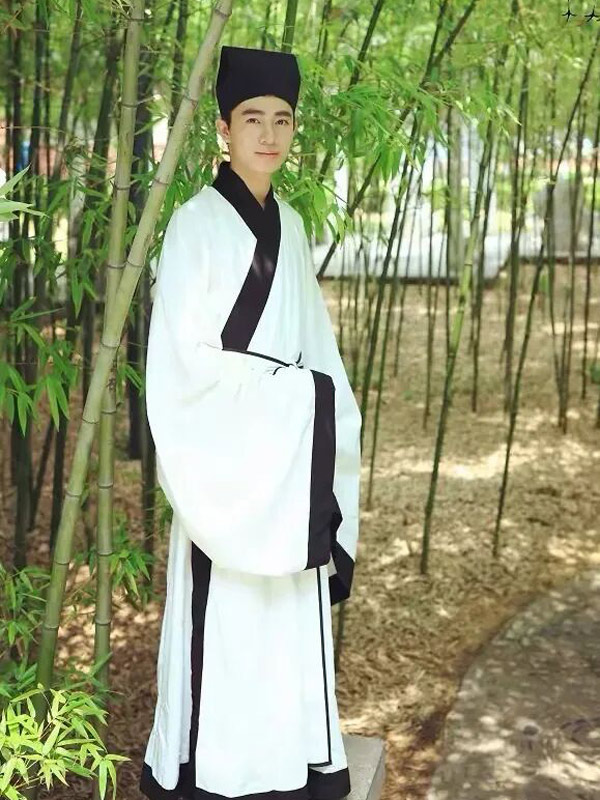
While the candidates celebrated, the state also held its own official banquets. The "Deer Banquet" traced its roots to the ancient Book of Songs (诗经), where a poem describes hosting a joyful banquet with wine. It was a dinner hosted by local officials for successful provincial graduates. It was a formal affair, heavily ritualized, and it symbolized the state's recognition of merit and its welcoming of new talent into the system.
For the guests, wearing the shenyi (深衣), the iconic Confucian robe, was essential. This garment, combining an upper and lower piece, was a declaration of their commitment to the proper order of the world. The official host, by contrast, would wear his formal uniform, a clear hierarchical distinction. This banquet was less about revelry and more about establishing the formal relationship between the new scholar and the state authority.
6. Celebrating
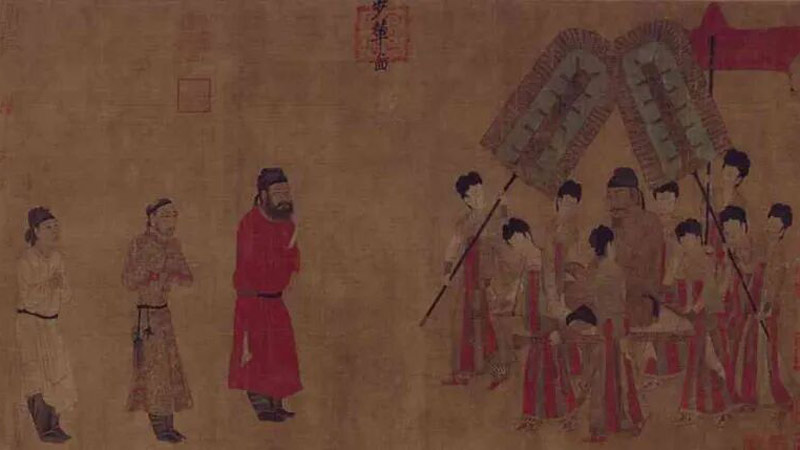
The ultimate accolade for the top scholars was the "Orchid Forest Banquet." This was the highest-tier celebration hosted by the Emperor himself in the royal gardens. It was a declaration that the state’s most brilliant minds had been welcomed into its highest circles of power.
This was the moment of transformation. For this one event, the newly appointed officials shed their scholar robes and, for the first time, donned the official court attire. In the Ming dynasty, this was a complex ensemble of red robes and ceremonial hats that indicated their new official rank. It marked the final step in their journey, from a "blue-shirt scholar" to a "court official."
For a young man like Bai Juyi, this was the dream made real. He went from being the youngest in his class to a recognized name in the capital, forever remembered by his proud inscription on the pagoda. The process was a powerful engine of social mobility and a cornerstone of Chinese governance for over a millennium.
