
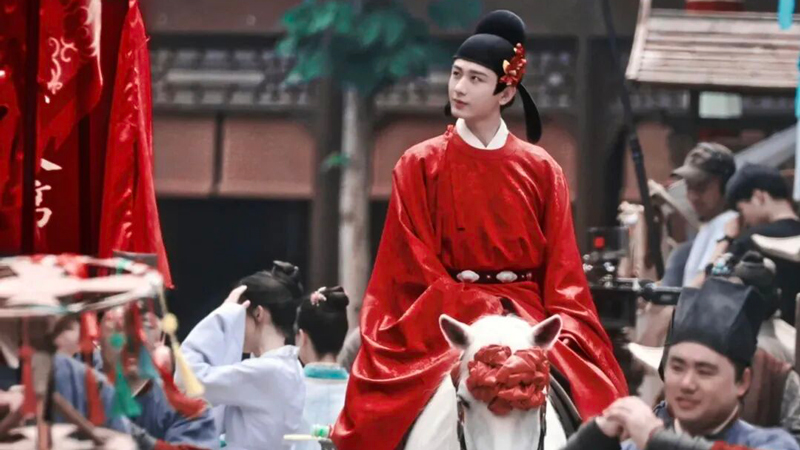
Every June, millions of Chinese students rush into exam halls, their hearts pounding with the same dream that drove ancient scholars a thousand years ago. But if you watch popular historical dramas like Ming Dynasty (大明风华), you might notice a puzzling detail: the top scorer rarely wears red. Instead, he appears in deep blue, sometimes green, and only occasionally red.
Why the confusion? The answer lies in a forgotten imperial dress code that separated ordinary Jinshi (进士) graduates from the ultimate champion – and it has nothing to do with modern graduation gowns. Let’s travel back to the Forbidden City of 1370 and uncover the real colors of success.
The Blue Ceremony
On the third to fifth day after the final palace examination – a day called Chuanlu (传胪) – every new Jinshi, from the lowest rank to the top scorer, put on the same official uniform issued by the imperial academy. It was a deep blue robe with dark blue edges, wide sleeves, and a round collar. No red. No green. Just a dignified, scholarly blue known as the Jinshi Jinpao (进士巾袍). This was their only formal graduation attire, and they treasured it.
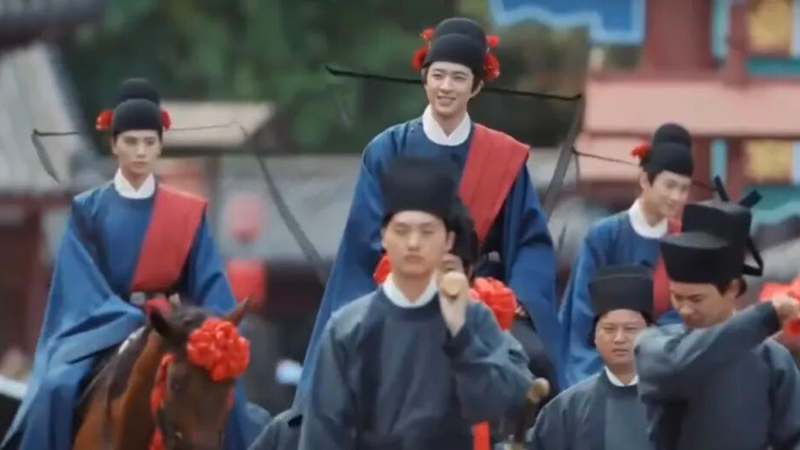
Many commissioned portraits wearing this blue robe, hanging a red silk sash over one shoulder as the sole touch of celebratory color. The matching hat, called Jinshi Jin, looked like a black gauze cap with two long ribbons dangling from the sides, plus a small silver plaque engraved with the words "Grace Banquet." For a man who had spent decades grinding ink and memorizing Confucian classics, this blue moment was his peak glory.
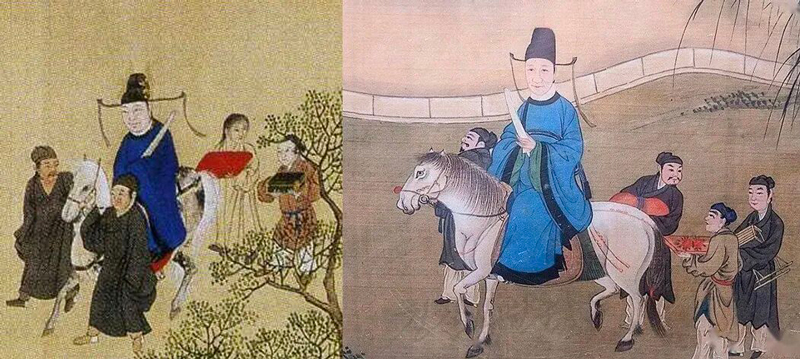
Why blue? Because the robe copied the Lanshan (襕衫) style worn by junior officials – a sign that the graduate was now leaving commoner life behind. He could finally wear a hat with wings, a privilege denied to merchants and farmers. But here’s the catch: this blue outfit was a one-size-fits-all. The emperor didn’t personally design it for the top scholar. That special treatment came later, and it involved a completely different color.
The Emperor’s Red Gift
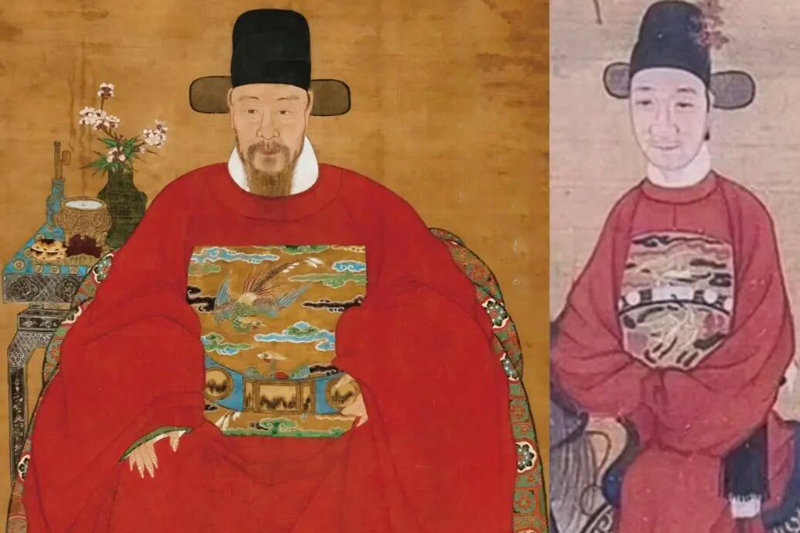
The real game-changer happened after the ceremony. Starting with the Ming dynasty’s founding emperor Zhu Yuanzhang (朱元璋) in 1371, the top scorer – the Zhuang Yuan (状元) – received a private imperial gift: a full set of crimson court robes. Not blue. Not green. Bright, official red. The set included a red silk gown, a red apron-like piece, a white inner shirt, jade belt ornaments, and black boots with cloud-shaped toes. This was the Chaofu (朝服), the same grade worn by fifth-rank ministers. On normal days, the new Zhuang Yuan would switch to a green or blue everyday robe with a mandarin square showing an egret – the badge of a sixth-rank civil officer. But during the Confucius temple ceremony and the imperial thank-you banquet, he alone wore the emperor’s red.
So why do so many TV shows get it wrong? In The Longest Day in Chang’an (长安十二时辰) or Story of Yanxi Palace (延禧攻略), you often see top scholars in red robes during their graduation walk. That’s partially correct for Ming dynasty ceremonial scenes, but not for the actual exam announcement day. The red court robe was a secondary gift, worn days later at formal banquets. The primary robe – the one they wore when the golden list was read – was always blue. And if the drama is set in the Song dynasty (960-1279), then red is completely wrong. The Song top scholar wore green.
Song vs. Ming: A Green Surprise
Imagine the surprise of a Song dynasty scholar. After passing the final exam, he did not receive blue or red. He was given a bright green robe, a wooden tablet to hold, and a black hat with straight wings. The Lüpao (绿袍) or green robe was the official Jinshi uniform for the entire Song period, as recorded in the historical text Yan Yi Yi Mou Lu (燕翼诒谋录). The emperor even added a purple pouch as a special gift for the top scorer. This is why attentive viewers of the drama Serenade of Peaceful Joy (清平乐) might notice a brief scene where a new graduate wears green – the producers got it right. But most directors prefer red because it looks more dramatic on screen, leading to the popular myth that ancient top scorers always dressed in crimson.
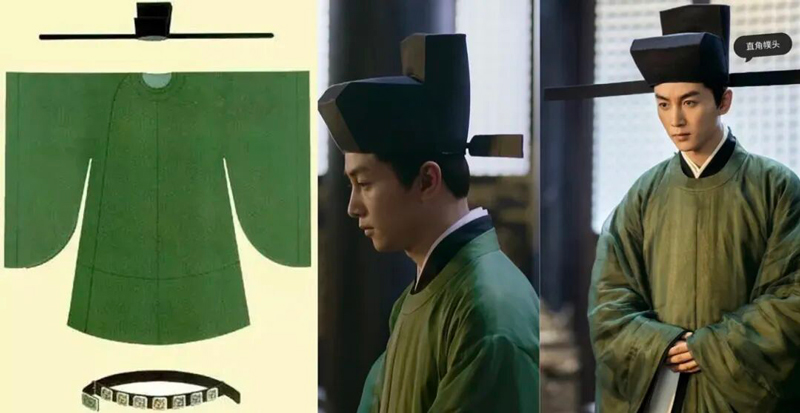
There was one exception, however. During imperial banquets, Song officials could request temporary permission to wear red – a practice called Jie Fei (借绯) or "borrowing red." This was a favor granted only to low-ranking officials on festive days. So if you see a Song-dynasty character in a red robe at a party scene, that’s historically accurate. But if he’s receiving his diploma in red, that’s a Hollywood-style invention. The same applies to the flower-wearing tradition. All successful candidates, regardless of dynasty, would tuck a fresh flower into their hat – a custom that began in the Tang dynasty and became a national craze during the Northern Song. Peonies in spring, chrysanthemums in autumn. The flower was the only flashy element on that solemn blue or green robe. And that subtle elegance, more than any red carpet, is the true Chinese romance of academic success.
