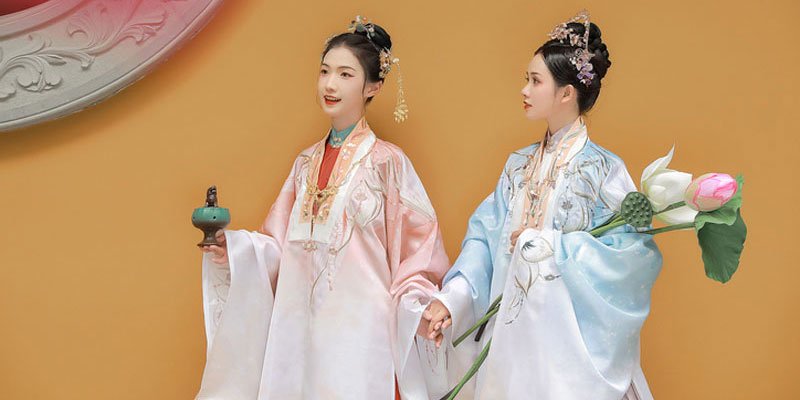
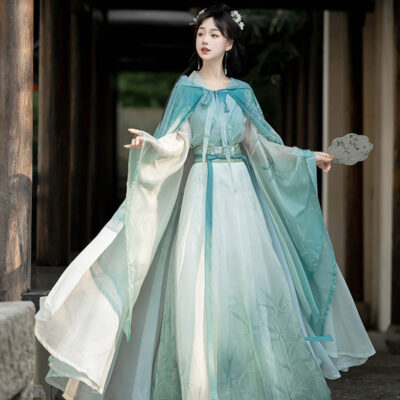
From niche subculture to mainstream trend, 2021 marked a pivotal year for Hanfu. Despite ongoing pandemic disruptions, the traditional Chinese clothing industry surged past the 100 billion yuan mark, cementing its status as a cultural and commercial force. From short-video platforms like Douyin to bustling Hanfu streets in Chengdu, Hanfu became an increasingly common sight. This report analyzes the 2021 Hanfu market from multiple perspectives: market scale, consumer demographics, regional distribution, product trends, industry channels, and future challenges.
I. Overall Hanfu Market in 2021
Breaking the 100 Billion Yuan Barrier
After experiencing a slowdown in 2020 due to the COVID-19 pandemic (market sales of 63.6 billion yuan), the Hanfu market rebounded strongly in 2021. Propelled by government efforts to promote traditional culture, capital inflow, and increased public recognition of Hanfu, sales in 2021 were projected to surpass 100 billion yuan for the first time. According to iiMedia Research, the number of Hanfu enthusiasts in 2021 reached 6.894 million, with the market sales scale expected to hit 10.16 billion yuan. Meanwhile, iResearch data placed the 2021 “New Hanfu” market at approximately 10.1 billion yuan, representing a 6.4% year-on-year increase. However, this growth rate was notably slower compared to the explosive expansion of previous years, partly due to pandemic-related constraints on offline activities and tourism as well as the need for Hanfu designs to further adapt to modern consumer preferences.
The 2022 China New Hanfu Industry Development White Paper noted that the current Hanfu market still accounts for only 0.8% of China’s overall apparel market, leaving substantial room for growth. As Hanfu design aesthetics and wearing habits become more aligned with modern needs and lifestyles, the industry is expected to achieve a breakthrough and enter the “hundreds of billions era,” at which point market penetration could reach approximately 5.0%, truly making Hanfu a mainstream daily apparel category.
New Media and Content Continue to Drive Growth
Social media platforms remained the primary engine of Hanfu’s popularity in 2021. As of May 2021, the “Hanfu” tag on Douyin had accumulated over 511.8 billion views, with more than 90 related hashtags gaining significant traction. Short-video creators delved into niche areas such as affordable Hanfu, Hanfu accessories, and Hanfu makeup, producing differentiated content that both attracted massive viewership and accelerated the popularization of Hanfu culture. By early 2021, the potential Hanfu consumer base — including overseas markets — had reached 415 million people.
Live-streaming e-commerce also played a growing role, with platforms like Douyin and Taobao Live becoming key sales channels. Even international expansion showed promise: Hanfu exports via Tmall Overseas increased by over 20% year-on-year between May and July 2020, and this cross-border momentum carried into 2021.

II. Core Data: Consumer Demographics & Behavior
Aggregated data from iiMedia Research, iResearch, and other third-party institutions reveals the following portrait of the 2021 Hanfu consumer:
- Gender Ratio: Female consumers continued to dominate, accounting for 64.8% according to iiMedia Research. iResearch’s New Hanfu White Paper reported an even higher female share of 74.8% among target consumers. However, the male share was on the rise, with some sources indicating that male enthusiasts reached approximately 23% in 2021.
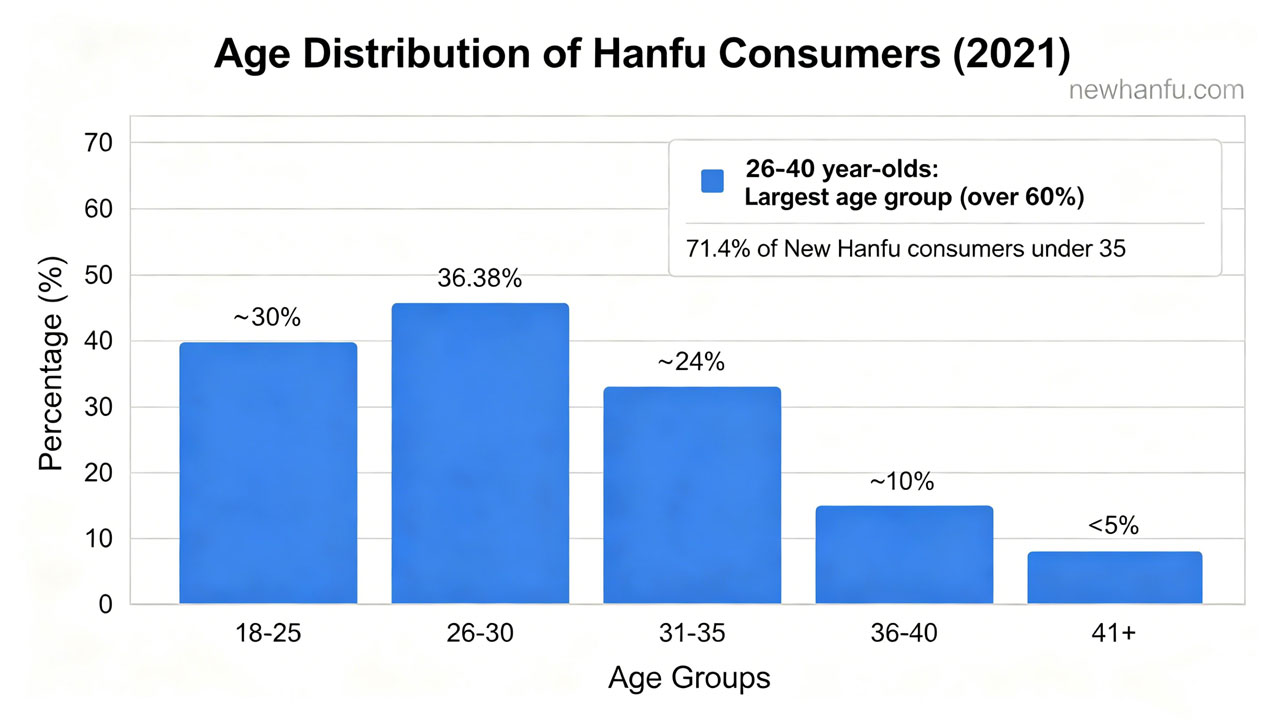
- Age Distribution: In contrast to earlier years when teenagers and early-20s consumers dominated, 2021 saw 26-40 year-olds become the largest age group, accounting for over 60% of Hanfu consumers. Among these, the 26-30 segment alone represented 36.38%. iResearch data further showed that 71.4% of New Hanfu consumers were under 35, with the 18-25 age group constituting nearly 30% — indicating young people still represent tremendous growth potential.
- Geographic Distribution: Hanfu consumers were primarily concentrated in first and second-tier cities, with 40.44% in first-tier and new first-tier cities, and 26.84% in second-tier cities. Regionally, 32.15% of consumers were located in East China, followed by South China and North China (both 17.71%).
- Ownership and Spending Power: Nearly half of Hanfu consumers — 47.5% — owned 2 to 4 Hanfu outfits. Most spent between 300 and 500 yuan on a single Hanfu outfit, though premium handcrafted limited editions could cost thousands. Premium brands like Minghuatang had production lead times extending into 2022, with prices often exceeding 2,000 yuan and the most expensive sets reaching 9,600 yuan.
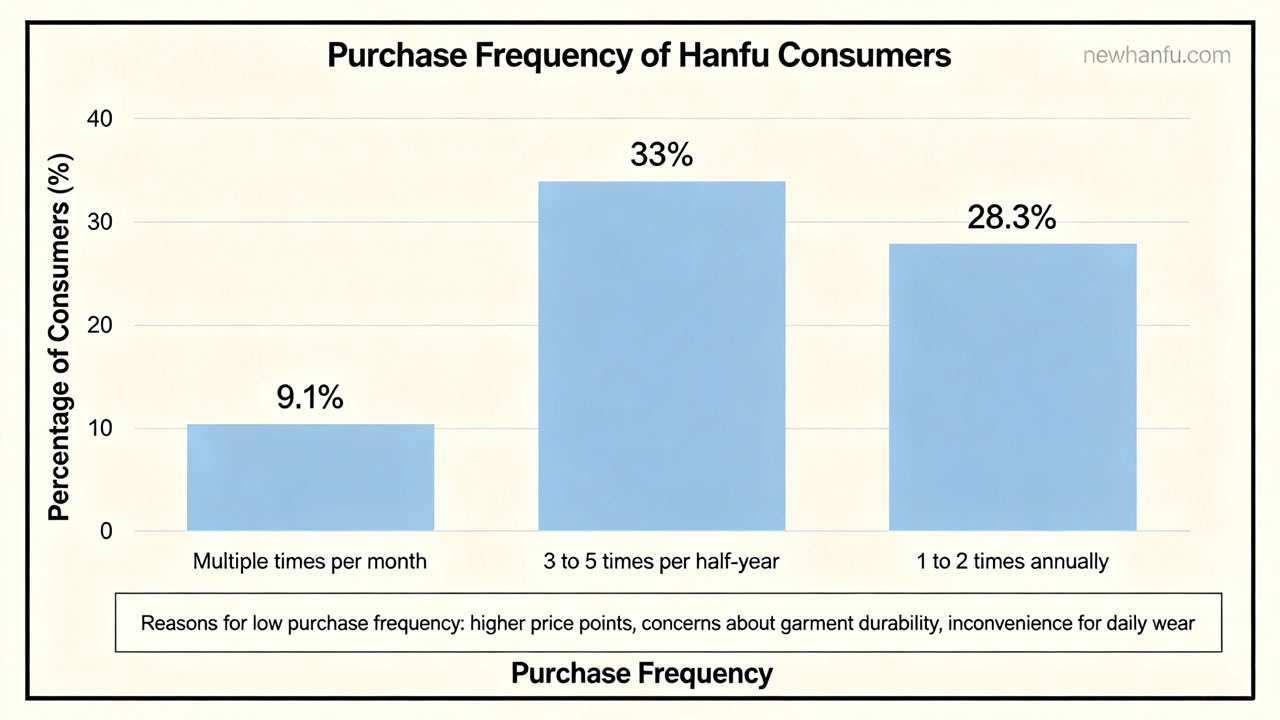
- Purchase Frequency: 33% of consumers purchased Hanfu 3 to 5 times per half-year, while 28.3% bought 1 to 2 times annually. Only 9.1% purchased multiple times per month. The relatively low frequency was attributed to higher price points, concerns about garment durability, and inconvenience for daily wear.
- Information Sources: Social media became the primary channel for discovering Hanfu, with nearly 60% of consumers citing platforms like Weibo and Douyin as their main information source. Among 19-25 year-olds, 71% discovered Hanfu through social media.
III. Regional Distribution and Industry Hubs
2021 witnessed a notable shift in the geographic landscape of Hanfu production and sales, with new players emerging alongside established hubs.
Four Major Production Clusters
By 2021, four dominant Hanfu production regions had taken shape: Jiangsu-Zhejiang region, Shandong’s Cao County, Sichuan-Chongqing region, and Guangdong’s Guangzhou. Among these, Cao County emerged as a remarkable success story. A third-tier county in Shandong province with a historical background in coffin and funeral garment manufacturing, Cao County leveraged its existing textile expertise and e-commerce infrastructure to pivot into Hanfu production. By 2021, Cao County boasted over 2,000 Hanfu-related enterprises, including more than 600 original Hanfu processing companies, with original design Hanfu sales accounting for approximately one-third of the national market. The county’s Hanfu industry generated 4 billion yuan in annual sales in 2021, climbing to 7.215 billion yuan by 2023 — over 40% of the national market share.
The other major hubs retained their distinct advantages: Hangzhou excelled as an e-commerce and influencer center, housing top brands like Shisanyu; Guangzhou led in manufacturing capacity; and Chengdu stood out as the consumption capital, hosting China’s first Hanfu physical store and a vibrant enthusiast community.
Online vs. Offline Distribution
From the supply side, China had over 3,000 Hanfu enterprises by 2021, with more than 1,500 Taobao Hanfu merchants active. E-commerce remained the dominant channel, with 48% of Hanfu consumers purchasing through Taobao or Tmall. Leading brands derived the vast majority of their sales from online platforms. Physical Hanfu stores and experience centers were concentrated in Xi’an, Chengdu, and Hangzhou, with Central South China (36.03%) and East China (31.66%) having the highest concentration of brick-and-mortar stores. The “Hanfu Street” at Xiangping Plaza in Chengdu became a notable example of how physical retail clusters can effectively gather Hanfu enthusiasts and facilitate both commerce and cultural exchange.
IV. Product and Style Popularity Trends
Rising Popularity of the Mamian Qun
Among Hanfu styles, the Mamian Qun (horse-face skirt) — a Ming Dynasty staple — gained significant traction in 2021, especially after Dior’s controversial plagiarism incident in 2022 would later catapult it into global headlines. In 2021, however, the Mamian Qun was already establishing itself as a favorite among enthusiasts for its elegant silhouette and practicality. The Hezi Qun (Tang Dynasty waistband skirt) also remained a strong seller, offering a flattering and regal look that resonated with both newcomers and seasoned collectors.
Other popular styles included the Aoqun (jacket and skirt) for its daily wear potential, as well as Ming and Song Dynasty-inspired designs featuring intricate embroidery and modified silhouettes that balance historical authenticity with modern comfort.
Functional and “New Hanfu” Innovations
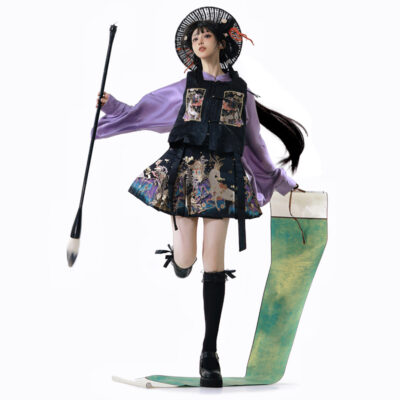
2021 also marked the continued rise of “New Hanfu” — designs that retain traditional Hanfu’s characteristic aesthetics and structural elements while adapting them for contemporary lifestyles. According to the 2022 White Paper, 80.4% of consumers expressed a preference for Hanfu styles suitable for daily, multi-scenario wear. Brands experimented with detachable elements, lighter fabrics, and modular designs to make Hanfu more practical for office wear, commuting, and casual outings. This trend toward functionality was credited as a key driver for expanding the market beyond special occasions and into everyday wardrobes.
Pricing and Accessibility
To attract younger consumers — many of whom were students or entry-level professionals — most brands priced their core offerings below 300 yuan. At Shisanyu’s Tmall flagship store, approximately 60% of products were priced between 100 and 300 yuan, while Lan Ruo Ting offered all Hanfu under 180 yuan. Premium brands like Minghuatang and Hankesilu continued to serve the high-end custom market with prices exceeding 2,000 yuan and wait times stretching months or even years.
V. Industry Channels and Business Models
E-commerce Dominance and the Rise of Live-Streaming
E-commerce platforms, particularly Taobao and Tmall, remained the primary sales channel for Hanfu brands. However, live-streaming platforms like Douyin began gaining ground. The “celebrity + e-commerce” model drove significant growth. Shisanyu, founded by Bilibili influencer “Xiao Doukou-er,” continued to leverage its strong fanbase to rank among top Hanfu brands on Tmall in 2021. Other major brands like Chong Hui Han Tang, Lan Ruo Ting, and Han Shang Hua Lian dominated bestseller lists.
According to Hanfu Information’s statistics, the top 30 Hanfu sellers on Taobao in 2021 saw a 17.32% decline in total output value compared to 2020 — a sign that while the overall market was growing, competition was intensifying and profit margins were tightening. Many brands still operated on pre-order models, using sales data to determine production quantities due to limited working capital and market forecasting capabilities.
Cross-Border Expansion
International sales of Hanfu gained momentum in 2021. Platforms like AliExpress and Tmall Overseas reported consistent growth, with emerging markets such as Southeast Asia, Australia, and Europe showing increasing interest. Brands like Shisanyu won recognition as a “Top Ten New Global Brands,” with export turnover rising 158%.
VI. Opportunities in 2021
Pervasive Counterfeiting and IP Infringement
Perhaps the most persistent issue facing the Hanfu industry in 2021 was the proliferation of counterfeit goods. iiMedia Research found that 31.2% of Hanfu consumers had unknowingly purchased knockoff Hanfu. Among respondents, 41.1% held a neutral stance toward counterfeits, and only 11.2% expressed complete opposition. The vague definition of what constitutes Hanfu design infringement, combined with the high cost of legal action, created an environment where copycats could thrive.
Small original design studios were particularly vulnerable. A brand founder interviewed by the media noted that original Hanfu production often takes six to eight months from concept to finished product, yet a knockoff could appear on the market within weeks, undercutting the original on price and eroding consumer trust. Malicious trademark squatting also emerged as a serious problem, with counterfeiters registering the names and logos of legitimate independent designers.
Supply Chain Strains
While large brands like Chong Hui Han Tang began transitioning to digital manufacturing, many smaller designers struggled with fabric shortages and long production lead times. A set of Hanfu often requires coordination across multiple specialty factories — embroidery, fabric dyeing, garment assembly — each of which may have limited capacity. In 2021, the gap between supply and demand widened, leading to customer dissatisfaction over shipping delays and contributing to slower-than-expected consumer growth.
One emerging brand, Yan Yun Zhi Zao Ju, reported that its Spring/Summer collection — planned as early as August of the previous year — still had not launched by mid-2021 after repeated adjustments with manufacturers. The scarcity of suppliers capable of high-end embroidery work, some with as few as 7-8 machines, remained a critical bottleneck.
Opportunities: IP Collaborations and Offline Events
Despite these headwinds, 2021 also saw promising developments. Hanfu brands increasingly pursued cross-industry collaborations with films, TV dramas, video games, and cultural institutions. Themed collections tied to popular IPs helped brands break out of their original user circles and reach broader audiences. Offline events such as cultural festivals, Hanfu exhibitions, and fashion weeks — including the Wuhan Fashion Week’s “Han·Chao” theme — gained renewed importance, offering immersive experiences that built community and brand loyalty.
Data showed that 75.9% of the general public paid attention to Hanfu exhibitions, with 26.2% indicating they would attend and purchase related merchandise. Among those who were extremely attentive, 50% were between 26 and 30 years old.
VII. Future Outlook Beyond 2021
The milestones achieved in 2021 set a strong foundation for the industry’s future. While the market had successfully broken the 100 billion yuan barrier, it was only beginning to scratch the surface of its potential. With the 2022 White Paper projecting a trillion-yuan future, several key factors will determine the industry’s trajectory:
- Consumer education and cultural confidence: As awareness of traditional culture deepens, and as policies supporting cultural heritage continue to roll out, Hanfu is poised to transition from a niche hobby to an accepted everyday attire category.
- Innovation in design and functionality: The “New Hanfu” concept — blending traditional aesthetics with modern comfort and practicality — will be the key to unlocking mass adoption, especially among consumers aged 35 and younger, who represent 71.4% of the target market.
- Intellectual property protection and industry standards: Solving the counterfeit crisis will require coordinated action — legal reforms, industry self-regulation, community-driven authentication, and consumer education. Without this, the “race to the bottom” will continue to suppress margins and stifle creativity.
- Infrastructure and supply chain maturation: Investments in specialized Hanfu manufacturing capacity, from fabric production to embroidery to assembly, will be necessary to meet growing demand while maintaining quality and delivery timelines.
As of early 2022, Hanfu had firmly transitioned from a passing fad to a legitimate sector of China’s modern fashion economy. The 100 billion-yuan milestone was not the finish line but rather the starting point for the next phase of growth — one that will determine whether Hanfu becomes truly integrated into daily life, globally recognized, and culturally sustained for generations to come.