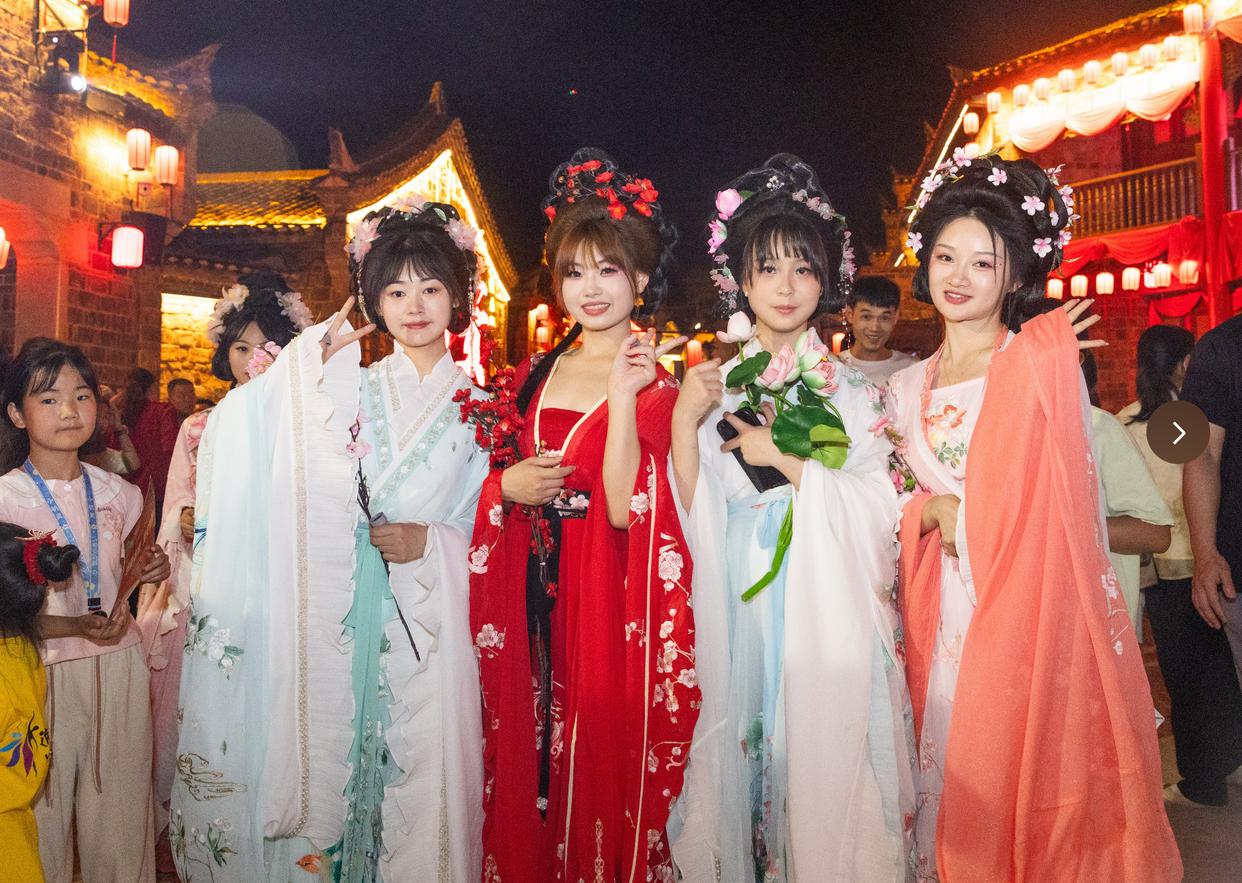
Over the seven days of National Day, Badachu Park in Beijing’s Western Hills packed 70 events into a single week. The 13th Badachu Culture Week ran from October 1 to 7, built around two threads the organisers named red heritage and Chinese-style revival, and stitched together red-culture experiences, roaming flash shows, Han-Tang-style parades and hands-on games.
Red Radio Opens the Week
A red-culture programme opened the week, marking the 77th anniversary of the founding of the People’s Republic of China and drawing on the park’s own “Red Radio” history. Staged as a two-part mix of narration and performance, it recreated the historical scene and told the story behind it while carrying the patriotic theme through music, with songs including “Sing a Folk Song to the Party”, “Happy Reunion” and “Liuyang River”.
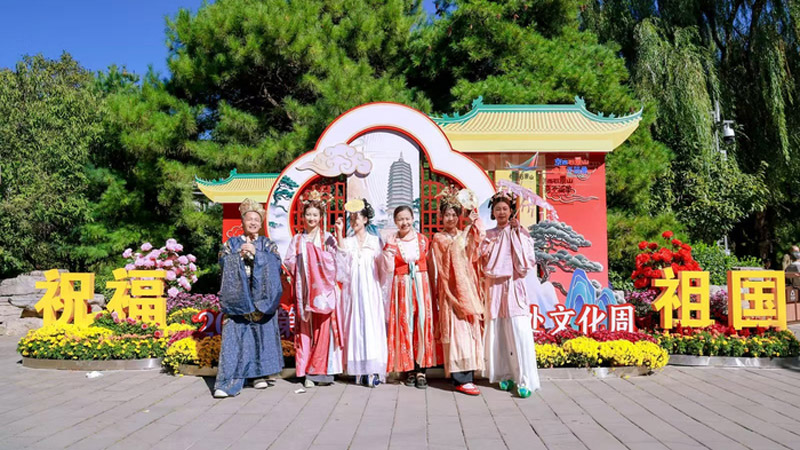
At the entrance square a large flowerbed themed “Bless the Motherland”, red and gold against the old masonry, became the first photo stop for visitors coming through the gate. The week was produced by the Beijing Chinese Orchestra, under the Capital Culture and Technology Group, which set the red-culture programme beside the holiday entertainment that followed.
Parading Twice a Day on the Hill
Chinese-style dress was the other spine of the week. The “National Day Song, Roam Badachu” Han-Tang parade ran four times a day from October 1 to 7, at 9:30 and 11 in the morning and at 2 and 3:30 in the afternoon, for 28 performances across the run, following a route over the park’s main sights.
Its guest contingent included the Chinese Hanfu performance team that had appeared at London Fashion Week, and along the way visitors could join the procession and pick up lucky bags handed out by the marchers.
Flash Shows and Folk Games
Around every corner the park kept a stage running. At the main viewpoint, Baihui Garden, the Second Site square corridor, Tongji Bridge and the Seventh Site platform, 70 flash shows unfolded over seven days, spanning song, dance, magic, clapper talk and instrumental music, or, as the organisers put it, blowing, plucking, singing and reciting in one place. Beside Tongji Bridge an old-Beijing flash set paired the clapper piece “Family Reunion”, quick and full of punchlines, with “Ode to Beijing”, which folds the capital’s alleys and street life into its beat, while at the Seventh Site slide platform an interactive set offered instrumental playing, close-up magic and balloon work.
Between performances the organisers set up games in the busiest areas: a hundred-blessing scroll, a poetry-recall round, pitch-pot, and a boxing-ring challenge, small contests suited to every age with souvenirs for those who took part. At a rubbing station on the Second Site square, visitors laid out paper, took up the pad and tapped gently until gilded fu characters in five scripts came up through the sheet; some pasted their rubbings across a blessing board until it glowed red, others rolled theirs up to take home. The park’s old coin-eye toss, in which a visitor pitches a coin at a bell, stayed popular, and the newly reopened cableway let people ride slowly up and slide quickly down for a different view of the hills and the city beyond. Now in its 13th year, the culture week has become a fixture of Beijing’s western-suburb holiday tourism.