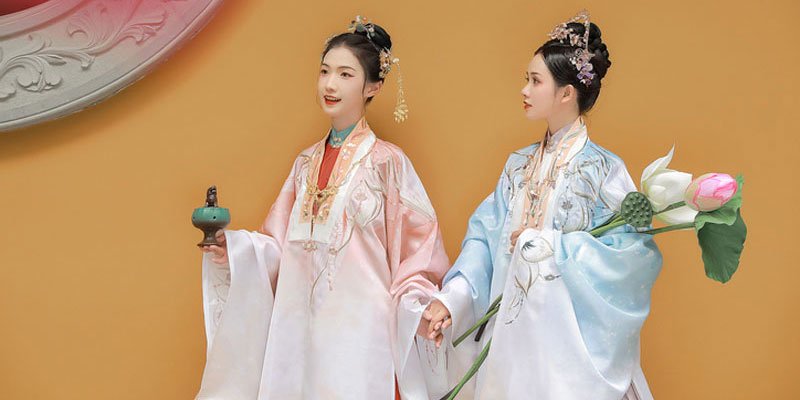
In recent years, “Hanfu” has transformed from a niche subculture into a prominent cultural phenomenon. Despite the global disruptions caused by the COVID-19 pandemic in 2020, the Hanfu industry showed remarkable resilience. From short-video platforms like Douyin and Bilibili to bustling shopping streets in Chengdu and Guangzhou, traditional Chinese clothing became an increasingly common sight. This report analyzes the 2020 Hanfu market from multiple perspectives: market scale, consumer demographics, regional distribution, product trends, industrial chains, and future challenges.
I. Overall Market Situation in 2020
Rapid Growth Despite the Pandemic
The Hanfu revival, which began in 2003 when Wang Letian first walked the street in Hanfu, saw explosive growth in 2020. According to iiMedia Research, China’s Hanfu market sales jumped from 1.9 billion yuan in 2015 to 63.6 billion yuan in 2020. Although the epidemic slowed growth somewhat, the total industrial scale reached approximately 76.9 billion yuan by the end of 2020 (some estimates go as high as 79.6 billion yuan). The number of Hanfu enthusiasts (known as “Tongpao”) continued to grow at over 70% for the fourth consecutive year.

New Media and Content Drive the Wave
2020 was a defining year for content-driven consumption. With people spending more time online due to lockdowns, short-video platforms became the primary catalyst for Hanfu’s popularity. On Douyin alone, videos tagged with “Hanfu” generated over 100 million posts and accumulated more than 30 billion views. Historical dramas and immersive shows such as “The Longest Day in Chang’an” further fueled public interest. By mid-2020, the number of Hanfu consumers on Alibaba’s platforms approached 20 million, with a potential consumer base of 425 million identified.
Evolution of the Industrial Chain
By 2020, the Hanfu industry had matured into a full economic ecosystem. From raw fabric sourcing and tailoring design to processing, production, and finished goods sales, the entire chain became increasingly mechanized and standardized. This shift from purely artisanal, slow-fashion production to a hybrid model of machine manufacturing and modern logistics allowed brands to scale rapidly. Local governments also began recognizing the economic potential of Hanfu. For example, Luoyang signed strategic agreements with Heze (Cao County) — often called the “Hanfu Capital of China” — to collaborate on industrial chain upgrades and tourism integration.
II. Core Data: Consumer Demographics & Behavior
Aggregated data from e-commerce platforms and third-party research institutes reveals the following portrait of a typical 2020 Hanfu consumer:
- Gender Ratio: Female consumers dominated, accounting for nearly 80% of total consumption. The male segment saw gradual growth, particularly in specific functional styles like the Jiaoling Ruqun.
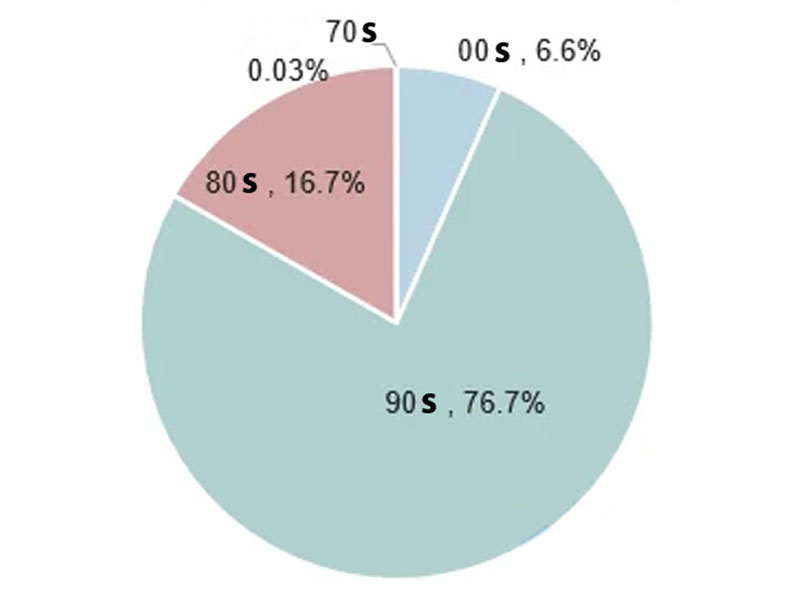
- Age Distribution: Post-90s and Post-95s (aged 20-30) became the absolute main force. Post-95s increased their purchasing power significantly, surpassing Post-90s by a factor of five in buying volume. Gen Z’s consumption contribution rose for three consecutive years, now accounting for more than half of all online Hanfu purchases.
- Spending Power: Most consumers spent between 300 and 500 yuan on a single Hanfu outfit. Premium, handcrafted limited editions could cost thousands. Due to intricate embroidery and non-mass-produced fabrics, overall spending remained higher than standard fast fashion.
- Motivation: Wearing Hanfu was no longer viewed as “weird fashion” as it might have been a decade ago. In 2020, consumers increasingly saw it as an expression of cultural identity and daily fashion. Many wore Hanfu not just for photoshoots or festivals but as regular streetwear — a shift from “costume” to “clothing.” The pandemic paradoxically boosted the desire for expressive, aesthetic clothing as people sought joy and cultural grounding in uncertain times.
III. Regional Distribution of the Hanfu Industry
The geographic footprint of the Hanfu market expanded significantly in 2020. For physical retail stores (brick-and-mortar), Henan Province led with 16 regions hosting Hanfu shops, followed by Guangdong (11), Zhejiang (10), and Hunan (10). In terms of registered Hanfu-related corporate entities, data from Qichacha shows that Anhui Province ranked first with 237 registered companies, followed by Guangdong and Hubei. At the city level, Wuhan (103 companies) and Xi’an (102 companies) emerged as the top two cities for Hanfu enterprises, with Shenzhen third (98 companies).
Meanwhile, three cities established themselves as manufacturing powerhouses: Chengdu, Guangzhou, and Caoxian (Shandong) formed a “tripartite confrontation” in Hanfu production. Chengdu, in particular, solidified its reputation as a city brand for Hanfu, leveraging its rich cultural heritage and strong local consumer market to drive both production and tourism.
IV. Product and Style Popularity Trends
The “Hezi Qun” (Waistband Skirt) Dominates
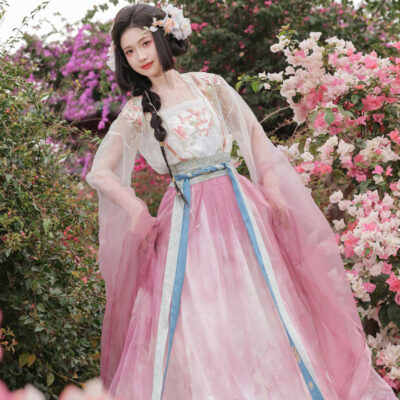
The most defining fashion trend of 2020 was the explosion of the Hezi Qun, a style reminiscent of the Tang Dynasty’s splendor. This silhouette became the must-have item of the year, dominating Taobao’s bestseller lists. Although overall sales volume for Hezi Qun remained robust, the market saw fragmentation with multiple mid-tier brands challenging established giants.
Best-Selling Brands and SKUs
Competition among top brands intensified. According to sales rankings, Lan Ruo Ting demonstrated overwhelming dominance, capturing seven spots in the top 15 best-selling Hanfu items of the year, including the top three positions. Their “Beizi·Cijian Chunse” generated a staggering sales volume of 35.38 million yuan. Shi San Yu followed, securing three spots in the top 15. Other notable brands like Han Shang and Kong Gu Ji also performed well. In e-commerce specifically, Chong Hui Han Tang, Lan Ruo Ting, and Han Shang Hua Lian were ranked as the top three powers.
Functional and “Rave” Hanfu Emerge
2020 saw the rise of functional innovation. Brands began experimenting with modular designs for daily wearers. For example, Qiao Zhi Hanfu launched a “Rave Hanfu” series — outfits designed for nightlife and dancing — featuring detachable sleeves and expandable structures that allowed a single garment to transform into multiple styles, directly addressing demand for practicality and versatility.
V. Industry Channels and Business Models
E-commerce dominance: Taobao platform’s Hanfu transaction volume officially broke through 2 billion yuan in 2020. Over the past three years, Tmall’s Hanfu industry grew sixfold. The “celebrity + e-commerce” model proved most successful. Shi San Yu, founded by famous Bilibili influencer “Little Dough-er,” leveraged her fanbase to rank first in Tmall Hanfu brand sales in 2020.
International expansion: While domestic offline retail faced pandemic restrictions, Hanfu exports boomed. Between May and July 2020, Hanfu sales on Tmall Overseas platform increased by over 20% year-on-year. Shi San Yu also won acclaim as one of the “Top Ten New Brands for Going Global,” with an export turnover increase of 158%.
VI. Challenges and Opportunities in 2020
- Knockoffs and IP infringement: As the market grew more lucrative, the battle between authentic vs. counterfeit intensified. Malicious trademark squatting and fabric design theft became headline crises, stifling creativity and hurting profit margins of independent designers.
- The “Xianfu” (Fairy Dress) debate: A heated ideological war continued between traditionalists who demand historical accuracy and brands that produce aesthetically beautiful but historically inaccurate “fairy dresses” to appeal to the mass market. This ownership fight over the definition of Hanfu split the consumer base.
- Supply chain strains: Sudden demand outpaced the capacity of many small workshops. While large brands transitioned to digital manufacturing, smaller designers struggled with fabric shortages and long lead times, causing customer dissatisfaction over shipping delays.
VII. Future Outlook
The events of 2020 set the stage for 2021. With the market expected to break the 10 billion yuan threshold in 2021, the industry stands at a critical crossroads. To sustain growth, brands must balance commercialization with cultural heritage, solve intellectual property crises through legal and community mechanisms, and continue to innovate for daily wearability. Hanfu has firmly cemented its status not as a passing fad, but as a thriving sector of the modern Chinese fashion economy.