A leaked behind-the-scenes image from the set of The Mo (家业) has set Chinese social media buzzing. There stands Yang Zi (杨紫), hair tied with nothing more than a thin red cord. No gold pins, no jade ornaments, no elaborate headpieces. That single, humble red string instantly unlocked a flood of childhood memories for millions. It looks so… ordinary. Yet that ordinariness is precisely why it feels so real, so warm, so deeply familiar. Why does this tiny piece of cotton thread, dyed the color of cinnabar, carry such weight? The answer isn’t about fashion or trends. It’s a journey through centuries of Chinese life, practicality, love, and a quiet rebellion against empty extravagance. This seemingly simple prop isn’t just a styling choice; it’s a history lesson woven into a single knot.
Ancient Threads
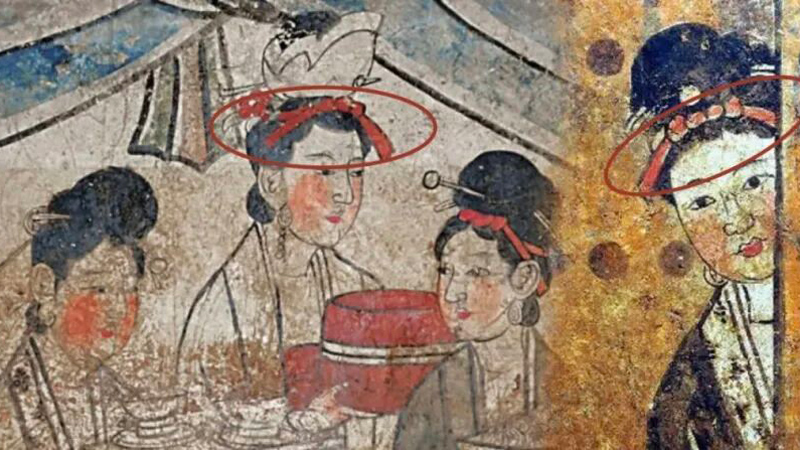
Many assume the red hair string is a modern invention, perhaps from the 20th century. In truth, the practice of using red ties to bind hair stretches back over a thousand years. Early versions were simply narrow strips of red cloth, used to secure a bun and add a touch of festive color for special days. Ancient tomb murals from the Song Dynasty show women tying small, bow-like bands of red fabric just above their buns. The effect is neat, clever, and dignified—never frivolous. This was the original blueprint for the butterfly knot we see on Yang Zi today.
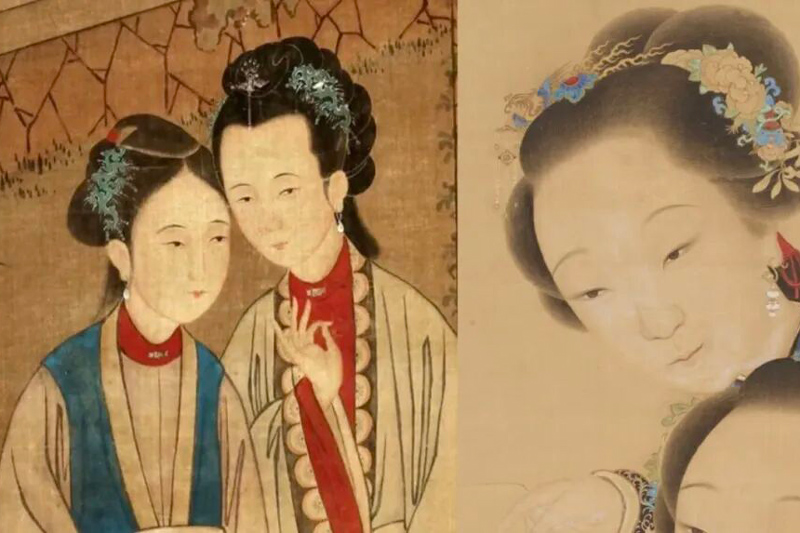
By the late Ming Dynasty and early Qing Dynasty, a hairstyle called San Liu Tou (三绺头) became popular. It required dividing long hair into three separate sections. Hairpins and combs were too rigid to manage this detailed separation. The solution was a thin, flexible red cord. It could precisely tie the top section while allowing the side hair to fall smoothly. That’s why you see so many fine red strings in paintings of ladies from that era—not as decoration, but as a practical tool for an elegant look.
There was even an ancient ancestor of the red string called Xu (须), a narrow band made from leftover fabric scraps from tailoring clothes. The classic text Zhu Xi’s (朱熹) Family Rituals (朱子家礼) describes it clearly: “a strip of slightly coarse linen, eight inches long, used to bind the roots of the hair.” This humble strip, born from thrift and utility, is the direct forerunner of the red cord we see in The Mo. It was never meant to be a luxury; it was a smart, everyday solution.
Red as Blessing
After the Industrial Revolution, machine-knitted wool yarn became widely available in China. Red wool string was cheap, strong, and easy to tie. It quickly replaced handmade cloth strips in ordinary households. But to understand why this piece of red string became a national emotional touchstone, you have to look at performance art. The iconic play and later film The White-Haired Girl (白毛女) featured a scene where a poor father, unable to afford a fancy hairpin, buys a simple strip of red yarn to tie his daughter’s hair. That small act of love, in the face of crushing poverty, transformed the red string into a powerful symbol of tenderness, resilience, and hope.
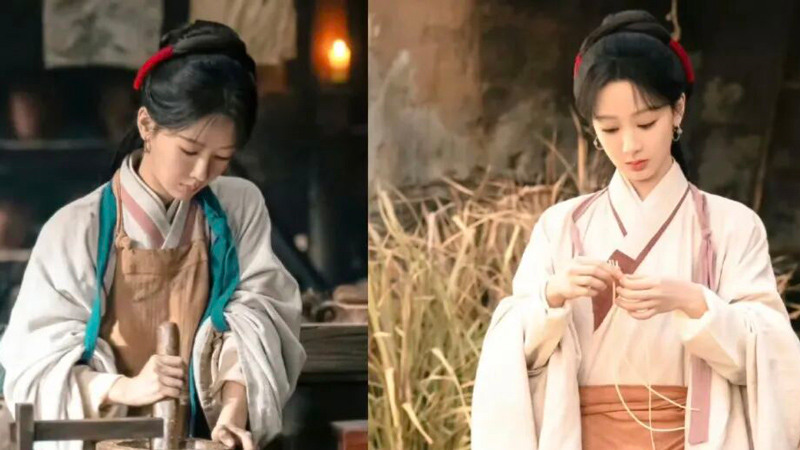
For generations of Chinese families, red has never been just a color. It is a language of blessing and expectation. Grandmothers tied red strings on toddlers’ wrists or topknots to wish them safety and a smooth path in life. During festivals, you still see children with bright red cords in their hair, carrying on a simple, heartfelt tradition. Before cheap rubber bands and plastic clips took over, a length of red string was a mother’s daily ritual—a quick, loving touch that made a messy-haired girl look neat and cheerful, even if the family owned no silver or gold.
That practical warmth is what Yang Zi’s styling captures so perfectly. Her character in The Mo is not a noblewoman in a palace; she’s involved in the serious, earthy business of Huizhou (徽墨) ink making during the late Ming period. A heavy, jeweled headdress would make no sense. The red string does more than just hold her hair. Its bright, clean line frames her eyes and brow, suggesting a young woman who is both traditionally gentle and quietly stubborn. It aligns her face with the weight of her craft—serious, grounded, and authentic.
Back to Essence
The most striking thing about the red string’s current popularity is what it rejects. Many modern historical dramas pile on ornate, glittering headpieces. They mistake “more” for “better,” creating looks that are busy, anachronistic, and emotionally empty. These costumes scream for attention but say nothing about the character’s life or inner world. The Mo chose a different path. It leaned into the minimalist aesthetic of a working-class Ming dynasty household. The result is not poverty; it is integrity. The red string doesn’t distract; it focuses.
This shift matters because it signals a deeper understanding of what makes traditional Chinese beauty endure. It is not about gold or gems. It is about the line of a collar, the drape of a sleeve, the single purposeful knot in a plain red cord. These small, correct details create a sense of lived reality. When audiences see Yang Zi in that red string, they don’t just see a pretty actress. They see a woman from another century—someone who has to keep her hair back while grinding ink sticks, who has no maid to adjust a jeweled tiara, whose only adornment is a scrap of hope tied with a mother’s hand.
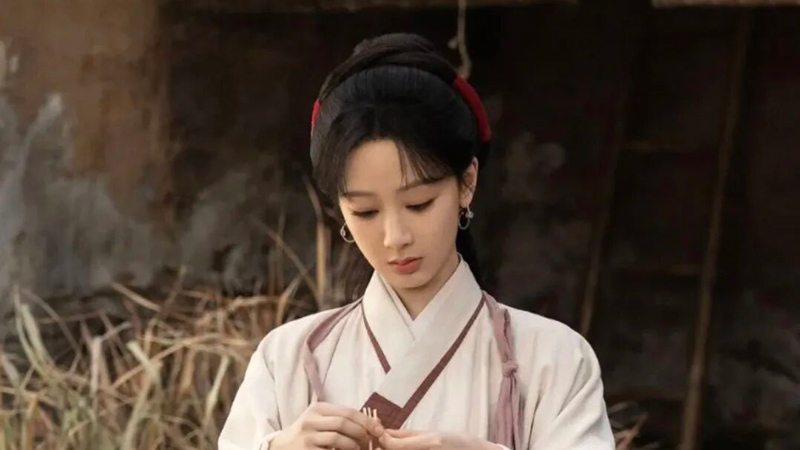
That red string, running from ancient tombs to Song murals, from Ming hairpins to modern TV screens, is a tiny bridge across time. It carries the history of how ordinary people solved everyday problems with grace. It holds the color of luck and protection. And now, thanks to a well-researched costume detail in a drama about ink-making, it reminds us that the most moving kind of beauty is the kind that has a story. The question isn’t whether you like the retro look of a red hair tie. The real question is: how did we ever forget its quiet power in the first place?