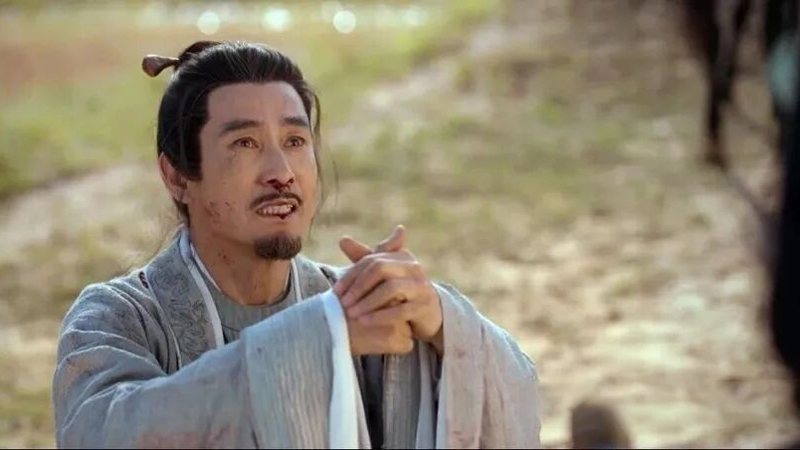
In the drama Fate Chooses You (佳偶天成), a scholar named Taishi Qian (太史钱) swallows pills that wreck his heart, copies ancient texts with his own blood, and finally kneels on a dusty road before collapsing dead. He does all this for a single set of scrolls called the Wushuang Milu (无双秘录). Mencius once said that if you cannot have both life and righteousness, you should give up life for righteousness. Taishi Qian’s story turns that ancient saying into a brutal, bloody reality.
But what exactly is in those scrolls that makes a man throw away his last breath? And why do the so-called immortals hunt down anyone who touches them? The answer lies not in some magical power, but in something far more ordinary—and far more dangerous: human skill.
The Forbidden Scrolls
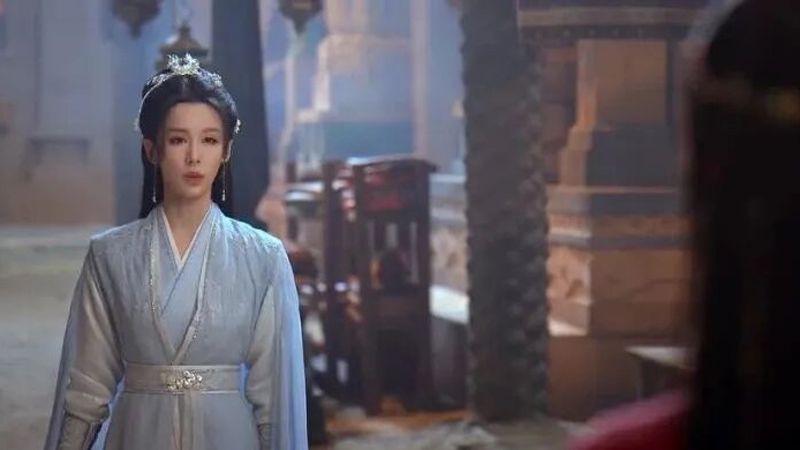
Legend says the Wushuang Milu was written by a human goddess. It contains no spells or divine secrets. Instead, it teaches astronomy, mathematics, engineering, and poetry. One page describes how to build a giant flying boat that once landed in Bei Xiang (北襄). Another page explains the Linglong Baocheng (玲珑宝城), a small box that somehow holds an entire city’s worth of people. When Lu Qianqiao (陆千乔) shows this box to Xin Mei (辛湄), she gasps in wonder. It is pure human ingenuity—no gods, no immortals, just brains and hands.
Why would anyone kill for a textbook? Because the Xian Men (仙门), or Immortal Sect, rules by keeping humans weak. If humans learn to build flying boats and compact cities, they no longer need immortals for protection or trade. The Xian Men leaders understand this threat very well. They stole most copies of the Wushuang Milu centuries ago and burned every human village that dared to teach its lessons. But one complete set still sits locked inside the Sihe Shuku (四合书库) in Bei Xiang. And that is where Taishi Qian and his friends from the Wushuang Hui (无双会) set their sights.
The Xian Men call the Wushuang Hui “demons.” But watch how the immortals behave in the drama. They slaughter unarmed scribes. They set fire to libraries. They chase down fleeing scholars like wolves after sheep. If anyone looks like a demon here, it is not the humans. The Wushuang Milu threatens the Xian Men’s comfortable rule, so they smear its protectors as evil. Taishi Qian knows this lie. He also knows that entering the Sihe Shuku requires a priceless trade—one original artwork for one visit inside.
Copying Amid Danger
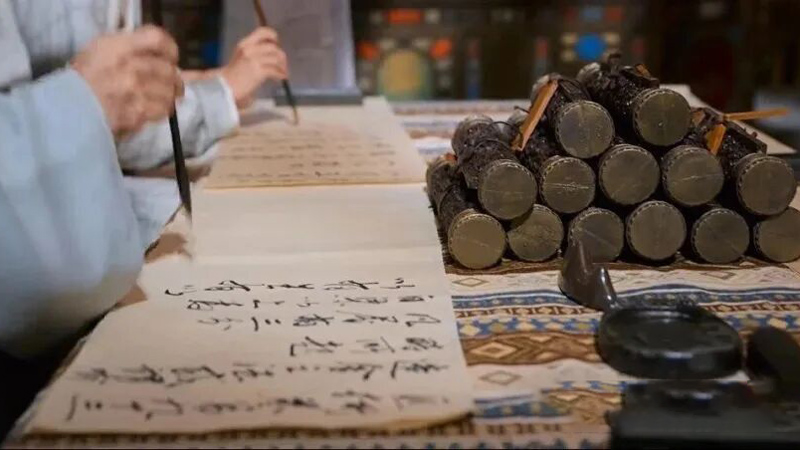
Luckily, Lu Qianqiao is a master painter. His landscape scroll buys the group a few precious hours inside the library. But no one can take a single book out. They must memorize or copy everything on the spot. Taishi Qian and his fellow scribes—Shi Wen (施温), Da Jian (大坚), and others—split into teams. One reads aloud. Two write. One checks for errors. The air smells of old paper and panic. They know the Xian Men are already on their way.
To stay awake and focused, they take Xingnao Wan (兴脑丸), a stimulant that sharpens the mind but destroys the heart. The pills work at first. Hands fly across paper. Characters appear in neat rows. But then Shi Wen’s nose starts bleeding. Da Jian’s hand shakes. Taishi Qian ignores the pain in his chest and keeps writing. When the ink runs out, he bites his own finger and uses blood. He tells the others, “We only need to finish one complete copy. After that, let the immortals come.”
The Xian Men arrive faster than expected. Led by Bai Zongying (白宗英) of the Tianyuan Sect (天元派), they set the Sihe Shuku on fire. Lu Qianqiao, Xin Mei, A Sheng (阿笙), and Meishan Jun (眉山君) fight outside to buy time. Inside, Taishi Qian refuses to run. He grabs the half-finished copy and shouts, “Keep writing! Even if we die, the book lives!” The smoke grows thick. Pages catch fire. But they manage to escape with a damaged but readable manuscript. They hide in a tea house and continue copying through the night. Outside, swords clash. Inside, brushes scratch against paper soaked with sweat and blood.
His Last Kneel
The Xian Men track them to the tea house. More scribes fall. Bai Zongying’s men show no mercy—they stab a young copyist who begs for his life. Taishi Qian gathers the surviving pages and runs toward the road leading south to the Central Plains. His heart feels like a cracked bell. Every step sends spikes of pain up his neck. He knows the Xingnao Wan has ruptured something inside him. But he does not stop. He cannot stop. The book is not finished, but what he carries is enough for another scholar to rebuild the rest.
Meishan Jun (眉山君) catches up with him on a muddy path. Taishi Qian suddenly turns around and drops to his knees. The wet dirt soaks through his robes. He holds out the bundle of scrolls with both hands. His voice comes out weak and wet with blood. “Please,” he says. “Take this to the Central Plains. Do not let it burn. Promise me.” Meishan Jun tries to pull him up, but Taishi Qian shakes his head. “I am already dead. I just haven’t fallen yet.” Then his hands drop. His eyes stay open. He dies kneeling on that road, still facing south.
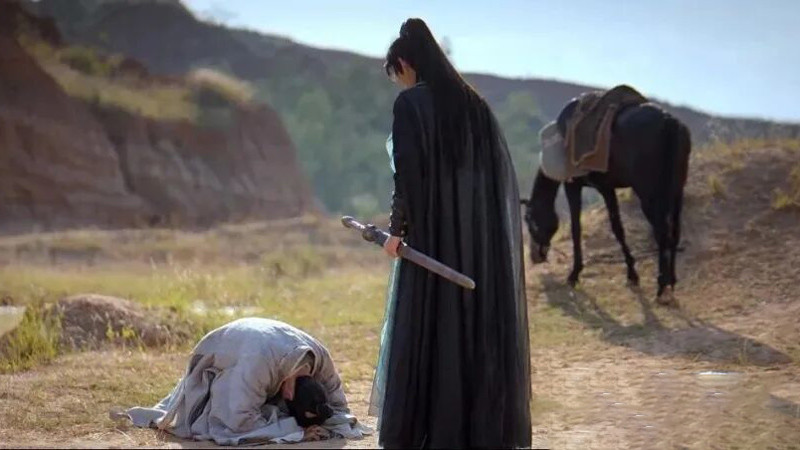
What makes a man choose that end? Not a grand speech about honor. Not a reward or a statue. Taishi Qian does it because he has seen what happens when humans stay ignorant. He has watched the Xian Men treat his people like cattle. The Wushuang Milu is not a weapon. It is a key. A key to building, thinking, and standing on your own two feet. When he kneels in the mud, he is not begging for his life. He is handing that key to the next person. And that is what the Xian Men fear most—not one dead scribe, but a thousand living ones who will finish his work. In the end, the immortals look like monsters, and a bleeding scholar looks like a true human being.
