

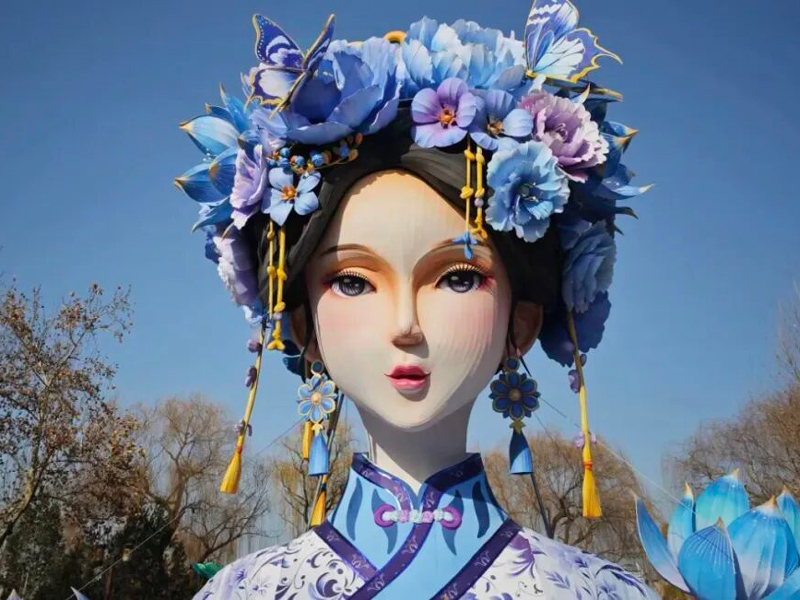
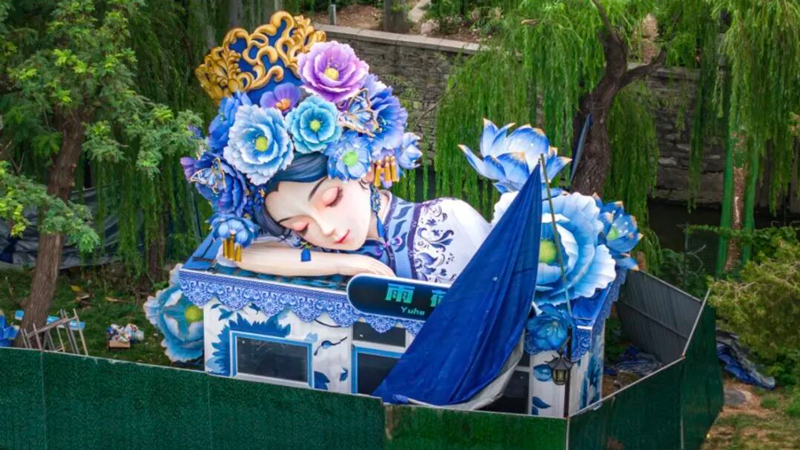
Why does the city of Jinan (济南) ignore its real historical giants and instead embrace Xia Yuhe (夏雨荷), a fictional character from the TV drama My Fair Princess (还珠格格)? Recent tourism campaigns in Jinan have featured cheerleaders dressed in Qing dynasty costumes as Xia Yuhe, plus a giant installation of her at a scenic spot. The backlash was swift.
Local netizens asked: “Doesn’t Jinan have any real cultural celebrities? Is Li Qingzhao (李清照) not good enough?” Meanwhile, the city of Su Qian (宿迁) used actor He Rundong (何润东) to promote the historical hero Xiang Yu (项羽), drawing sharp contrast. Jinan sits on a goldmine of authentic heritage but begs for a fictional princess. Why?
Fake vs. Real
The core of the dispute is about cultural identity and dignity. Jinan is the heart of Qi-Lu (齐鲁) culture, a region rich with millennia of philosophy, poetry, and loyalty. Using a made-up Qing dynasty “gege” (格格, princess) not only wastes these resources but also distorts the city’s true spirit. This character has no historical tie to Jinan; her tragic, romantic persona clashes with the upright, heroic ethos of Qi-Lu. What makes it worse? The costume includes hairpin flower elements that aren’t even from local tradition. It’s a hodgepodge of stereotypes, not a tribute.
Compare this with Su Qian, where He Rundong portrayed Xiang Yu – the legendary “Hegemon-King of Western Chu” – during a sports event. That image fits the city’s history and resonates with local pride. No confusion, no offense. Jinan’s approach, however, signals a deep insecurity: instead of trusting its own rich past, it chases a fleeting TV trend. The result is a cultural mismatch that makes the city look out of touch with its own roots.
Why does this matter? Because tourism campaigns shape how millions perceive a city. If Jinan pushes Xia Yuhe as its face, visitors might think Qing dynasty costumes and fictional romance are what the city stands for. They would miss the real treasures: the ancient sage-king, the father of Chinese medicine, the greatest poets of the Song dynasty, and a loyal general who became a folk god. That’s not just a missed opportunity – it’s a cultural betrayal.
Jinan’s True Giants
Let’s talk about who Jinan actually owns. The legendary sage-king Da Shun (大舜) once farmed on Li Shan (历山) (today’s Qianfo (千佛) Mountain). His wells and road names still mark the city, embedding filial piety and virtue into Jinan’s soil. Then there’s Bian Que (扁鹊), the father of Chinese pulse diagnosis, born in Changqing (长清). His four diagnostic methods – looking, listening, asking, and feeling – remain the backbone of traditional Chinese medicine. These are not minor figures; they are civilizational pillars.
And how about the “Two Ans of Jinan”? Li Qingzhao (李清照) and Xin Qiji (辛弃疾) – the former from Zhang Qiu (章丘), the latter from Li Cheng (历城). She wrote “I often remember sunset at Creek Pavilion, drunk and not knowing the way back,” capturing Jinan’s lyrical waters. He roared, “Drunk, I flick the lamp to see my sword; dreaming, I hear bugles from camp to camp,” embodying his fierce loyalty. The Shuyu (漱玉) Temple by Baotu (趵突) Spring and the Jiaxuan (稼轩) Temple are living memorials. Why trade these for a TV princess?
Wait, there’s more. The Tang dynasty general Qin Qiong (秦琼), also from Li Cheng, became a prototype for door gods – his righteous image still guards homes during Lunar New Year. Prime minister Fang Xuanling (房玄龄), from Zhang Qiu’s Xianggong Village, gave us the phrase “Fang’s plans and Du’s decisions.” And the Song dynasty scholar Zeng Gong (曾巩), while governing Jinan, dredged Daming Lake and named Baotu Spring. Even the modern writer Lao She (老舍) taught here and wrote “Jinan’s Winter,” making “warm and sunny” the city’s weather signature. All these figures are deeply bound to Jinan. They each could become a unique, authentic IP. Instead, Jinan chose a ghost.
A Painful History
Let’s not forget what the Qing dynasty actually meant for Jinan. In the late Ming, during the Chongzhen era (1628-1644), Qing forces broke through the Great Wall and swept south. From 1638 to 1639, Dorgon led the army to besiege Jinan. After its fall, the invaders allowed three full days of slaughter. The Ming Shilu (明实录) records that the Shandong surveillance commissioner later buried over 130,000 corpses inside the city alone. The actual death toll may have reached hundreds of thousands. Women suffered unspeakable horrors. This is not ancient abstraction – it is a scar on Jinan’s flesh. To dress the city in Qing costumes for a cheerful tourism gimmick is not just ignorant; it is deeply disrespectful.
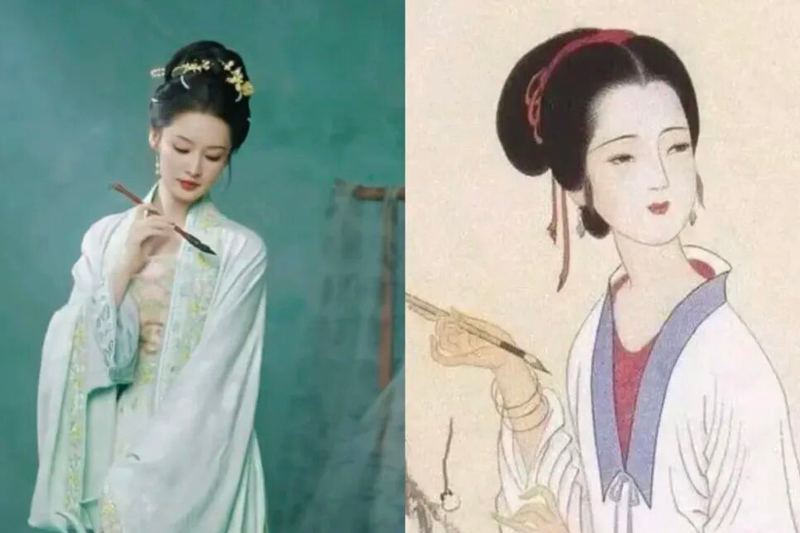
So what should Jinan do? Instead of chasing a fictional character in Qing attire, the city should dig into its own Song dynasty elegance. Imagine a cultural IP built around Li Qingzhao and Xin Qiji – not as cheap cosplay, but as authentic Song dynasty literati. Their poetry gives you the clothing style: refined robes, simple hair ornaments, and a spirit of defiance or melancholy that matches their work. That would be unique to Jinan. No other city can claim the “Two Ans.” That is a competitive advantage that requires zero invention – only respect.
This lesson applies to every city racing to create a “costume IP” for tourism. You cannot just grab any hot drama or any pretty dress. The costume must grow from local history, from real people, from genuine events. Otherwise, you end up with a hollow spectacle that confuses visitors and insults ancestors. Jinan’s mistake is a warning: cultural confidence means believing that your own stories – even the painful ones – are worth more than a borrowed fantasy. The city has a mountain of gold under its feet. It’s time to stop begging for a fake princess and start building a real legacy.
