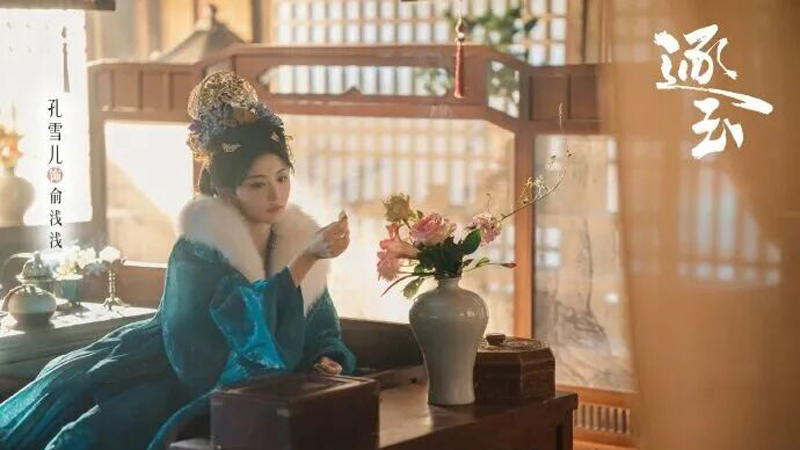
In the captivating drama Pursuit of Jade (逐玉), the character Yu Qianqian presents a fascinating puzzle. She is a clever woman with money and a son, yet she lives in constant fear of a man named Sui Yuanhuai (随元淮). Her deepest wish is to evade him forever. However, her actions seem to contradict this goal entirely. Instead of hiding in the shadows, she makes the bold and public decision to open a bustling restaurant. Why would someone so afraid take such a visible risk?
The answer lies not in a lack of fear, but in the very fabric of her identity. Yu Qianqian (俞浅浅) is not just a resident of the ancient world depicted in the series; she is a time-traveler, and it is her modern mindset that ultimately dictates her choices, leading her both to freedom and directly back into the path of the man she dreads.
The Double-Edged Sword of a Modern Mind
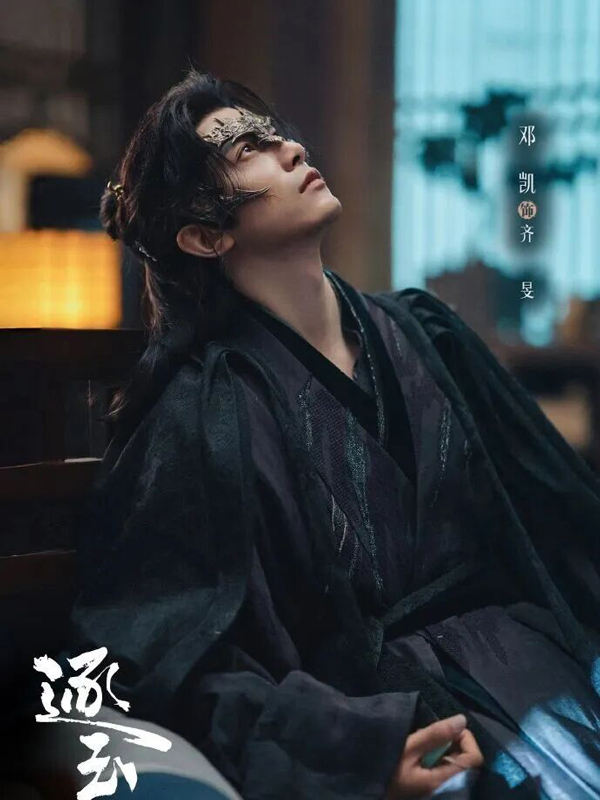
Yu Qianqian’s initial victory over her captor is a direct result of her contemporary thinking. When she first arrived in the past, she used modern first-aid—chest compressions—to save a drowning Sui Yuanhuai. This act, born of her own world's knowledge, ironically bound her to him. He became obsessed and imprisoned her. But it was her modern psychology that enabled her escape. She understood the power of performance, feigning submission to lull him into a false sense of security. This clever ruse was a product of a mind that refused to accept captivity as a permanent state. It was a plan born of the belief in personal freedom, an idea deeply ingrained in her original time. This initial success reinforced her trust in her own modern judgment, a trust that would later prove to be her undoing.

Her modern reasoning led her to believe she was safe. From her perspective, a man's obsessive love, especially in an ancient society with few legal constraints on men, was unlikely to last. She calculated that Sui Yuanhuai's passion, like a modern fling, would fade with time and distance. She purposely left misleading clues suggesting she had fled beyond the border, knowing that in an era without instant communication or digital records, this trail would grow cold.
For years, her logic seemed flawless. She and her son lived in peace, convinced that the past was behind them. She measured his potential feelings by the standards of her own world, where few men pine for years, failing to grasp that she was dealing with a deeply obsessive individual shaped by a different era's psychology.
The Unbearable Stagnation of an Ancient Life
While fear of discovery was a constant shadow, another powerful force was at play: sheer boredom. Yu Qianqian, a woman accustomed to the sensory overload of modern life, found the quiet, isolated existence of a fugitive to be a profound psychological burden. The world she was hiding in lacked the constant stimulation she once took for granted. There was no internet to scroll through, no television for evening entertainment, no simple pleasure of browsing in a shop or texting a friend. The silence and monotony of a life spent behind closed doors with only a young child for company was its own form of prison, one that chipped away at her spirit in ways her fear of Sui Yuanhuai could not.
For Yu Qianqian, opening the restaurant was not merely a business venture; it was a lifeline. It was a way to inject color, noise, and purpose back into her days. The bustling environment of a Gufeng (古风) eatery, with its diverse customers, complex logistics, and daily challenges, became her substitute for the vibrant world she had lost. It allowed her to engage with people, to solve problems, and to feel a sense of agency and accomplishment. This need for a stimulating life, a core part of her modern identity, ultimately overrode her caution. She craved the very social interaction that putting down roots in a community would inevitably bring, underestimating how quickly news of a unique, attractive businesswoman would travel.
A Mother's Hope for a Normal Life
Beyond her own needs, the most compelling reason for Yu Qianqian to step out of the shadows was her son. In her modern understanding, a child’s healthy development hinges on socialization. She knew that a boy raised in hiding, isolated from peers and the normal interactions of childhood, would be psychologically stunted. She had witnessed the intensity, the "madness," of Sui Yuanhuai and was terrified her son might inherit not just his genes, but his antisocial tendencies if raised in a similar vacuum. She believed that only by immersing him in a community could he learn empathy, friendship, and how to be a well-adjusted individual.

This maternal instinct, filtered through her modern lens, was powerful. She envisioned a future for her son that was the opposite of his father's isolated obsession. The restaurant, therefore, was her solution. It would be his classroom, his playground, and his introduction to the world. He would see people, talk to them, and become a part of the fabric of daily life. Her desire to give her son a "normal" childhood was so strong that it blinded her to the fundamental risk. She prioritized his long-term mental health over their immediate physical safety, a deeply modern and humane choice that, tragically, led directly to the exposure of their whereabouts and the return of the danger she had tried so hard to outrun.