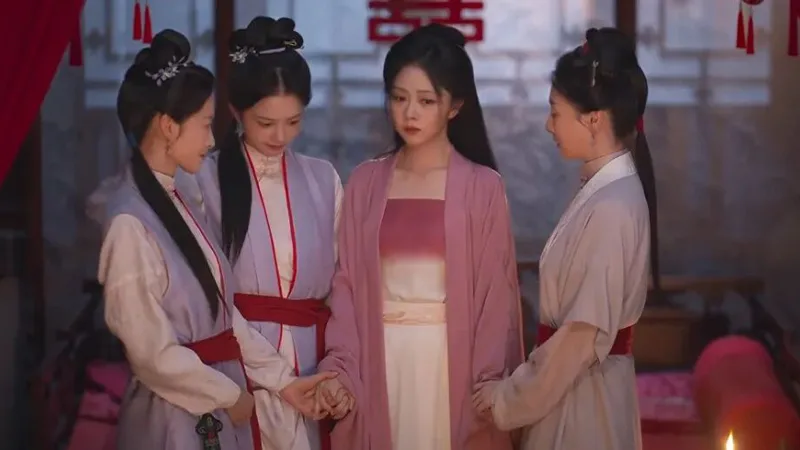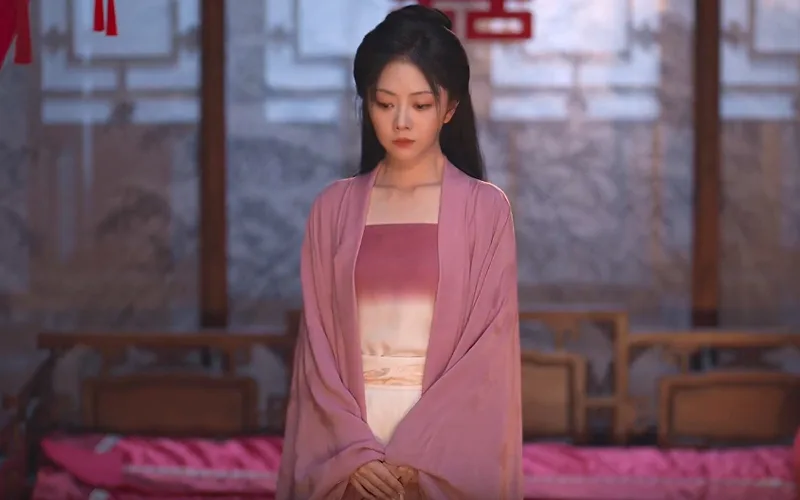
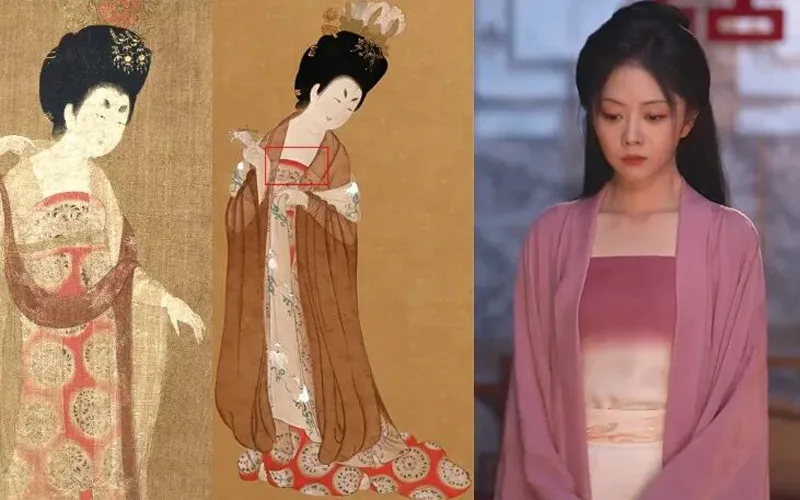
In Against the Current (兰香如故), a wedding-night scene gives Xu Lanxiang (许兰香) a nightgown that shifts from deep rose at the chest to pale pink, then to creamy white near the waist. Viewers may wonder whether such fabric could exist in ancient China. The answer is yes, though not as a factory-made modern gradient. Historical textiles used careful resist dyeing and loom work to create soft color changes.
The show does not copy one relic; it reshapes an old visual language for the camera. That choice makes the scene memorable, and it also opens a window into real textile skill. A plain red robe would have been safer, but this gown gives the bride a private weather. The question is not whether a modern factory could dye that cloth, but whether old hands could guide color across a surface with control. They could. It is a small costume decision with a long technical shadow.
Old Shade Tricks
Chinese weavers and dyers had a term for shade-grading, sometimes called fading shade. One family of methods worked on finished cloth. Tie-resist dyeing bunched or stitched fabric before it entered the dye bath; the tied areas took less color, and the loosened cloth showed gentle edges. Clamp resist used carved boards to hold sharp patterns, with slight color bleed near motif borders. Wax resist hid color inside crack lines, so its shading looked broken rather than smooth. These methods did not need modern chemical gradients. They relied on pressure, wax, thread, and timing. A dyer could control the softness of each step by changing how tightly the cloth was bound and how long it stayed wet. A pale edge could appear where the cloth was folded, and a deeper center could stay dark. The dyer’s aim was not a perfect mechanical fade but a readable change.
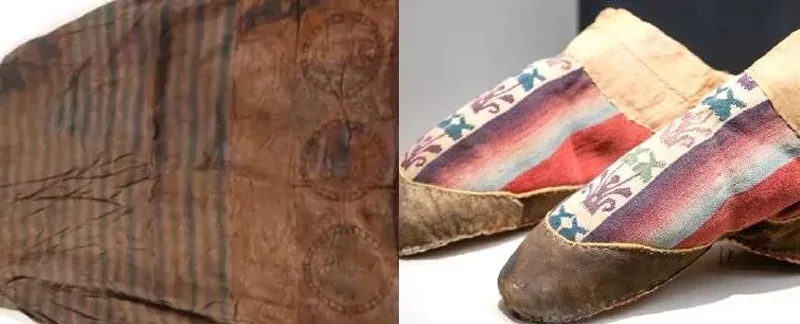
A second family built color into the weave. Silk tapestry could shift hue thread by thread, producing a flat, fine transition. Patterned silk with colored warps arranged different dyed threads before weaving, and warp-bundled resist dyeing tied sections of the warp before loom work. The surface looked planned, not painted. Such cloth cost time and skill, so it belonged to special garments and high-status settings. The drama’s nightgown borrows this logic: color moves in steps, but the eye reads a river of shade. The method also explains why ancient gradients often look quieter than digital ones. Cloth has grain, thread has thickness, and light catches small changes. Woven shading also made the back and front behave differently, which mattered when a robe moved. That is why the gown looks rich rather than printed.
Early examples reach back before the Tang Dynasty. Pre-Qin dyeing was rough and mostly local. Cloth found in Xinjiang (新疆) shows early resist marks. By the Han and Jin periods, Niya (尼雅) graves yielded footwear with smooth woven shading. Tang craftsmen made delicate tie-dyed silk; examples from Astana (阿斯塔那) look surprisingly close to modern tie-dye. Tomb paintings and Court Ladies Adorning Their Hair with Flowers (簪花仕女图) by Zhou Fang (周昉) show dresses with red-pink transitions. Later dynasties kept both paths alive: silk tapestry and brocade used woven shading, while folk cloth kept resist dyeing. Southwest communities carried tie-resist skills into the present, so the old shade logic never fully vanished. The record is not one straight line; it is a set of regional habits and court tastes. Each object supports the claim that graded color was known, used, and admired.
Camera Choices
Why not dress the bride in plain red? First, the gown carries feeling. Xu Lanxiang marries by imperial order, not by free choice. She brings old attachments, grief, and unease into the bridal chamber. Deep red at the chest reads as ceremony; pale ends read as private hurt. The fabric says what dialogue cannot: joy is the public script, while doubt runs underneath. A single red robe would flatten that tension into one loud signal. The gradient lets the costume hold two moods at once, and viewers can read the conflict without a line of explanation. The nightgown also marks the gap between public ritual and private thought.
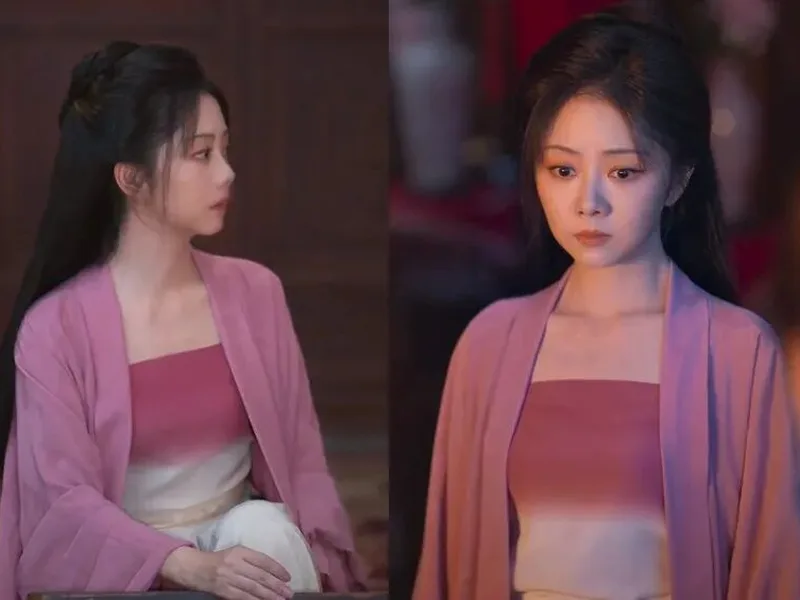
Second, the camera needs separation. The room glows with warm red light, candles, and heavy curtains. A solid red dress would merge into that field. A graded surface gives the lens dark and light zones; candlelight slides across the cloth and shapes the body. The viewer finds the figure at once, and the frame gains depth without extra props. This is practical design, not empty decoration. Costume, light, and lens work as one system, and the nightgown becomes a soft spotlight in a crowded warm scene. The audience’s eye follows the pale hem first, then moves up to the face. Without that contrast, the bride would become part of the wallpaper.
Third, memory matters. Earlier costume dramas rarely gave a bridal nightgown such a clear color path. The show uses a shape and shade pattern that sticks in the mind. It is not a museum copy; it adjusts the old shade-grading idea, smooths the steps, and makes the color even enough for close shots. The result feels ancient in logic and modern in finish. Does it look good? That depends on taste, but it does make a quiet scene speak. A costume can be accurate and still fail on camera; this one chooses mood, shape, and recall over literal reconstruction. That balance explains why the scene feels staged yet intimate. Viewers remember the color path after the plot beat fades.