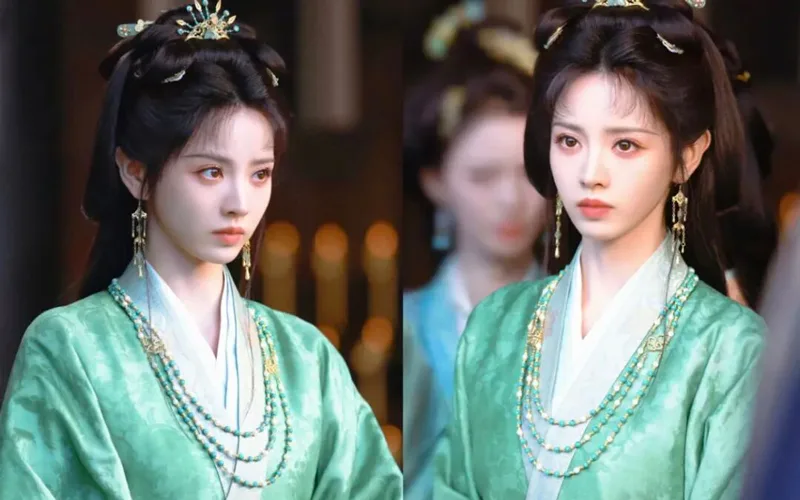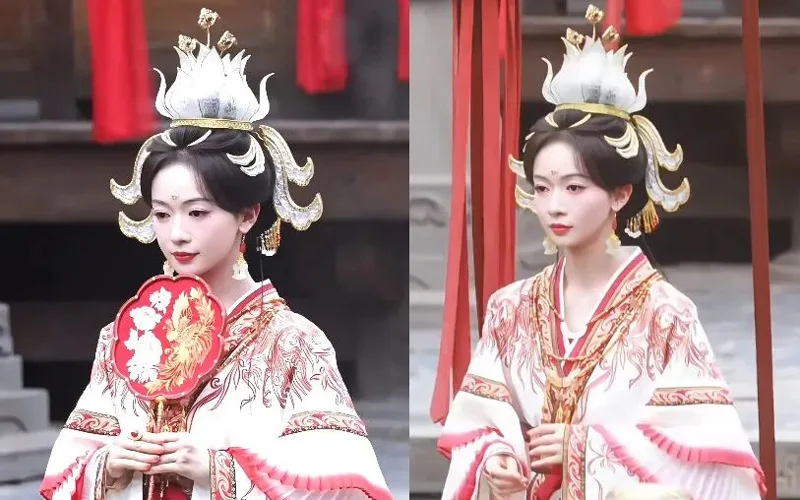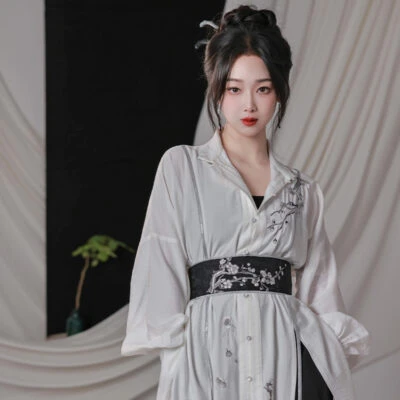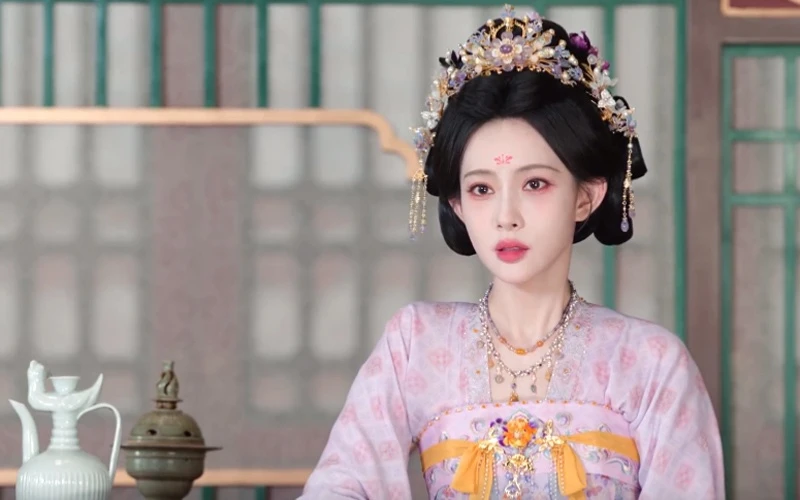
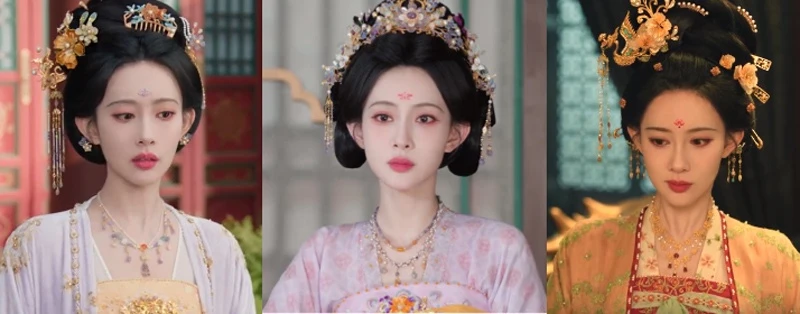
In Tigers Sniff the Rose (尚公主), she wears dense bead flowers, swaying hairpins, and rich neckpieces. Her ears, however, stay bare—no hoops, no drops, not even a tiny stud. Some viewers read this as a styling gap. It is not. The drama builds its look around Tang-era Han dress, and formal Han beauty in that period often skipped pierced ears. The bare ear is a quiet period signal, not a missing accessory. The show even places beads and pins near her temples to create a soft ear-side shimmer. Costume design can omit an accessory and still look complete when the silhouette is strong. That choice raises a better question: why did earrings fall outside so many Tang wardrobes?
Tang Style Rules
Tang fashion did not treat earrings as a must for Han women. Modern viewers often imagine every ancient noblewoman with pierced ears and swinging gold. Historical images are less tidy. In surviving Tang paintings, Han female figures usually have plain ears; earrings show up more often on foreign attendants, dancers, and traders. A bare ear therefore fits a Han aristocratic character in a Tang-style drama. It also keeps the face clean, letting the hairpins and necklaces carry the visual weight. Necklaces and hairpins already fill the frame; extra earrings would crowd it.
Ear piercing itself is old. Neolithic remains show the practice, and early royal tombs have yielded jade ear ornaments. Under early imperial ritual codes, Central Plains nobles moved away from piercing. Jade ear pieces became pendants or dress attachments. An Eastern Han text noted that pierced ear plugs were not a Central Plains custom. The body was expected to stay whole; ornament found other routes. Ritual texts favored covered ears over pierced skin.
Han women used a hairpin ear ornament: a bead or jade piece tied to one end of a hairpin, with the pin fixed in the bun and the bead hanging beside the ear. No hole was needed. Many “ear plugs” in Central Plains tombs were likely attachments to this hairpin system, not objects pushed through flesh. The effect was gentle motion near the cheek—close to an earring’s charm, but built from hairpins and cords. The ornament moved with the head, not the body.
Earring History
During the Wei-Jin period, migration and northern customs brought more pierced plugs and gold pendants into Central Plains fashion. The map was uneven. Southern elite families kept old ritual dress, where hairpin ear ornaments remained formal and earrings stayed outside official wear. Northern noblewomen, shaped by steppe customs, wore pendants more often. Fashion was not one river; it was many streams with different banks. Trade routes and court alliances carried objects as well as people.
Sui and Tang courts largely continued the Central Plains ritual line. Extant Tang paintings support this: Han women usually appear without earrings, while earring wearers are mostly foreign maids or performers. Near the late Tang, taste loosened. More Central Plains women began to wear earrings, preparing the ground for a broader shift. Still, the high Tang look did not depend on pierced ears. It relied on hair, cloth, gold, and stone. A single accessory can mark who belongs inside a court and who performs at its edge.
Song etiquette changed the rule. Earrings became part of a woman’s composed appearance. Empresses, titled wives, and ordinary women wore them. Later imperial eras kept the habit, so earrings stopped looking foreign or minor. Once that happened, the bare ear of an earlier Tang lady could seem strange to later eyes. The drama simply restores an older norm. The shift was slow, but it stuck.
Other Missing Pieces
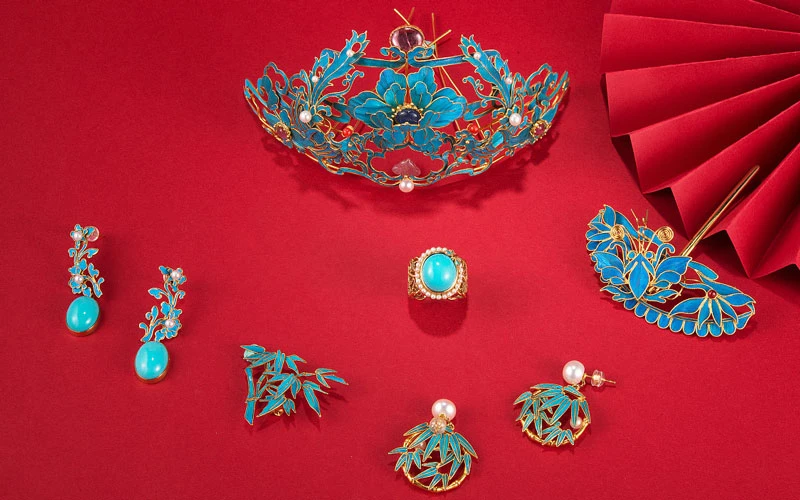
Earrings were not the only later favorite absent from Tang daily dress. Rings existed in gold and jade, but Central Plains women seldom used them as everyday decoration. Foreign wearers and seal rings explain many finds. Jade rings could also serve as seals, marking authority rather than vanity. Rings became common in Song and Yuan life, then spread widely in late imperial eras. Tang elite women put hand ornament elsewhere: arm bracelets, bangles, and wide wrist bands.
The phoenix crown is another later system. Tang empress formal dress used a flower-tree crown, built around flower trees, jeweled plaques, and side wings. The full dragon-phoenix crown took shape in Song from flower-hairpin crowns. Kingfisher-feather inlay also matured later. Tang workshops favored gilding, gem setting, and gold-with-jade work; feather appeared as a small accent. The carved-metal, feather-filled technique reached its peak in late imperial eras, not in Tang. Each era leaves a different fingerprint on metal.
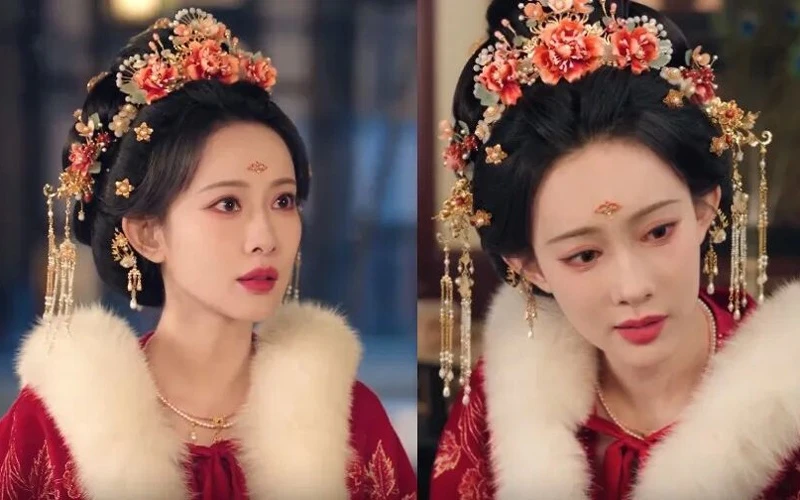
So the bare ears in Tigers Sniff the Rose are historically grounded. Some costumes place bead flowers or dangling pins at the temples, making the eye read “ear-side decoration” without metal on the lobe. The result is clean, regal, and slightly unusual for viewers trained by later costume dramas. The bare lobe lets the face breathe. Does the earring-free look work for you?