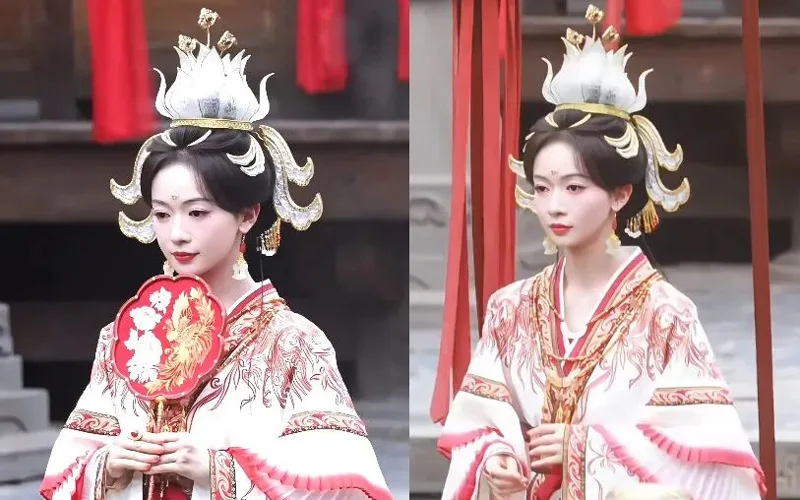
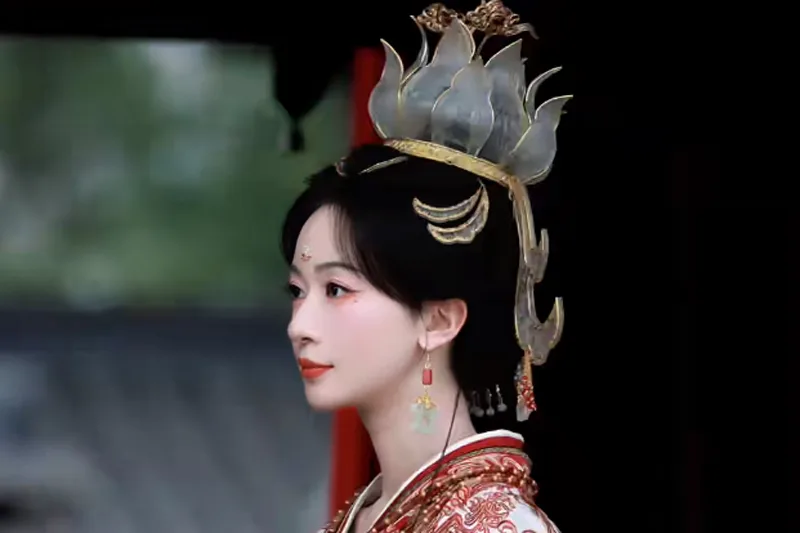
Behind-the-scenes photos from Wu Jinyan’s (吴谨言) new drama Feng Bu Qi (凤不栖) have sparked curiosity. In a wedding scene, she wears a silver-white lotus crown with side ornaments, a wide-sleeved robe with a white base and red patterns, and holds a red round fan embroidered with a golden phoenix. This styling differs sharply from typical ancient drama weddings.
Why so strange? The drama adapts the novel Di Huang (帝凰) in a fictional setting. Wu plays heroine Qin Changge (秦长歌). Overall makeup and costumes reference the Wei, Jin, Southern and Northern Dynasties. At that time, no fixed wedding uniform rules like “red groom, green bride” or “phoenix crown and rosy cape” existed. Brides mostly wore daily ceremonial robes with popular accessories. This explains part of the oddity.
Lotus Crown Symbolism
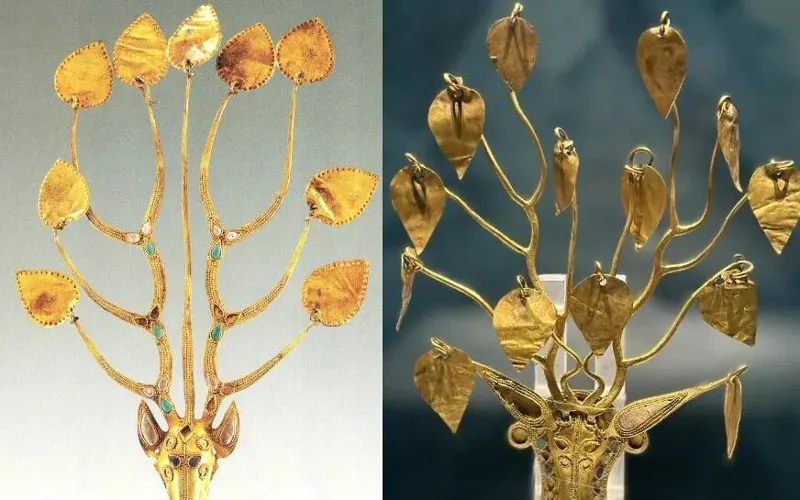
For Han noblewomen in that era, wedding hair often used false buns as a base, decorated with step-shake ornaments, gold flowers, hairpins, and forehead floral patches. Eastern Palace Old Stories (东宫旧事) lists step-shake items in a crown prince’s bride dowry. Book of Jin (晋书) records noblewomen favoring false buns for grand occasions. Northern nobles preferred step-shake crowns covered with dangling leaves. Baotou (包头) in Inner Mongolia yielded several gold step-shake crowns, possibly dowries from interethnic marriages. But why a lotus crown for a wedding?
During the Southern and Northern Dynasties, royal courts promoted Buddhism. Lotus motifs appeared widely in architecture, objects, and clothing patterns. Noblewomen’s headwear included lotus-shaped crowns. In the painting Empress Wenzhao Worshiping Buddha (文昭皇后礼佛图), the empress wears a lotus crown similar to Wu’s. The production team likely borrowed this visual cue. A lotus crown at a wedding may look unusual today, yet it fits the period’s Buddhist-infused aesthetic and aristocratic fashion.
The lotus also carries meanings of purity and rebirth. Qin Changge in the original novel returns from fire to seek revenge. The team transplanted the lotus crown’s “nirvana” image from Buddhist worship into a wedding scene. This choice matches her “rebirth” persona and suggests her honor comes from herself, not from a husband. So the crown is not random decoration; it serves character and plot.
White Robe Choices
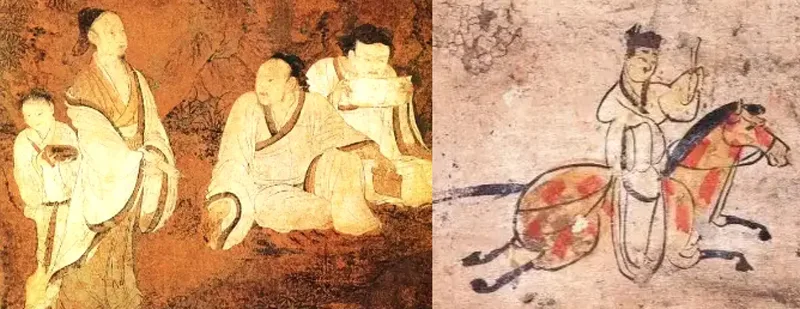
In the Wei, Jin, Southern and Northern Dynasties, a free and flowing style influenced upper-class clothing. White garments were popular. Surviving paintings and excavated murals show many white outfits. Shen Congwen (沈从文) noted that Six Dynasties women liked light white shirts. Eastern Palace Old Stories (东宫旧事) records a white gauze shirt for a crown prince’s bride, though scholars debate whether it was outerwear. No other wedding dress records survive. From a fashion perspective, a white wedding robe was plausible.
Wu’s robe uses white as the base, with red phoenix and scrolling grass patterns on the body and cuffs. The cuffs have pleated red edges, adding festive elements and echoing the red fan with a golden phoenix. Visually, the red-white robe pairs with the silver-white lotus crown. Color layers stand out clearly, the character’s silhouette becomes more prominent, and close-up shots gain a cold, fragile beauty.
The production team did not strictly recreate a Wei-Jin wedding look. Instead, it made artistic adjustments within period styling to serve plot and character needs, while also differentiating from other ancient dramas. So Wu’s wedding look is a creative choice, not a historical mistake. Do you find this red-white robe with a lotus crown attractive?