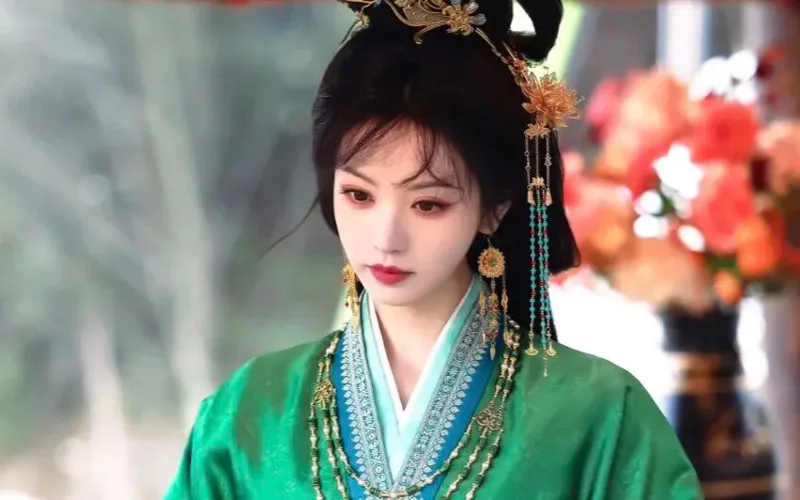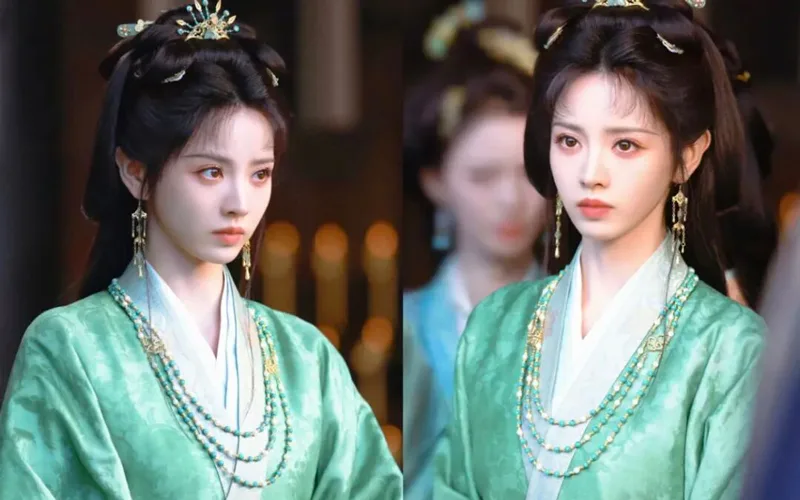
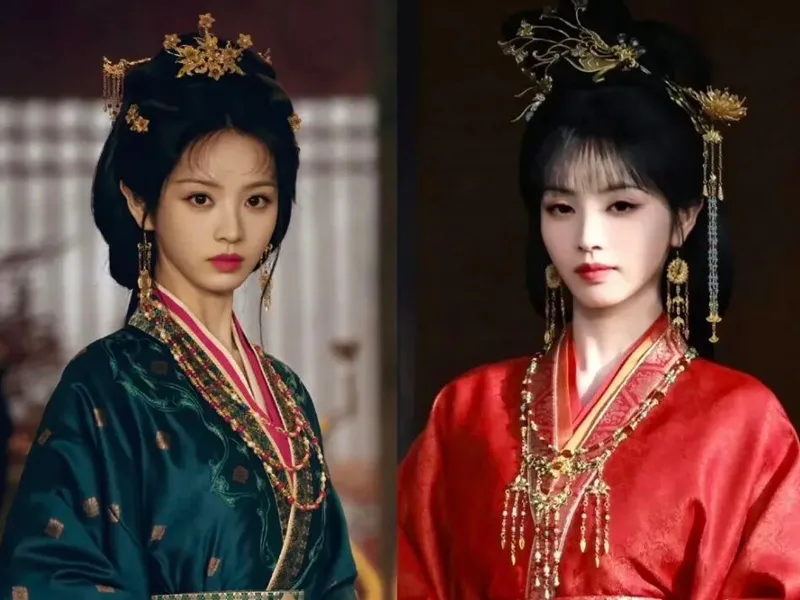
Viewers of Where the Mask Ends (嫁金钗) keep pausing on the long bead chain hanging over Tian Xiwei’s chest. Some call it a modern accessory; others insist every Han lady wore one. The truth sits between those claims. Han tombs and museums do contain beaded neck ornaments, often single-strand or multi-strand pieces. The show’s extra-long, low-slung version leans toward later soft Yingluo (璎珞) styles. Costume design has enlarged a real root for camera, character, and mood. It is not an excavation photo, and that difference matters. The necklace works as television, but it should not be mistaken for a tomb report.
Museum Proof
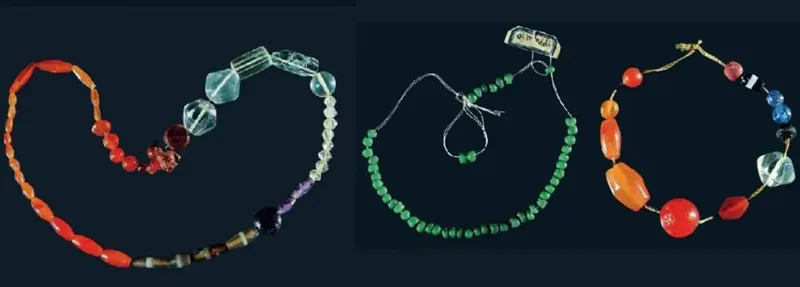
A useful starting point is the Southern Han Mausoleums Museum (南汉二陵博物馆). Its agate-and-crystal bead set reaches about forty centimeters and falls near the chest when worn. That structure is close to the “long necklace” many viewers recognize. The materials are not random either: crystal, agate, amber, and small jade pieces are strung together with care. Such objects show that neck beads were not invented by a costume team. They belonged to real dress practice, even if their scale and placement varied. The museum piece does not prove every detail on screen, but it does give the costume a material ancestor.
Other Han-era finds widen the picture. At Hepu (合浦) in Guangxi (广西) and Niya (尼雅) in Xinjiang (新疆), archaeologists have recorded mixed bead sets: agate tubes, faceted crystal, glass beads, and gold beads. Many were worn directly around the neck. Scholars often call them bead-strand neck ornaments. Their richness comes through trade, local craft, and open exchange. A screen necklace can echo this material language while still changing proportion, length, and drape for visual effect. The beads on television are cousins of the museum pieces, not duplicates.
Han women’s main clothing also shaped how jewelry worked. Deep robes such as Quju (曲裾) and Zhiju (直裾) usually covered the neckline. There was little bare skin to fill with dramatic layers. Beads served as accents. The taste was quiet: a warm jade glow, a clear crystal flash, a subtle pattern in agate. A huge chain would not have carried the same meaning as it does on television. That gap is exactly why we should separate archaeological evidence from costume storytelling. The old pieces ask for close looking; the drama asks for quick reading.
Screen Logic
Television costume has a different job. A viewer needs to read rank, emotion, and period atmosphere within seconds. A long necklace creates a vertical line, frames the face, and signals “ancient” without dialogue. It can also make a character feel wealthy, guarded, or fragile. None of those effects require exact copying. The mistake is to claim the screen image is a direct tomb record. The stronger choice is to admit the enlargement and explain its source. When a costume team knows the prototype, it can stretch it without losing the thread.
This is where clear boundaries help. Archaeologists preserve how objects were actually used. Costume designers build a visual argument for a story. Good adaptation knows the prototype, knows what was changed, and can say why. Confidence does not mean freezing every detail, nor mixing dynasties at random because the result looks pretty. It means respecting the root while allowing a controlled artistic step. The necklace can be both a Han-inspired object and a television prop. That dual life is not a flaw if the makers are honest about it.
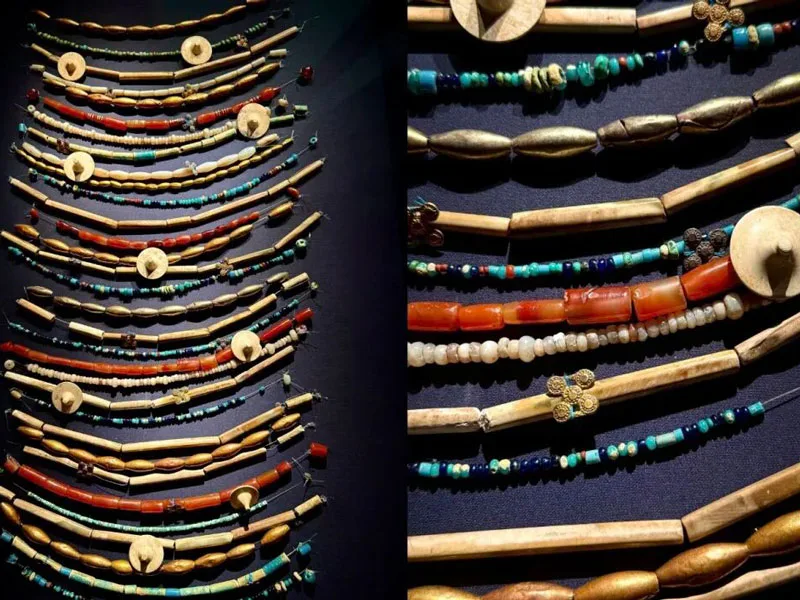
Han taste itself offers a better guide than gold pileups. It favored the material’s own light: jade’s softness, crystal’s clarity, agate’s grain. Restraint made the luxury feel personal. Some modern Guofeng (国风) accessories miss that point, adding more beads and metal until the wearer disappears. The old beads are compelling because they breathe. So enjoy the drama’s long chain, but also visit the museum case. Do you like these two-thousand-year-old bead designs? Which necklace has held your gaze longest?