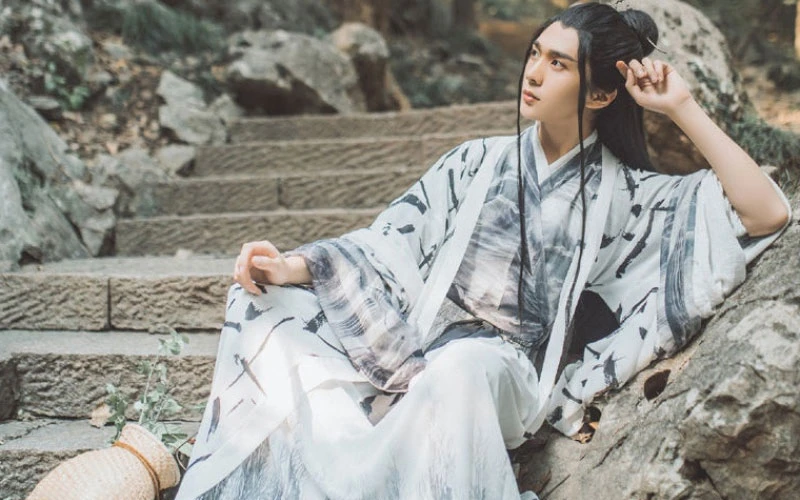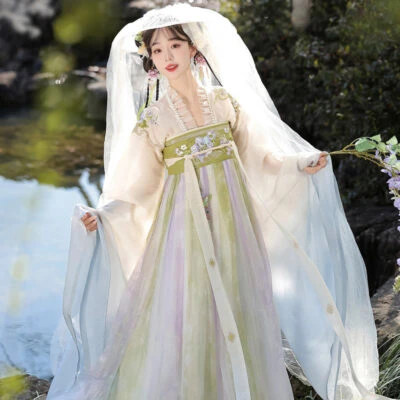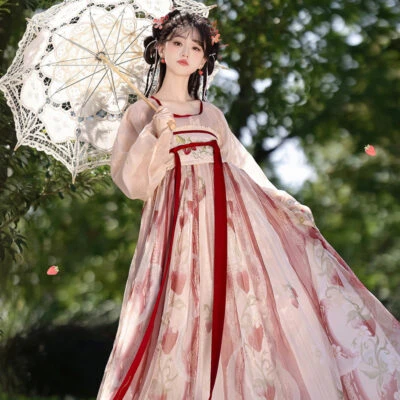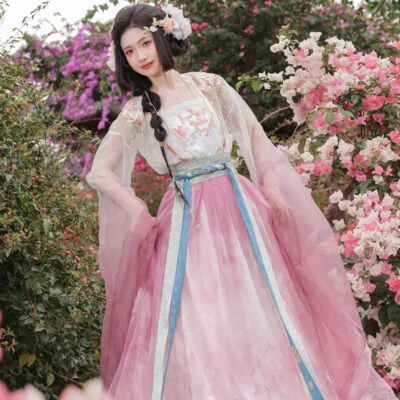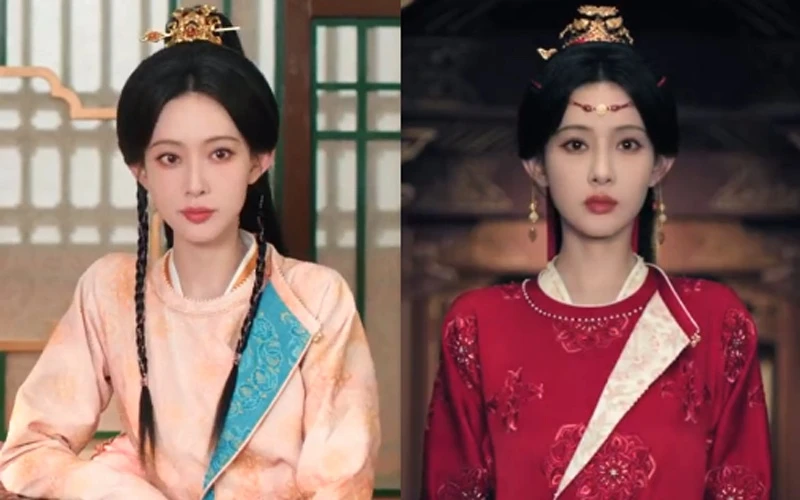
A loose collar can look like a costume mistake. In Tigers Sniff the Rose (尚公主), Meng Ziyi (孟子义) wears two outfits with one edge folded down, lining exposed, while the round-collar robe stays otherwise neat. Viewers may ask: why not fasten it? The answer sits between Tang fashion, practical dressing and camera-friendly design. This open edge is not random; it borrows a historical habit and reshapes it for television. It also gives the character a small visual hook that a fully buttoned robe would lack.
Tang Turn
The folded collar began on the steppe. Western Regions riders needed clothing that handled wind, dust and fast temperature changes. A closed collar blocked cold air; an open, turned-down edge let heat escape. That simple switch suited horseback travel and camp life. Early examples were not formal court dress. They were working clothes with flexible edges, made to move with the body. When those garments reached northern China, they carried that practical logic with them, and local wearers adapted the shape to different robes and layers.
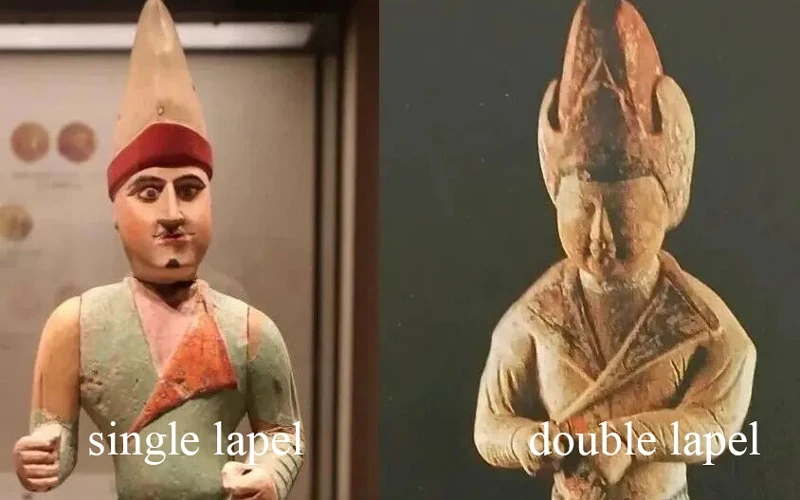
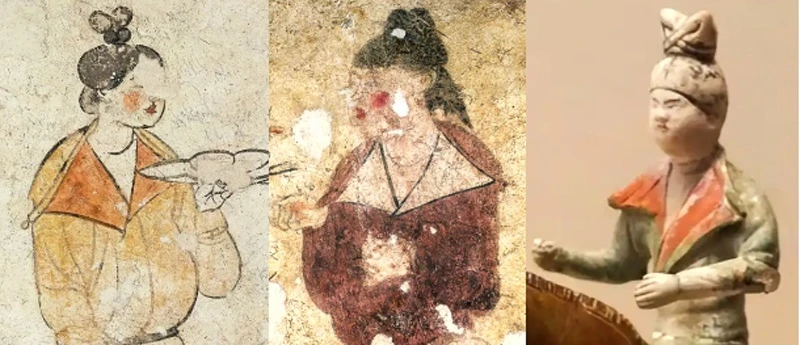
During the Wei, Jin, Southern and Northern dynasties, migration and mixing quickened. Tuoba Xianbei (拓跋鲜卑) elites began to wear folded-collar robes, and images of such figures appear in tomb murals and pottery. Under the Sui, more exchange brought the style into aristocratic circles, though it stayed a minority taste. It prepared the ground for a much wider fashion in the Tang. The collar was no longer only a riding aid; it became a sign of openness to outside dress.
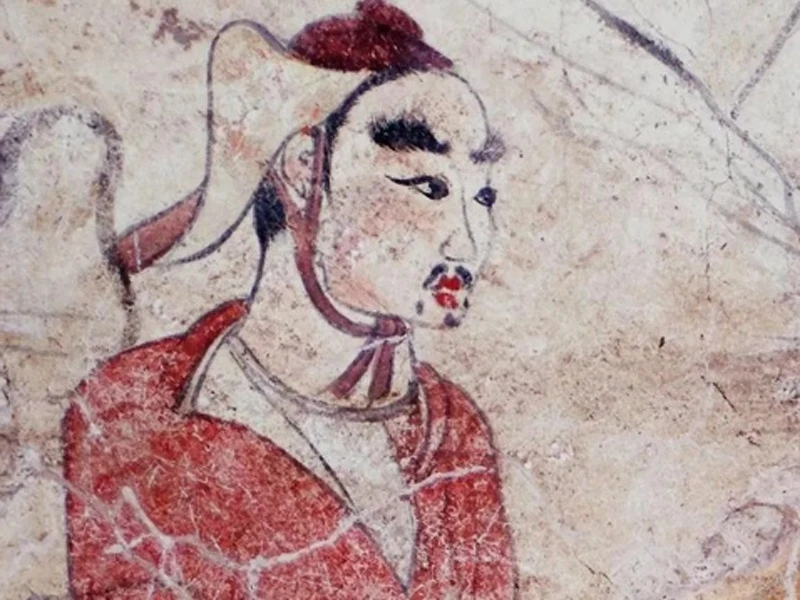
The Tang Dynasty gave the folded collar its high point. The New Tang History notes that nobles and commoners liked it. Some collars carried round floral embroidery; others used contrasting silk as lining, so the turned edge flashed with color. Murals in tombs such as Princess Yongtai (永泰) and finds of Tang figurines show attendants in folded-collar robes. After the An Lushan (安禄山) rebellion, foreign styles lost favor, and the look faded from daily dress in later dynasties, surviving only in scattered border areas.
Practical Choice
Why did Tang wearers like it? Weather mattered. A round-collar robe looked formal and secure, but it could feel stiff in mild heat. Unfastening one side or both sides let air in. On a formal day, the buttons went back; on a relaxed day, the collar opened. One garment offered two modes. The opened chest area could even serve as a loose pocket for small items, a small bonus for busy wearers. That flexibility made the style useful beyond the riding field, and it explains why the look could move across social ranks.
Color and shape also counted. Tang taste often favored strong contrast. A turned collar revealed a lining in another hue, creating a bright edge against the robe. Narrow sleeves and a clean folded line looked brisk rather than bulky. This matched a wider interest in women wearing men’s styles, with a confident, active feel. The collar was not only a fastening point; it became a visible design element. A wearer could look tidy, relaxed or bold by changing one small detail.
Trade and fashion travel together. Silk Road routes brought merchants, music, food and cosmetics into Chang’an (长安). Foreign dress entered the same stream. Poets such as Yuan Zhen (元稹) noted the vogue for foreign tastes. A folded collar fit that mood because it looked slightly foreign, easy to wear and easy to show off. It was practical, but it also carried the pleasure of mixing styles. In a busy capital, that small open edge could signal taste without a full change of costume.
Screen Design
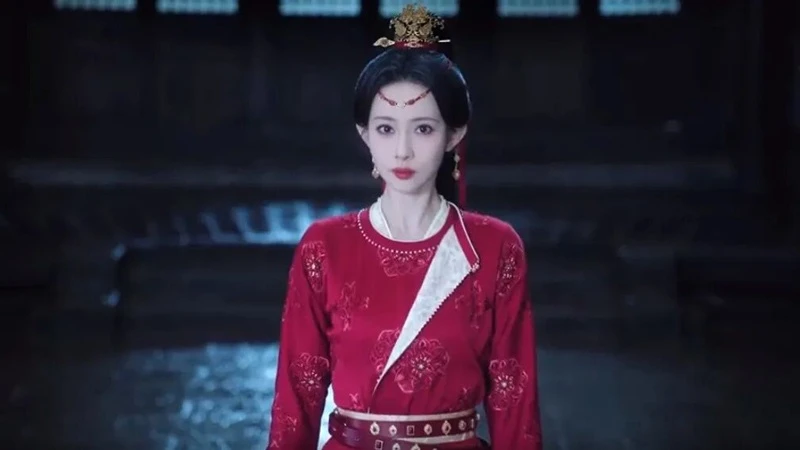
In Tigers Sniff the Rose, the open collar is a screen choice, not a strict reconstruction. Two costumes leave the edge unfolded and the lining exposed. The aim is decoration first. A contrasting inner fabric adds layers without adding heavy trim. In dim scenes, that pale or bright edge catches light and separates the actor from the background. The robe still reads as historical, but the collar does extra visual work. It also keeps the costume from looking too flat on camera.
The diagonal single fold also changes the body line. It draws the eye downward and sideways, making the neck look longer and the shoulders narrower. On camera, that line can sharpen a silhouette and make movement feel lighter. A fully buttoned collar would look correct, yet flatter. The open edge gives the character a small trace of ease and edge, even when the rest of the costume is controlled. Viewers may notice the line before they notice the history behind it.
So the missing button is not a careless slip. It links steppe practicality, Tang color play and television framing. Meng Ziyi’s folded collar may look odd to some viewers and elegant to others. That split reaction is part of the fun. Does the open edge make the costume feel more alive, or does it pull you out of the scene? Your answer may depend on whether you watch for history or for character.