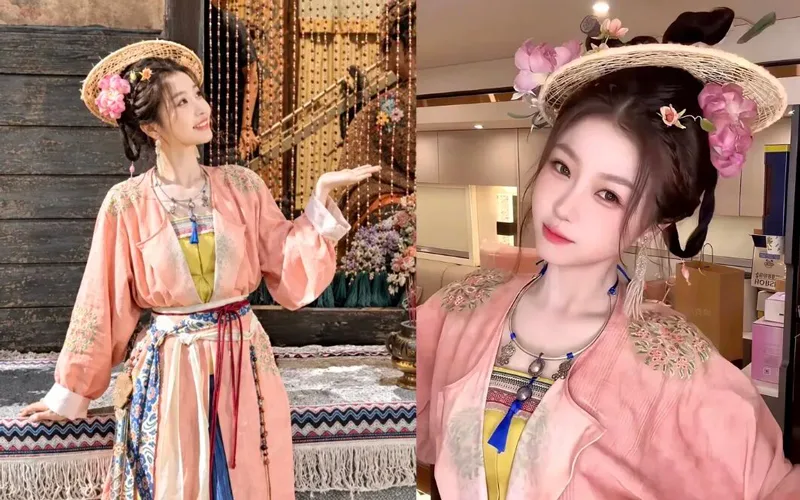
A pink costume from Chang Sheng Gu (长生骨), also listed as Nian Xiang Si (念相思), has been passed around online with unusual energy. The surprise is not luxury. It is the easy way Yu Shuxin (虞书欣) wears a Hanfu shape that many viewers file under “stage only.” Her look borrows a Tang Dynasty round-collar robe, then trims it for screen drama. The result feels less like a museum label and more like a wardrobe question: could this really leave the set and walk into a city street? That question is why the images keep travelling, and why the outfit has started a quiet chat about daily wear.
Tang Roots
The base shape is not random. In Tang times, the round-collar robe was mainstream clothing, not a rare ceremonial item. Men and women both wore it. On women, it could read sharper than many layered outfits: a neat collar, narrow sleeves, a long body, little fuss. Yu’s version keeps that clean line but softens the mood with a playful double-bun hairstyle, a yellow inner top, blue trousers, turned-back cuffs and small ornaments. The pieces are simple. Together they push the look toward youth rather than solemn history. That balance explains why reblogs spread so fast.
The so-called double-lapel detail also has a trail. A folded lapel is not a fixed rule of Hanfu. Related lapel and pleated-cuff styles often came through the western regions, with strong links to music culture around Kuqa. Tang taste was open to such foreign elements, often called Hu style. A turned collar exposes a lining and adds a layer of finish beyond the plain round collar. The drama merges two lines: the round-collar robe and the Hu lapel. Old form, new cut, and the mix lands because it does not shout.
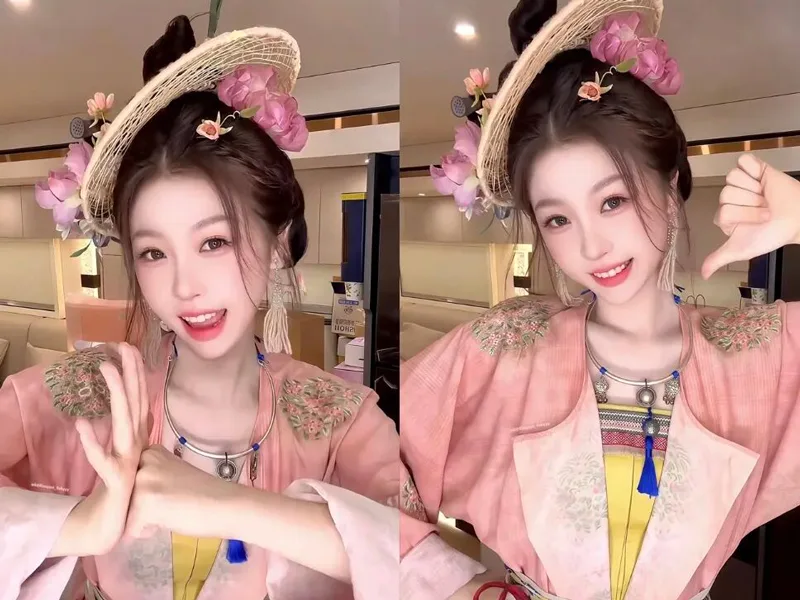
Costume design lives on this edge. Research gives the garment a spine; camera appeal gives it breath. If a show copies a historical piece too literally, the actor can vanish inside the evidence. If it ignores evidence, the look becomes generic fantasy. Here, the collar, sleeve and body keep enough Tang memory to anchor the eye, while the color blocking and styling do the storytelling. Viewers may not name the source, but they feel the difference. That is the quiet work of good screen clothing: it invites curiosity without turning the scene into a lecture.
What makes the experiment readable is restraint. The outfit does not pile on every Tang sign at once. It chooses a collar, a sleeve, a long body, then stops. The bun and inner top do period-adjacent work without turning the actor into a walking timeline. Small ornaments catch light and motion, which matters on camera. Folded cuffs break the vertical line and keep the arms lively. These are costume decisions, not history lessons. They give the audience a way in: first you notice a silhouette; later you may ask where it came from. Curiosity arrives after pleasure, which is often the better order.
Modern Wardrobe
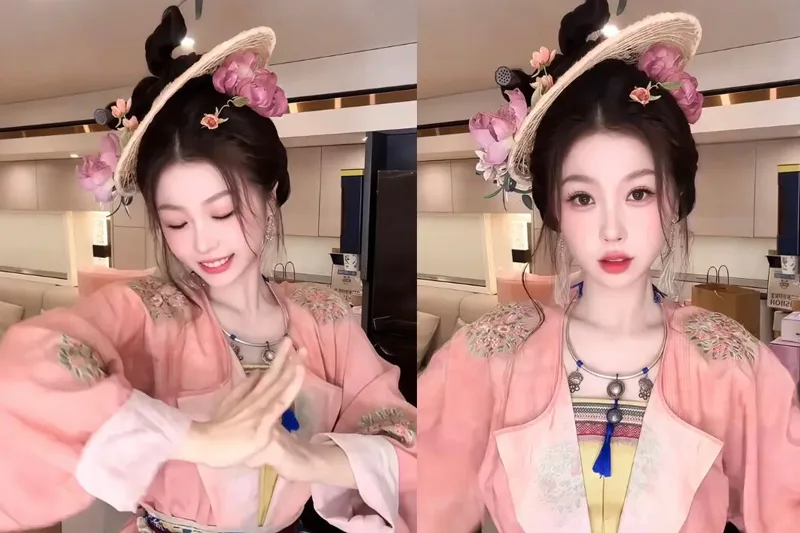
Pink matters here. In older Chinese color systems, pink was an intermediate shade, a softer space for personal choice. On a court lady it can suggest gentleness. On He Pan (何盼), a thousand-year clam spirit, it gains a sly, lively edge. The pink robe is set against blue and yellow, so the sweetness never turns sticky. The contrast gives her softness a bit of grip. That matches the character better than a purely pretty palette would. The outfit looks light, but it is not weightless.
The practical cut is the real hook. Narrow sleeves and a generous body let the robe work in more than one way. Worn closed and belted, it reads as a dress. Opened, it becomes a long outer layer, close to a modern oversized coat. Yu’s styling points in that direction: wide trousers, a defined waist, a relaxed silhouette. You do not need a full historical set to try the idea. One robe, or one robe-like jacket, can talk to jeans, boots or a simple top. That is how clothing survives: by being worn, altered and repeated.
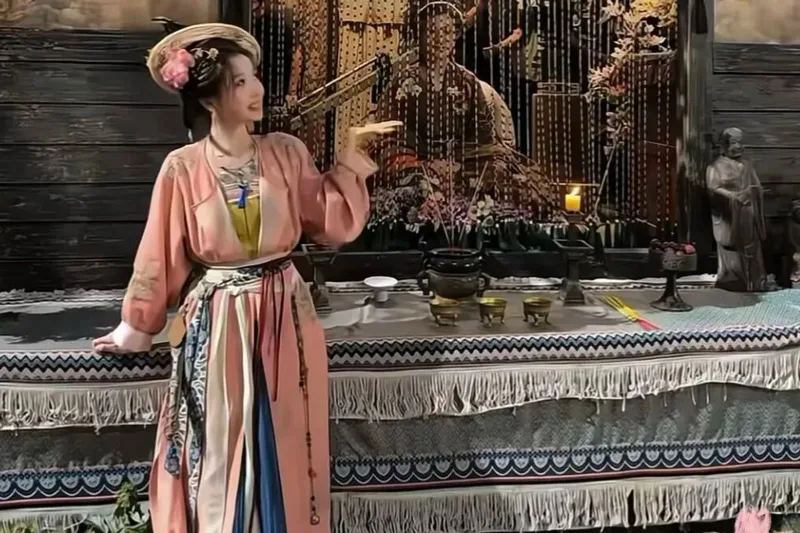
The buzz is not really about rarity. It is about a changed angle. A shape from a thousand years ago suddenly looks fresh, close and usable. Traditional dress is not only for display cases. It stays alive when someone can imagine it on a busy morning, in a lift, at a café, on a train. Yu’s pink round-collar look does not ask viewers to dress like a drama extra. It offers a smaller invitation: take one idea, one line, one layer. That is probably why the images linger. Do you like the look?
Social media rewards outfits that can be copied in parts. This look offers several entry points: a pink tone, a contrast lining, a belted waist, a long open layer. Nobody has to buy a full set. A modern long shirt can mimic the robe’s line; a wide-leg trouser can hold the volume; a folded cuff can echo the sleeve. The drama supplies a mood, not a rulebook. That looseness keeps the conversation friendly. People are not debating whether the costume is “accurate enough” in every stitch; they are asking how they might wear one piece tomorrow. The question is practical, and that is why it has legs.