Luotian county in Hubei began its 18th Dabie Mountains Red Leaf Season on 28 October, with the main stage at the Hexi Fan waterside red-leaf area and a programme running to 1 December. Four other viewing points are tied into the same ticket and the same schedule: Shengrentang, Tiantangzhai, Xufengchong and Jiuzi Ancient Town. The county runs the season alongside its 16th sweet-persimmon season and a third orchid exhibition, a three-part autumn calendar it bills as persimmons in the south, leaves in the north, orchids in the middle. For a visitor the practical question is not whether the leaves are red but which week to go, and that answer changes by altitude.
| Dates | 28 October to 1 December 2026 |
| Venue | Hexi Fan waterside red-leaf area, Luotian Dabie Mountains resort, Huanggang, Hubei; linked points at Shengrentang, Tiantangzhai, Xufengchong and Jiuzi Ancient Town |
| What it is | An 18th-edition autumn festival combining leaf viewing with Peking opera touring shows, a guofeng market, Hanfu and mecha parades, a national photography contest and a mountain market |
| Scale | Five leaf-viewing points; ten themed stalls at the mountain market; a long-table hotpot banquet of 100 tables on 7 November |
| Tickets | Five scenic areas honour each other’s tickets: a valid ticket from one buys the first-gate ticket at another for half the listed price |
| Getting there | A direct shuttle from Wuhan to the waterside area and the persimmon orchard, 39.9 yuan each way; self-drive visitors navigate to the Luotian Dabie Mountains resort |
What the Luotian Red Leaf Season Is
The Luotian Red Leaf Season is an annual autumn festival held in Luotian county, Huanggang, in northeastern Hubei, and 2026 is its 18th edition. The county has run it since 2008, and the 2025 edition closed as the 17th. Its centre of gravity is a stretch of the Dabie Mountains where Chinese tallow trees grow along terraced fields and riverbanks, turning the hillsides red from late October.
What separates this edition from earlier ones is infrastructure rather than scenery. The waterside area at Hexi Fan has been rebuilt for 2026 with a red-leaf camp, a suspension bridge and walking trails, and it carries the opening ceremony, the sunset concerts and most of the evening programming. The county has also folded the season into a wider autumn consumption campaign that includes the persimmon harvest at Sanliban township and the orchid show that starts on 7 November.
Hubei contributes two entries to the China Meteorological Administration’s 2026 national autumn guide, published during the National Day culture and tourism month: Luotian and Shennongjia. The guide covers 19 provinces and 25 cities and counties, and it places both Hubei sites in a mountain-red-leaf category. That listing is the clearest external signal of what the county is selling, and it is also the reason the viewing calendar below is organised by height rather than by date.
Five Viewing Spots and Their Timetables
Leaf colour in the Dabie Mountains moves downhill. Ridges above 1,700 metres turn first, gorges follow, and the terraced fields at the foot of the range come last, which stretches a single season across five or six weeks. Tiantangzhai, the main peak at 1,729 metres, and Baodaofeng hold the early window. The gorges take the middle. The field villages carry the late window and, for photographers, the money shot.
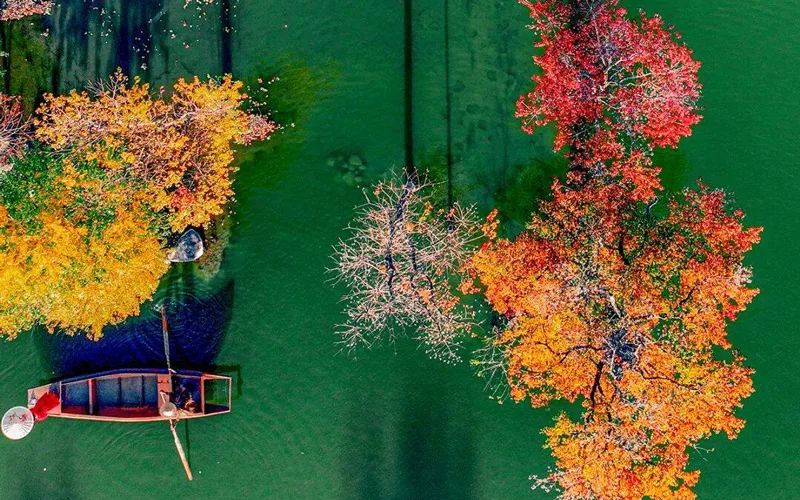
- Hexi Fan: tallow trees standing at the waterline, with reflections doubling the colour; boats run on the lake and the rebuilt camp sits beside it. Best in the morning, when the surface is still.
- Shengrentang: fields, old houses and leaves in one frame, strongest in morning mist; the village’s viewing platform is the standard position for the three-layer red-yellow-green shot.
- Xufengchong: known locally as the first village of red leaves, with tallow trees scattered through the terraces and rice stubble underneath.
- Tiantangzhai: the high view, cloud sea and rock peaks above the treeline; a cable car covers most of the climb.
- Jiuzi Ancient Town: an old street with leaves at the edges, best walked in the evening alongside the night market and folk performances.
Four villages, Shengrentang, Hexi Fan, Xufengchong and Qilin Fan, form one continuous tallow-tree belt along the Jiuzi River, and photographers have long called the area the best red-leaf base in the country, with a saying that puts it alongside Fragrant Hills in the north. Judged by date, the ridge window falls in mid to late October, the gorge window from late October into early November, and the field window from late October to late November.
For anyone pairing leaves with something else, the persimmon village of Zanzishi in Sanliban township holds more than 6,000 old trees and peaks in the same weeks. Luotian’s forest coverage sits at 85 percent, and Jiuzi River town works as the accommodation base, with eight scenic areas inside a 20-kilometre radius.
Hanfu, Mecha and Peking Opera on the Programme
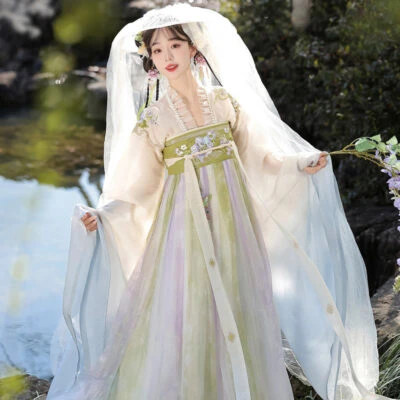
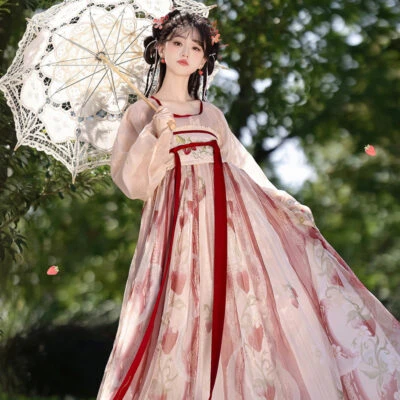
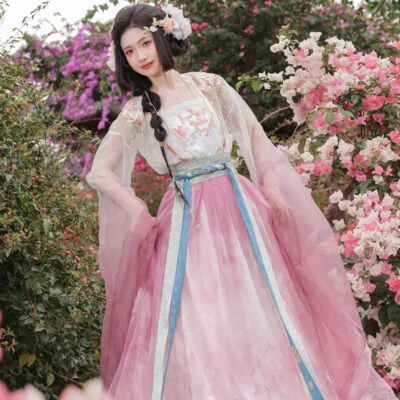
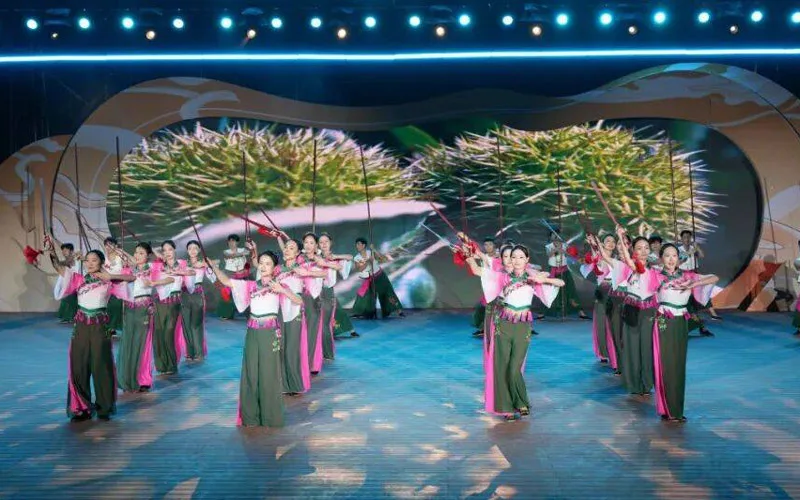
Hanfu occupies two slots in the schedule rather than one. A guofeng market with Hanfu photo points runs along the lakeside viewing area from 28 October to 1 November, with Peking opera performed in afternoon and evening sessions each day. The three-day itinerary then adds a parade that puts period-styled mecha alongside Hanfu wearers, a pairing that has become common at Chinese scenic areas since night tourism and costume photography began feeding each other.
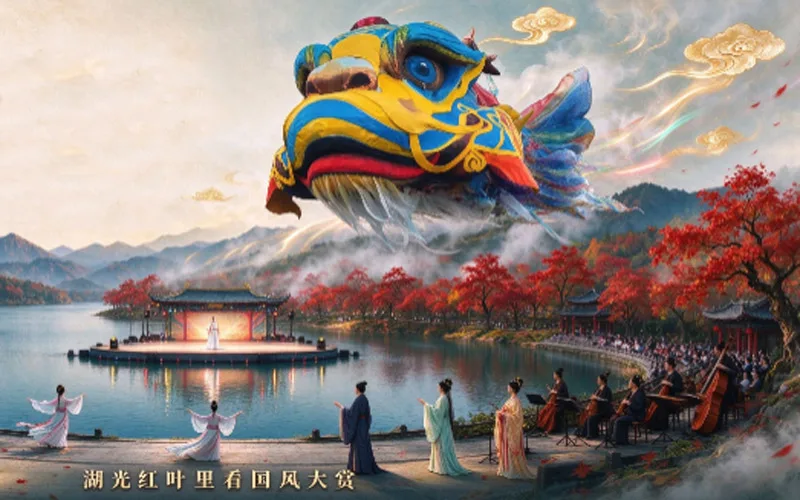
The opera programming is the larger structural change. Luotian has plugged the touring programme of the 11th China Peking Opera Festival into its opening, so a county-level leaf season begins with repertoire from national companies rather than a local variety show. Sunset choral concerts run at the round stage on the waterside from 28 to 31 October, with folk songs and singalong sets that deliberately invite the audience in. Sichuan opera face-changing performs weekly through 30 November, and a giant fish-lantern procession works the lake from 28 October to 1 November.
A national photography contest began taking entries on 28 October and closes on 30 November, covering the whole resort including the waterside area, Shengrentang, Xufengchong and Tiantangzhai. The county’s suggested itineraries run from one day to four: a single day for a dawn shoot and a boat trip, two days to add the Tiantangzhai climb and the ancient-town night, three days to add farm activities and the mecha parade, four days to fold in the market, an opera matinee and the long-table banquet. Visitors planning around costume photography will find the wider Hanfu travel routes useful for comparison.
Sharing One Ticket Across Five Scenic Areas
Five scenic areas in the county now honour each other’s tickets. Tiantangzhai, Baodaofeng, Dujuan Tiantang, Yan’er Valley and Jiuyue Farm Valley let a visitor holding a valid ticket from any one of them buy the first-gate ticket at another for half the listed price, which turns a single-day stop into a two- or three-day loop without a second full-price ticket.
Commerce adds a coupon stack. A ticket stub qualifies for a 300-yuan voucher package with a single-use discount capped at 100 yuan. Hubei’s shopping coupons are released at 10 a.m. on Fridays, Saturdays and Sundays, and a receipt-based lottery pays out instantly on receipts of 100 yuan or more, up to 800 yuan, with a periodic draw reaching 150,000 yuan in goods. Luotian has put 1.09 million yuan of its own money behind the campaign and signed up close to 100 businesses.
Service measures are part of the offer. The 39.9-yuan shuttle from Wuhan comes with a licensed photographer on board for costume portraits, the county publishes a daily leaf-colour index and persimmon forecast, and it opens government and institutional car parks to visitors, runs canteens at state-set prices, and instructs traffic police to waive penalties for minor violations by out-of-town vehicles. A volunteer corps handles enquiries. Shi Wei, who heads the county’s culture and tourism bureau, said complaints that are accepted and verified will be paid out before the investigation finishes.
Tallow Trees That Turn Three Colours at Once
Chinese tallow, the tree behind the season, is a native species common along the Yangtze basin and easy to identify by its diamond-shaped leaves and waxy white seeds. Autumn colour comes in stages: chlorophyll breaks down first, then carotenoids show yellow and orange, and anthocyanins build red in the same leaf as sugars accumulate. Because the three pigments peak at different moments within one crown, a single tree holds orange, crimson and amber at the same time, and a hillside of them reads as layers instead of a flat block of red.
Water doubles that effect. Tallow grows willingly at the waterline, and the reflection at Hexi Fan extends the viewing distance, which is why the waterside point photographs better than the slope points despite holding fewer trees. The same logic explains the altitude calendar: every hundred metres of climb pushes the peak a few days later, so Tiantangzhai and Xufengchong never peak in the same week even though they sit in one county.
Numbers from the villages show what the season does to a local economy. Shengrentang alone has built 153 guesthouses and receives about 400,000 visitors a year, most of them in these five weeks. In 2025 Tiantangzhai was named one of eight core red-leaf sites in a national corridor promotion, and the county has since leaned on that listing in its marketing. The pattern is familiar across mountain counties: a five-week colour window is too short to carry a year, so the fix is to lengthen the stay with performances, markets, a photography contest and a multi-area ticket, and to convert one ticket into a loop of spending. Whether the opera festival connection holds beyond 2026 is the part worth watching.