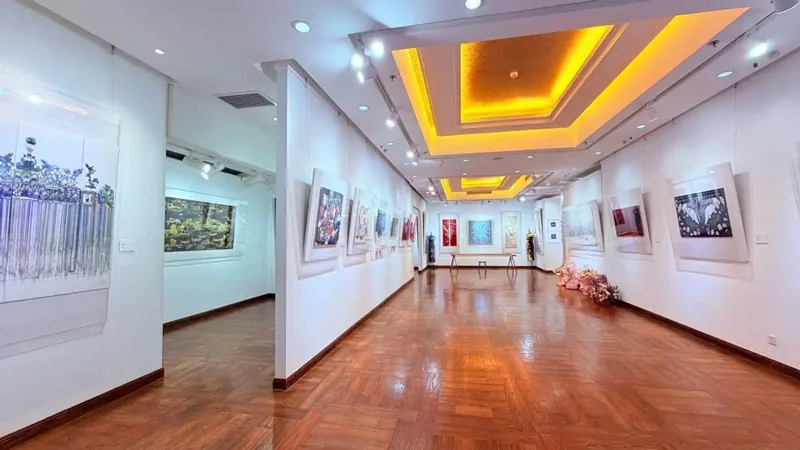
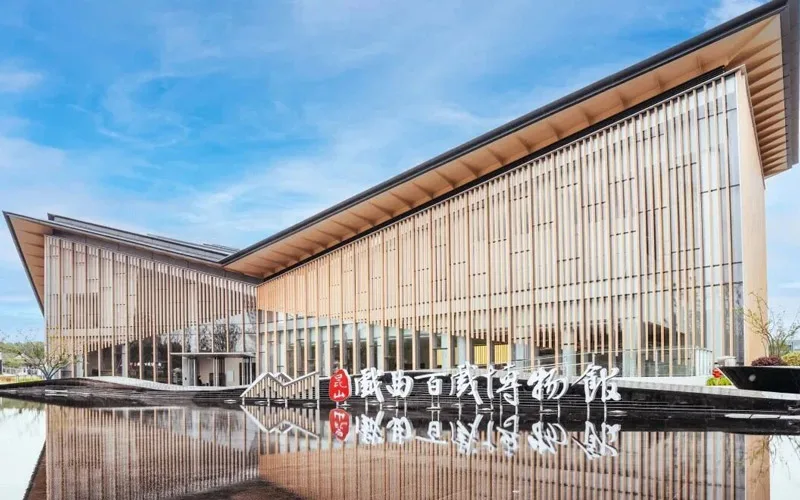
Four original bronze zodiac heads from the Yuanmingyuan water clock arrived in Kunshan, Jiangsu, on 26 October and go on show from 31 October at the Kunshan Museum of Chinese Operas, where the exhibition runs to 5 January 2027. The ox, tiger, monkey and boar heads are joined by Shang and Zhou bronzes and Northern Dynasties stone Buddhist sculptures, most of them objects brought back to China from overseas. The museum timed the show to its third anniversary.
| Dates | 31 October 2026 to 5 January 2027 |
| Venue | Special exhibition gallery, Kunshan Museum of Chinese Operas, Suzhou, Jiangsu |
| What it is | Four original zodiac heads with repatriated bronzes and stone sculptures, three thematic sections |
| Tickets | Early-bird 29 yuan, sold 19 October 10:00 to 28 October 23:59; bookings open from 29 October until 16:30 on 5 January |
| Also on view | Shang and Zhou ritual vessels, a Northern Wei to Northern Qi gilded Buddha triad |
The Heads, Opened in Public
Unpacking took place on the evening of 26 October, and the museum published a record of it: staff worked object by object, the display plan had been revised several times, and the lighting was adjusted on site. Each head reads differently up close. The ox stares with round eyes set under a heavy brow. The tiger carries a mane that reads as much lion as tiger. The monkey has a live, alert face. The boar shows a long snout and tusks, a shape Chinese taste has always found more comic than fierce.
Cast in red copper, the four heads share a modelling approach rather than a single style: anatomy is accurate, volume and turning points are emphasised, and the surface treatment separates hair, hide and skin into distinct textures. The carving is naturalistic, closer to European animal studies of the period than to earlier Chinese animal sculpture, and that is the point of them. They are the surviving evidence of a specific eighteenth-century exchange between Qing court workshops and European technology.
Seven Returned Since 1860, Five Still Missing
British and French troops burned the Yuanmingyuan in 1860, and the heads scattered with the rest of the palace contents. They began surfacing at auction in the 1980s. Seven have come back: the ox, tiger, monkey, boar, rat, rabbit and horse. Five remain unaccounted for, the dragon, snake, rooster, sheep and dog. A head said to be the dragon appeared at an overseas auction in 2018, but its authenticity is still disputed, and the other four have produced no reliable public trace.
Four dates carry the return story. In 2000 Poly Group paid more than 30 million Hong Kong dollars for the ox, tiger and monkey heads and placed them in the Poly Art Museum. In 2003 Stanley Ho bought the boar head and donated it to the same museum. In 2007 he paid 69.1 million Hong Kong dollars for the horse head and gave it to the State Administration of Cultural Heritage. In 2013 the Pinault family of France returned the rat and rabbit heads. The surviving four have since travelled from the Poly Art Museum to cities across the country, and Kunshan is one stop on that circuit.
Bronze Vessels and Buddhist Stone Share the Hall
The exhibition builds three sections that pull the heads into a longer sequence, running from Shang and Zhou ritual bronzes through Northern Dynasties stone figures to the Qing bronze animals. The vessels are arranged by function rather than by date, grouped into food, musical, wine, water, weapon and miscellaneous categories, which lets a visitor compare shapes that were designed to work together at a sacrifice.
Named pieces include a Western Zhou standing hare-shaped vessel and a Pengji phoenix-bird vessel, both returns from overseas collections, alongside a gilded and painted Buddha triad made between the Northern Wei and Northern Qi. Kunshan’s claim on the material is the opera connection: the town is the birthplace of Kunqu, the tradition later performers called the teacher of a hundred operas, and the museum frames the pairing of opera and bronze as one instinct to protect what carries a culture.
The Heads Were Plumbing Before They Were Art
Reading them as sculptures misses what they were built to do. The twelve heads sat on the Haiyantang water clock in the Western Mansions of the Old Summer Palace, each one an outlet for a hydraulic system fed from a reservoir behind the building. Each head represented one of the twelve double-hours, spouting on its turn, with all twelve firing at noon. The mechanism, known at court as Western water methods, combined the Chinese hour system with European pumping and piping.
Function left marks on the objects. The necks and mouths carry pipe diameters, and the interiors are shaped for flow rather than finish, which is why the heads read as components under close inspection. Their value therefore splits in two: as original fittings of a Qianlong-era garden building they document a court’s appetite for imported technology, and as objects looted in 1860 each return is recorded as a public event. With seven home and five missing, the twelve-hour set remains incomplete, which is exactly the argument the exhibition makes by setting bronze vessels and stone figures beside them.