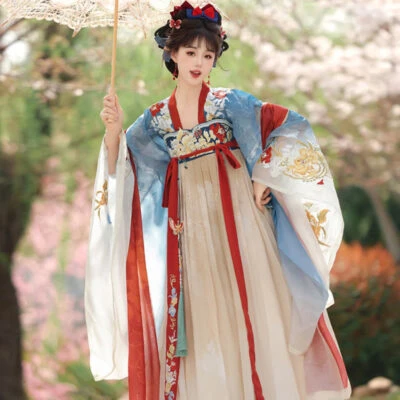
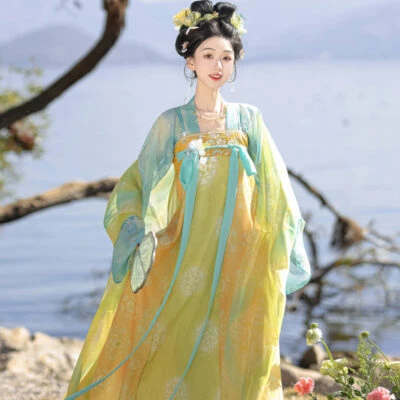
Harper’s Bazaar China held the 2026 edition of its From China programme in Jiangyin, Wuxi, on 20 and 21 October, and the design exhibition attached to it went on public view on 22 October with more than 150 shortlisted works on show. Held at the Xiake Xing theme park in Xiake Bay Science City, the display gathers award winners, handmade craft pieces and artist commissions along three strands: objects taking form, a hundred states of human life, and moving with the times.
| Dates | Summit 20 to 21 October 2026; design exhibition open to the public from 22 October |
|---|---|
| Venue | Xiake Xing theme park, Xiake Bay Science City, Jiangyin, Wuxi, Jiangsu |
| What it is | Annual culture project of Harper’s Bazaar China and the first exhibition of its Craft Future Design Awards |
| Scale | Over 150 shortlisted works on display; 739 entries judged, 27 winners named |
| Run | Winning works stay on display for close to a year |
| Access | Open to the public |
Seven Hundred Entries, Twenty-Seven Winners
From China began in 2019 and is now in its seventh year. For 2026 the magazine added a design award to the programme: entries ran from January, 739 pieces arrived, and ten judges spent close to ten months on site reviews and successive rounds before naming 27 winners across fashion design, packaging design and miscellaneous, decorative design, and accessory design. Judging weighed understanding of a craft’s core technique, how Chinese culture was interpreted, originality, market viability and sustainability.
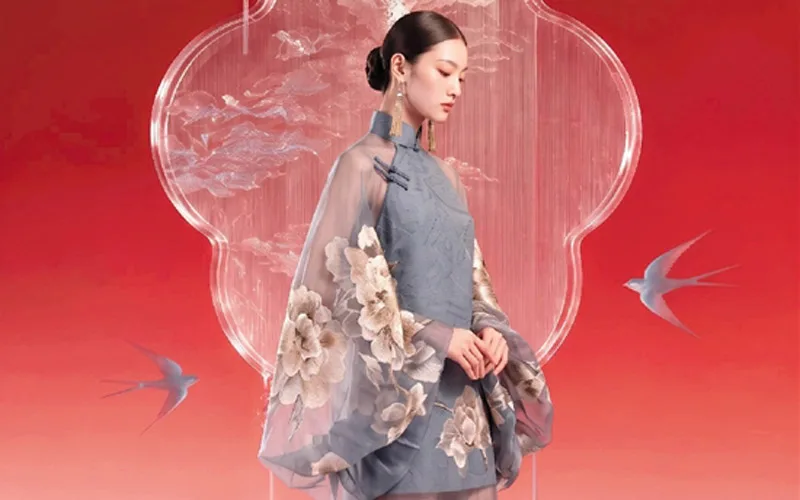
Four award tiers carry the results. The emerging designer award went to the Shiliang Feipu and Garden Idle Days jewellery series, Rebirth: A Structural Prologue, River Boat, Her Page, the Instrument Skateboard, a resonance speaker built from sancai glazed ceramic, a woven arch stool and a bamboo dragon-boat incense holder. The style award covered an eggshell porcelain dress, Xingge Ruxiu, Shiyin, Wuxiang Zhixiang, Shuiyunjian, the ZIFEI WANG Silk Road series, Liujin Huaxu, Yan Xiayu and The Wall Collection. The Chinese aesthetics award went to a scent and incense line named after the 24 solar terms, a Yungang gift series, mortise-and-tenon jewellery, Haptic Bloom and a knotted bead headpiece. A pastry category rewarded two confectionery concepts, one built around Xu Xiake’s travels and one on Jingdezhen sweets.
A Porcelain Dress Built Tile by Tile
Among the fashion entries, Liang Liwen’s eggshell porcelain dress drew the most attention. Raised in a Jingdezhen ceramic family, he has worked since 2019 on moving kiln technique into clothing: porcelain is fired into tiles roughly 0.4 millimetres thick and 6 centimetres square, then bonded, drilled and hand-sewn onto knit, cotton and linen so that a brittle material becomes something a body can move in. A single dress takes about 600 tiles. His vocabulary comes from the kiln as well. Drawing on a 1993 Hong Kong film about a snake spirit, he maps snake scales onto the crackle of Ge ware, and one blue dress borrows the graded colour of transmutation glazes with kintsugi lines run through it.
Liu Yuanfeng, a professor at the Beijing Institute of Fashion Technology, took a different route. He lifts colour, line and pattern structure from the armour of the heavenly kings in Mogao Cave 446, the dress patterns of female donors in Cave 138, the caisson ceiling of Cave 249 and the honeysuckle scrolls of Cave 285, then rebuilds them into modern silhouettes; Dunhuang Imagery No. 7 is the clearest example. Neither designer reproduces a motif. Both convert a logic of making into a logic of dressing.
Where Element Stacking Stops Working
The two routes point at the same test. For a market that has spent several seasons expanding, a garment that only stacks Pankou, standing collars and embroidery on a Western cut remains a set of symbols: every element is present and nothing about the material, structure or silhouette has changed. What separates the winners here is that the tradition altered the construction. Porcelain changed what the cloth can be; Dunhuang changed how a pattern is organised across a body.
Jiangyin’s interest in hosting the programme is industrial rather than ceremonial. The city is Xu Xiake’s birthplace, the traveller who set out from here four centuries ago, and it now wants Xiake Bay Science City to link craft protection, design and incubation into a manufacturing base serving buyers abroad. The opening programme made the pairing explicit: a nine-lion dance from Jiangyin, a Wuxi opera artist singing an aria from a stage work about Xu Xiake, and an excerpt from the dance drama Wing Chun that sets Wing Chun boxing and gambiered Canton gauze, both national-level craft traditions, inside one sequence. Buyers in new Chinese style will recognise the argument, since the category’s next step depends on the same shift.