A three-day programme run by the Hunan provincial culture and tourism department took 45 heritage crafts and 95 named inheritors into a Changsha neighbourhood, an office park and a riverside town between 25 and 27 October, one venue per day. Organised under the title Experiencing Hunan Heritage, Meeting a Better Life, the series is the provincial edition of a national format that sends craft practitioners into six kinds of venue, and its local structure was built around six entry points: a cup of tea, a vessel, a stitch, a taste, a scene and a good object.
| Dates | 25 to 27 October 2026, one venue per day |
|---|---|
| Venues | Dongtang community, Yuhua district on 25 October; a software park in Xiangjiang New Area on 26 October; Jinggang, Wangcheng district on 27 October |
| What it is | Provincial heritage-in-the-community series, with each day framed as a different kind of room |
| Scale | 45 heritage items and 95 inheritors in total; 19 items on day one, 14 on day three across two routes |
| Hours | Full day at each venue |
| Taking part | Open to residents, employees and town visitors; day one issued a stamp map, with nine stamps exchangeable for a craft souvenir |
Three Days, Three Kinds of Room
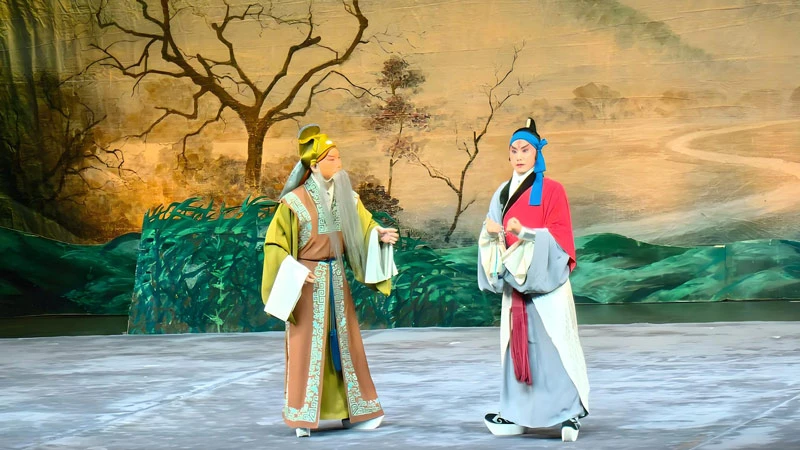
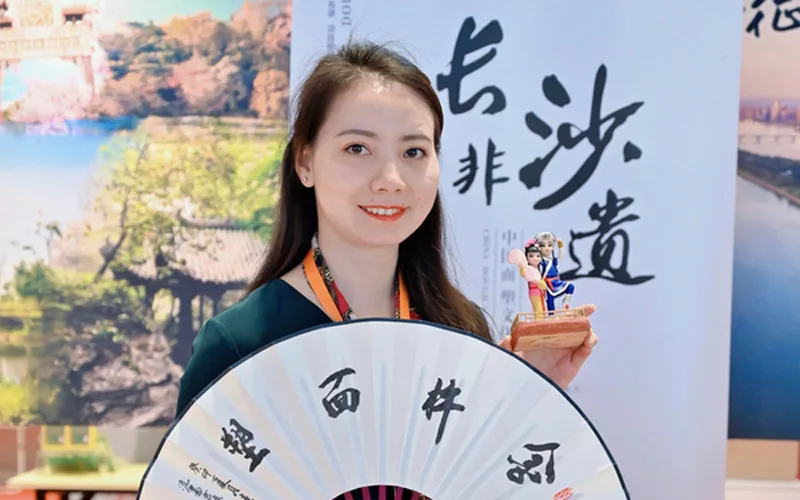
On the opening day, a community hall became a street market. Folk musicians from the Hunan opera troupe warmed up the room before excerpts from an opera version of Hu Jia Zhuang and a puppet play opened the programme, and 19 heritage items then took their places, among them Hunan opera, puppet theatre, Taoyuan embroidery, yellow tea making and Changsha dough figurines. Two dough-figure inheritors worked the crowd, Peng Fengling, sixth-generation carrier of the Xiao school, and Chen Jincheng, who has spent 21 years at the craft, guiding residents to roll, pinch and twist a lump of dough into opera characters.
The second morning moved the workshop into a company lobby. Taiji boxing in the Chu Guiting line, flower arranging, Xiang embroidery and nut carving were laid out for employees, and each practitioner walked visitors from raw material through process to finished piece. Wu Jue, who carries the Changsha nut-carving tradition, demonstrated the five stages in sequence, from choosing a pit and sketching a design to roughing out, fine carving and polishing, so that the conversion of a fruit stone into an object could be watched end to end.
Jinggang, on the last day, returned the programme to a town. At Jinggang in Wangcheng district the 14 items split into two routes: a hand-skills line of resist dyeing, Tujia brocade, Liling underglaze polychrome porcelain and Xiang embroidery, where visitors could look, learn, make and take away; and a food line of sweet fermented rice, Dong’an chicken, a Jingpai flatbread from Nanxian and Liling pastries, with Jiang Zonglin cooking the chicken dish on site. Puppet theatre, face-changing and song filled the gaps between demonstrations.
What the Roster Covered
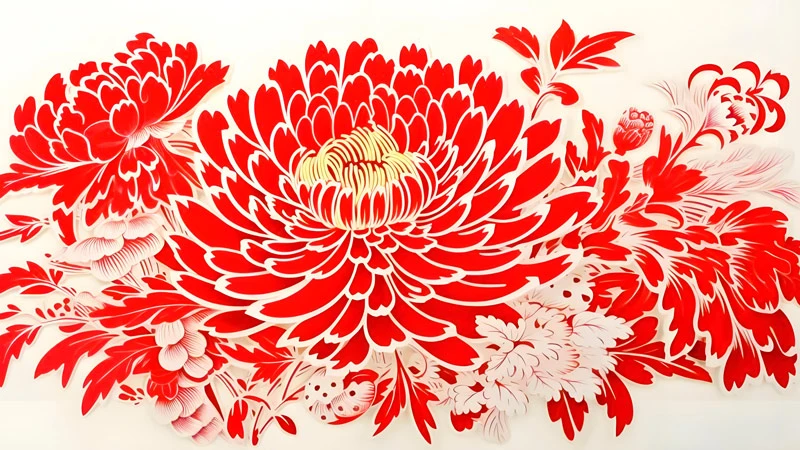
The lists show the province’s craft map in miniature. Textiles and dyeing were represented by Xiang embroidery, Taoyuan embroidery, Tujia brocade and resist dyeing; ceramics by Liling underglaze polychrome; printmaking by Tantou woodblock New Year pictures; food by yellow tea making, fermented rice, Dong’an chicken and the Nanxian flatbread; performance by Hunan opera, puppet theatre and face-changing; handwork by dough figurines, nut carving and flower arranging.
Selection followed one criterion more than any other: whether a visitor can participate. Xiang embroidery, Tujia brocade and Liling porcelain are all slow, high-threshold techniques that most people meet only inside a display case. Taoyuan embroidery, worked mainly in flat stitch with saturated colour and bird-and-flower subjects, and Tujia brocade, woven with discontinuous wefts into the geometric patterns the Tujia call Xilankapu, both let a beginner finish a small sample inside a session. Liling underglaze porcelain cannot: throwing, glazing and high-temperature firing allow only the key steps to be shown.
Distance Is the Real Problem
What a series like this actually changes is not visibility but distance. The difficulty in transmitting a technique is rarely the technique itself; it is the number of occasions on which a possible learner or buyer can meet it. Splitting the programme across a neighbourhood, a workplace and a heritage town pushes the contact surface into three different daily routines, and the three audiences differ in useful ways: residents have time and neighbourhood networks, employees have spending power and team-building budgets, and town visitors arrive already as foot traffic.
Every venue therefore carried something to take home, whether a stamped souvenir, a dough figure shaped by hand or a plate of food cooked in front of the visitor, converting a single viewing into a physical memory. For textile crafts that step matters most. A finished Xiang embroidery or Tujia brocade panel can take months, which puts the price out of reach for a first purchase, so meeting a pattern, a stitch and the feel of the cloth has to come before any conversation about commissioning.