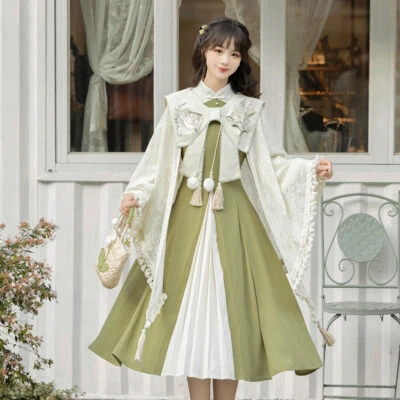
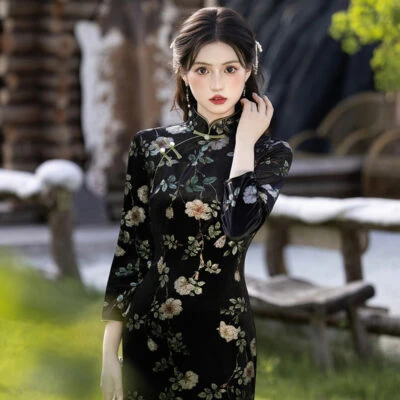
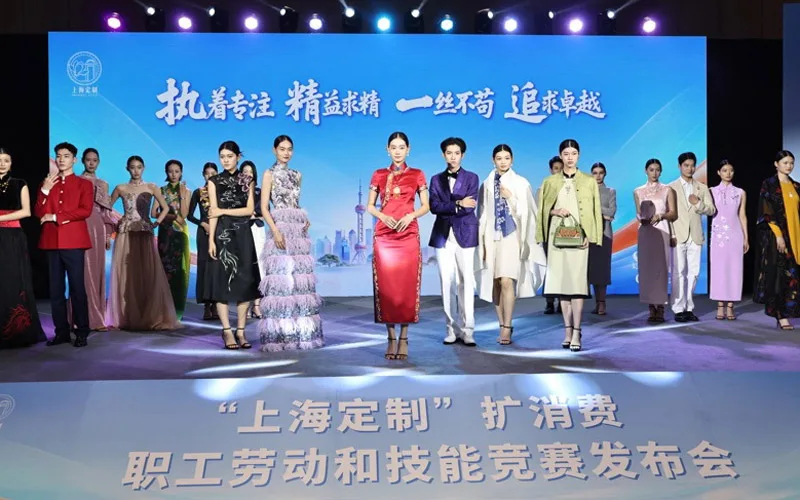
The fashion accessories and personalised tailoring track of the 2026 Shanghai Bespoke skills competition closed in Shanghai on 22 October, ending a contest that put hand-sewn qipao, knotted closures and Kesi silk tapestry work on the same score sheet. The track was organised by the Shanghai Federation of Trade Unions and the Shanghai Municipal Commission of Commerce, undertaken by the Shanghai Modern Service Industry Federation, and supported by trade bodies including the Shanghai-style Qipao Culture Promotion Association and the city’s intangible heritage protection association.
Five Dimensions on a Hundred-Point Scale
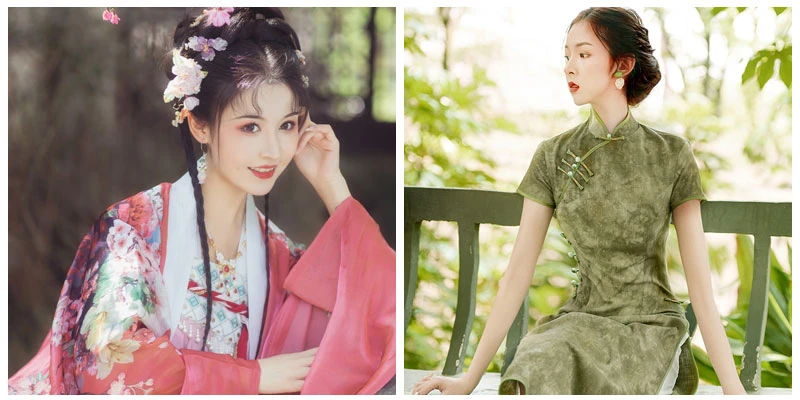
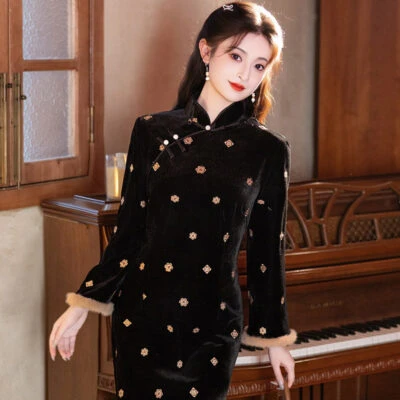
Entries covered improved Shanghai-style qipao, new Chinese formal gowns, jewellery craft, art scarves, handmade leather shoes and craft bags, and competitors were asked to fold Pankou, embroidery, Kesi tapestry and Shanghai jade carving into contemporary custom design. Judging ran on five weighted dimensions against a hundred-point scale, with the stated principles being craft as the base, innovation as the core, culture as the soul and market orientation as the guide. A panel of specialists in odd number screened association submissions first, then sat for on-site review.
Each dimension carries a defined test. Craft and professional level requires judges to measure cutting and sewing, carving and inlay, embroidery and knotting against category standards, checking structure, seams and surface finish for burrs or scratches. Design innovation weighs originality of shape, pattern and colour, looks for new materials, processes and digital tools, and explicitly asks whether traditional elements have been converted rather than pasted on. Cultural content examines whether Shanghai and Jiangnan aesthetics sit inside the fabric and construction, and for heritage pieces traces the line of transmission. Presentation scores the live explanation of concept and use. Market value reviews cost, pricing and delivery, and whether a piece can carry small-batch custom orders.
The panel included Zhang Bolin of the federation’s member service centre, Zhou Zhuguang of the qipao association and art director of Hanyi, Hu Minggang of the Zhaomu wool embroidery studio, the jeweller Zheng Lianbo, and Ye Jing, a national model worker from the Sanlian eyewear workshop. Zhang Gefei moderated the final session, Yang Guangming of the Pudong New Area trade union addressed it, and Gu Linfan and Fei Xia attended for the heritage and qipao associations respectively.
Award Categories and Who Won Them
Twenty-nine projects received awards across six categories: craft quality, creative design, craft inheritance, fashion expression, emerging artisan and market potential. The qipao association took part throughout as a supporting body, and the six labels it mobilised, Manloulan, Xiangdaigong, Jingpo Qinhan, Yangxin Cloth Art, Qinxinyi and the Meishiju Xihuzhu studio, entered eight projects and won with all of them. Craft quality went to Manloulan’s core collection for the 2026 Shanghai Fashion Week; creative design went to Yangxin Cloth Art for a series that sets Shanghai homespun cloth beside Xinjiang Atlas silk in qipao and new Chinese pieces.
Fashion expression awards covered Manloulan’s Swarovski series and its Manyue Zhaohua qipao, Xiangdaigong’s Lantingxu-themed collection, Jingpo Qinhan’s Moyu Qiguang series and a ceremonial qipao from the Xihuzhu studio; market potential went to Qinxinyi’s Chifeng Qiwu. Other winners ranged from a qipao chest ornament and a batik scarf to Shanghai enamelwork, a carved leather handbag, jade carving, a pyrography slipper, water-bamboo-leaf weaving and a Yixing teapot. One craft quality award went to a pair of restored Guqin, a Ming-dynasty leaf-form instrument and a Tang-style piece, both re-created from historic models. Winners will be shown together later, with buyer meetings and retail sessions arranged, and the organisers framed the whole exercise as training, incubation, exhibition and sales driven by competition rather than ending at a ceremony.
Where the Craft Leaves the Dress
Pankou sits in the scoring document beside cutting, carving, embroidery and inlay as a named measure of technical difficulty, and the placement is not decorative. Qipao making traditionally runs through nine finishing crafts, of which the last is the knotted closure, and it remains the clearest line between a hand-finished garment and a factory one. The cord is stiffened with paste before it is shaped, hard-cord floral buttons and soft-cord closures are made differently and used differently, and the number, spacing and pattern of closures have to match the weight of the cloth and the position of the opening.
That is also why Pankou has moved off the garment. Knot-work now sells as brooches, earrings and bag charms, which is the practical shape heritage conversion takes in this industry: a technique is separated from its original carrier, priced as a unit, produced in small batches, then returned to clothing at a higher value. By making market conversion a scored dimension, the contest treats that path as a legitimate business rather than a dilution of tradition. For Shanghai-style qipao the competitive question shifts accordingly, away from how faithfully a cut reproduces the 1930s and toward whether a workshop’s finishing can be absorbed by a modern supply chain. Our qipao reference covers the construction side of that question.