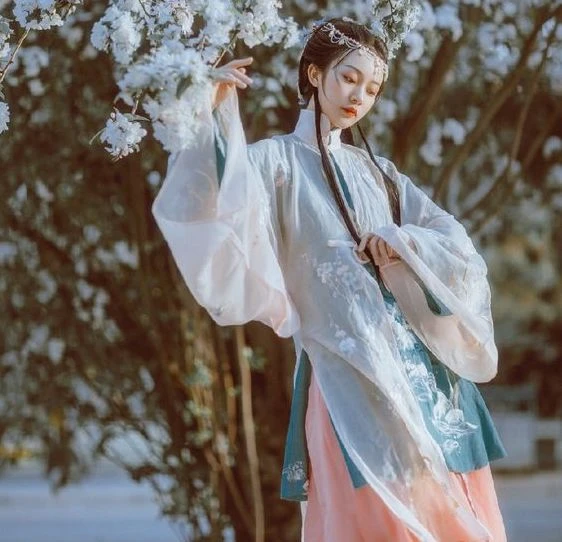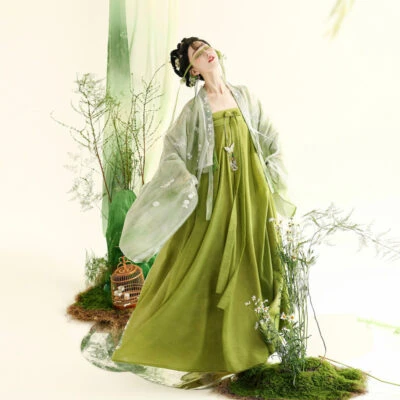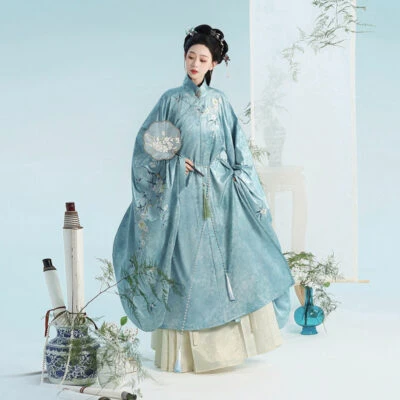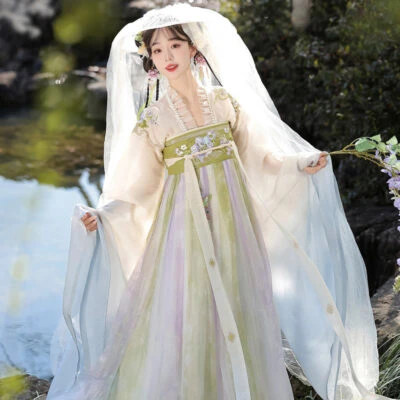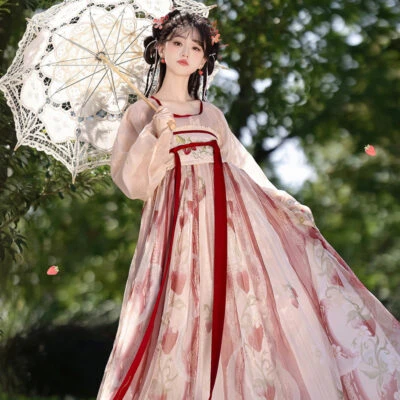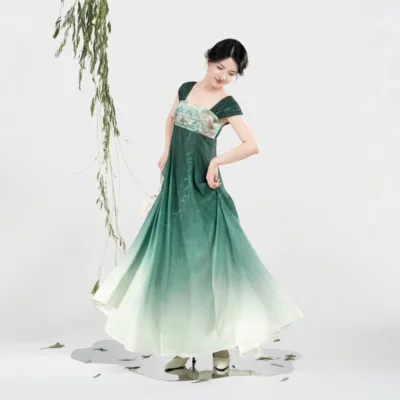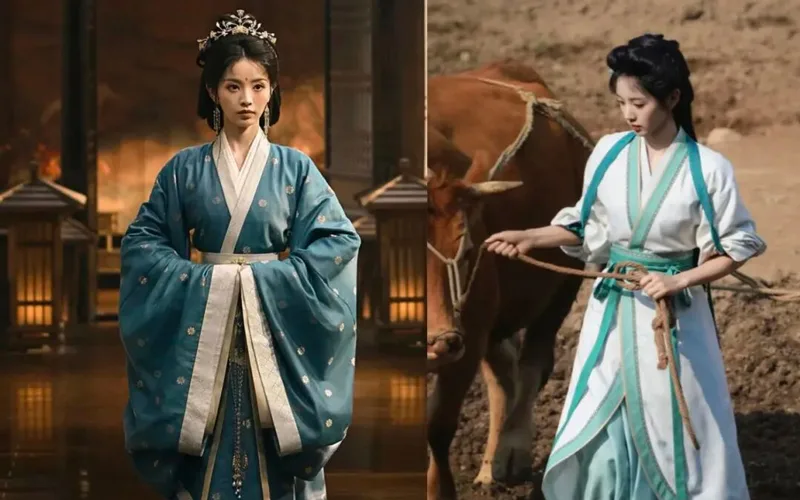
Photos from Where the Mask Ends (嫁金钗) show Tian Xiwei (田曦薇) in a long robe whose hem curls and falls in loops. Fans quickly called it Quju (曲裾); some press notes said the first costume borrowed “classic elements of a Western Han deep robe.” The label spread fast. Yet a photo, a caption, and a museum report do not carry the same weight. The question is not whether the dress looks graceful. It does. The question is whether the curved hem alone proves a historical cut. That difference matters, because television costume design and archaeological reconstruction follow different rules. One serves a camera; the other answers to surviving cloth, seams, and grave goods. So what exactly is being copied here—and what is being invented?
Screen Versus Tomb
Mawang Dui (马王堆) is the usual benchmark for Western Han Quju. The robes found there are deep garments made from separately cut upper and lower parts, then joined. Their key structure is a continued lapel and a triangular side panel that wraps around the body. The beauty comes from layered edges and a close, quiet silhouette—not from a single curved line drawn across the front hem. A Zhiju (直裾) straight-hem robe, by contrast, falls vertically. Both can cover inner trousers and underskirts in normal wear. If a costume leaves those layers exposed on purpose, the design may be attractive, but it is already moving away from the basic logic of Han dress.
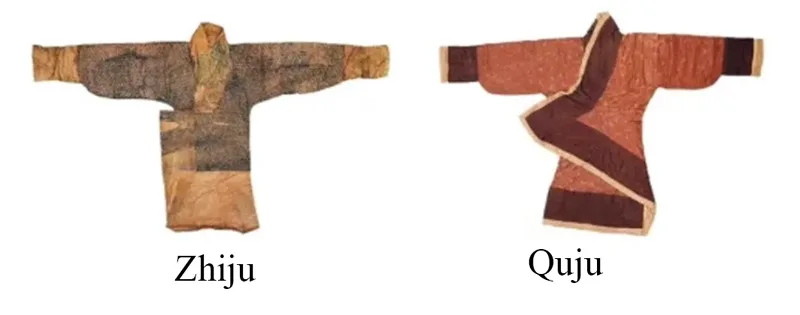
A common confusion appears when a robe opens at the front and spreads like an inverted “V.” Many people call that a small Quju. In fact, such shapes often echo straight-hem robes from Mashan Chu Tomb (马山楚墓), from the earlier Warring States period. The split look can come from a long body and a trailing hem, not from a continuous wrap. That style appears across a long span. Television often shortens the body and adds extra curves at the two hem points, creating a half-wrapped effect. It reads as Han-ish on screen, yet the construction is a modern second draft, not a tomb-accurate pattern.
Once a template becomes familiar, it travels. Costume teams reuse the “small Quju” look in Han-era stories because audiences recognize it. It shows up in Beauty’s Rival in Palace (美人心计) and Love Like the Galaxy (星汉灿烂), even when the plots sit far apart in time. The reuse is practical: a known silhouette saves explanation. The risk is memory. After enough dramas, an unsupported shape can feel like evidence. Viewers may believe they have seen the real thing, when they have seen the same borrowed design repeated. Repetition does not turn a guess into a grave find. It only makes the guess comfortable.
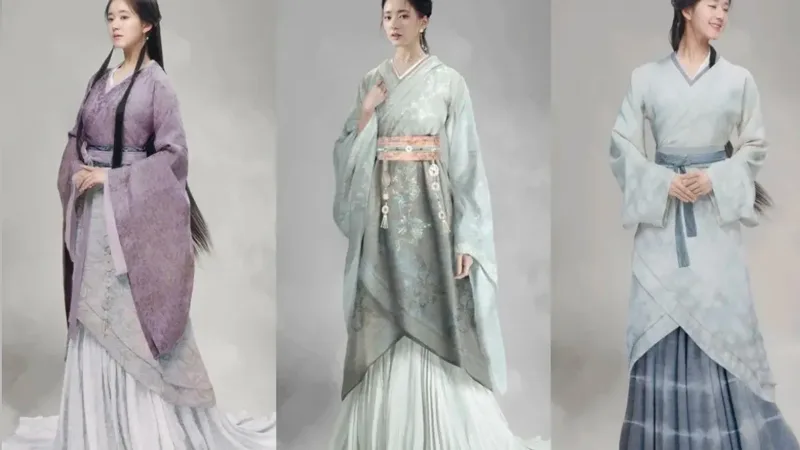
This does not mean every creative choice is a failure. Where the Mask Ends described its look as mixing Quju elements, not as a museum copy. That wording leaves room. A costume can quote a historical idea and still change proportion, fabric, and movement for the camera. The mistake is letting the quote stand in for the source. A screen robe may borrow the idea of wrapping; a Western Han robe must show how the panel, lapel, and seam actually work. The first is design language. The second is material evidence. Keeping those categories separate protects both the pleasure of drama and the authority of artifacts.
What Survives
The hard limit is survival. Silk and hemp from Han tombs rarely last intact. Complete garments are scarce. At present, Quju robes supported by excavated objects come mainly from Mawang Dui, including deep robes and lighter single-layer forms. Double-wrap and multi-wrap Quju appear on wooden and pottery figurines, but no matching garment has been found. Those figures are useful hints, not sewing patterns. A reconstruction can test a theory; it cannot crown the theory as fact. This is why careful language matters. “Based on figurines” and “found in a tomb” are different claims, and audiences deserve to hear the difference.
Public memory, however, rarely grows from catalogues. It grows from screens. A dramatic hem is visible; a triangular panel is not. An authentic Mawang Dui reconstruction often looks restrained, with a narrow visual range. On camera, restraint can read as plainness. Costume designers need contrast, motion, and a quick read. So the eye-catching version wins. Over time, the familiar version becomes the mental default: “Han clothing must look like this.” The actual evidence sits in storage, waiting for a viewer who is curious enough to look.
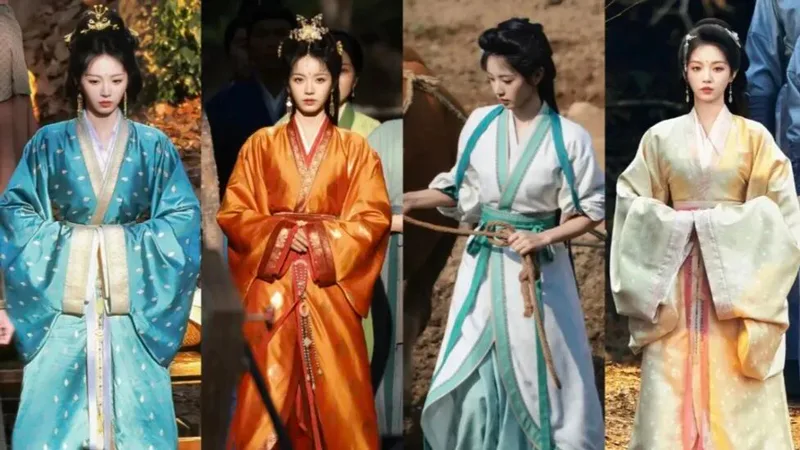
There is no need to scold audiences for liking the dramatic dress. Enjoyment is not the problem. The problem is a closed loop, where television feeds memory and memory feeds television. A better loop would include museums. If a viewer leaves a drama and then searches for Mawang Dui textiles or Mashan Chu Tomb robes, the picture widens. She may still prefer the television look. She will at least know what she is preferring. That small step turns a costume from a false authority into a visible choice.
So what is the curved-hem dress in Where the Mask Ends? It is a designed garment that borrows Quju imagery. It is not, by strict comparison with excavated objects, a Western Han Quju robe. Both statements can be true. One belongs to art; the other belongs to archaeology. The useful question is not “Which is prettier?” but “Which claim is being made?” A label that says “inspired by” is honest. A label that says “restored” needs evidence. After the episode ends, the real adventure may begin in a gallery, where a fragile piece of cloth can correct a very loud picture. Which version do you want to remember?