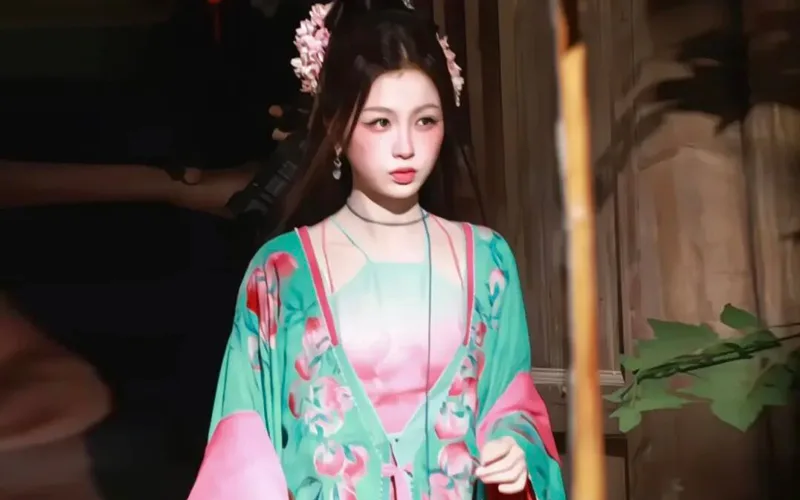
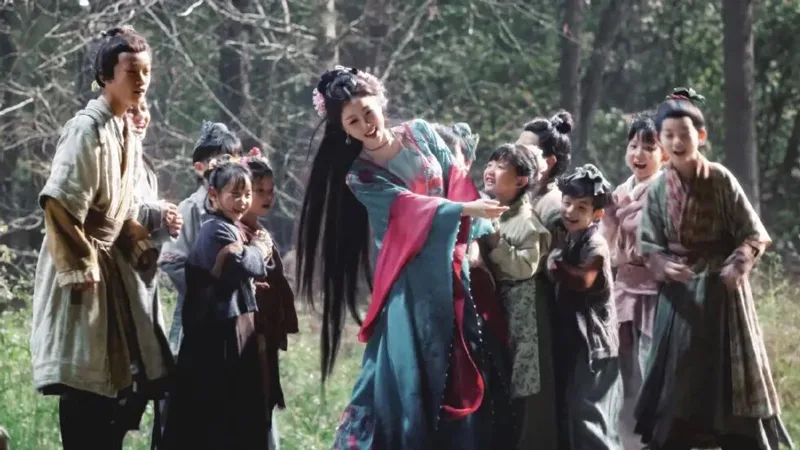
A recent set photo of Yu Shuxin (虞书欣) in the costume drama Chang Sheng Gu (长生骨) showed a jacket covered with embroidered peaches. Fans blinked. Fruit on a period costume? Was this a stylist’s joke? The answer is stranger and richer. In old China, a peach was never only a snack. On one soft shape, writers packed long life, many sons, protection from harm, and romantic luck. That makes the jacket less a stunt than a quiet argument about clothing as a carrier of wishes. The detail is small, but the question is large.
Peach as Power
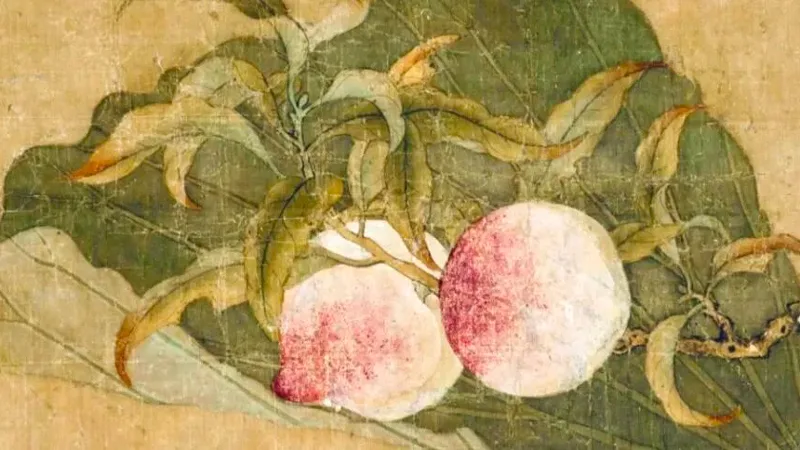
The clearest meaning is long life. The flat peach party in Journey to the West made the link famous, but Wu Cheng’en (吴承恩) did not invent it. Earlier tales already had Xi Wangmu (西王母) offering a peach to Han Wudi (汉武帝). The fruit became a shorthand for “live as long as heaven and earth.” That phrase later moved onto birthday tables, where dough peaches still appear beside cakes and steamed buns. A peach on a robe worked the same way: it turned a private wish into public decoration. The wearer did not need to explain; the thread did the talking. Even a small embroidered fruit could promise years.
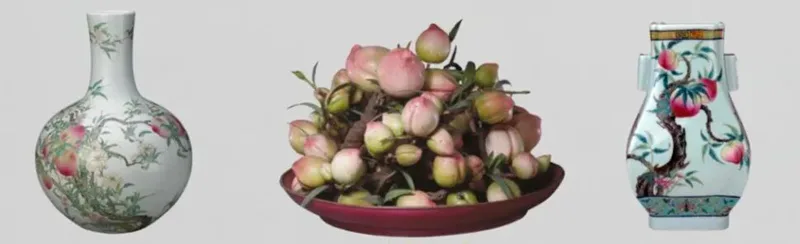
Peaches also guarded a house. Before paper charms became common, peach wood was the serious protective material. In Classic of Mountains and Seas (山海经), Kua Fu (夸父) dies while chasing the sun, and his thrown staff becomes a peach grove. Later New Year charms used peach wood and door gods to scare off trouble. A peach stitched on cloth carried a smaller version of that old guard duty. It was not cute decoration alone; it was a shield with a soft face. The same fruit that wished you a long life could also stand at the door and warn bad luck away.
Fertility gave the peach another job. Li Shizhen (李时珍) wrote in Compendium of Materia Medica (本草纲目) that the tree flowers early, plants easily, and bears much fruit. Its old name even hinted at a huge number. Pomegranate stood for many seeds, finger citron for blessing, and peach for long life. Together they formed the “Three Abundances” motif on auspicious robes. One garment could carry a family’s hope for children, fortune, and years. That is a lot of work for a small fruit, but old clothing was built for such tasks. A sleeve could hold a whole family plan.
This pattern language was practical, not vague. A tailor chose a peach because the message was clear at a glance. A grandmother saw long life. A mother saw children. A young bride saw spring and hope. The same motif could speak to different people in different rooms. That flexibility kept the peach popular on robes, purses, and birthday gifts. It also explains why a modern viewer can spot the fruit and feel a jolt: the symbol is old, but the wish is still easy to read.
Love, Luck, Longevity
Romance is the peach’s brightest stage. Book of Songs (诗经) opens with a young peach tree in bloom and compares a bride to its flowers. The poem wishes her a happy home and many descendants. Three thousand years later, the image still works: peach blossom means a face, a crush, a spring that arrives too fast. A peach on a costume can tease love without a single word. It can also hint at jealousy, since beauty and trouble often share the same branch. The flower is pretty, but it never stays long.
He Pan (何盼) is a clam spirit in the drama, so the peach embroidery creates useful friction. She is not human, yet her jacket is covered with very human wants: a longer life, a full house, safety from bad luck, and maybe someone to love. The gap between spirit and wish makes her less a flat monster and more a character with appetites. Clothes do not just dress her; they expose what she lacks. The peach makes her look softer and more dangerous at once, because wanting things is never simple.
Old clothing design often followed a simple rule: every pattern had a meaning, and every meaning wished for good fortune. A sleeve peach said long life. A collar bat said fortune. A skirt pomegranate said children. Modern shirts print letters or geometry and stop there. Old robes kept talking after the wearer left the room. That was not superstition. It was a shy, practical way to put “may you live long, may you be safe, may you be happy” next to the heart. The message traveled by thread instead of voice.
So the peach jacket is not a random burst of fruit. It is a compact list of human hopes, stitched onto a spirit who is supposed to stand outside them. That contrast gives the costume its charge. It also asks a modern question: would you wear a garment that says what you want before you open your mouth? The old answer was yes. A robe could be a letter to the future, written in peach, bat, and pomegranate. The wearer walked around inside the wish. Would you wear that kind of peach today, or would it feel too loud?