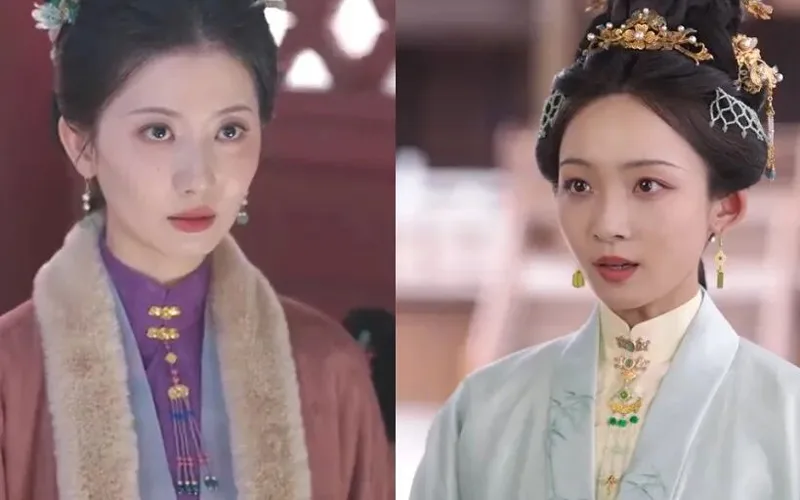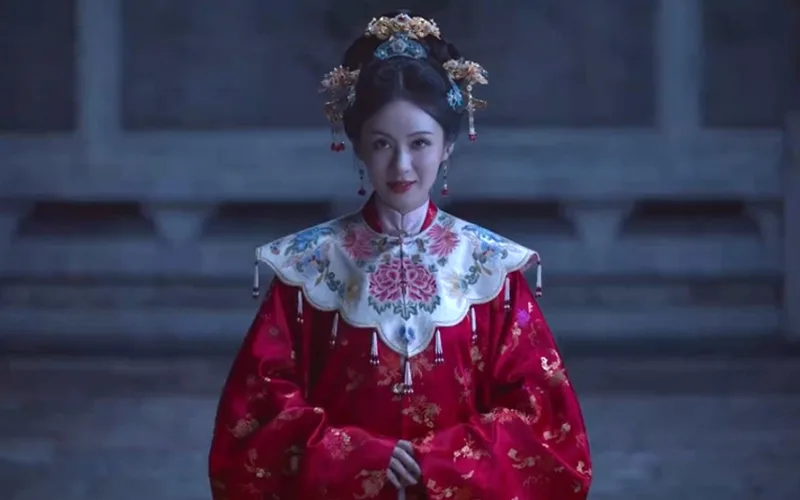
When Du Cuique (杜翠雀) rides back into Jinling (金陵) in Against the Current (兰香如故), the first image is deliberately off-key. She wears a long scarlet robe, heavy gold hairpins, and a pale embroidered piece around her neck. Its scalloped edge and tiny tassels make it look like a bib pinned to ceremonial red. Is she dressed for a wedding, a victory, or a warning? The garment is no random styling trick. It is a cloud collar, and its history gives the scene a sharp double edge.
Borrowed Clouds
The specific piece is a Four-Harmony Ruyi cloud collar (四合如意云肩). Its outline suggests four soft cloud heads falling around the shoulders, a wish for smooth fortune in every direction. One version uses four separate ruyi-shaped panels, each embroidered, pinned at front, back, left, and right. Another is cut from one cloth and laid over the neckline; its rounded front reads almost like an oversized bib. Du wears the second type, which explains the odd first impression.
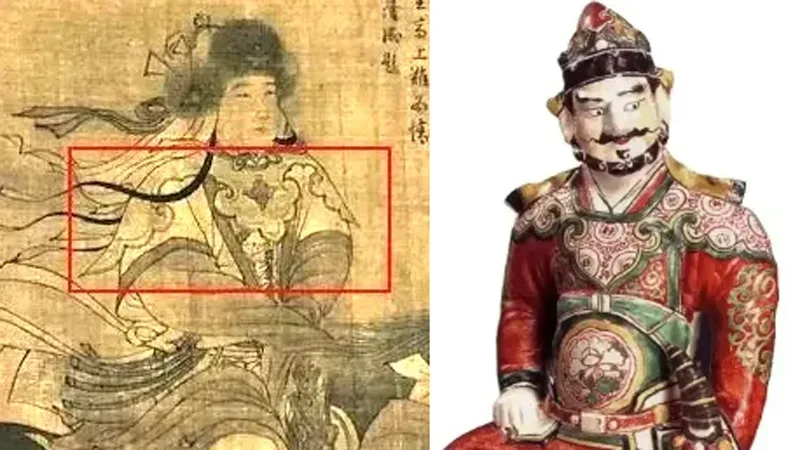
Older images point to a sacred beginning. Murals at Dunhuang (敦煌) from the Wei-Jin and Sui periods show Guanyin (观音) and auspicious goddesses with cloud-shaped shoulder pieces. At that stage, the item belonged to religious figures, not ordinary wardrobes. By the Jin dynasty, the term appears in Collected Rites of the Great Jin (大金集礼), so it had entered ritual language. The Jurchen likely adapted a northern nomadic accessory called Jaha and merged it with shoulder shapes seen in Central Plains murals.
Its first job was practical. Around the neck and shoulders, it blocked cold and kept inner clothes clean in harsh northern weather. Nobles turned that useful layer into a mark of rank. In the Yuan period, the four-cloud form was written into costume rules; History of Yuan: Rites and Costumes (元史·舆服志) records it. A related design linked cloud-collar patterns to sleeve panels, making ceremonial dress heavier and more formal. Ming courts and officials kept the idea, while standalone cloud collars still appeared on women in prints and paintings. Qing fashion pushed both main styles to their fullest, with brides, banquet guests, and festivalgoers wearing layered, embroidered versions. Western dress and the Qipao later pushed the old blouse-skirt system aside, leaving cloud collars mostly on opera stages.
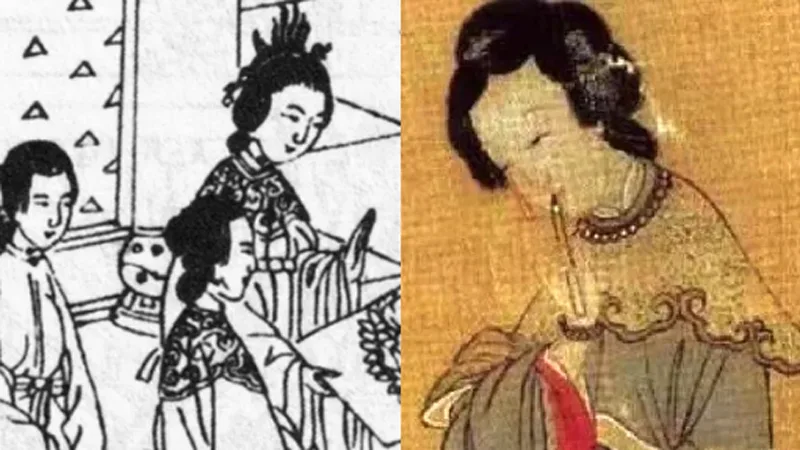
That survival matters for a screen costume. Opera keeps silhouettes larger than life, and a cloud collar reads clearly even under stage light or night fire. Its round frame isolates the face, while the hanging tassels add motion when the wearer turns. On Du, the piece is not a museum citation. It is a wearable echo of ritual dress, folk celebration, and theatrical display, all pressed into one pale circle over red.
Contrast and Camera
Why place one on Du now? First, contrast. Scarlet suggests celebration; the cream collar softens and unsettles it. The outfit hints at a bride but refuses a standard wedding cut. That near-miss mirrors her past: she schemed to enter the Lin family, failed, and was exiled. On the road she slipped away, joined sea bandits, lived among them for years, and now returns to Jinling with armed followers. She dresses like a celebration while planning to crack open the old order. The mismatch exposes ambition, resentment, and an identity that will not sit still.
Second, the camera. The scene is a night street, dark behind her, firelight flickering. A pale collar creates a bright island at the neck, pulling eyes to her face instead of letting her dissolve into shadow. Its width also extends her shoulder line, adding physical weight and pressure. The look is not pretty for its own sake; it is a visual weapon. The costume says she has arrived, and the street should feel it.
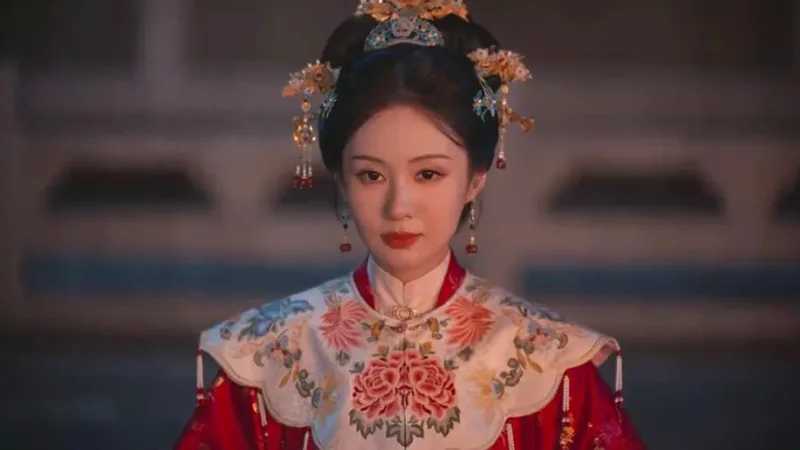
The styling also keeps her from becoming a simple avenger. Red gives her force, but the soft collar adds a trace of misplaced ceremony. She looks ready to celebrate something that never happened, and that gap makes her more unsettling. A pure villain in black would be easier to read. Du is harder: she wears the color of joy while carrying old humiliation and new leverage.
Zheng Hehuizi (郑合惠子) plays Du. She first drew wide notice as Yan Mo (颜末) in Rush to the Dead Summer (夏至未至). Her turn in Against the Current is being read as a career step forward. Does the red robe and pale cloud collar work for you, or does the bib-like shape distract from the drama? That question may be the point.