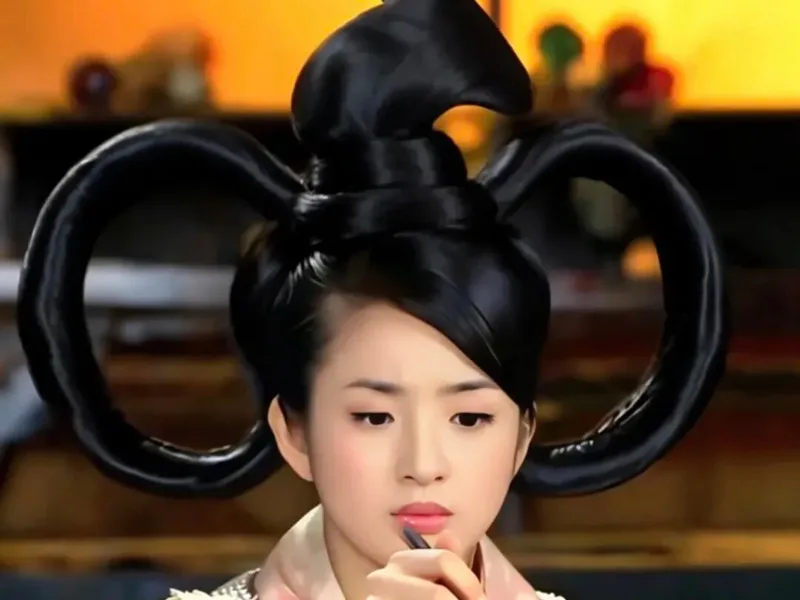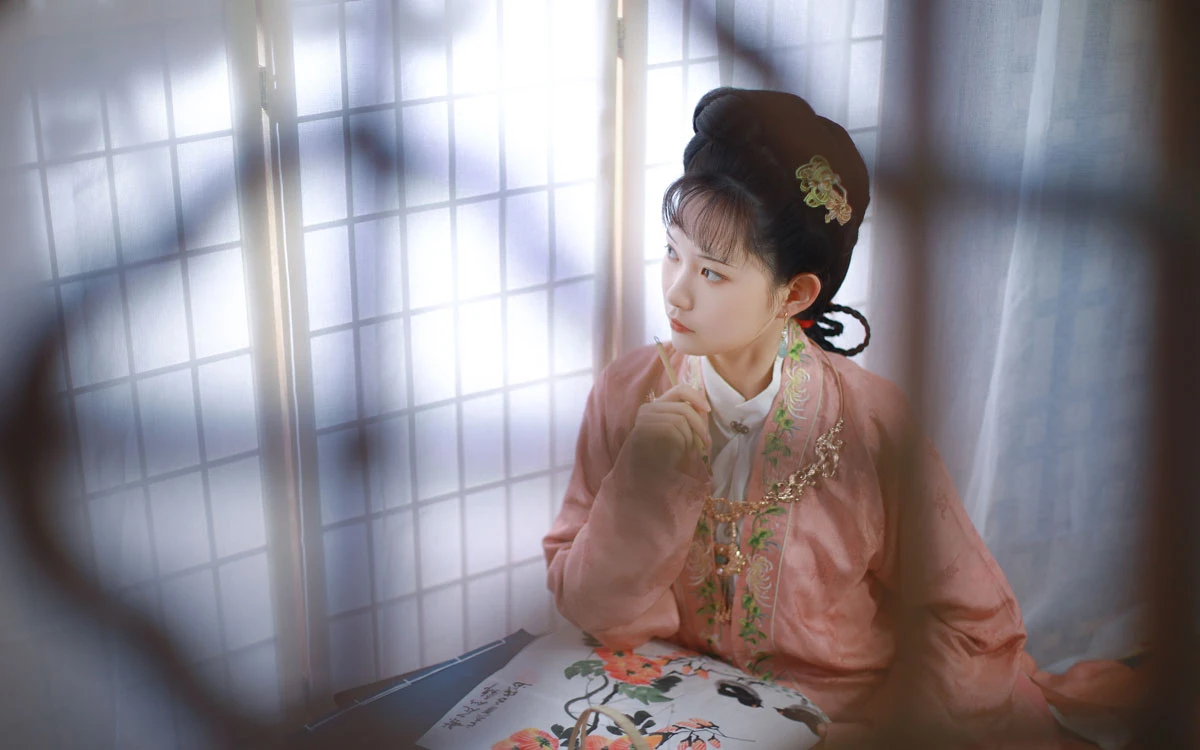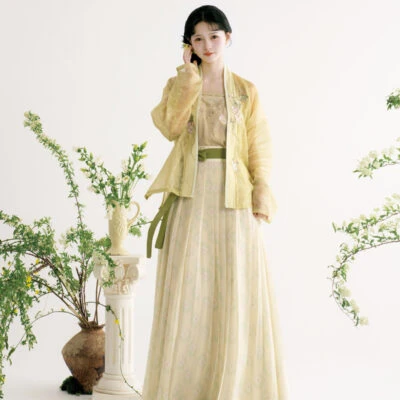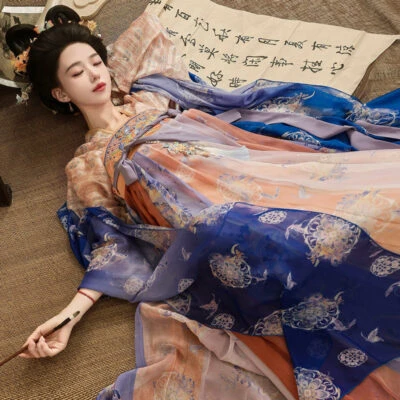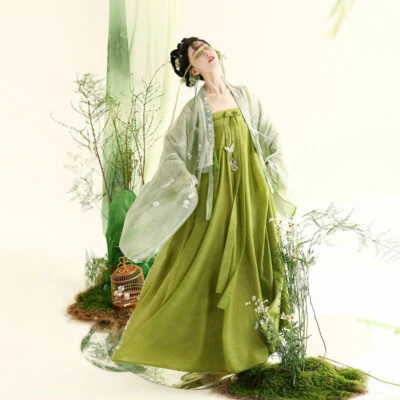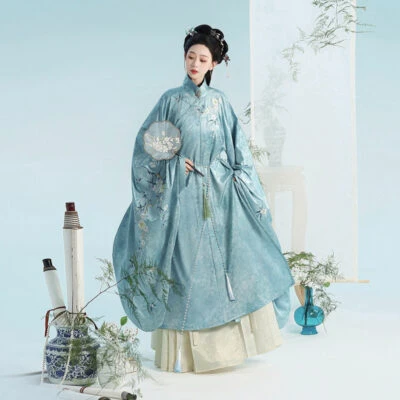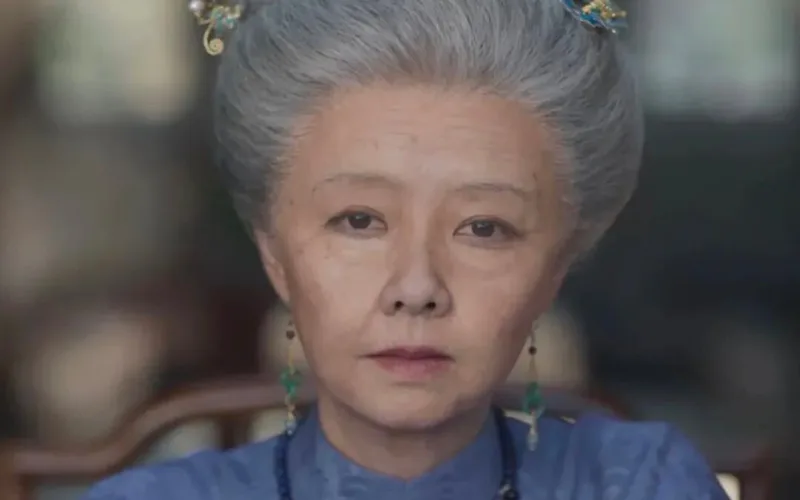
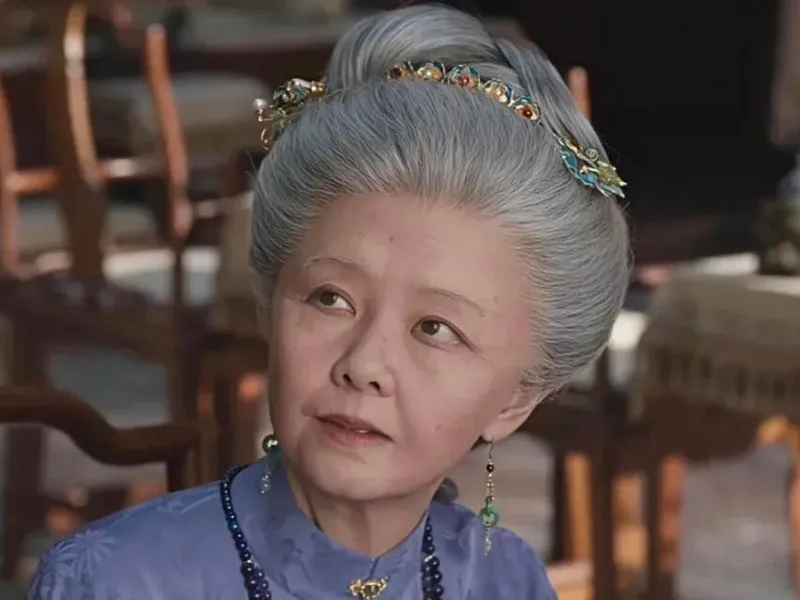
Open any period drama today. The female lead steps out, and before her face registers, a round, puffed-up bun fills the frame. Her hairline looks drawn by a compass. The crown is padded to cartoonish heights, and side hair flares wide to wrap the entire face. The whole arrangement sits like a helmet. This is “head-wrapping-hair”. Even the elderly makeup in Against the Current (兰香如故) obeys the same rule. The technique once served a purpose: it could soften an uneven hairline and balance a narrow face. But a tool has become a reflex. Stylists now pile volume first and ask questions later. Why are period dramas so fixated on this one shape? The result often looks less like history and more like a uniform.
A Modern Import
The obsession did not come from ancient China. Around 2020, Korean pop stars such as Jennie became bone-structure benchmarks. Social media flooded with tutorials on padding the crown and welding hair roots to the scalp. Fans then searched history and found a few similar looks, but not a universal rule. Only the High Tang period truly embraced such volume. Other eras kept hair closer to the head. Even within the Tang, variety ruled. So the “ancient origin” claim is shaky at best. A modern fad borrowed a fragment of history, then sold it as tradition. Drama crews took the shortcut without checking the timeline. They saw a trend, not a research question.
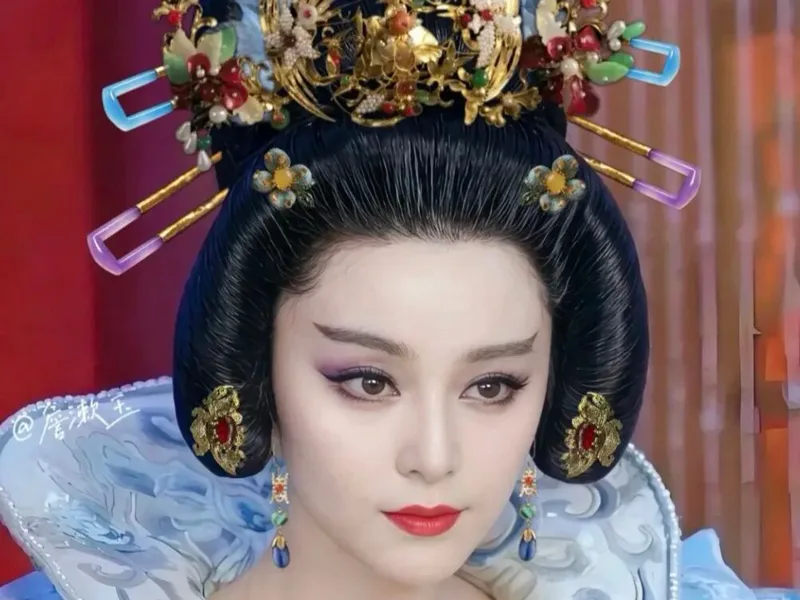
Drama crews ignored that nuance. Recent stills show ultra-high crowns, center-parted bangs, drooping rabbit-ear buns, delicate large buns, bright red lips—all face-slimming tricks lined up in a row. Noble ladies, female generals, even female emperors wear the same silhouette. A passerby cannot tell which still belongs to which show. Stylists ask “Is this person pretty?” not “Who is this person?” The question of identity disappears. A princess and a warrior should not share the same hair architecture. Yet they do. The face gets smaller on camera, but the character gets thinner in meaning. The audience loses a sense of rank, mood, and story. Every frame feels interchangeable. That is the cost of copying without context.
So the end of aesthetics becomes an assembly line. One mold replaces character-specific design. A teenage maid and a sixty-year-old matriarch receive the same padded outline. That sameness erases rank, mood, and story. Viewers stop seeing a person and start seeing a template. The tool became a stereotype—an unbalanced pile of hair that throws off facial proportions. Worse, it flattens the actor’s own features. A strong jaw, a broad forehead, a sharp cheekbone—all get buried under foam and fake hair. The screen becomes a row of identical helmets. No one remembers the character; they remember the bun. That is not styling. That is hiding. And hiding is lazy.
Copy-Paste Styling
The old-age look in Against the Current is the clearest warning. Tan Songyun (谭松韵) plays Xu Lanxiang (许兰香). Her elderly makeup uses a 3D silicone mask covering the face and collarbone, over sixty fake wrinkles, and six to seven hours of application in Hengdian (横店) summer heat above 40°C. Needles pierce the mask so sweat can escape. The craft is intense. The logic is not. Viewers broke down for good reason: why does this character, in old age, still need a padded crown? Age should change the silhouette. Skin sags, hair thins, posture shifts. A grandmother with a teenage hairline and a balloon crown looks wrong. The effort spent on wrinkles gets undone by the bun. That contradiction is what stings.
Did ancient people chase head-wrapping-hair? No. Tang women had dozens of recorded hairstyles: reverse coils, half-flips, startled-goose buns, spiral buns, double-loop immortal buns, thrown-home buns, Wuman (乌蛮) buns. High buns reached one chi (尺). Yuan Zhen (元稹) wrote of buns towering a foot high, with people standing at the gate to watch the spring breeze. Bai Juyi (白居易) noted fashionable high coils and light, flowing makeup. But high was not the only option. The same era also loved fallen-horse buns and Japanese-fallen buns—loose, tilted to one side, hair clinging to both cheeks. That is the opposite of head-wrapping-hair. Han dynasty fallen-horse buns also dropped sideways. Old paintings show face-wrapping-hair in many scenes. Each era had its own temper.
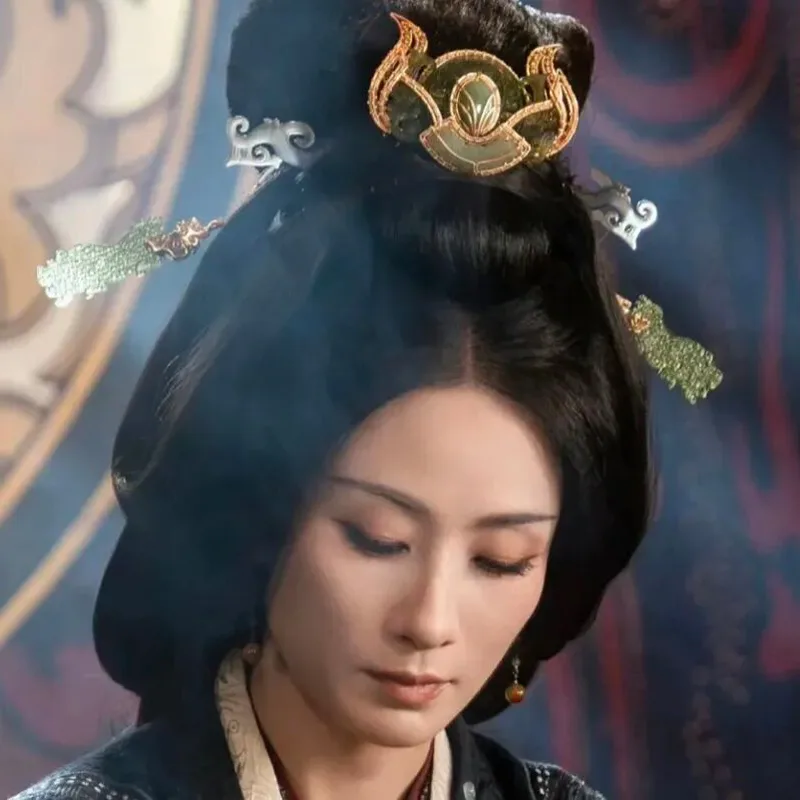
Each identity had its own combing method. A court lady, a dancer, a farm wife, a nun—none shared one shape. No single ruler measured everyone. The modern habit of forcing every role into the same padded outline erases those distinctions. It also ignores practical sense. A warrior cannot fight with rabbit-ear buns bouncing at her ears. A grieving widow should not look camera-ready. A tired mother should not have a crown that defies gravity. Style should answer to character, not to a filter. When the answer is always “more volume,” the question has already been lost. That is how a tool becomes a cage.
The real downgrade is not uglier actors. It is lazier stylists. Treating “slim face on camera” as the only truth and applying one template to every role produces identical faces and audience blindness. Beauty flows. You may love a high crown today, but it is one option among thousands, not an iron law from ancestors. Let hair behave like hair. Let age show. Let rank and mood shape the silhouette. Stop letting piled-up buns cage the imagination of period dramas. What do you think of this stereotype? The next time a drama opens, ask not “Is her face small?” but “Who is she?” That question alone could break the mold.