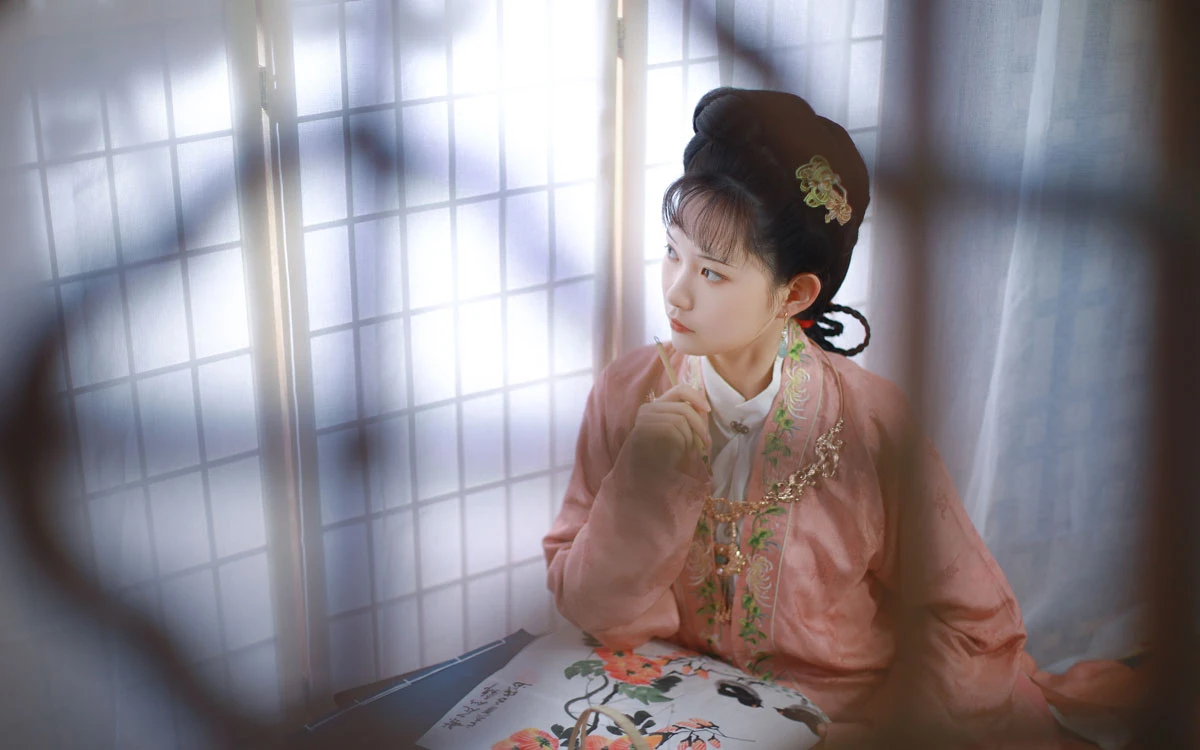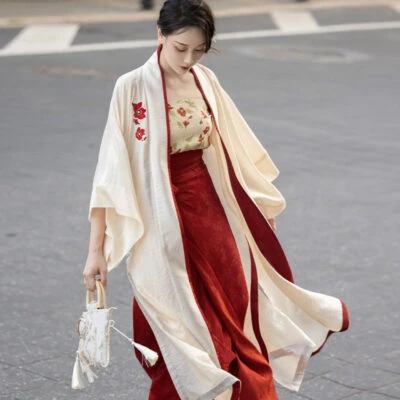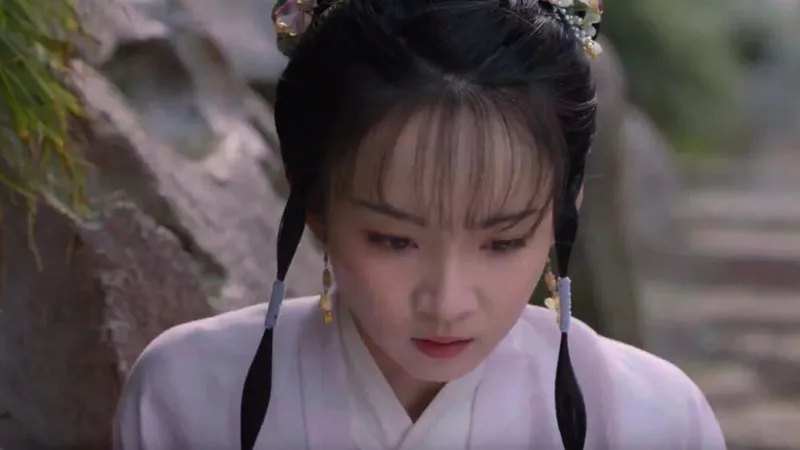
In Against the Current (兰香如故), young Lin Xiuru (林秀茹) appears with a thin, wispy fringe before marriage. It looks almost exactly like the air bangs worn by many women today. That small detail raises a bigger question: did ancient China really have air bangs, or are costume dramas quietly borrowing a modern hairstyle? The answer says less about history and more about how television shapes youth, beauty, and memory on screen. A few strands of hair can carry more meaning than a costume, a prop, or even a line of dialogue. It is a tiny style choice with a long history problem.
Ancient Hair Rules?
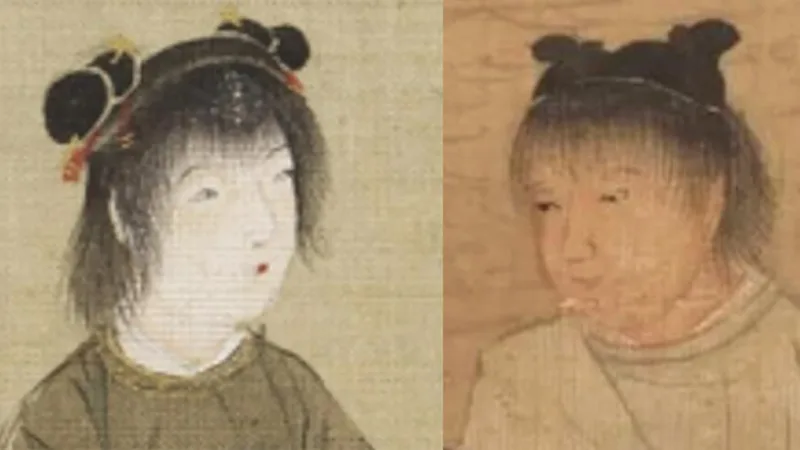
Ancient girls did wear hair over their foreheads, but not in the modern clipped style. Northern Qi (齐) records in Records of Cinnabar and Lead (丹铅录) describe young girls whose forehead hair covered their brows and eyes. Twin-loop buns and double-flat buns often left short strands loose at the front. These strands fell naturally. They were not cut thin, shaped, or trimmed into a neat fringe. Some ancient paintings show soft strands, but no evidence points to thinning shears or styled bangs. So the resemblance to air bangs is accidental, not historical. The past had loose baby hair, not a salon technique.
After a girl passed the hairpin ceremony, tradition changed her look. Her hair was gathered up completely. The forehead was shown. No covering fringe remained. That visual shift marked adulthood, marriageability, and social rank. In costume dramas, this rule becomes a useful shortcut. A loose fringe signals a girl before marriage. A bare forehead signals a married woman or a grown-up role. Against the Current uses that change with Lin Xiuru, letting the audience read her status without a line of dialogue. The hair does the work that exposition would otherwise do, and the change is easy to notice on a small screen.
The fringe known today arrived much later. During the late Qing and Republican years, Western fashion reached Chinese cities. Women cut their hair short and began trimming forehead hair. Styles such as blunt bangs, side bangs, and air bangs followed. Photography and early film helped spread these looks. People often confuse air bangs with brow-level fringe. The latter hangs flat and even with the eyebrows, like Lin Daiyu (林黛玉) in the 1987 A Dream of Red Mansions. Air bangs are thinned out, lighter, and end in uneven wisps. They do not sit in a straight line. One is a solid curtain; the other is a soft haze.
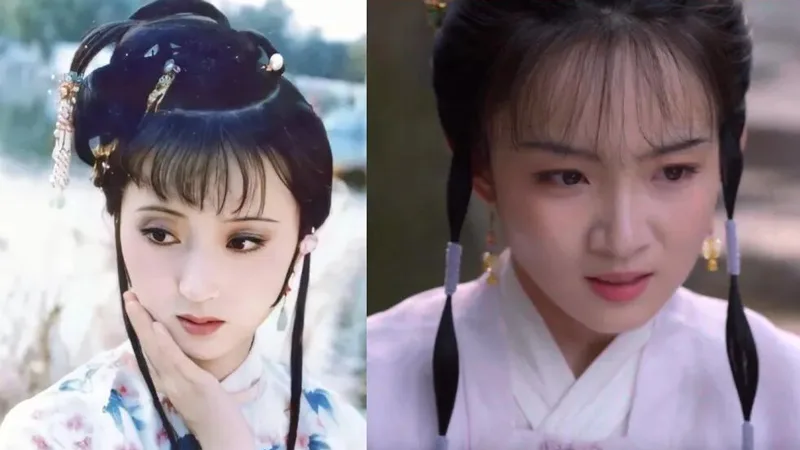
Costume designers know this difference, yet many still choose the haze. Why? Because television is not a museum. It speaks in symbols that viewers recognize fast. A young heroine needs to look innocent, pretty, and unfinished, as if her story has not yet begun. Air bangs deliver that message in a second. Historical accuracy may matter, but camera clarity often matters more. A designer might defend the choice as practical rather than lazy. The style may be modern, but its screen function is ancient: it tells us who a character is before she speaks.
Why It Works
The first reason is character signaling. A thin fringe gives a young, unmarried identity. When the same character later appears with a clear forehead, viewers instantly understand that she has grown up, married, or taken on a new role. This is quick visual storytelling. The second reason is face shaping. Air bangs soften a high hairline, a broad forehead, or a long mid-face. A high forehead may read as mature or severe on camera, while a few soft strands make it gentler. They are lighter than heavy blunt bangs, so they do not feel gloomy. The wispy ends blur the brow bone and cheekbones, adding a soft, youthful impression that cameras love.
The third reason is taste. Many recent costume dramas are sweet romances built around innocent young heroines. Air bangs fit that image. Classic hits already trained audiences to link this fringe with lively ancient girls, so designers reuse the idea. It is less a historical choice than a familiar visual language. When a producer wants a heroine who feels approachable, protected, and sweet, the fringe is an easy answer. When the script later needs a strong married woman, the fringe disappears. The audience accepts the change because the code is already learned.
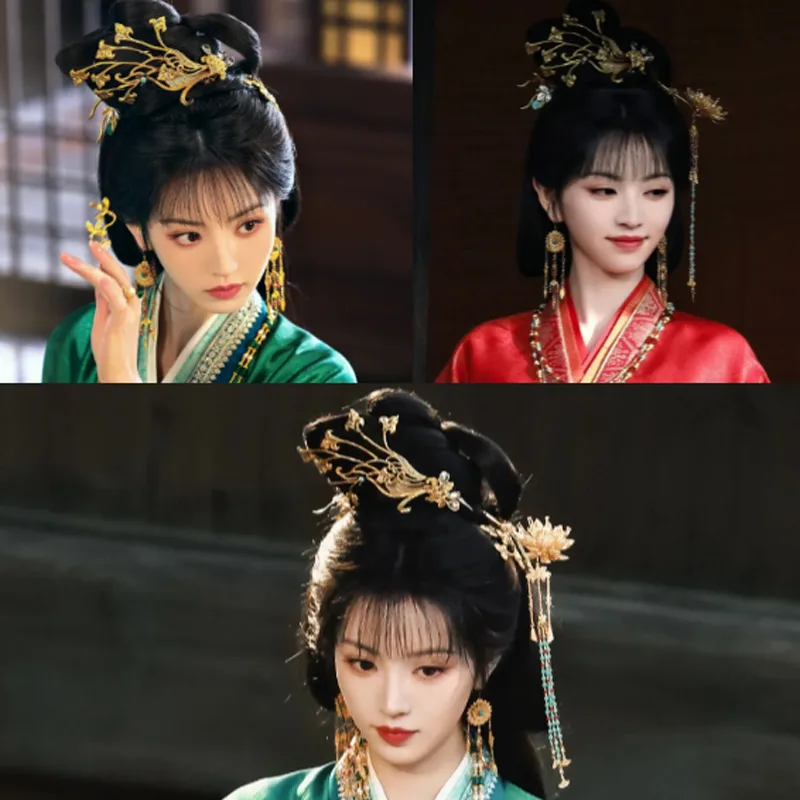
In the end, air bangs in costume dramas serve modern beauty standards and fast character setup. They are an artistic effect, not proof that ancient women wore them. The past is used as a stage, while today’s tastes write the costume notes. Some viewers enjoy the soft, youthful look. Others want stricter historical detail. Both reactions make sense. The real question is not whether the style is authentic, but whether it helps the story. Do you think this borrowing makes ancient heroines more vivid, or does it pull you out of the past?