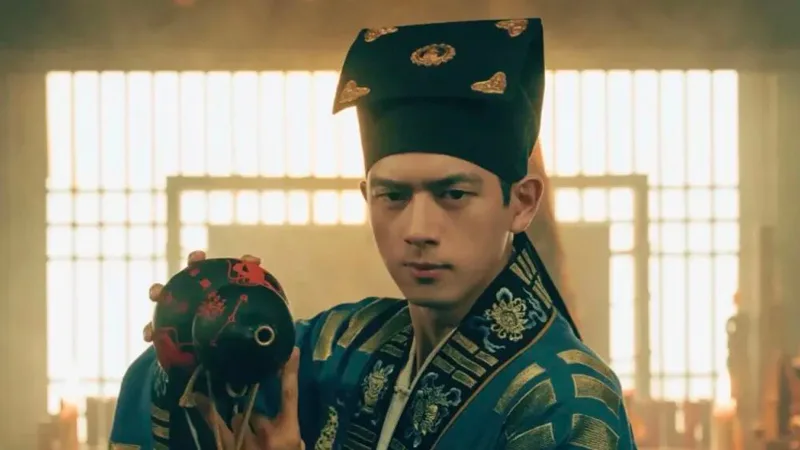
In the suspense drama A Prophet (我不是大师), actor Li Xian plays Shangguan Chengming (上官诚明), a wealthy young man from Jiangnan who disguises himself as a fortune teller after his family is destroyed by a secret sect. Dressed in a blue crane-feather cloak with fingers poised in divination gestures, he delivers the line that has become a viewer favorite: “It’s not ghosts who deceive you — it’s people.”
But the most fascinating detail of his costume isn’t the robe or the gesture. It’s the cloth hat on his head — a piece with square flaps hanging front and back, ribbons drifting in the breeze. That hat carries several hundred years of history behind it.
The Fluttering Cap
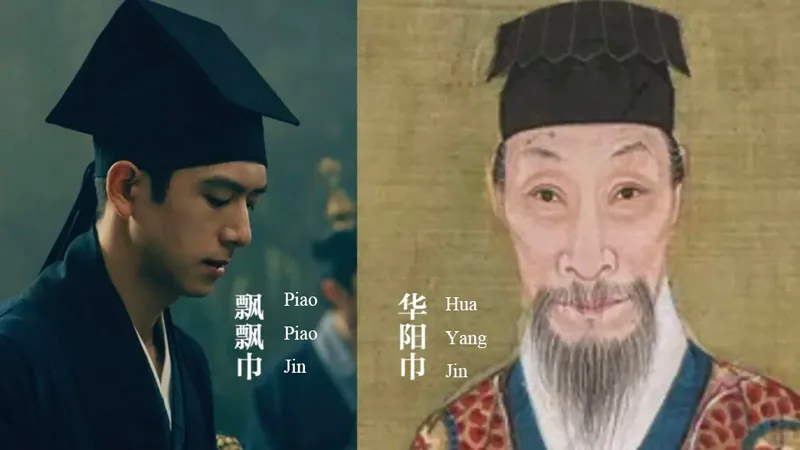
The hat Li Xian wears is called a Piao Piao Jin (飘飘巾) — literally the “Fluttering Cap.” Historical records describe it as a soft cloth headpiece worn by Ming Dynasty scholars, distinguished by square fabric panels draped at both the front and back. When the wearer walked, the panels and ribbons swayed together with the robe, creating what modern viewers might call a “walking soundtrack.” The name itself is wonderfully onomatopoeic: piao piao, drifting and floating. A 17th-century text known as the Hu Family Miscellany (胡氏杂抄) confirms that young men of scholarly families favored this style, noting that it featured “a piece draped front and back.”
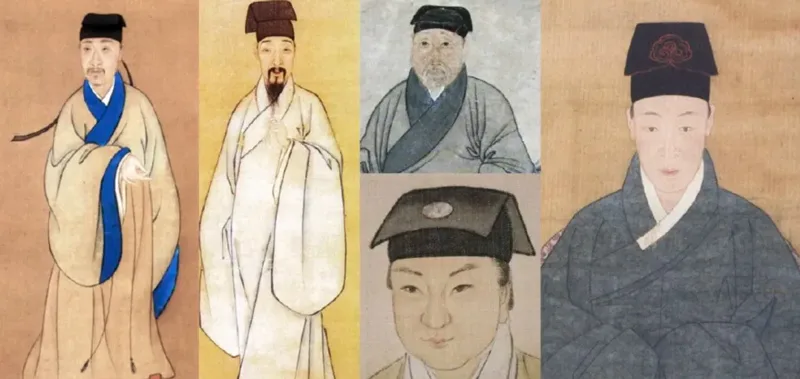
Unlike stiff ceremonial hats, the Fluttering Cap was everyday wear. It paired naturally with a Taoist robe or a straight-hemmed scholar’s gown. The overall look was relaxed yet refined — the Ming equivalent of smart casual. Because of its soft construction, it also offered better breathability than lacquered hard hats, making it practical for daily use. In portraits and woodblock prints from the late Ming period, you can spot it again and again on the heads of scholars, poets, and gentlemen of leisure.
The cap’s design evolved from an earlier square cloth hat and became widely popular in the late Ming and early Qing periods. Some versions added decorative borders or jade ornaments along the edges. The overall silhouette, however, remained consistent: angular roof-like top, fluttering side panels, and a sense of unhurried elegance that no stiff official cap could match.
Huayang and Crane Cloak
A related but distinct headpiece is the Huayang Jin (华阳巾), also called the Chunyang Cap (纯阳巾). This was a Taoist soft cap with a folded cloth top rising toward the back and nine pleated ridges running down the front — a design symbolizing the nine stages of Taoist alchemical transformation. During the Song Dynasty, it became standard wear for recluses. By the Ming period, scholars had adopted it as well. The New History of the Five Dynasties (新五代史) records an official named Lu Cheng (卢程) who wore a Huayang cap with a crane cloak while handling affairs at his desk.
That companion garment, the crane-feather cloak, deserves its own mention. Originally made from actual crane feathers and worn without sleeves, it later evolved into a sleeved outer robe. A Ming court document notes that the old design had no sleeves — which is precisely why it was called a “cloak” rather than a robe. In the Song and Ming periods, scholars wore it as casual outerwear. The combination of Huayang cap and crane cloak became shorthand for a man who stood apart from worldly affairs.
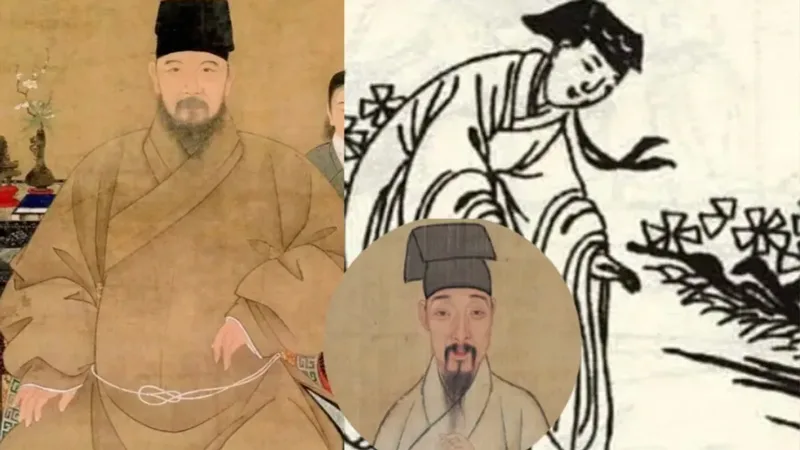
Yet the Fluttering Cap and Huayang Cap are not the same. The Fluttering Cap has flat square panels front and back with no raised top. The Huayang Cap has a distinctive folded crown and those nine front ridges. Confusing the two is easy, but costume historians are careful to separate them. Both, however, share the same visual language: soft, flowing, and deliberately unpretentious.
From Scholars to Street Corners
How did a Ming scholar’s hat end up on the head of a Republican-era street fortune teller? The answer lies in the professional branding of the divination trade. Since the Ming and Qing dynasties, fortune tellers cultivated an image of being “outside the mundane world” — people who had transcended ordinary society and therefore possessed special insight. To look the part, they adopted the visual vocabulary of scholars and Taoist recluses: flowing robes, soft caps, and an overall air of detachment.
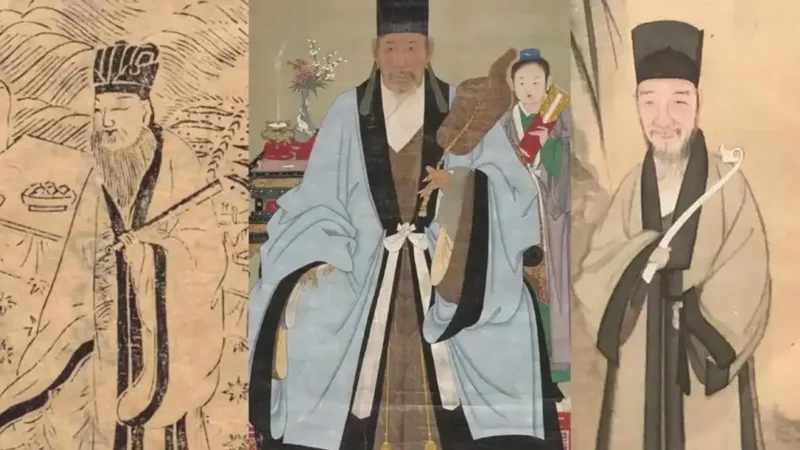
By the Republican period, street diviners and traveling mystics had inherited this costume tradition wholesale. A fortune teller who looked like a merchant would inspire no confidence. One who looked like a Ming scholar who had wandered out of a painting? That was a different story. Li Xian’s character in A Prophet wears this costume not as a historical reenactment but as deliberate deception — he uses the visual authority of tradition to sell his act.
The Fluttering Cap eventually migrated from history into opera and film. Qing Dynasty theatrical costumes adopted it as the signature look of the scholarly protagonist, often adding embroidered borders and jade accents. Stephen Chow’s Flirting Scholar (唐伯虎点秋香) cemented its image in popular memory. Today it functions as a visual shorthand: see the fluttering panels, know the man is a scholar.
So the next time you watch A Prophet, look past Li Xian’s face for a moment. Look at the hat. The fabric panels that sway as he walks are not just costume design — they are a direct line to Ming Dynasty scholars, Taoist recluses, and the long theatrical tradition that turned a piece of cloth into a symbol of wisdom, mystery, and quiet authority.