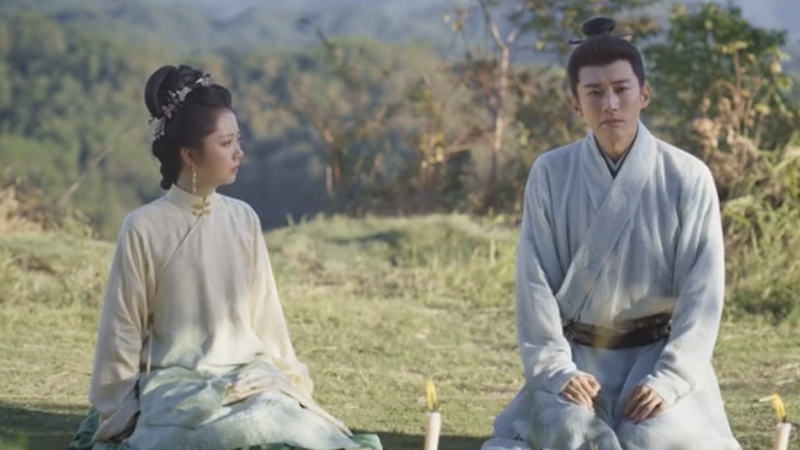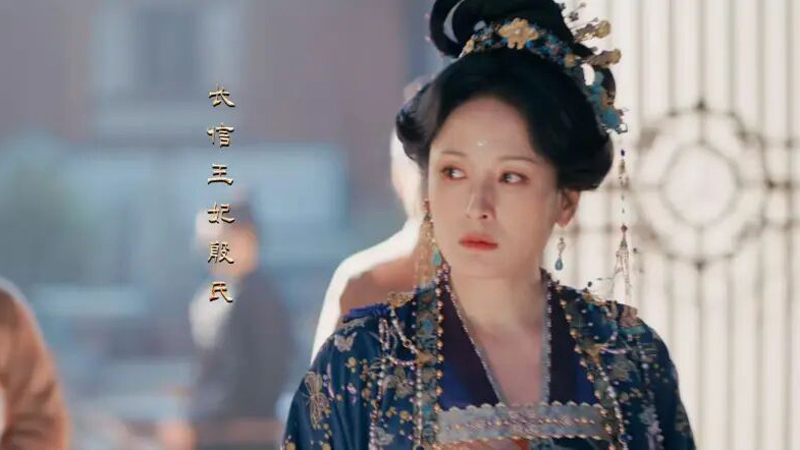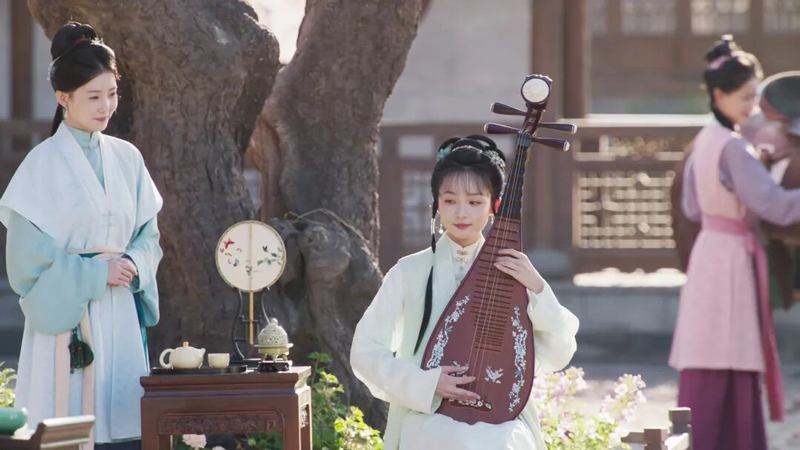
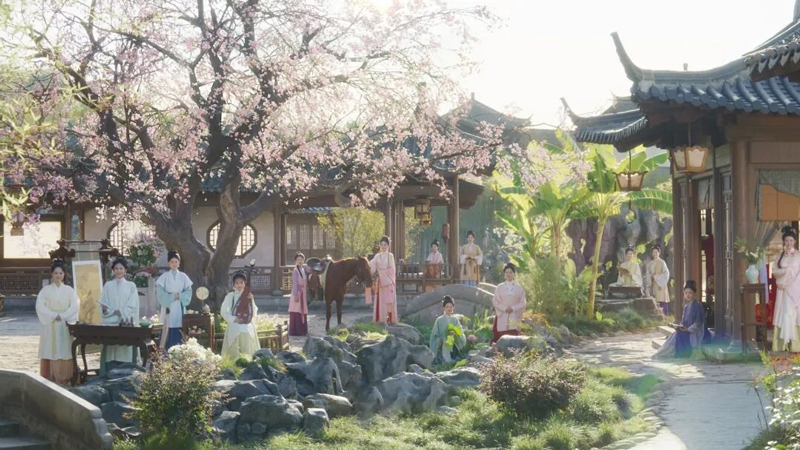
At the close of Against the Current (兰香如故), Lanxiang (兰香) imagines all the sisters standing together. Lin Jinqi (林锦岐) has died. The camera drifts across the group: Furong Xiu (芙蓉绣) sings onstage, Yuchan (玉蝉) reads, Lin Xiulai (林秀莱) checks accounts, Xiaolian (小莲) jokes with Gantang (甘棠), Lin Xiuwan (林秀芄) leads her horse, and Lin Xiuru plucks a pipa.
Yet only Lin Xiuru wears the dress of a young unmarried girl. She has already married. Why would the drama bring her back in that first, girlish form? It feels too deliberate to be a careless mistake. The answer may lie less in plot logic than in memory, grief, and the kind of truth that only affection can create.
Happiest Memories
When viewers first see the group, they may assume Lanxiang remembers each sister exactly as she last was. That reading is natural. But memory rarely keeps a simple timeline. It keeps the moments when a person seemed most alive. For Furong Xiu, that moment is performance: the stage, the song, the applause she owns. For Yuchan, it is quiet reading. For Xiaolian and Gantang, it is teasing and bickering, the easy warmth of two people who need no ceremony. None of these pictures depends on marriage, duty, or family rank. They show the women as themselves.
Lin Xiulai’s happiest image is not a wedding. It is the account book after her separation, when she returns to the Lin household and uses her skill to protect her children. Lin Xiuwan’s joy is a horse and a wide horizon, a life measured by roads rather than rooms. Her horse arrives with her because it carries her chosen purpose. These final images are not trophies. They are private definitions of freedom, the lives each sister might have chosen if the world had asked less of her.
Lin Xiuru is different. Her married life brings one hard turn after another. She gives birth to a daughter, her husband takes a concubine, and she turns separation into a bargaining chip just to survive. Then she is widowed young. In Lanxiang’s mind, those years may not look happy at all. Compared with her days in the Lin household, they are full of trouble. So the sister Lanxiang remembers most fondly is not the calculating wife or the wary widow. She is the girl who once played a pipa, still untouched by the deals that later shaped her. That is why the young dress makes emotional sense.
The visual grammar supports this reading. Every other sister appears with the object or action that defines her joy: a stage, a book, a friend, a horse, an account ledger. Lin Xiuru appears with a pipa, an instrument linked to her girlhood. If the scene were a simple roll call of final fates, she would appear as a widow, a mother, or a woman managing a household. Instead, she appears before those identities harden. Lanxiang may not be denying what happened. She may be refusing to let suffering become the only truth about her sister.
Pure Self
Lin Xiuru spends much of her life calculating. As a girl in the Lin household, she has no reliable protector and feels almost invisible. To live better, she learns to disguise herself. She lets everyone believe she is meek, hesitant, and harmless. When her second sister’s crisis opens a chance, Lin Xiuru steps forward and takes the marriage. The mask cracks. Yet marriage does not give her peace. She must keep scheming to secure herself and her daughters. Only after her husband dies and the Yuan (袁) family divides its property does she find a quieter life.
That quieter life matters. Once the titles of wife, daughter-in-law, and negotiator fall away, Lin Xiuru can return to a simpler self. Her manners may grow lighter. Her laughter may come easier. In later scenes with Lanxiang, she seems lively and at ease, even when she is plotting against someone else. She does not hide her cleverness from Lanxiang. She trusts her. The order in which the sisters fade from the final vision also suggests that Lin Xiuru stayed near Lanxiang for a long time. A companion who remains close is remembered in her warmest form, not her most guarded one.
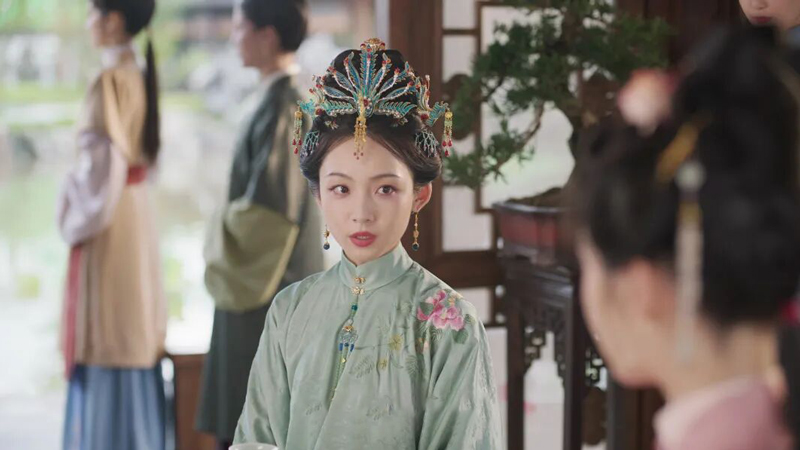
Perhaps the director had no hidden plot clue in mind. Perhaps the choice serves beauty, contrast, and feeling. A married woman in a girl’s dress can look strange on paper, but on screen it can feel like a quiet correction. It says that before the world loaded her with roles, Lin Xiuru was simply herself. Lanxiang may prefer that version because it is the one she loved without complication. The final group shot is both moving and sad. The sisters escape the inner courtyard and find purposes of their own. Lanxiang, once surrounded by noise and company, watches them leave one by one until only she remains.
So what does Lin Xiuru’s outfit mean to you? A slip in continuity? A sign of Lanxiang’s tender memory? A visual promise that every woman in the story once had a life before duty? The answer may shift with each viewing. That is the power of the scene: it lets grief, love, and hope share the same frame.