Long ago, hair was not just hair. It was a daily duty. Women brushed it, braided it, pinned it, and washed it with patience. No plastic bottle sat on the shelf. No electric dryer hummed. A basin, a comb, clean water, and time did the work.
They called washing the head Mu (沐). Washing the body was Yu (浴). The two words were not interchangeable. For officials in the Han period, hair care even shaped the calendar. Every five days, they received Xiumu (休沐), a rest day to go home, heat water, and clean themselves. It sounds modest, but without showers, it was practical state policy.
Family rules were just as strict. Liji (礼记) says younger members should prepare warm water for their parents every three days. Hair washing became a sign of respect, not vanity. A son or daughter who ignored it ignored care itself.
When Guests Arrived Mid-Rinse
Zhou Gong (周公), a serious political figure, once had visitors while his hair was still wet. He did not keep them waiting. He walked out with dripping strands, holding them aside. The story survives because it shows something ordinary: even powerful men rushed through hair washing, and even they could not escape its demands.
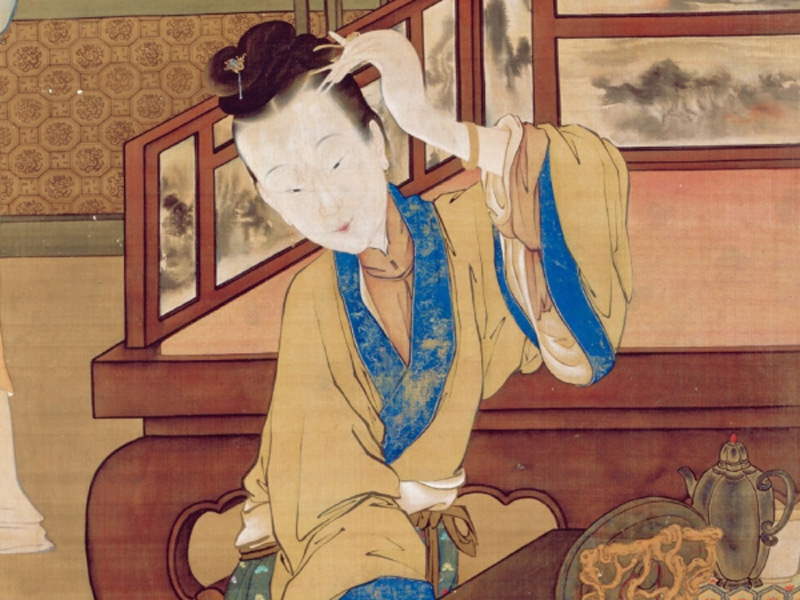
Paintings later captured quieter moments. Jin Tingbiao (金廷标), a court painter, left an image of a lady fixing flowers in her hair. The scene is calm, but the message is clear. Combs, pins, oils, and clean water turned hair into a private ritual. Women did not chase foam or heat. They used what they had: patience, repetition, and a good day for washing.
Maybe that is why old phrases still linger. Thick black hair, cloud-like buns, flower-like faces. They were not magic. They were the result of small habits, kept for years.
Ancient “Shampoo” Uncovered
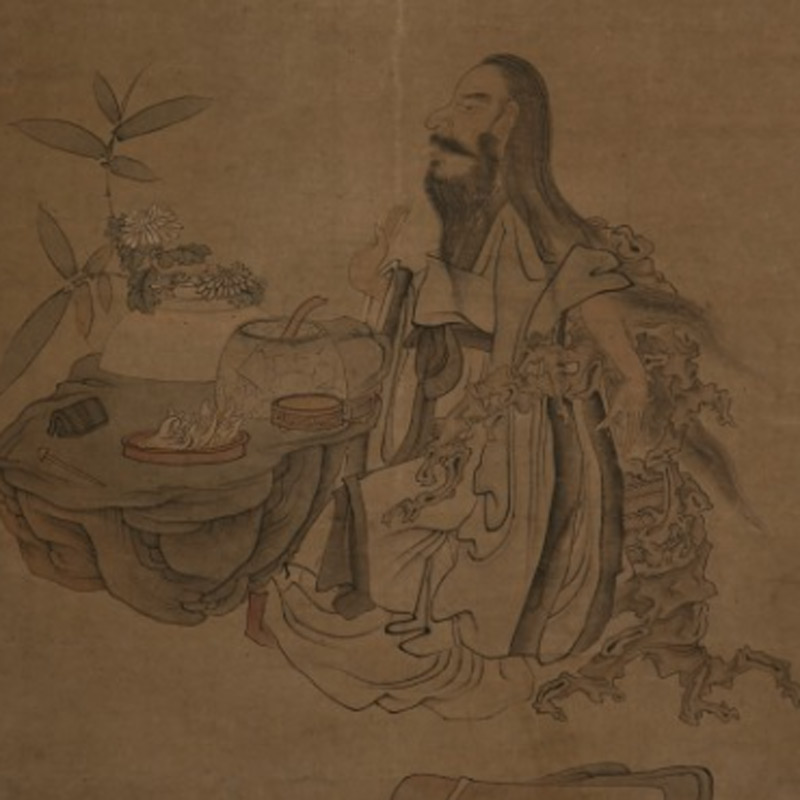
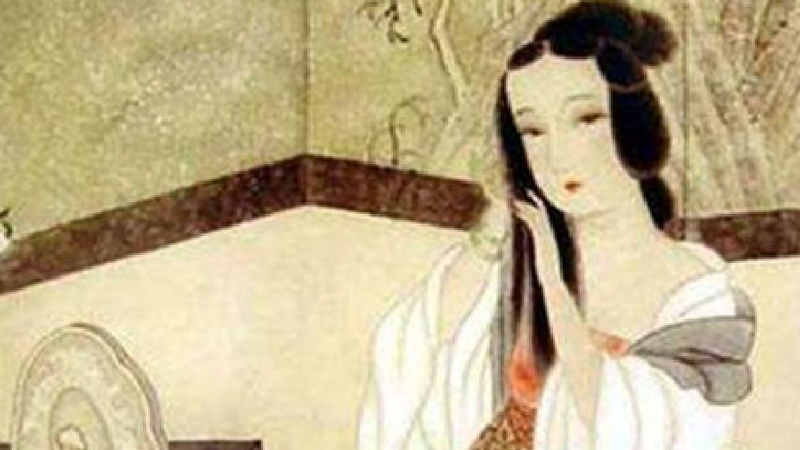
Washing Hair (晞发图), by Chen Hongshou (陈洪绶), Ming Dynasty
- Rice water: the top choice for nobles in the pre-Qin period. Zuo Zhuan (左传) records a story about a feigning-sick person receiving rice water for hair washing. Rich in B vitamins, rice water helps keep hair black and shiny. Compendium of Materia Medica (本草纲目) also notes that washing hair with rice water boiled with paulownia leaves and sesame seeds promotes hair growth.
- Chinese honey locust: the “king of ancient shampoo”. Crush honey locust pods, soak them in water and stir, then filter to get natural herbal shampoo. It cleans hair, darkens hair and strengthens hair roots. Decoction made from honey locust branches and leaves can clear heat, remove dampness and prevent hair loss.
- Hibiscus leaves: a mild alternative to honey locust. With a fresh, pleasant scent, they were much loved by ancient women. Legend says washing hair with hibiscus leaves on Qixi (七夕) Festival brings blessings from the Weaver Girl and a good marriage — arguably the earliest “matchmaking shampoo” in ancient times.
- Plant ash: the go-to option for commoners. Ash from burnt rice straw contains potassium carbonate, which absorbs oil effectively. Warning: always filter it before use; otherwise your hair will get dirtier.
- Egg white: ancient hair conditioner. Li Shizhen (李时珍) confirmed its effect: egg white cleans hair and leaves it smooth and soft. In Dream of the Red Chamber (红楼梦), when Fangguan (芳官) washed her hair, Xiren (袭人) prepared egg white for her. Tip: avoid hot water, or you will end up with “scrambled eggs” on your head.
- Flower-scented oil and soap: luxury goods for nobles. In Dream of the Red Chamber, Fangguan’s hair-washing set includes flower-scented oil, soap and egg white. “Soap balls” were already sold in markets back in the Song Dynasty.
Ancient Hair Care Rivaling Modern Salon Treatments
Step 1. Dry cleansing: Use a bi (篦, a fine-tooth comb, much denser than an ordinary comb) to brush the hair repeatedly and remove dirt. Legend has it that this tool was invented by Chen Qizi (陈七子) in prison during the Spring and Autumn Period. Empress Dowager Cixi (慈禧) liked to sprinkle specially made fragrant hair powder onto her hair and comb it with a bi.
Step 2. Wet washing: Thoroughly clean the hair using the natural “shampoos” mentioned above. Without hair dryers, people had to soak up moisture bit by bit with cotton cloth. This step alone could take most of a day.
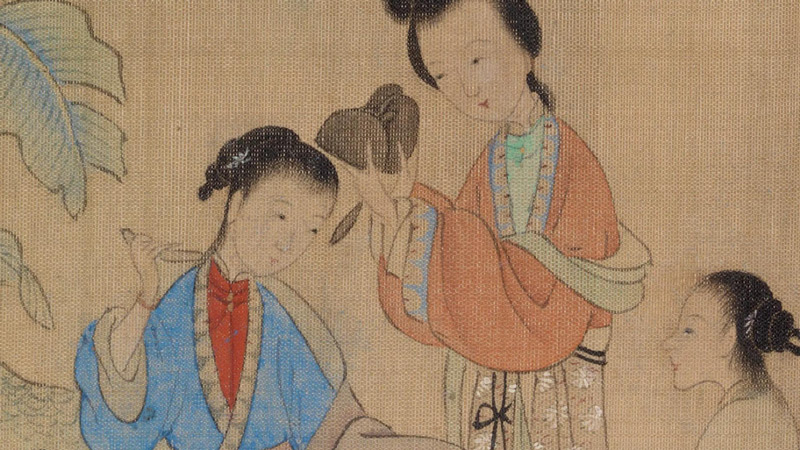
Lady Grooming by Banana Plant (芭蕉仕女理妆图), attributed to Qiu Ying (仇英)
Step 3. Applying hair oil: Equivalent to a mix of modern hair serum and hair styling spray! The word gao (膏) in the line “How can there be no hair ointment?” from The Book of Songs (诗经) refers to hair-nourishing oil. Sweet osmanthus oil was the most popular variety. It was steamed with half-bloomed osmanthus flowers and sesame oil, releasing a rich fragrance. Dream of the Red Chamber contains the lament: “A maiden grieves, with no money to buy osmanthus hair oil.”
Step 4. Hair combing for health: Su Shi (苏轼) once suffered from hair loss. A famous doctor advised him to comb his hair more than a hundred times. After keeping up the practice, his hair loss improved. The ancient saying “To keep hair from falling out, comb it a thousand times” was no empty phrase.
Ancient Haircare
From rice water to Chinese honey locust pods, from fine-tooth bi combs to scented hair oil, ancient women’s hair-washing routines were cumbersome yet full of wisdom and ritual.
As early as 3,000 years ago, The Book of Songs recorded the line: “How can there be no hair ointment? For whom do I make myself fair?”
Without proper shampoo and hair care products, how could one adorn their looks?
It seems the love for beauty has never faded, from ancient times to the present.