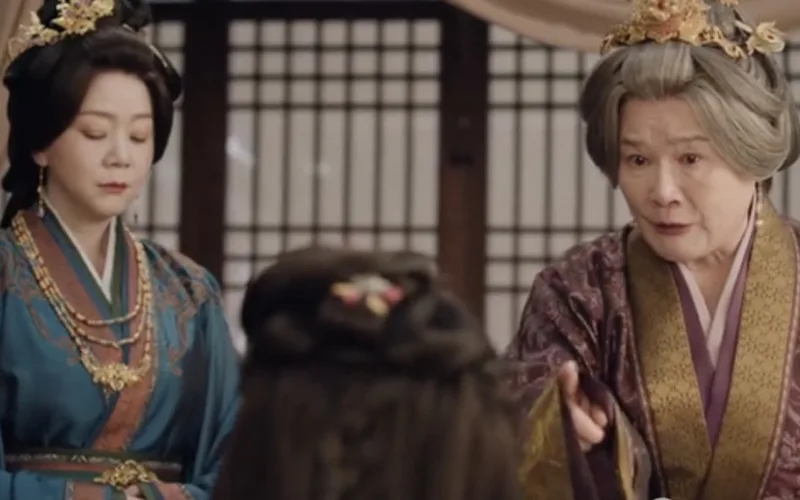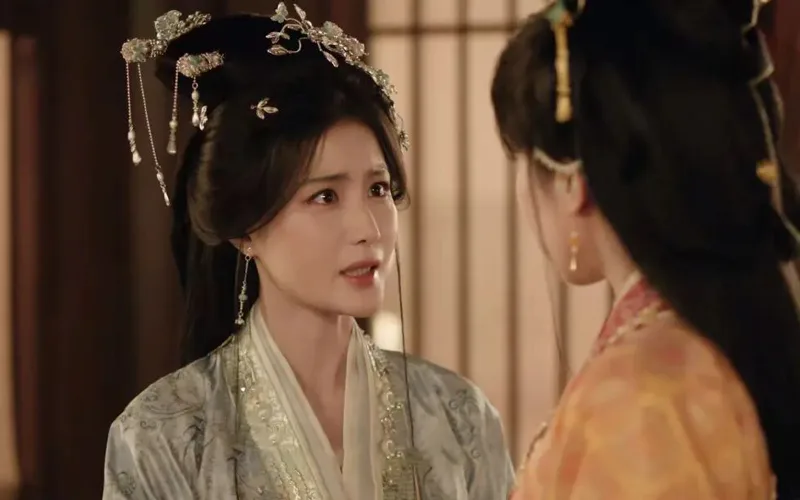
After the finale of Tigers Sniff the Rose (尚公主), the loudest takeaway is not the central romance. It is the supporting cast. Almost no minor figure exists merely to push plot buttons. Each has a past, a want, a mistake, and a consequence. That completeness changes the show’s temperature: the chaos feels inhabited, not staged. Even tiny roles leave a mark, and their choices make the ending sting longer than any grand speech. The finale’s most memorable crown, then, belongs to the ensemble, not only the leads.
Love and Defiance
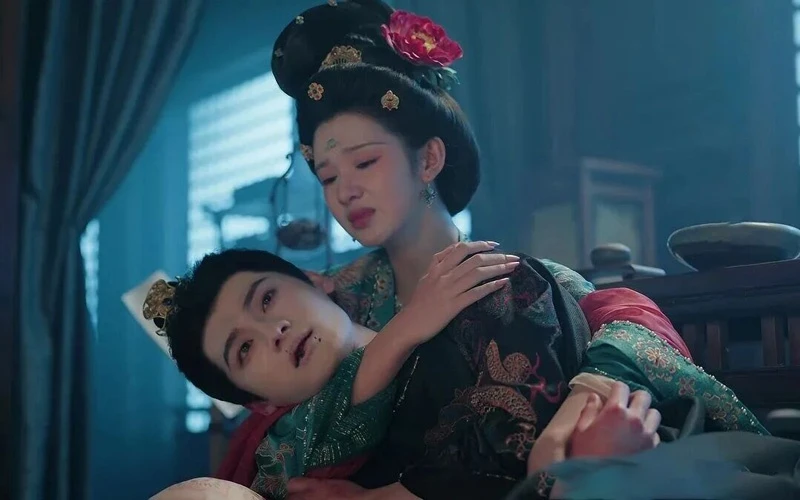
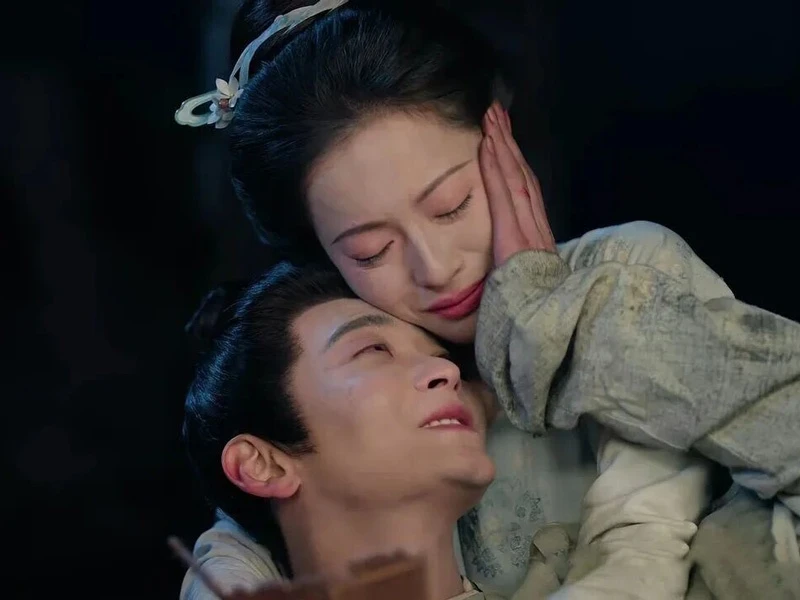
Chunhua (春华) and Liu Wenji (刘文吉) carry the saddest thread. She reaches the empress dowager’s seat, while he chooses blood to keep her safe. Without hesitation, he kills the Jin Prince (晋王), then drinks poison. He dies in her arms and finally hears that she has loved him for years. Relief and grief arrive together. Yet one cruel blind spot remains: to his last breath, he believes his friend Yan Shang (言尚) died in battle. Had he known otherwise, would he have chosen a different ending? His loyalty makes the question hurt.
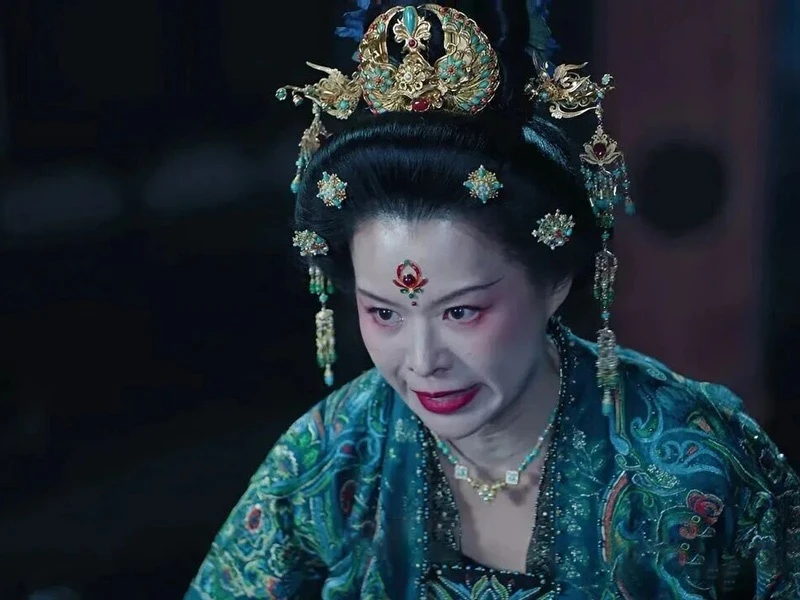
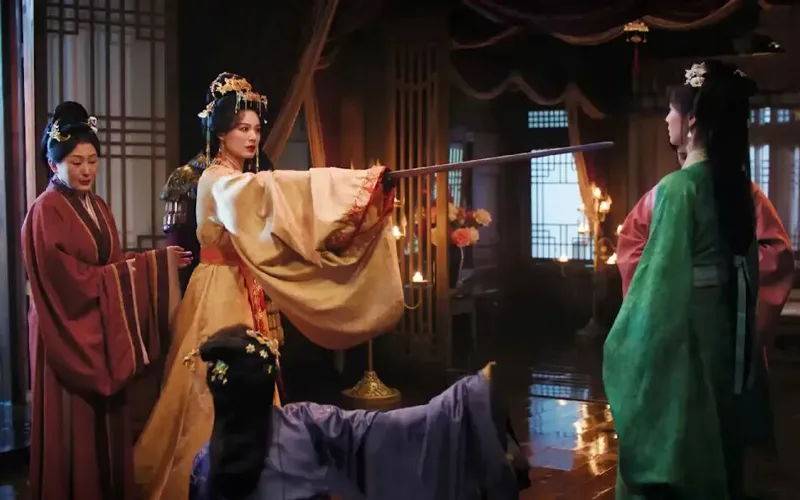
Yu Gong (鱼公) and Luling Princess (庐陵长公主) turn restraint into heat. Their middle-aged forbidden bond drew fans close to the main couple. When he exits, viewers see he was never simply a villain. She, usually wild and careless, gets her sharpest hour as the crown prince’s troops storm the city. She refuses surrender, scolds Muxun (慕勋), then takes her own life with a sword. That final stand reveals a woman of real appetite, real loyalty, and real responsibility. Her death is not decoration; it changes how the whole court feels.
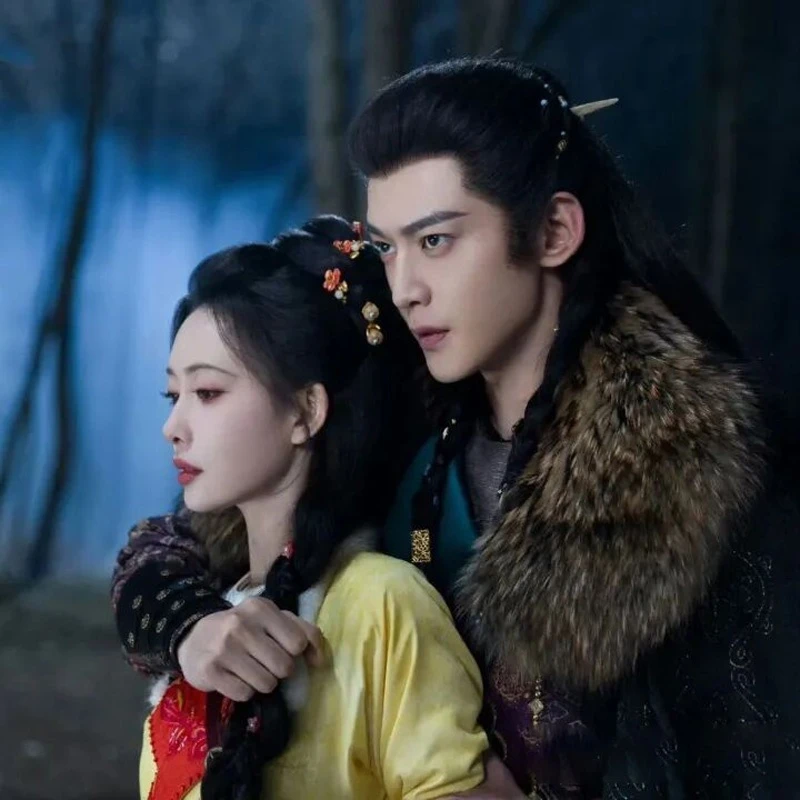
Meng Zaishi (蒙在石) and Mu Wanyao (暮晚摇) linger because their love grows through action. He first steals a bride for his uncle; later, he does it for himself. His restraint deepens instead of repeating. On the run, he takes an arrow for her, then jokes through the pain. Seeing her tears seems to comfort him. He hands her the tally for Beijiang (北靖)’s hundred thousand troops and sends her toward freedom. That gesture completes him better than victory ever could, because it asks nothing back.
Yang Si (杨肆) is the adaptation’s most divisive change. Here he adores the princess, yet at every crucial turn he cannot fully stand beside her. The wavering wears thin. In the novel, his heart belongs to Yan Xiaozhou (言晓舟), and their pair carries clearer tragedy. On screen, he chooses, regrets, and chooses again. His final request—that Mu Wanyao fire the last arrow—reads as a self-made ending, a ragged sort of redemption rather than a clean romance. It leaves a bitter aftertaste, but it fits his indecision.
Echoes Beyond Arrows
Wei Shu (韦树), the top scholar with little screen time, hides a neat trick. Early episodes mention his love of alchemy, which looks like idle color. At the critical gate defense, that hobby becomes useful. The setup and payoff meet with quiet precision. It is a small writer’s choice that rewards attention, and it proves that even a throwaway detail can carry weight when the ending remembers it. He never needs a heroic speech; his odd habit does the work.
Liu Ruozhu (刘若竹) and Lin Dao (林道) stand as a righteous couple in wartime. They light the beacon at great risk. Lin Dao falls with an arrow, and grief seems certain. Then Tan Yuanchun (谭元春), once a student of Liu’s father, remembers old kindness and spares Liu Ruozhu. Just as the story tightens into loss, a bamboo slip meant as a gift blocks the fatal wound. Luck and tenderness arrive together, earned by earlier choices. The rescue does not erase danger, but it keeps hope alive.
Cailian (彩练) and the princess’s maids are not decoration. During the final defense, they step forward, take duty, and fight with the only weapons they have. Their courage is not grandly staged; it is practical and stubborn. That is exactly why it lands. These women give the siege a wider pulse. They remind viewers that a household can become a line of defense, and that loyalty often wears plain clothes. No one calls them heroes, yet the city holds partly because they refuse to vanish.
The finale’s real greatness sits in such small lives: separate loves, separate regrets, separate courage. Chunhua’s crown, Luling’s sword, Meng’s tally, Wei’s alchemy, Lin’s bamboo slip—each detail closes a private circle. Together they make Tigers Sniff the Rose feel warmer, fuller, and worth revisiting. A group portrait works best when every face can be remembered without the camera demanding it. This show understands that. Its side characters do not orbit the leads; they build the ground beneath them, and that is why the ending still echoes.