-
5 Must-Watch Chinese Costume Dramas Shaping a New Narrative Trend
The landscape of Chinese costume drama is undergoing a quiet but significant evolution. As evidenced by five recent standout series, the genre is moving beyond epic battles and fantastical romance toward a new paradigm defined by intellectual depth and narrative precision. These shows—from investigative procedurals to historical political dramas—prioritize specialized knowledge, mature character dynamics, and sophisticated genre blending. Their collective success, often fueled by word-of-mouth rather than sheer promotional might, signals a discerning audience appetite for substance. This trend marks a maturation of the genre, where compelling storytelling is built not on scale, but on the solid foundations of logic, character integrity, and innovative conceptual hooks. The Imperial Coroner 2 (御赐小仵作2) The sequel to the sleeper hit The Imperial Coroner demonstrates that a loyal audience awaits well-crafted stories. The Imperial Coroner 2 reunites the original cast after five years, a rare move that pays off by preserving the unique dynamic fans loved. The series follows the married forensic examiner Chu Chu (楚楚) and her husband, the imperial official Xiao Jinyu (萧瑾瑜), as they lead the judicial department. Their partnership now operates on both professional and personal levels. What sets this show apart is its effortless blend of a tightly-plotted investigative…- 70
- 0
-
Glory: Family Sorrow Behind Rong Shanbao’s Protection?
In the misty tea hills of Southern Song Dynasty Jiangnan (江南), the illustrious Rong family is revered as the undisputed sovereigns of tea. Their legacy, however, rests upon a fragile and painful paradox: a matriarchal line where women inherit power and men marry in, and a spiritual cornerstone known as the "Tea Bone." This rare, innate gift for discerning and crafting tea is both their divine right to rule and the source of a generational agony. The new matriarch, Rong Shanbao (荣善宝), exhibits a fierce, almost obsessive protection over her sixth sister, Rong Yunwan (荣筠纨). This is far more than sisterly devotion; it is a desperate defense against a secret that could shatter their world. For Yunwan, the true and unwitting bearer of the "Tea Bone," is a pure soul trapped in a childlike state of mind, her priceless gift making her a pawn in a ruthless game for control of the family's destiny. The Weight of the Crown Rong Shanbao’s authority is built on a foundation of sand. The family's rule demands its leader possess the "Tea Bone" to legitimize their command over vast tea gardens and imperial trade licenses. The aging matriarch, knowing the true heir could never…- 38
- 0
-
Glory: Bond and Trust in Conspiracy’s Web
In the world of Glory (玉茗茶骨), the delicate aroma of tea leaves intertwines with the sharp scent of conspiracy. At the heart of this drama set in Jiangnan's tea empires lies the complex relationship between Rong Shanbao (荣善宝), the heiress to the Rong family tea legacy, and Lu Jianglai (陆江来), a disgraced scholar. Their story is not one of simple romance but a meticulous dance of suspicion and alliance, forged in the kilns of family power struggles and imperial court machinations. From master and servant to unlikely allies, their journey questions whether trust can ever truly blossom when every hand seems turned against them. A Calculated Beginning Their connection began not with warmth, but with cold utility. After surviving an assassination attempt that left him with lost memories, Lu Jianglai found himself at the mercy of Rong Shanbao. Seeing an opportunity in his plight and a potential pawn in her family's internal wars, she relegated him to the lowest station: a stable hand. He, in turn, played the part of a subservient amnesiac, hiding his keen intellect to avoid further danger. This initial dynamic was pure transaction. She tested his limits, searching for weakness or use. He observed her maneuvers,…- 32
- 0
-
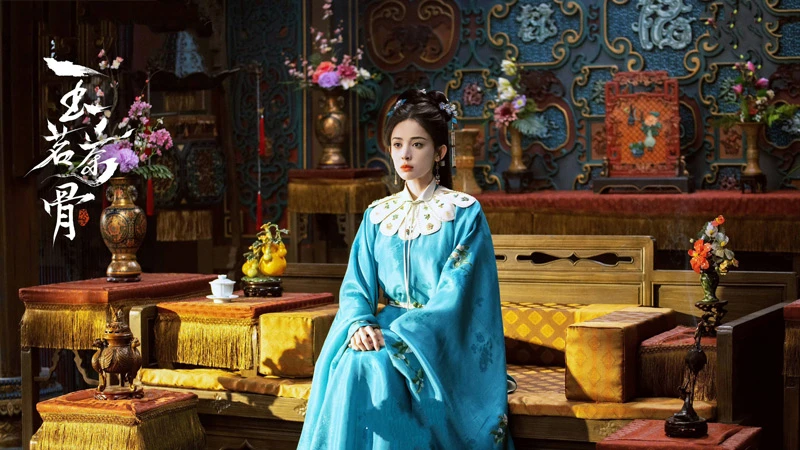
Why Does Rong Shanbao’s Outfit in Glory Look So Slimming?
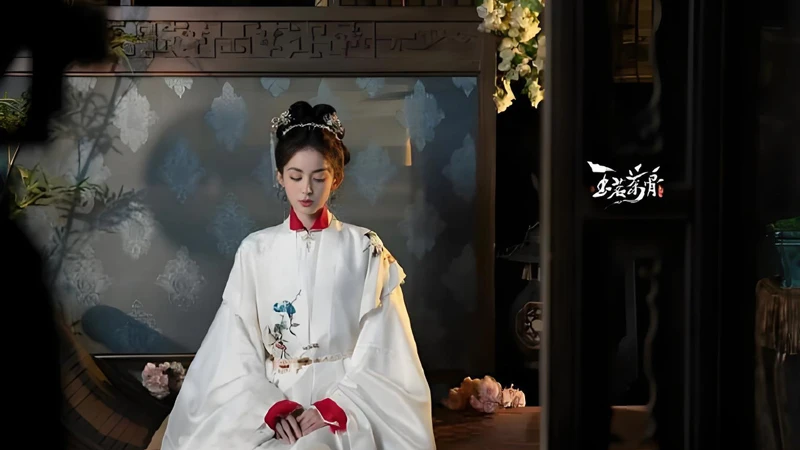
In the historical drama Glory (玉茗茶骨), actress Na Zha (娜扎) captivates audiences not just with her performance, but with her wardrobe. Her character, Rong Shanbao (荣善宝), is frequently seen in a specific style of outerwear that seems to magically elongate her silhouette, sparking online conversations about its flattering power. Viewers quickly noted its similarity to modern fashion items, revealing a fascinating truth: this garment is a centuries-old design called the Bijia (比甲). More than just a costume piece, the Bijia’s journey from the imperial courts of ancient China to contemporary street style showcases a stunning continuity in aesthetic preference, proving that some designs truly are timeless. Historical Threads The Bijia’s origins trace back to the Song Dynasty. Originally a form of Hanfu, it was a sleeveless, collarless over-garment, similar to a long vest. Its practical design was later adopted and adapted during the Yuan Dynasty for functionality. Historical records like the Yuanshi (元史) describe its purpose: a garment with a front shorter than the back, lacking sleeves and a collar, secured by two ties. This made it ideal for equestrian activities and labor, protecting the torso without restricting arm movement. By the Ming Dynasty, the Bijia had shed its purely…- 25
- 0
-
Tomb Ignites Rong Yunshu's Vengeful Frenzy in Glory
The grand gates of the Rong family compound shut firmly behind Rong Shanbao (荣善宝). Cast out by the formidable Matriarch for defying family decrees, she leaves with little more than her resolve. Her crimes? Insisting on a proper burial for her aunt and the return of a young cousin wrongly declared dead. In the ruthless social hierarchy of their era, such compassion is seen as a dangerous flaw, a stain on the family's prestige. While Shanbao faces exile, another young woman within those same walls watches silently. Rong Yunshu (荣筠书), the delicate fifth miss, feigning blindness and fragility, nurses a secret vengeance that will soon ignite a chain of destruction. The stage is set not just for a family dispute, but for a moral collision that questions the very meaning of justice and legacy. A Tomb's Silent Message After her banishment, Rong Shanbao performs an act that baffles everyone. She commissions a new tomb near her aunt's resting place, on a peaceful hillside planted with delicate February Orchids. The name carved on the stone, however, is not a relative of hers. It reads: Lin Pingxiang (林萍香). This mystery woman is the long-deceased mother of Rong Yunshu, a tragedy the family…- 45
- 0
-
Glory: Breaking the Cycle of Manipulation and Cruelty
When Rong Shanbao (荣善宝) collapses in the rain, shielded by Yan Bailou's (宴白楼) umbrella and caught in his embrace, this moment is far from romantic. It is the culmination of a lifetime spent as a chess piece. The separation of the Second Miss from her child, the Fifth Miss's blindness, and the vicious conflicts among the sisters—all were engineered outcomes. The true puppeteer is the Matriarch, whose desires shape every tragedy within the mansion. The drama Glory (玉茗茶骨) dissects not just family strife, but the cold machinery of control, where affection is a liability and individuality a threat. The Pawn's Awakening Shanbao's decision to marry Lu Jianglai (陆江来) at the ancestral hall is her final attempt to claim autonomy. The Matriarch's response is not a blessing, but a calculated warning. She recounts her own bitter past: a youthful elopement with a scholar who later betrayed her, stealing precious tea seeds and scriptures. This man, Shanbao's biological grandfather, now lives confined within the clan temple, a permanent trophy of the Matriarch's vengeance. Her story is a clear message: romantic trust is foolish, and personal happiness is irrelevant. Shanbao's value lies solely in her utility to the family's—and the Matriarch's—power. Despite understanding…- 61
- 0
-
Glory: A Devil’s Bargain Over 30,000 Catties of Illicit Tea
In the world of Glory (玉茗茶骨), a Qipao is not merely a dress, and a teacup is never just a drink. They are weapons, currencies, and shields in the intricate wars fought within gilded mansions. The series presents a society where bloodlines are leveraged, emotions are bargained, and personal identity is the ultimate contested territory. At the heart of its latest storm is Rong Shanbao (荣善宝), the designated heir to a prestigious tea empire, whose destiny is hijacked not by market forces, but by a devastating familial secret and a woman who wields politeness like a scalpel. The Calculated Sister Xie Huiqing (谢惠卿) arrives at the Rong residence not with force, but with a devastating smile and impeccable manners. Her words to Shanbao are soft, dripping with concern for an aging father and a longing for a lost brother. Yet, each syllable carries a precise, unspoken threat. She holds the key to a catastrophe: the secret of the 30,000 catties of illicit tea sold by Shanbao's father, a debt poised to crush the family after a hailstorm ruins their harvest. Xie's offer is a devil's bargain. The powerful Duke's mansion will clear the debt, but only if Shanbao can persuade…- 45
- 0
-
A Tea Master's Vengeful Path in Glory
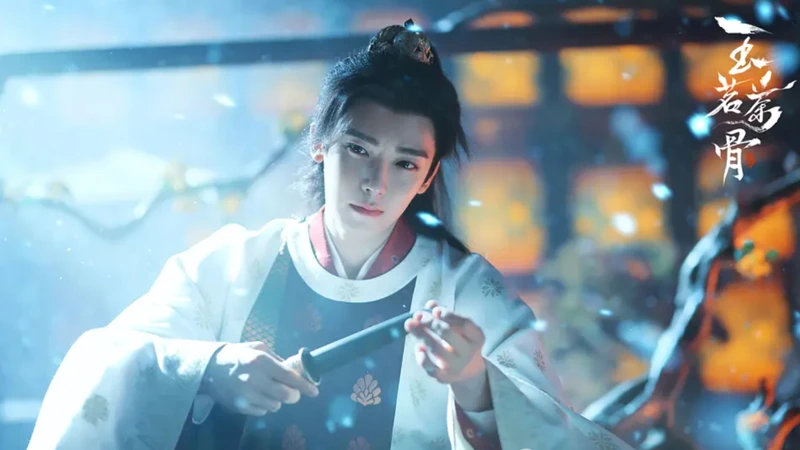
In the refined world of aristocratic mansions, where the steam from a teacup can veil murder and a whispered secret can topple a dynasty, who is the man serving the tea? The period drama Glory (玉茗茶骨) presents a mystery wrapped in ceremony, where the elegant art of tea brewing becomes a facade for a chilling decade-long quest for vengeance. At the center is the gentle-mannered Yan Bailou (晏白楼), whose arrival at the prosperous Rong Manor seems to herald nothing more than philosophical discussions and perfect brews. Yet, his true purpose is as dark as the leaves at the bottom of a cup: to find and destroy the woman responsible for his family's ruin and to win the heart of the eldest Rong daughter, Rong Shanbao (荣善宝). The two goals are tragically intertwined, setting a course where love and retribution cannot coexist. A Ticking Clock Beneath the Robes The plot accelerates with the shocking death of Lady Yang. Deciding to forsake her worldly life, she seeks refuge in a nunnery, only to meet a brutal end. The audience, privy to a truth the characters are not, watches as the kindly Yan Bailou sheds his gentle disguise. The black cloak he wore…- 62
- 0
-
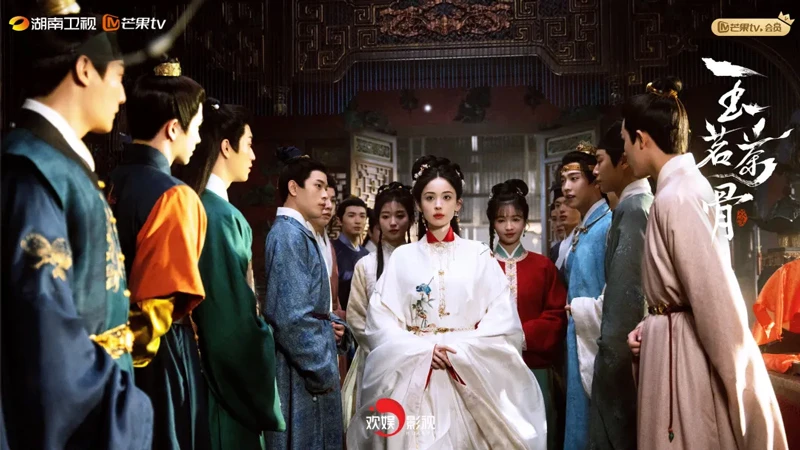
How Glory Challenges Gendered Narrative Tropes
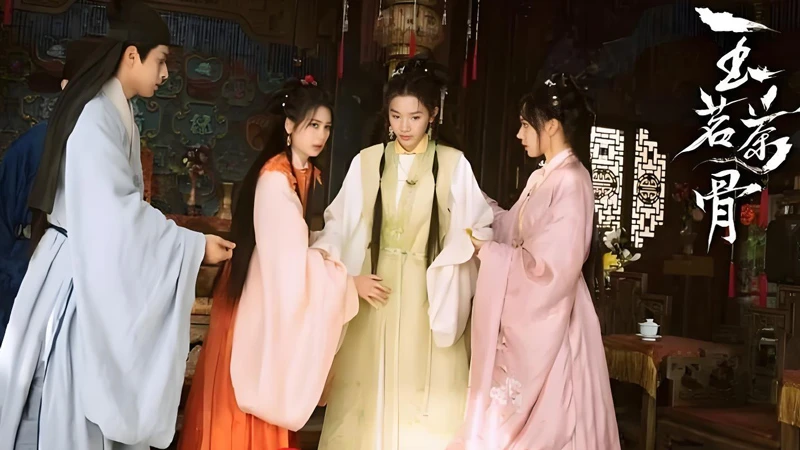
The period drama Glory (玉茗茶骨) presents a world where men scheme in inner chambers and women pursue political thrones. Its producer, Yu Zheng (于正), markets this as a true female-centric narrative. The concept is undoubtedly attention-grabbing, positioning itself as a bold departure from tradition. It flips the script of classic palace intrigues, placing female characters in conventionally male positions of overt ambition. Yet, simply having men play at "harem struggles" while women seek a crown does not automatically forge a new path. The framework often feels familiar, merely swapping the genders within an old blueprint. The core mechanics of power—conspiracy, betrayal, rivalry—remain unchanged. This raises a question: is it female empowerment, or just the same play with a different cast? The drama's real test is whether it can move beyond this initial inversion to imagine a fundamentally different structure of power and relationship. When Men Wear the Palace Crown A new television drama turns the traditional courtship narrative inside out. In Glory, the power to choose belongs entirely to women. The story unfolds within the wealthy and influential Rong Family, a matriarchal clan whose authority in the tea trade rivals that of regional lords. Here, men are the suitors, brought…- 61
- 0
-
Unmasking a Family’s Corrupt Legacy in Glory
The opulent halls of the Rong family mansion, famed tea merchants of Lin'an (临安), held a secret as delicate and potent as their finest brew. For generations, their fortune was attributed to a mystical heirloom: the "Tea Bone," a chosen family member born with an innate ability to discern tea quality and cure ailing tea plants. This myth justified every cruelty, every sacrifice. The elderly Matriarch Rong enforced this belief with an iron will, having anointed her granddaughter, Rong Shanbao (荣善宝), as the current Tea Bone. But whispers swirled that the true heir was actually the simple-minded sixth daughter, Rong Yunwan (荣筠纨), declared dead to the outside world to hide her perceived shame. While sisters schemed for favor, one remained in the shadows: the fifth daughter, Rong Yunshu (荣筠书). Believed to have been blind for twenty years, she sat quietly in corners, a silent witness to the family's poisonous dynamics. No one suspected her sightless gaze saw everything, or that her heart burned with a cold, patient fury. The Performance of a Lifetime Rong Yunshu's blindness was a meticulously crafted performance, a role she perfected after a childhood tragedy. Two decades prior, her mother, deemed of lowly birth, was cast…- 59
- 0
-
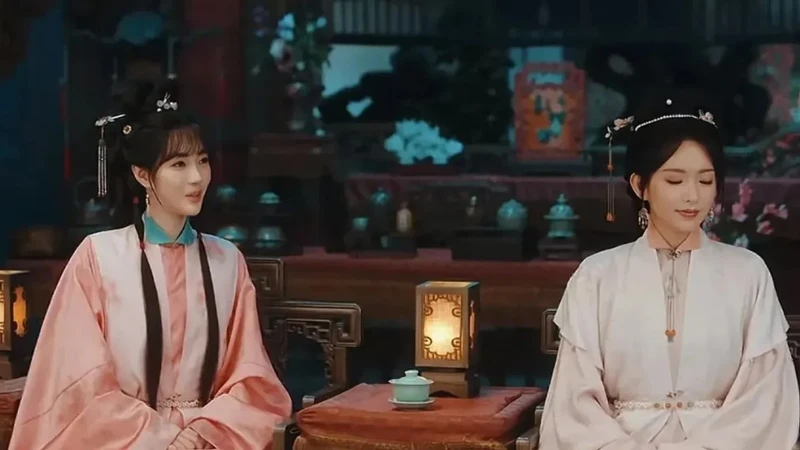
The Strange Rules of the Rong Family in Glory
In the world of Glory (玉茗茶骨), a single family's fate is bound to the ancient art of tea. The sprawling Rong clan, a centuries-old tea dynasty, presents a glittering facade of tradition and success. Yet, beneath the surface, a brutal contest unfolds. Seven of the eight Rong sisters secure prosperous futures, while one—the most privileged of them all—faces utter ruin. This outcome reveals the clan's unspoken law: in the fight for survival and power, noble birth guarantees nothing. Sharp instincts, strategic alliances, and sometimes, a well-crafted deception, matter far more than the hand one is initially dealt. The Constructed Prodigy Rong Shanbao (荣善宝) stands as the family's paragon. From a young age, she demonstrates impeccable skill in tea cultivation and appraisal, earning the revered title of "Tea Bone", the designated heir to the family's legacy. Her judgment is flawless, her business acumen unmatched, capable of outmaneuvering even the most astute outsiders. To the matriarch and the world, she is the living embodiment of the Rong tea tradition, a perfect successor groomed from childhood. However, this perfection is a carefully maintained facade. The true "Tea Bone" is actually her sixth sister, Rong Yunwan (荣筠纨), who possesses an innate, supernatural ability to…- 305
- 0
-
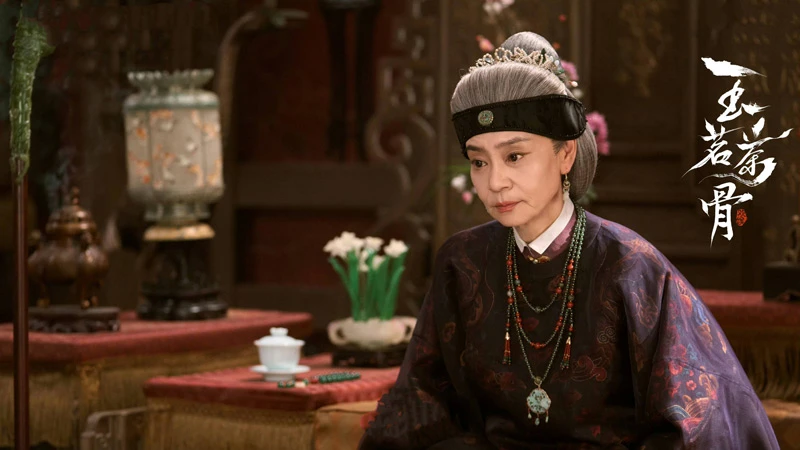
Glory: The Hidden Shield Behind the Family Feud
The most captivating stories are those where the most ardent enemy reveals themselves as your greatest protector. In the swirling, fragrant world of the period drama Glory (玉茗茶骨), this classic trope receives a masterful and heartbreaking execution. For much of the narrative, audiences believed the central conflict pitted the determined but ‘false’ heir, Rong Shanbao (荣善宝), against her jealous and scheming younger sister, Rong Yunyin (荣筠茵). The truth, unveiled in a breathtaking reversal, is far more complex. Rong Yunyin’s palpable hatred was never real. Her every act of defiance, every sharp word, was a meticulously performed role. She was the ultimate deep-cover agent, planted by the family’s formidable matriarch, Grandmother Rong, within the camp of her sister’s rivals. The person who seemed to despise Shanbao the most was, in fact, her most vital shield. This revelation reframes every prior interaction. Their heated arguments, Yunyin’s alliances with other discontented family members, even her public attempts to undermine Shanbao’s authority—all were calculated moves to gather intelligence and divert danger. Grandmother Rong, often perceived as sternly traditional, engineered this deception from the start. She recognized that a visible, unified front would be a brittle one. True strength for the Rong Family, the preeminent…- 103
- 0
-
Glory: The Blind Sister Outmaneuvers Rong Mansion
In the opulent world of Glory (玉茗茶骨), power is a delicate brew, steeped in tradition and simmering with familial rivalry. Everyone has a role: the brilliant heir, the jealous sibling, the overlooked cousin. Yet, amidst the calculated moves within the Rong Mansion, the most formidable player emerged from the place least expected. She was the one everyone dismissed, the blind daughter born to a servant, the one they called Wu Mei (五妹). While others saw a fragile girl to be pitied or ignored, they failed to recognize the sharpest mind in the room. This is not a story of overt strength, but of perception manipulated and trust weaponized. The real drama was not in the boardrooms or tea fields, but in the quiet, unseen calculations of the sister nobody thought to watch. The First Betrayal Wu Mei’s initial position was one of apparent vulnerability. As the blind fifth daughter of a concubine, she was marginalized by her grandmother and sisters. Her strategy was one of selective alliance and perceived utility. She attached herself to the ambitious Second Sister, offering counsel and appearing to be a loyal, if pathetic, follower. This was her camouflage. The turning point came with a plot…- 87
- 0
-
Are Period Dramas' Costumes Wrong?
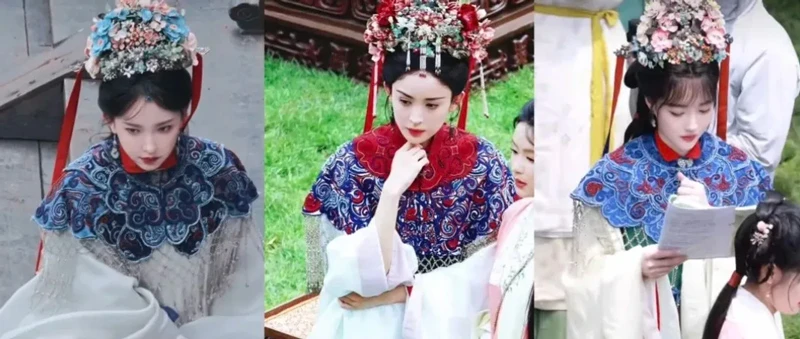
In the recent historical drama Glory (玉茗茶骨), a particular costume detail has ignited a fiery debate among viewers: the Yun Jian (云肩), or cloud collar. Adorning the shoulders of characters, these ornate pieces have left audiences divided. Are they an authentic representation of Ming dynasty elegance, or a glaring historical inaccuracy? This sartorial storm surrounding a single accessory opens a fascinating window into a much larger issue: the widespread blurring of historical lines in modern costume design, often substituting the flamboyant styles of the late Qing era for the reserved sophistication of the Ming. What is a Yun Jian? Many assume the cloud collar is a standard component of Hanfu. This is not entirely accurate. While the concept of shoulder-decoration existed earlier, for most of the Ming dynasty, the Yun Jian was primarily a woven or embroidered pattern integrated directly into the fabric of formal robes, not a separate accessory. It functioned as a symbolic motif on ceremonial garments. Only in late Ming paintings, often depicting immortals or elegant ladies, do we begin to see the emergence of the Yun Jian as a distinct piece of attire. The true, independent cloud collar gained traction only in the late Ming period.… -
Glory: Rong Yunshu’s Quiet Power
In the bustling world of period dramas, where flamboyant villains and righteous heroes often dominate the screen, a new kind of character is quietly commanding attention. The television series Glory (玉茗茶骨) presents a narrative not of clashing swords, but of simmering tensions and silent strategies, set against the backdrop of a prestigious tea family. While the spotlight initially falls on the charismatic and capable eldest sister, the true narrative power lies in the shadows, with a character whose strength is measured in whispers, not shouts. This story shifts the focus from overt conflict to the profound impact of calculated patience, asking us to reconsider who truly holds power in a room full of voices. The Visible Battle The drama Glory introduces the Rong family, whose fortune and reputation are built on the art of tea. The central figure, Rong Shanbao (荣善宝), is a force of nature. She is decisive, talented, and fiercely protective of her family's legacy, effortlessly navigating business rivals and personal betrayals. Her apparent antagonist is the ambitious second sister, Rong Yunxi (荣筠溪), whose envy and direct challenges create the series' most visible friction. Their conflict is public, passionate, and drives much of the early plot, drawing viewers…- 178
- 0
-
Glory: Forging Character Through Grace and Tenacity
Have you ever considered how a television drama's title might hold the key to its deepest truths? The recently announced historical series Glory (玉茗茶骨) has sparked intense discussion, not for its plot, but for the profound duality embedded within its four-character name. This is not merely a label; it is a philosophical statement, a compact guide to understanding the interplay between human character and ancient tradition. To unpack this title is to embark on a journey into the heart of Chinese aesthetics and the timeless struggle for integrity in a complex world. The series uses the lens of tea culture—its rituals, its language, its very essence—to frame a narrative about resilience and grace under pressure. Glory's Elegance The first half of the title, Glory, evokes a specific and rarefied beauty. Yuming (玉茗) is a classical poetic name for the white camellia, a flower admired for its pure, jade-like petals and crisp, elegant fragrance. In the world of tea connoisseurs, it has come to signify the highest grade of tea—one with a luminous liquor, a refined aroma, and an aura of dignified purity. This term sets the visual and moral stage for the drama. It promises a world of understated beauty:…- 124
- 0
❯
Profile
Check-in
Message
Message
Search
Contact Us
Scan to open current page
Top
Checking in, please wait
Click for today's check-in bonus!
You have earned {{mission.data.mission.credit}} points today!
My Coupons
-
$CouponsLimitation of use:Expired and UnavailableLimitation of use:
before
Limitation of use:Permanently ValidCoupon ID:×Available for the following products: Available for the following products categories: Unrestricted use:For all products
No available coupons
Daily tasks completed: