In period dramas today, love stories no longer orbit a single couple. Instead, a single series now offers three or more fully formed relationships, each with its own arc and spotlight. These pairs are no longer mere assistants to the leads; they carry their own distinct personalities and moments to shine.
Titles like Perfect Match (五福临门) and Pursuit of Jade (逐玉) have shown that a secondary couple can captivate audiences just as fiercely. This shift reflects how the genre is maturing. The creative challenge now lies in weaving multiple, fully realized romances together without losing clarity or emotional impact—all within a limited runtime.

Romance Unfolded in Many Pairs
Multiple Love Lines, One Story World has become a powerful engine for costume dramas, offering audiences a buffet of romantic flavors within a single narrative. Instead of betting everything on one central couple, these shows create a constellation of relationships, each with its own distinct tone and dynamic. This approach doesn't just pad the runtime; it strategically captures a wider audience by catering to varied tastes. One viewer might be drawn to the slow-burn intensity of a marriage of convenience, while another prefers the angsty pull of a forbidden connection. By weaving these multiple threads together, a drama can feel less like a single story and more like a fully realized world where love, in all its complicated forms, is the primary language. This technique transforms the viewing experience into a kind of exploration, where the audience can pick their favorite path, making the investment in the show deeply personal.
A Spectrum of Romance
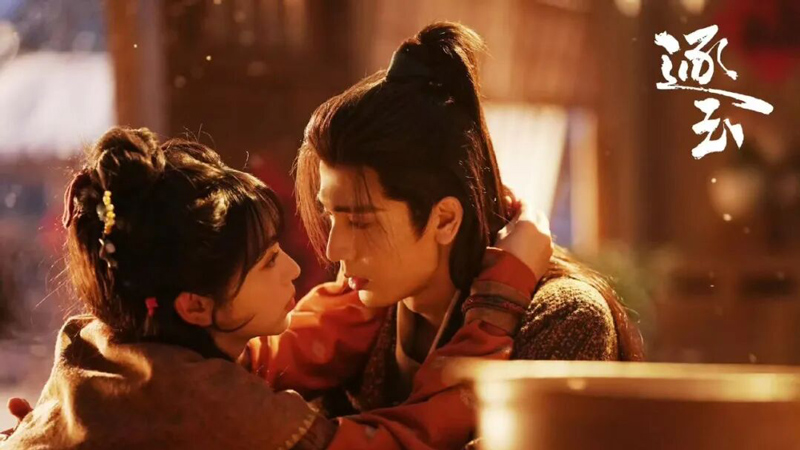
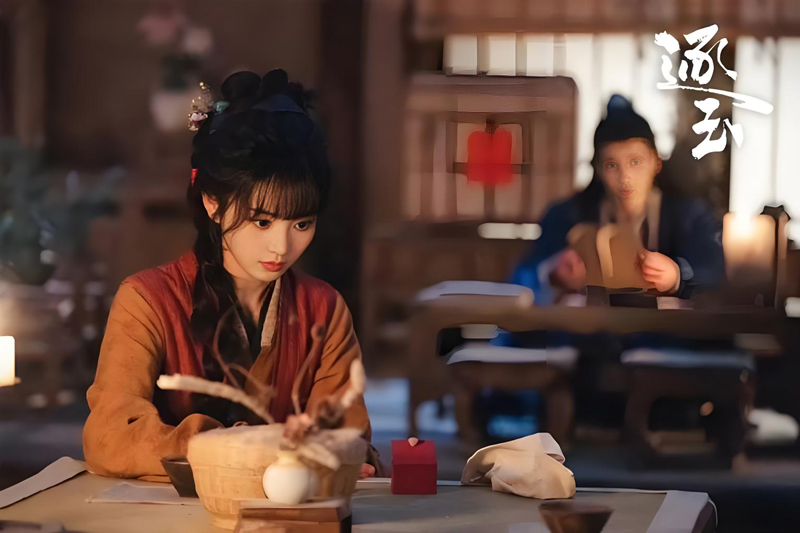
The recent buzz around Pursuit of Jade perfectly illustrates the power of this strategy. The drama presents a spectrum of five distinct couples. The main pairing features a contract marriage between two powerful forces: a vengeful marquis turned reluctant matrilocal husband, Xie Zheng (谢征), and the butcher’s daughter, Fan Changyu (樊长玉), who becomes his wife. Their story is built on a foundation of mutual strength and a shared mission, a classic dynamic that provides the show’s backbone.
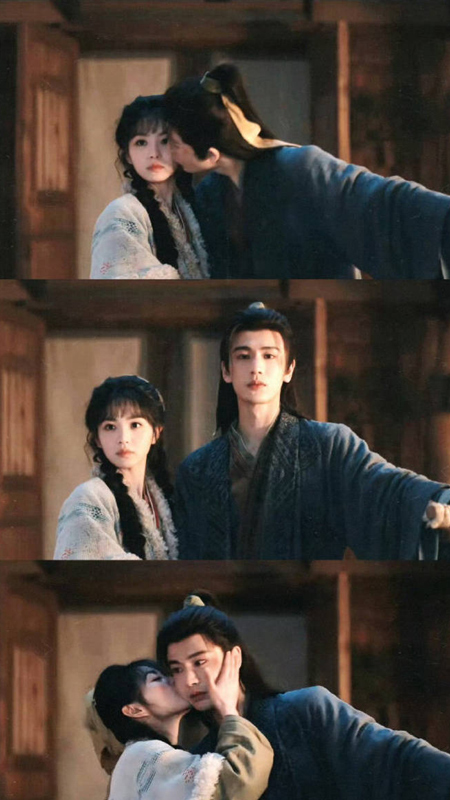
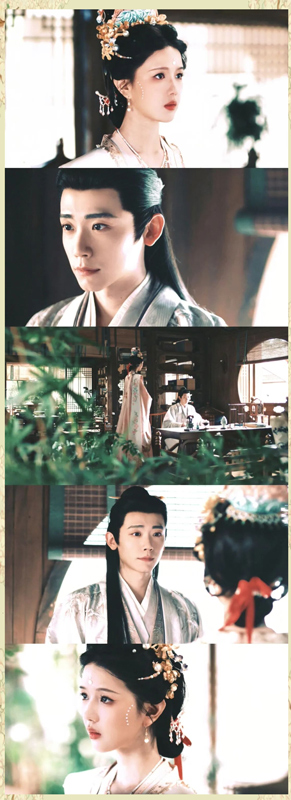
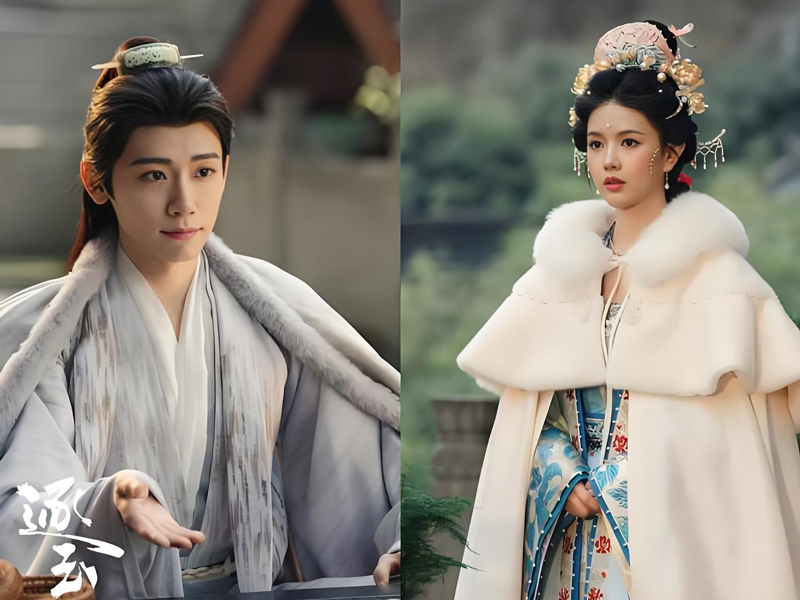
Alongside them, two secondary couples offer completely different flavors. One is a pure hatred-to-love story, marked by obsessive tension between a ruthless adopted prince and a tavern owner with a secret. The other shifts to a more refreshing tone, following a gentle academy scholar and a brave princess in a relationship full of bittersweet longing. This careful division ensures that the drama’s emotional landscape never feels monotonous, offering a palate cleanser between intense scenes and appealing to viewers who might prefer a softer, more romantic arc.
Beyond these, the drama sprinkles in two minor pairings that are brief but unforgettable. A dangerous alliance forms between a sickly, villainous heir and a vengeful female bandit, creating an edgy chemistry that feels more like a standalone thriller. Meanwhile, a pair of childhood friends offers a pure, redemptive narrative. Even this doesn’t cover all the possibilities, as viewers find themselves intrigued by the main heroine’s chemistry with other male characters, from a loyal guard to her complex rival. It’s a deliberate “CP free-for-all,” where the audience is encouraged to find their favorite connection without the pressure of backing the “correct” one.
A Calculated Strategy for Storytelling
This trend of multiple love lines is not confined to a single show. It has become a deliberate structural choice across the genre, adapted to fit various settings. In a matriarchal world, one drama weaves together couples like a powerful female tea master with her amnesiac husband, a striking villainess with a gentle tea master, and a scheming young lady with a fallen heir. Another, set in a world where humans and spirits coexist, pairs a human soldier with a spider spirit, a young man with a dragon saintess, and a fox prince with a human general. The most literal example comes from a drama featuring five sisters, effectively creating five distinct marriage stories, ranging from power partners to a classic bickering duo.
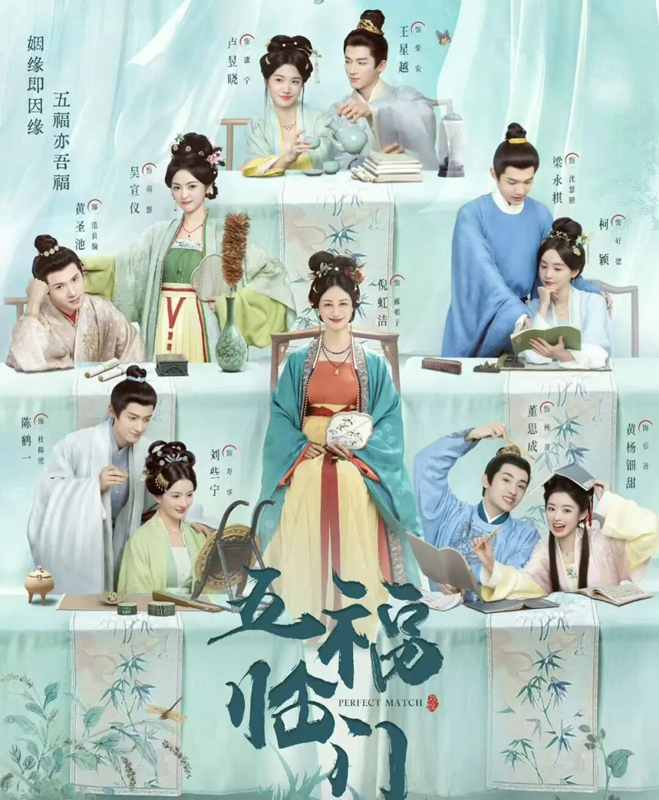
The true genius of this model lies in how it differentiates the main couple from the supporting ones. The main pairing typically adheres to a safer, more traditionally positive emotional model. Their story must align with mainstream values as they are the protagonists carrying the central plot. This provides a stable anchor for the show. In contrast, the secondary and minor couples are given the freedom to be more daring and extreme. They often draw comparisons to short-form dramas, known for their intense, fast-paced, and sometimes taboo themes.
This functional division allows the series to have its cake and eat it too. The main couple provides the grounded, long-form narrative that satisfies a broad audience, while the side couples inject the series with high-concept, emotionally charged subplots that can go viral on social media. For the audience, this structure is a win-win. It offers the safety of a satisfying central romance while granting the thrill of exploring wilder, more unconventional relationships on the side. The result is a richer, more engaging experience where viewers don't have to choose just one love story; they can immerse themselves in an entire ecosystem of them.

Drawing Eyes, Making Stars
In recent years, a noticeable shift has occurred within Chinese historical romance dramas. The narrative focus is no longer solely on the single, star-crossed journey of the main couple. Instead, a tapestry of relationships—what audiences now call "multi-thread CPs"—has become the new structural norm. This approach weaves several distinct love stories into the same production, creating a dense emotional landscape. It is a strategic evolution born from shifting audience appetites and the industry’s own need for sustainable talent development. This new model redefines how stories are told, transforming a drama from a single narrative into a shared universe of romantic possibilities.
Evolving Tastes
The rise of multi-thread romances is not accidental but a direct response to the changing demands of viewers. Looking back at the history of idol dramas, the archetype of the central couple has always been a mirror of the times. Early Taiwanese idol dramas favored the "strong man, weak woman" dynamic. This eventually gave way to trends like "strong woman, weak man," dual protagonists, and the competitive "one woman, multiple men" format. Each pattern was a direct reflection of the aesthetic preferences prevalent in the market during its specific era. The current landscape celebrates variety, rejecting a one-size-fits-all approach to love stories.
Today’s audience is more segmented and self-aware in its preferences. A single viewer might enjoy the saccharine sweetness of a "puppy love" story on one day and crave the intense drama of a "tragic romance" the next. By packaging multiple relationship dynamics into one series, the multi-thread model acts as a curated anthology. It acknowledges that the modern viewer does not want to be confined to a single emotional arc. This shift represents a fundamental change in storytelling philosophy: from dictating what the audience should feel to offering a menu of emotions for them to choose from.
A Palette
The strategic advantage of this model is immediately apparent in the richness it brings to the storyline. A drama no longer hinges on the success or failure of a single romantic plotline. If one couple's story becomes stagnant or fails to resonate, another can capture the audience's attention. This creates a safety net for the narrative, ensuring sustained viewer engagement. It also allows for a broader exploration of romantic themes; a series can simultaneously explore a sweet, devoted relationship, a tortured, angsty one, and a playful, forbidden one, all within the same fictional world.
This diversity in content directly translates to a broader audience reach. A viewer who typically avoids heavy melodrama might be drawn in by a lighter, comedic secondary couple. Conversely, someone seeking complex emotional turmoil might stay for the main storyline. The multi-thread CP model effectively casts a wider net, pulling in demographics that a single-focused narrative might miss. It transforms a show into a shared social experience where different factions of fans can debate and celebrate their favorite pairings, fueling online discussion and organic promotion long after an episode has aired.
Launching Careers
From an industry perspective, the multi-thread CP structure serves a crucial strategic function beyond storytelling: it is a powerful tool for talent incubation. In the current entertainment environment, achieving overnight stardom as a young actor is increasingly rare. However, gaining a solid fanbase through a memorable supporting role is a viable and common path. This model allows production companies and streaming platforms to introduce new faces to the audience in a low-risk, high-reward setting. Instead of bearing the immense pressure of leading a series, newcomers can gain visibility and build their reputations within an ensemble cast.
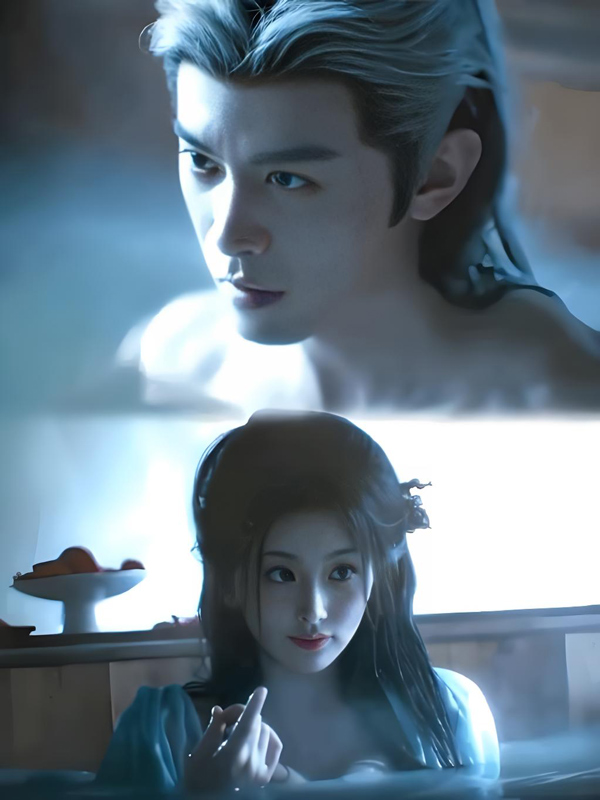
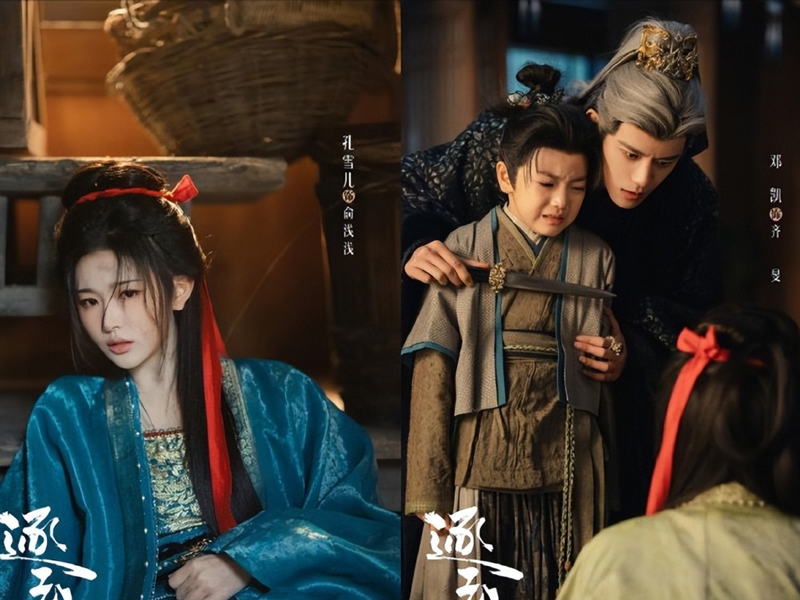
The drama Pursuit of Jade provides a perfect case study. While the main leads garnered significant attention, it was the secondary couple, characters Yu Qianqian (俞浅浅) and Qi Min (齐旻), played by Kong Xue'er (孔雪儿) and Deng Kai (邓凯), who achieved a breakout success. Their collaborative short videos on Douyin (TikTok) garnered millions of likes, and their popularity culminated in a joint photoshoot for a print magazine. Rumors of a potential modern-drama reunion for the pair further solidified their status. They successfully translated the show’s momentum into a tangible career boost, demonstrating the model’s effectiveness.

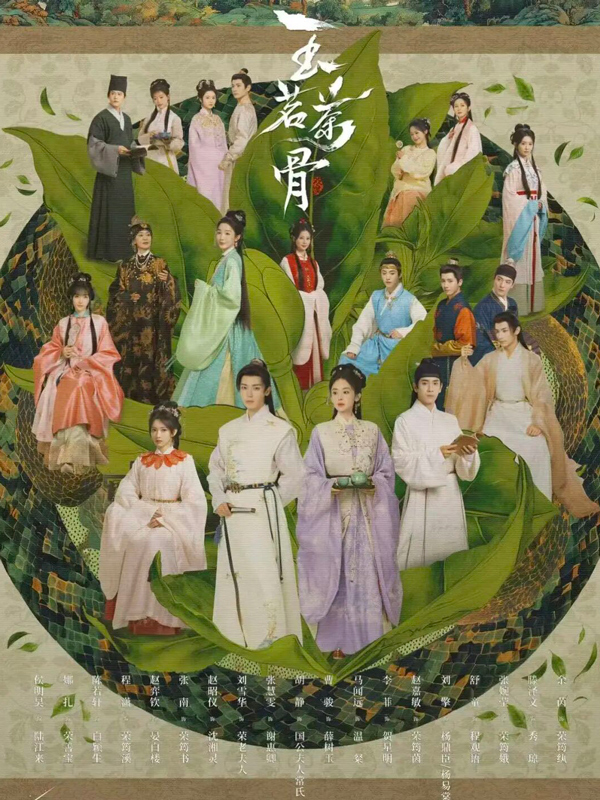
This pattern is repeating across the industry. In Glory (玉茗茶骨), a specific dynamic was hotly debated. Similarly, specific pairings in Perfect Match captured niche audience fervor. For the platforms and producers, the value is clear. It is far too risky to give an unknown actor the leading role in a high-budget production. The multi-thread CP structure offers a more stable and efficient development path. By pairing emerging actors with established, popular leads in supporting roles, it allows them to accumulate experience and fan loyalty organically. This system builds a pipeline of talent, ensuring the industry’s future stars are cultivated within successful, high-viewership projects.

Love Lines Unfolded
Beyond the Main Romance explores a new dynamic in Chinese period dramas: the rise of the secondary couple. Once relegated to the background as mere plot devices, these pairings are now being crafted with their own story arcs. This shift reflects a change in audience desire, where viewers are just as invested in the supporting characters' love stories as they are in the leads. The effectiveness of this approach, however, is not guaranteed. It requires a delicate balance of screen time, character depth, and narrative logic to ensure these secondary relationships enhance the main story rather than distract from it. The result is a new form of storytelling where multiple romantic threads must coexist, each vying for the audience's attention and affection.
The Uneven Spotlight: Why Some Succeed
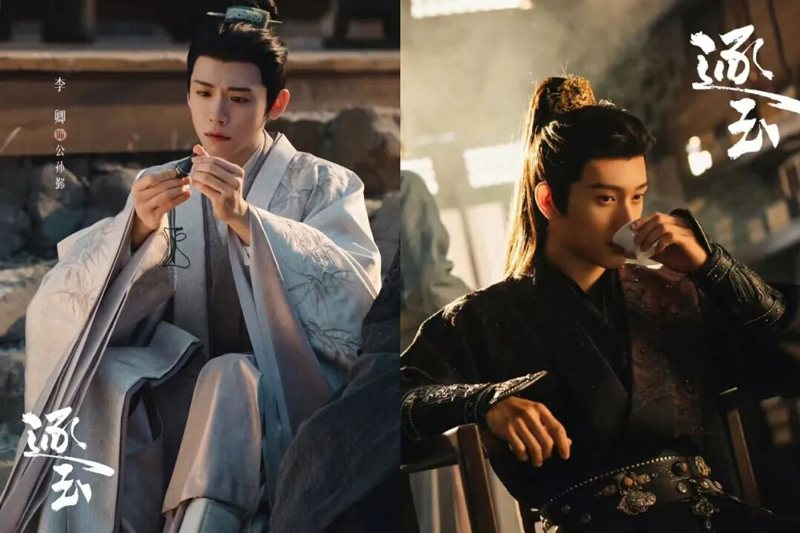
Not every secondary couple achieves the desired impact. In Pursuit of Jade, actors Li Qing (李卿), who plays Gongsun Yin (公孙鄞), and Lin Muran (林沐然), who plays Sui Yuanqing (随元青), found themselves trending on social media. Lin, a young actor born after 2005, garnered significant attention for his portrayal of a despised antagonist, a role that contrasted sharply with his youthful public image. This juxtaposition created a compelling figure that audiences loved to hate, proving that a well-executed, even villainous, character can capture the spotlight. Their success highlights how a distinct character concept can resonate deeply, turning a supporting role into a major talking point.
Conversely, the romantic pairings and scenes involving actresses Yu Zhongli (喻钟黎) and Lin Siyi (林思意) did not generate the same level of discussion. This disparity reveals a crucial factor: the allocation of narrative resources. For a secondary couple to break through, they need more than just screen time; they require a purposeful role within the story. When a character’s actions feel integral to the plot, or when an actor brings a unique, unpredictable energy to a role, the audience takes notice. Without this, even well-intentioned supporting roles can fade into the background, failing to ignite the same passion as their more prominent counterparts.
The "Multi-Couple" Formula
In many older idol dramas, secondary couples existed solely to facilitate the main couple's journey—creating obstacles or offering advice. Their stories were thin, their personalities flat. Today, a new model has emerged: the "multi-couple" system. In this structure, secondary pairings are often granted their own complete narrative arcs. This includes their unique first meeting, individual conflicts, and personal moments of triumph. The goal is to make them feel like protagonists of their own subplots, not just accessories to the primary romance. This approach gives the audience more reasons to stay invested across the entire series.
However, this model creates a polarized audience response. One segment of viewers will become deeply attached to a secondary couple, lamenting that their limited screen time is insufficient. They crave more scenes and deeper development. Another segment, however, may find these subplots distracting, using the fast-forward button whenever the focus shifts away from the leads. They may even accuse the production of artificially inflating the runtime. The line between a beloved subplot and an unwanted interruption is thin. Whether a production lands on the favorable side depends entirely on the skill of the writers, directors, and actors to establish compelling characters and clear emotional logic within a constrained timeframe.
Main Course, Not Just Garnish
From a series' overall perspective, establishing a clear hierarchy is essential, even when pursuing a multi-couple format. The main couple remains the foundation, determining the show's baseline quality and its ultimate reputation. The secondary couples, no matter how popular, serve to enhance the flavor, adding complexity and variety. Their storylines are often more condensed, featuring heightened drama and intense situations that are perfectly suited for viral clips on short-video platforms. These snippets can effectively draw in new viewers, but for those who commit to watching the entire series, the sustained motivation is almost always the central, unfolding relationship of the lead characters.
This multi-couple approach also places higher demands on production budgets and capabilities. A standard idol drama can succeed by focusing on one or two core relationships, using supporting characters as functional tools. To successfully execute the multi-couple model, however, requires meticulous effort at every stage. Casting must be strategic, selecting actors who can hold their own. The storylines must be carefully woven together to avoid feeling disjointed. Without this level of dedication, productions risk investing resources into subplots that fail to generate a return on investment, leaving both the secondary characters and the overall narrative feeling underdeveloped.
The New Economics of Supporting Roles
The growing popularity of the multi-couple model, alongside the phenomenon of "table-flipping" where a supporting character unexpectedly overshadows the leads, signals a significant shift. It proves that supporting roles in idol dramas are no longer disposable elements. They have become potential leverage for generating buzz, attracting viewers, and driving online conversation. A well-received secondary couple can become a show’s secret weapon, creating its own fanbase and contributing substantially to the overall cultural footprint of the series. This elevates the importance of every role, demanding more from the entire creative team.
Ultimately, whether creators can successfully capitalize on this model depends on their ability to balance priorities. The key is to ensure that while the main story remains central, every romantic pairing—no matter how small—possesses its own self-consistent and appealing logic. This means moving beyond the tired trope of forced pairings, often called "balancing literature", where characters are arbitrarily matched just to give everyone a partner. Audiences are no longer satisfied with perfunctory subplots or boring filler designed to stretch the runtime. Their desire is clear: they want dynamic, emotionally resonant character relationships that feel authentic and compelling, giving them new reasons to fall in love with the story with each new episode.