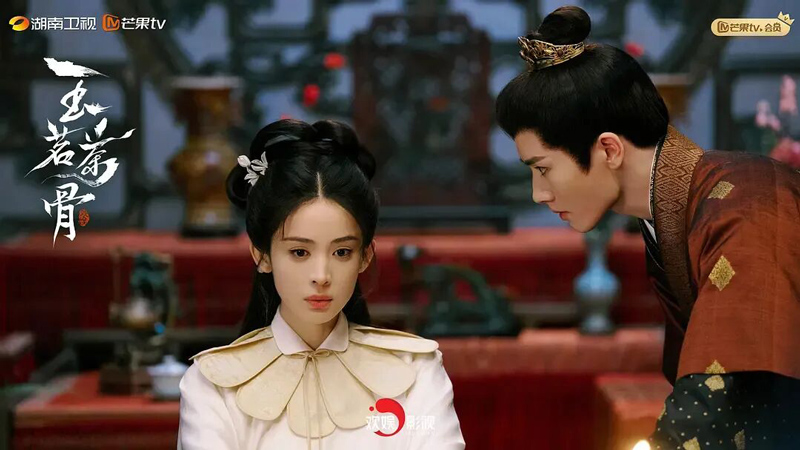
In the world of Glory (玉茗茶骨), the delicate aroma of tea leaves intertwines with the sharp scent of conspiracy. At the heart of this drama set in Jiangnan's tea empires lies the complex relationship between Rong Shanbao (荣善宝), the heiress to the Rong family tea legacy, and Lu Jianglai (陆江来), a disgraced scholar. Their story is not one of simple romance but a meticulous dance of suspicion and alliance, forged in the kilns of family power struggles and imperial court machinations. From master and servant to unlikely allies, their journey questions whether trust can ever truly blossom when every hand seems turned against them.
A Calculated Beginning
Their connection began not with warmth, but with cold utility. After surviving an assassination attempt that left him with lost memories, Lu Jianglai found himself at the mercy of Rong Shanbao. Seeing an opportunity in his plight and a potential pawn in her family's internal wars, she relegated him to the lowest station: a stable hand. He, in turn, played the part of a subservient amnesiac, hiding his keen intellect to avoid further danger. This initial dynamic was pure transaction. She tested his limits, searching for weakness or use. He observed her maneuvers, guarding his true self. Their interactions were a silent match of wits, each move calculated within the confines of their imposed roles.
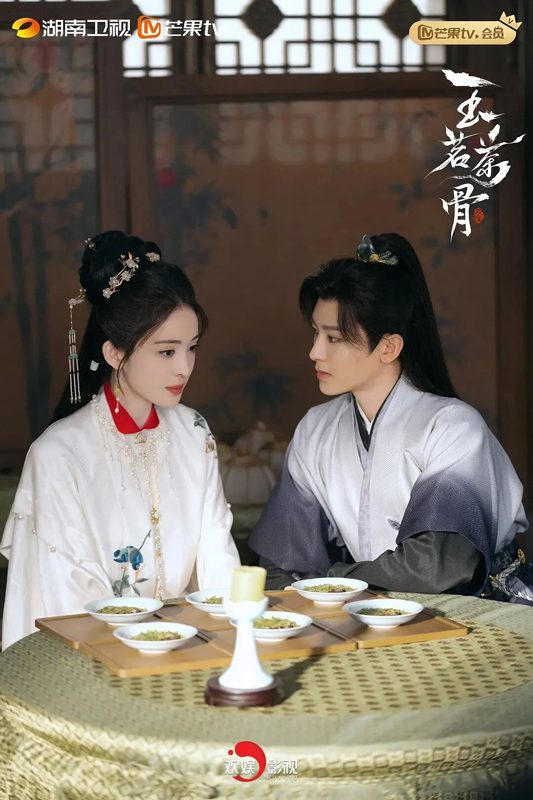
This tense stalemate first cracked over a shared crisis. The Rong family's prized tea storage cellar was sabotaged, threatening their most valuable asset. While Rong Shanbao scrambled, relying on her innate understanding of tea, it was the quiet stable hand who pointed out critical flaws in the family's security protocols. His analytical mind, seeing patterns where others saw chaos, provided the breakthrough she needed. In that moment, their relationship shifted. She recognized a peer where she expected a servant; he saw a dedicated guardian of craft, not just a ruthless heiress. Mutual respect, born from intellectual kinship, began to thaw the frost between them.
Their alliance was formally sealed through a daring ruse. Forced into a marriage of convenience with a manipulative outsider, Rong Shanbao secretly conspired with Lu Jianglai to turn the wedding into a trap. On the day of the ceremony, they worked in flawless coordination to expose their enemy's plot and protect the family. This successful partnership dissolved the last pretenses of master and servant. They became co-conspirators, their fates openly intertwined. Trust was no longer an abstract concept but a necessary tool for survival, willingly placed in each other's hands.
The Trust Gambit
Just as their bond solidified, it faced its most severe test. A rival family member, Rong Yunshu (荣筠书), engineered an elaborate scheme to break them apart. Lu Jianglai was framed in a compromising situation, designed for Rong Shanbao to discover. The scene was meticulously crafted: evidence of betrayal seemed irrefutable. When she confronted the scene, her hard-won trust shattered instantly. The fracture between them was deep, a canyon carved by deception and painful visual proof. This was the lowest point, where suspicion poisoned every past interaction and made future collaboration seem impossible.
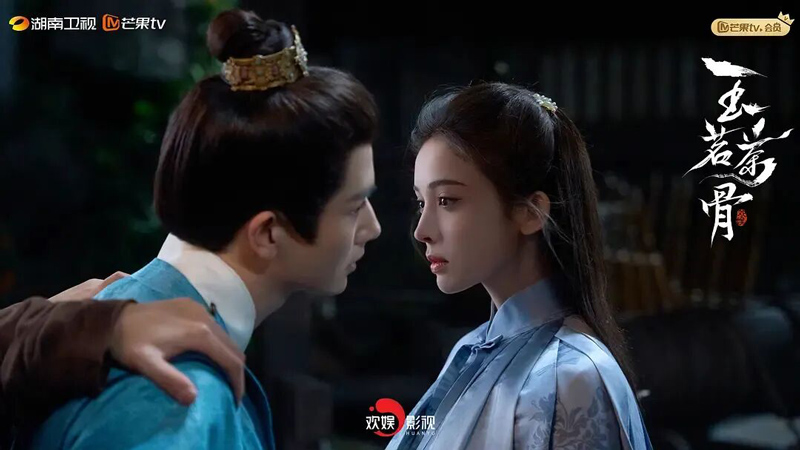
However, the truth behind the betrayal was more complex. Lu Jianglai, having regained his memories and aware of lurking threats, had been operating his own counter-scheme to expose the family's internal rot. He had underestimated his opponent's cunning. The "betrayal" was a staged part of his own dangerous investigation. When a fire broke out at an old tea warehouse, a hidden signal he left for her—a specific mark etched near the kiln—revealed his true, loyal intentions. This signal was their private cipher, a testament to the unspoken understanding they had built. Discovering it, Rong Shanbao realized the depth of his sacrifice and the extent of the conspiracy against them both.
The breach of trust, though agonizing, ultimately refined their bond. Navigating the aftermath of the misunderstanding forced them to articulate their loyalties and fears. Rebuilding was a conscious choice, not an accident. It proved their connection could withstand external sabotage. The trust they forged afterward was stronger, tempered in the fire of deception, becoming a silent language that needed no explanation. They learned to see the unseen motives, to trust the intent behind the action, making their partnership impenetrable to future schemes.
A Choice for the Soul
The final and most defining test of their relationship arrived with Lu Jianglai's restored identity. He was revealed to be the long-lost son of a powerful Duke, with a rightful claim to a title and a position in the imperial capital. The path to power and prestige was suddenly his for the taking, a stark contrast to his life as a tea merchant's aide. Society expected him to claim his birthright. Rong Shanbao, now solidified as the head of the Rong tea business, expected him to leave.
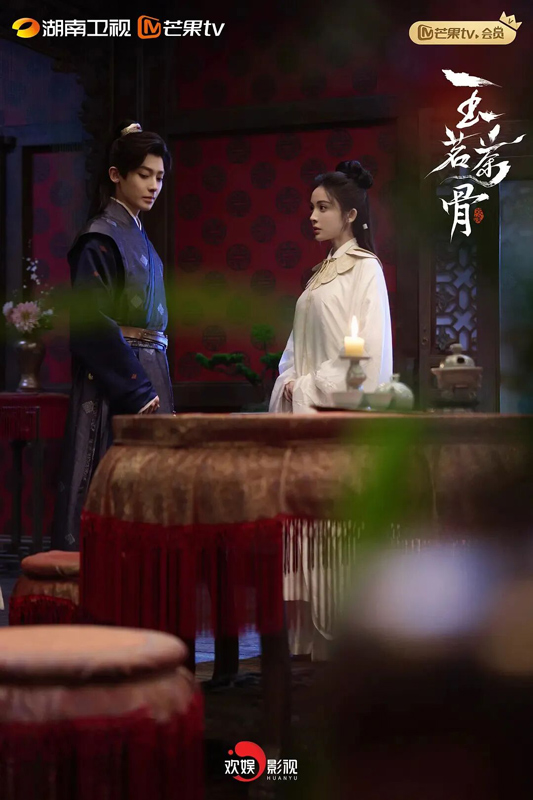
His decision defied every convention. He publicly renounced his title and inheritance, choosing a life of deliberate simplicity. He caught up with her at the river dock, not with promises of wealth, but with a declaration of shared purpose. He chose the earthy scent of tea leaves over the perfumed halls of power, the authenticity of their partnership over empty nobility. This was not a romantic grand gesture, but a profound alignment of values. He saw in her, and in their work, a truth he could not find in his bloodline.
Her choice mirrored his. Having secured her family's legacy, she too turned away from mere commercial dominance. Together, they retreated from the forefront of high society to focus on the essence of the craft itself. They built a life not defined by the labels of "tea master" or "scholar," "heiress" or "lord," but by mutual respect and a quiet, shared vision. Their story concludes not with a dramatic climax, but with the peaceful, sustained simmer of a well-tended tea kettle—a testament to a bond that chose depth over dazzle, and found freedom in that choice.