Article
Search results:
-
Exploring Ancient Chinese History Through the Eyes of a College Student
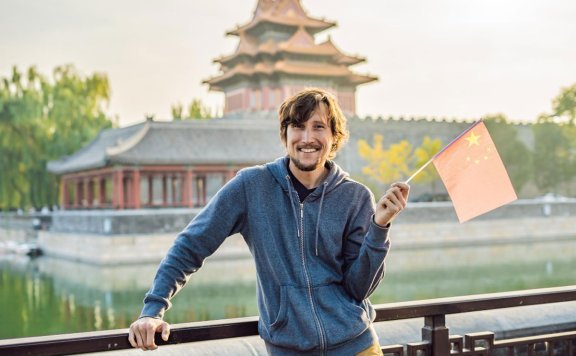
China is a developed country with advanced technology but one that treasures and respects ancient traditions. As a college student, studying ancient Chinese history is fascinating. China is the world’s oldest country. Written records date back to 1250 BCE, and the first dynasty in China lasted over 3,500 years. Its long history is filled with all kinds of adventures, challenges and events the world can learn from. Develop a solid grounding in historical research and study Doing historical research will help you to broaden the way you think about historical events and what kind of influence they have on today’s world. You will probably start by learning more about the Paleolithic period in ancient China. Modern humans probably appeared in China about 200,000 years ago. By 5000 BCE, there were village settlements in several regions with fortified walls built around them. It was between 2000 and 1600 BCE that the Bronze Age emerged out of the diverse Neolithic cultures. Get help from an essay writing service The study of history in college can be challenging due to the amount of research you need to do. If you can’t find the time to write essays, essay service EduBirdie has professional writers who… -
Yao-Chinese Folktales: Exploring the Mysterious World of Chinese Monsters
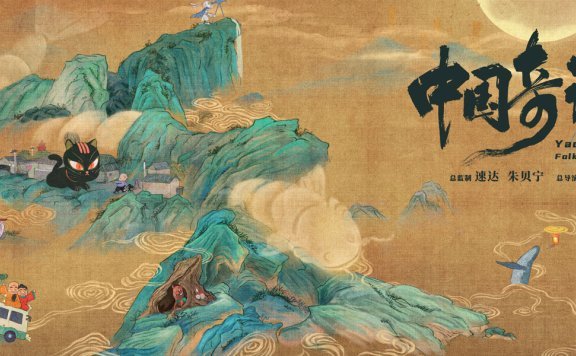
Recently, a Chinese animation has burst into the list of major platforms in China like an dark horse. It is Yao-Chinese Folktales, a collection of animated works jointly produced by Shanghai Animation Film Studio and Bilibili. It consists of eight independent stories rooted in traditional Chinese culture. At present, it has been broadcast in 3 episodes with more than 45 million views. In the Chinese animation industry, it goes without saying that Shanghai Animation Film Studio has high artistic achievements and a unique style, but because of the changes of the times and talent faults, it has fallen into a dilemma. However, "Yao-Chinese Folktales" seems to indicate that this old brand of film studio is back. https://www.youtube.com/watch?v=eLQBCNV7Lak Monster story collection The theme of Yao-Chinese Folktales is monsters. Monster has a rich meaning in Chinese traditional culture. It is not necessarily just a fierce and grotesque image. It represents the abnormal and unknown, getting along with and fighting with human beings, and may also be another side of human beings. The eight stories vary in style and core. The title of the first episode is Nobody, which tells the story of ordinary little monsters in "Journey to the West", but… -
Exploring the Oriental Fantasy Art of a Post-95 Xuanhuan Painter
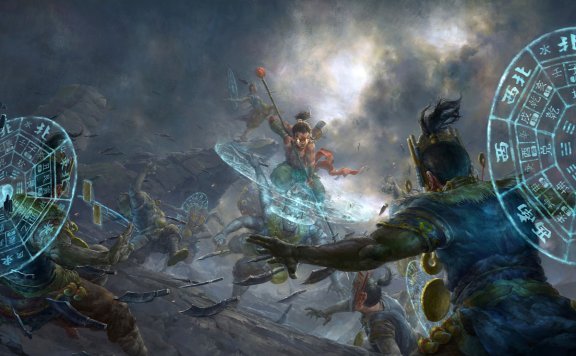
Serious eyes and magnificent scenes make the audience seem to be able to be in the painting. Each painting is powerful and has an impressive presence, and the oriental fantasy narrative is integrated into the painting, which makes people excited. Xiang Yu, the overlord of Western Chu with soaring aspirations. The unruly and uninhibited Monkey King. Tang warriors, who dressed in warrior armor and wore masks in the style of Tang Sancai pottery, guarded the tomb of Li Yuan, the founding emperor of the Tang Dynasty. Xu Zihui, born in Qingdao in 1996, has been in contact with comic strips, sketches and cartoons since childhood, and he has been drawing for 16 years. During his study at the Lu Xun Academy of Fine Arts, he won numerous awards and several heavyweight awards. Young "veteran artist" Becoming famous at a young age, most people thought he was a genius. But in fact, Xu Zihui's creation in the past few years is also a process of constant transformation. He changes in each bottleneck and doubt, and gains new life in difficulties just as in his painting. During the seven-year undergraduate and master years, the first two years are a learning process,… -
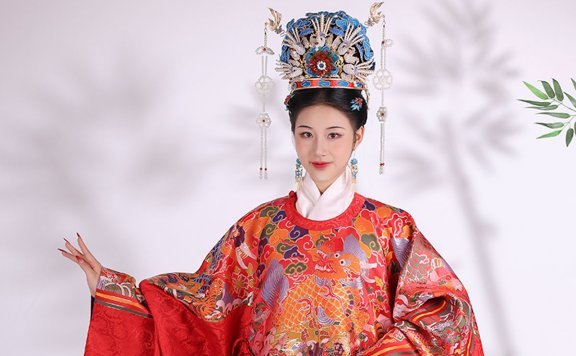
History of Ming Dynasty Makeup and Hairstyle
History Background In 1368, Zhu Yuanzhang has crowned emperor. His regime was established with the name of Hongwu and the whole dynasty was named Ming. In the 14th year of Hongwu, the remaining forces of the Yuan dynasty in Yunnan were pacified and ancient China was finally reunified again. Zhu Yuanzhang abandoned the costume system established in the Yuan Dynasty and adopted the system of the Han and Tang dynasties and tried his best to restore the various rituals of the Han people. From the beginning of the Ming Dynasty to the reign of the second emperor Chengzu, the Ming Dynasty had been quite prosperous, and after Chengzu, Emperor Xuanzong and Emperor Yingzong were still able to maintain prosperity. But since then, due to the eunuchs' disorderly administration and the invasion of pirates, the country had been on the way of declining. In 1644, Wu Sangui opened the Shanhai Pass and led the Qing troops into Beijing to fight against Li Zicheng. And after that the Qing troops entered the Central Plains. The Ming dynasty lasted 227 years from the beginning of the Ming dynasty to the death of Emperor Chongzhen who hanged himself. Ming Dynasty Makeup Features During… -
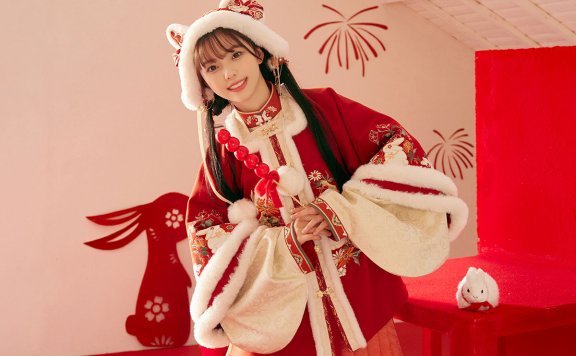
Hanfu Outfit Guide for the Lunar Year of the Rabbit
The rabbit has a positive, kind and transcendent meaning in Chinese culture. According to the ancient Chinese zodiac interpretation, the rabbit is a symbol of resourcefulness and luck, and people have a special fondness for the quirky rabbit. Therefore, the New Year's Eve dressing for the Year of the Rabbit should also reflect the innocent, lovely, witty and lively style. New Year Hanfu Outfit for Female Compared to the mature dignity of the cross collar hanfu, the straight collar costume is undoubtedly more spirited and playful, with a parallel collar and wide cuffs with a white fluffy edge, which is both warm and beautiful, reminding people unconsciously of a white rabbit hiding in a snowdrift. The two white pompoms on the neckline, whether tied up or naturally drooping, add a touch of girlish sweetness and make the heart grow fonder with just a glance. The bunny pattern on the bottom skirt perfectly fits the rabbit element of the New Year, and the main tone of red makes the whole set overflowing with fire enthusiasm and joyful atmosphere. In terms of color choice, in addition to the common New Year's red, you can also choose many other shades, but all… -
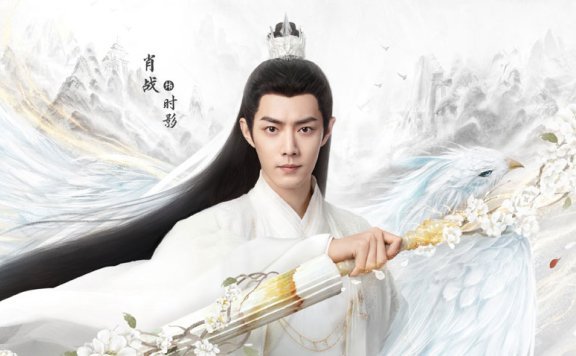
2022 Upcoming Chinese Wuxia & Xianxia Drama List
More than 20 Chinese Wuxia and Xianxia drama series are scheduled to air in 2022, including the highly anticipated "Joy of Life: Season 2" starring Zhang Ruo Yun and Li Qin; "The Longest Promise" starring Xiao Zhan and Ren Min; "The Longest Promise" starring Gong Jun and Dilraba Legend of Anle, starring Dilmurat. There are also several fantasy Xianxia dramas based on exciting Xianxia novels. The following is a list of Chinese Wuxia & Xianxia Drama highlights for 2022, as compiled by Newhanfu. Joy of Life: Season 2 · 庆余年2 Also known as: Qing Yu Nian 2 Period Background: Alternative reality Genres: Wuxia, Political, Romance, Action, Comedy Main Role: Zhang Ruo Yun as Fan Xian, Li Qin as Lin Wan'er, Chen Dao Ming as Emperor of Qing, Wu Gang as Chen Ping Ping Joy of Life: Season 2 will bring an even more stirring story, as Fan Xian's challenges continue to escalate after the ups and downs of the previous life and death, while many characters from the first season return and new roles will be introduced to the audience. Sword Snow Stride · 雪中悍刀行 (Aired) Aired: December 15, 2021 Also known as: Xue Zhong Han Dao Xing… -
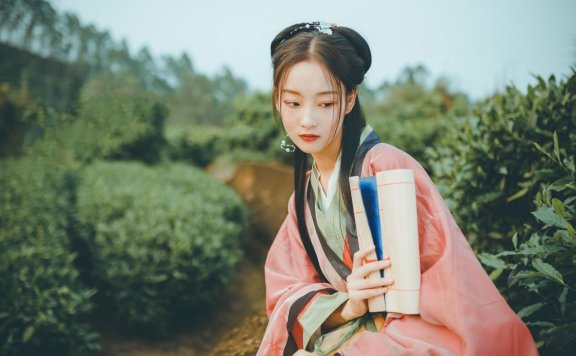
Origin and History of Ancient Chinese Traditional Tea
On the evening of November 29, at the 17th session of the UNESCO Intergovernmental Committee for the Safeguarding of the Intangible Cultural Heritage held in Rabat, Morocco, the "Traditional tea processing techniques and associated social practices in China" nominated by China were inscribed on the Representative List of the Intangible Cultural Heritage of Humanity. "Traditional tea processing techniques and associated social practices in China" covers the knowledge, skills, and practices of tea plantation management, tea leaf picking, manual processing, drinking, and sharing. Since ancient times, Chinese people have been growing, picking, making, and drinking tea. Using the art of tea making, tea makers have developed six major tea types, namely green, yellow, dark, white, oolong, black teas, and reprocessed tea such as flower-scented teas, and more than 2,000 kinds of tea products to meet the various needs of the people with different colors, aromas, tastes and shapes. https://youtu.be/Oe6kGFmFLnc 1 - The Origin of Chinese Traditional Tea Shennong used tea as an antidote for hundreds of poisons. Shu gave homegrown tea to the emperor of the Zhou Dynasty as a tribute. Since Lu Yu, the Saint of Tea, composed the "The Classic of Tea (茶经)", the status of tea has… -
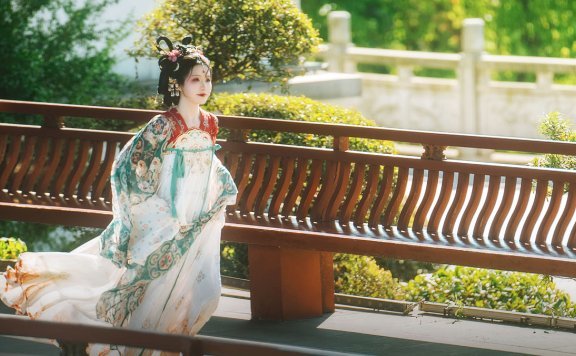
Recreating Historical Hanfu Makeup - Bloger Xiao Zhuang
The thriving hanfu and its derivative culture are coming back into the public view in a creative, distinct, and diverse way, lending its light and color back to the energetic youth. In this article, follow "THE GREAT SHOKUNIN" and meet Hanfu makeup blogger @Xiao Zhuang (小庄). Creative Ancient Hanfu Makeup The account @Xiao Zhuang is actually run jointly by two Hanfu enthusiasts, with makeup, appearances, editing and post generally handled by Qing Qing (晴晴), while photography and filming are done by Xiao Zhuang. They have collaborated on over 200 videos, the most popular of which is the series "The Beauty of China's Millennium", which has received nearly 10 million views. In this series, Qing Qing restored the history of the evolution of makeup, hairstyles, accessories, and hanfu clothing of the Tang, Song, and Ming dynasties. Before this, we mostly got a glimpse of ancient women's grooming, makeup and lifestyle from ancient TV dramas, but the style was mostly uniform, lacking in creativity and sophistication. On the contrary, in Xiao Zhuang's video, you can fully experience the changes of women's makeup and costume in different dynasties. Taking the Tang Dynasty makeup of this series as an example, the complete reproduction… -
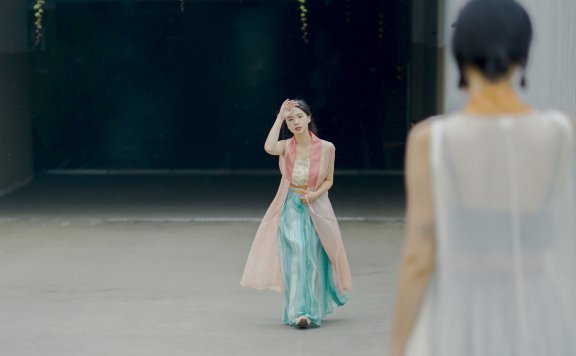
2022 Chinese Modern Hanfu Industry Development Report
Summary Modern Hanfu, also known as New style Hanfu, originates from the traditional classical dress style of the Han ethnic group and retains its typical formal characteristics, but innovates by combining it with the diverse wearing situations and fashion aesthetics of the current public. The core features of modern hanfu are: innovation, openness, and contextual diversity. While retaining the basic forms and aesthetics of ancient hanfu, modern hanfu has gained more and more popular among consumers in recent years by innovating its design to fit modern people's dressing habits and aesthetics, making it an everyday look. With the return of traditional Chinese culture to the mainstream, there are more and more hanfu with new styles. From both the cultural and productive point of view, the future of the new style hanfu industry is very promising. The basic situation of the modern Hanfu industry Modernization and daily use will drive the industry further The market size of the modern hanfu industry in 2021 is 1.4 billion dollars, up 6.4% year-on-year, slowing down relative to the past five years. This is partly because of the decline in the ability and willingness of consumers to purchase due to factors such as the… -
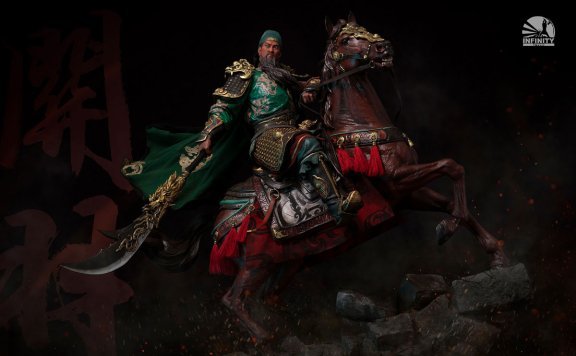
High-end Chinoiserie Statue Pioneer - Infinity Studio
In 2015, three post-80s, who love statues and model toys, founded Infinity Studio (开天工作室) together in Shanghai. Today, Infinity Studio has not only become the head brand of sculpture in China, but also led the niche circle to develop into a hot modeling industry, truly bringing love into reality and doing the best. Pu Xiang Industrial Design Studio recently interviewed the founder of Infinity Studio, Yu Guanglai, and talked with him about the first half of his life dedicated to the statues. 01 The bond with model toys Yu Guanglai has been associated with model toys for more than thirty years. Ever since he understood, most of his life has been closely connected with model toys. The first model toy in Yu Guanglai's life was the Transformers that his mother bought for him. But at that time, he was young and playful, and the toys he wanted were both numerous and expensive. Yu Guanglai repeatedly dreamed of going to various kinds of toy stores, and sometimes he would wake up with toys in his arms. When he woke up, he found that it was just a dream, and he was very disappointed. Once, the school organized a summer hiking.… -
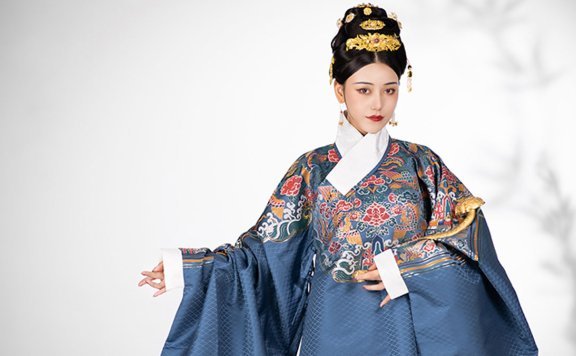
The Origin and Classic Style of Chinese Hanfu
After thousands of years of history, Chinese Hanfu styles are extremely diverse. However, the Hanfu recognized today mainly refers to the costumes of powerful dynasties such as Han, Tang, Song, and Ming, and is also the main basis for contemporary Hanfu design. There is no longer to consider the hierarchy in wearing modern Hanfu, with a richer mix of colors, patterns, and fabrics. Modern Hanfu designs are more simple and more comfortable, incorporating more fashionable elements while not losing beauty. Hanfu enthusiasts can choose and match Hanfu according to their own style and preference. However, because of its distinctive national characteristics, following certain wearing etiquette will definitely make the wearer more elegant and confident. The Origin of Hanfu Chinese Hanfu is the traditional costume of the Han people. How did the name originate? How is it worn? What is the relationship between Han Chinese costume and Chinese culture? These questions can not be explained in a few words. First of all, we need to understand the origin of the Han Chinese, the early Han Chinese set the tone for the dress of later generations. Hua Xia The Han originated from Huaxia. The term "Huaxia (华夏)" was first used in… -
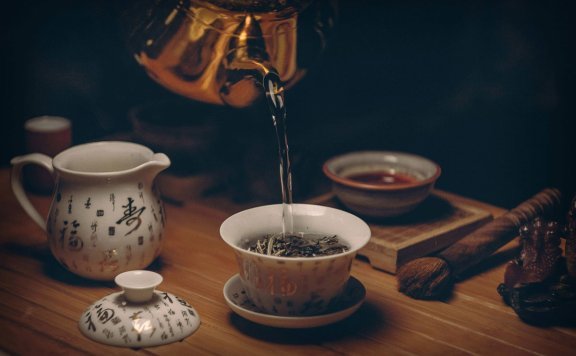
Brief History of Chinese Tea Culture
Chinese tea culture emerged in the Tang Dynasty. In the Song, Yuan, Ming, and Qing Dynasties, tea culture was deeply developed on the basis of inheriting the tradition, and tea-drinking customs with different characteristics and styles emerged successively, such as Jian Cha (煎茶, tea cooking), Dian Cha (点茶, tea whisking), Dou Cha (斗茶, tea tasting), and Pao Cha (泡茶, tea brewing ). With the progress of society, tea culture is developing continuously. The rise of tea culture in the Tang Dynasty According to historical records, as early as the Western Han Dynasty, it was common to drink and grow tea in Sichuan, China, and tea have already become an important commodity at that time. After the Six Dynasties, the trend of tea drinking rose in the south, and tea drinkers gradually increased in society. The establishment of the unified country in the Tang Dynasty, made it possible to have regular economic and cultural exchanges between the north and the south, which laid the foundation for the further popularization of tea-drinking customs and the continued development of tea culture. Tea drinking in China has a history of more than 4,000 years, and it was not until the Tang Dynasty that… -
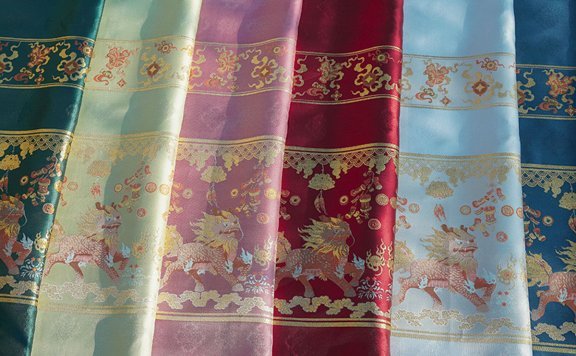
The Fabrics of Hanfu: Fibers and Weaves
Hey everyone, long time no see! It's been a while and I promise I'm still working on the Song Dynasty sections of Hanfu Unearthed—in the meantime, enjoy this not-so-short cheat sheet to all of the most commonly used fibers and weaves in hanfu, whether historically or in the industry today. Fibers Fibers are the material from which threads are spun to be made into fabric. These include synthetic fibers made in labs or factories by humans, as well as animal fibers that are grown as fur or silk by animals, or plant-based fibers that we harvest from various fibrous plants. Tencel Rising in popularity, especially last summer, tencel is a kind of semi-synthetic fiber made from cellulose, also called lyocell, originally made to imitate silk. Made by dissolving cellulose into pulp and using dry jet-et spinning to reconstitute the fibers, it’s a clean process that creates a kind of synthetic fiber using natural materials: easier to dye than cotton, more breathable than polyester, moisture-wicking, and softer than linen. The one downside of tencel is that it’s easily wrinkled, but its smooth draping quality and breathability make it a first choice for hanfu manufacturers today. Other rayons are also used, but… -
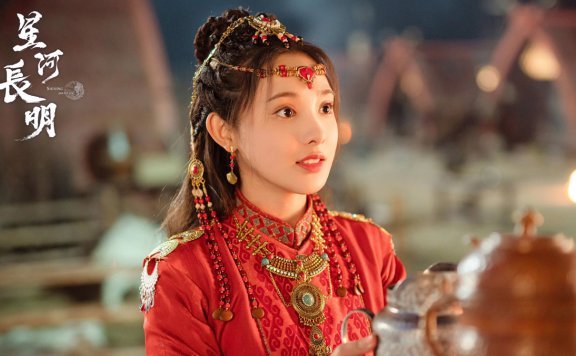
2022 Upcoming 11 Chinese Historical Dramas You Shouldn’t Miss
More than 20 Chinese historical dramas are scheduled to air in 2022, covering mystery, romance and comedy genres, including the highly anticipated Luoyang, starring Huang Xuan and Wang Yi Bo; The Wind Blows From Longxi, starring Chen Kun and Bai Yu, and A Dream of Splendor, starring Crystal Liu and Chen Xiao. The following is a list of Chinese historical dramas highlights for 2022, as compiled by Newhanfu. Luoyang · 风起洛阳 (Aired) Aired: December 1, 2021 Also known as: Feng Qi Luo Yang Period Background: Tang Dynasty Wu Zhou Period Genres: Historical, Mystery Main Role: Huang Xuan as Gao Bing Zhu, Wang Yi Bo as Bai Li Hong Yi, Victoria Song as Wu Si Yue, Song Yi as Liu Ran The drama is adapted from Ma Bo Yong's novel "Luo Yang", which tells a series of stories about a group of people from different classes who are investigating an unsolved case in Luoyang during the Wu Zhou period. Gao Bing Zhu, a notorious deputy marshal at the bottom of society in Luoyang, is involved in the case by mistake and becomes a suspect. While trying to prove his innocence, he meets Bai Li Hong Yi, who is trying to… -
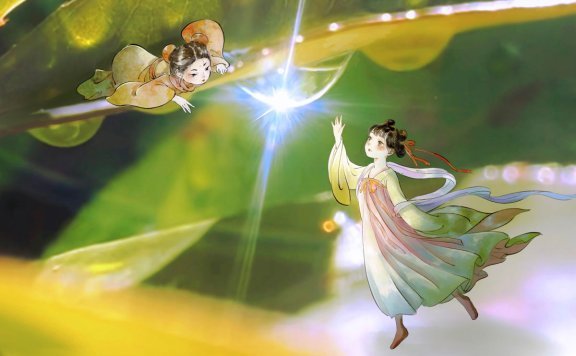
New Chinese Style Illustration - Anything Can Be Anthropomorphized Into Painting
Birds turned into hanfu beauty? The post-90s painter used her brush to anthropomorphize the birds, all of them cute. She gave up medicine for painting and is known as the "Most beautiful demon painter". She gave up her medical career and focused on painting. Let's Follow the "THE GREAT SHOKUNIN" to meet the painter @Lu Ming Shan (鹿溟山). The "accidental" popularity of practice painting Lu Ming Shan herself didn't expect that her bird paintings, which she usually used to practice, would receive a lot of love from netizens. In her brush, the little sparrows transformed into a group of energetic travelers, even their demeanor and temperament were pinpointed with great precision. They also turn into small schoolchildren playing with each other, the Tang dynasty musician playing the lute and deserting, or handsome knights. Lu Ming Shan is not only able to paint small sparrows, parrots, and magpies are often transformed in her brush. The yellow birds look so vibrant that she turns them into ladies in yellow hanfu dresses. The colorful birds are like the most dazzling colors in spring, and Lu Ming Shan does paint them as princesses, the tail is the skirt, floating and moving. Lu Ming Shan… -
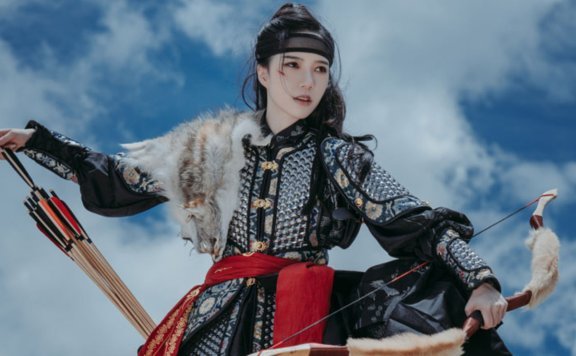
4 Types of Ancient Chinese Armor Decoration
The ancient armor is to some extent equivalent to the present military uniforms, which is the image of an army and therefore must be decorated. The decoration actually works in two ways, on the one hand, it is to show the good image of the mighty and on the other hand, it is to protect the armor from erosion. Leather armor is easy to rot and iron armor is easy to rust, both need to be protected by some decorative methods. The main methods of Chinese armor decoration are as follows. Paint, coloring Before Han and Wei either the leather armor or the iron armor, the armor pieces are painted, and repeatedly painted with multi-layer paint. Most of the Warring States' leather armors was black, according to the painted traces of terracotta warriors and horses, and the armor of the Qin Dynasty was mostly black. Many written records of the Han Dynasty armor are called Xuanjia (玄甲, black armor), and the armors of painted warrior figurines are also painted black. The color of black is a bit monotonous, so there is the idea of applying gold and silver pieces on the armor for decoration and painting at the same… -
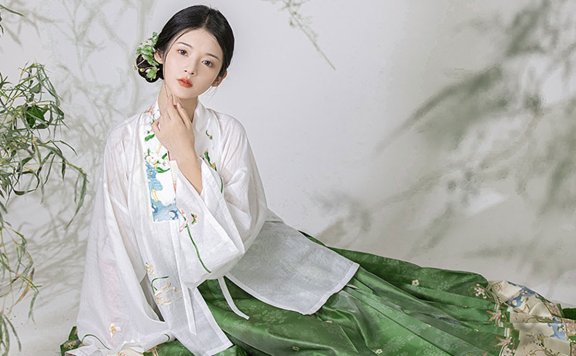
The Prototype and Development of Ming Dynasty Costume
In the first year of Hongwu in the Ming Dynasty. In order to eliminate the influence of the clothing left by the Yuan Dynasty, Zhu Yuanzhang issued an edict to the whole country, requiring the removal of Hu clothing. However, it was not the emperor who could determine the style of clothing, but the general public. Zhu Yuanzhang's edict on the restoration of the clothes and the crowns did not completely return people's dress to the Tang Dynasty tradition. Even many elements of Mongolian clothing of the Yuan Dynasty were retained because they were convenient to wear on a daily basis, resulting in the formation of Ming clothing of various shapes and features. Ming Style Hanfu vs. Song Style Hanfu For the general Hanfu lover, the difference between Ming Hanfu and Song Hanfu is probably the hardest to tell. Although it is often possible to make some guesses by feeling after wearing it, it is not really easy to pick out a single piece to see. Although there was no mention in Zhu Yuanzhang's edict of restoring clothing to the style of the Song Dynasty, but the Tang Dynasty was a distant time for the people of the Ming Dynasty.… -
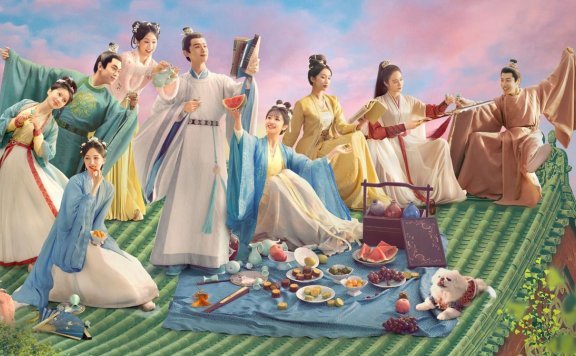
New Life Begins - The Latest Unmissable Comedy Sweet Cdrama
The new record of the fastest topping on the IQIYI drama list, seven consecutive days of the Chinese broadcast market share of the first, "New Life Begins (卿卿日常)" has become the biggest dark horse in the early winter drama market with its extremely high popularity. "New Life Begins" is produced by New Classics Media. In a marriage election, girls from all over the country gather in Xinchuan to marry the young prince of Xin Chuan. The 6th Prince, Yin Zheng (Bai Jingting), who is hiding his light, and Li Wei (Tian Xi Wei), who just wants to go back home and live comfortably, have a laughable marriage. This drama features a fresh style, a cheerful plot, and delightful characters. It combines love, cuisine, humanities, and history together, supplemented by comedy and laughs, ultimately presenting a life story. "New Life Begins" is different from the usual sweet comedy, the sweetness and joy presented are not a mindless spoof, but a romantic distillation of the fragments of life. Some people think that this drama wins in the background and the freshness of the persona, but after watching a few episodes, you will be able to feel the deep skills of the team… -
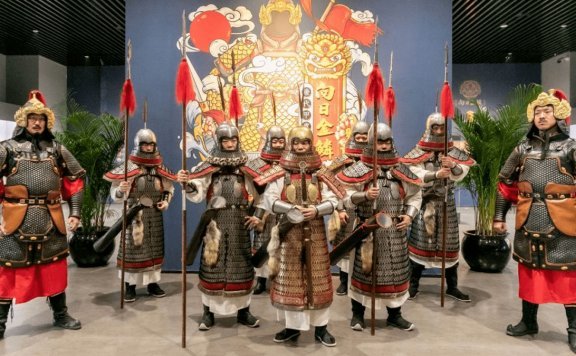
The Main Types of Chinese Ancient Helmets
The Chinese ancient armor protecting the head was called Zhou (胄, helmet) in the pre-Qin period. In oracle bone inscriptions, the helmet is painted as a shield with a vertical tube at the top. And many of the bronzes excavated from the Yinxu tomb in Anyang are fully consistent with this phenomenon. However, there is a lack of a standard for the definition of other ancient helmets without vertical tubes in Western Zhou and Spring and Autumn Warring States. Therefore, the emergence of iron head armor as the dividing line, before that, regardless of whether they had vertical tubes or not, they were called Zhou regardless of whether the material specifically leather or bronze, after that, they were divided into two categories: Dou Mou (兜鍪, helmet) and Kui (盔, helmet). But those with vertical tubes with feathers as decoration were still called Zhou, such as the unified style of the Qing Dynasty. Ancient helmets from the pre-Qin period Bronze Zhou (胄) of the pre-Qin period is bounded by the Shang and Zhou (周) dynasties. The surface of Zhou in the Shang Dynasty is generally cast with Taotie, round sunflowers, and other patterns, and the unearthed objects in Xingan County,… -
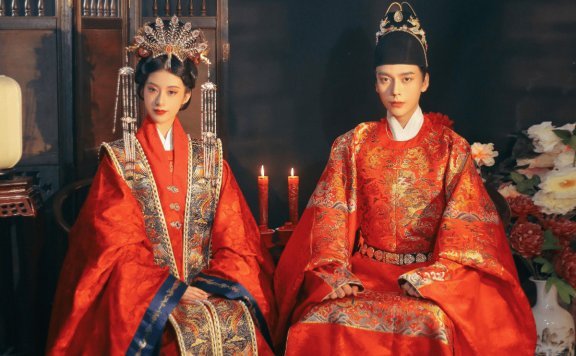
Oriental Romance - the Evolution of Traditional Chinese Wedding Dresses
In the Book of Songs, it is said, "The peach blossoms are in full bloom, their colors are bright and vivid like fire. This girl is getting married and will make her husband's family happy and harmonious. (桃之夭夭,灼灼其华。之子于归,宜其室家。)" With a few words, it outlines a prosperous scene of joyfulness and marriage of men and women. Chinese marriage rituals were formed during the Xia and Shang dynasties, and because the ancient ritual of marrying a wife was often held at dusk, it was known as the "Hun Li (昏礼)". Since ancient times, people have attached great importance to weddings, and on this day people dress up to celebrate this important event in their lives and gather many good wishes on their wedding clothes. In recent years, more and more people are choosing traditional Chinese wedding dresses for their weddings, and the beauty of the Feng Guan (凤冠, phoenix crown) and Xia Pei (霞帔) has stunned countless people. Chinese traditional wedding dresses are not only beautiful, but also have the weight and uniqueness of the ancient oriental culture, let's follow ArtMoment to explore the romance that has lasted for thousands of years and belongs to the Chinese people. Tang Dynasty: warmth…