Article
Search results:
-
Why Ancient Cdramas Frequently Use Headbands for Styling?
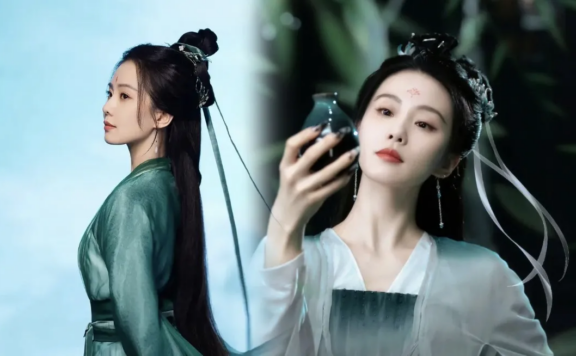
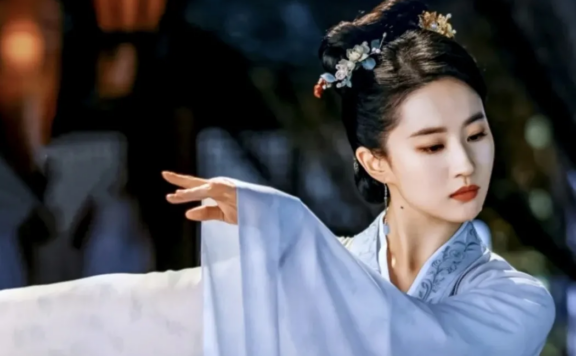
No matter which ancient - cdrama it is, there's always a headband on or behind the character's head. This seemingly simple headband can make the wearer look graceful and full of Chinese charm. How can such a simple accessory be so appealing? Let me state my view first. This headband is extremely common in TV dramas and Hanfu makeup and styling. For instance, Liu Shishi (刘诗诗) often sported headband looks in the ancient - costume drama Huai Shui Zhu Ting (淮水竹亭). Although we usually just call it a "headband", it actually has multiple names. Let's briefly sort out its common names and wearing methods. Netizens joke that this headband is like a veteran actor, as it appears in every ancient - costume drama with excellent "acting". One of its names contains a character that's difficult to write (a character composed of "xu" on top and "jin" at the bottom, pronounced "xu", meaning a hair rope). According to Zhu Zi's Family Rituals (朱子·家礼), for mourning women, the "xu - jin" is a piece of slightly thin linen about eight inches long, used to tie the hair roots with the rest hanging at the back. In the Song Dynasty's Records of the… -
Why Are Double-loop Bun Hairdos So Popular in Cdramas?
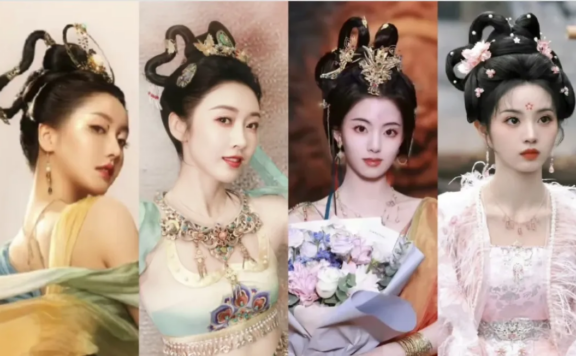
Why do fairies in ancient costume dramas always have two loops on their heads? It seems that in the ancient costume dramas I watched as a child, fairies all sported this hairstyle. Usually, there are two loops, but there can also be multiple loops. What's the name of this hairstyle? Let me give the answer first. This hairstyle is called the Double-loop (Bun) Immortal-worshipping Hairdo, which evolved from the Double-loop Hairdo. "Bun" and "loop" are interchangeable, just different terms. The Double-loop Hairdo was originally a hairstyle for young girls, and multiple loops can also be collectively referred to as "Bun Hairdos". But perhaps because it's so beautiful, this hairstyle also frequently appears in paintings of immortals, such as the famous ancient painting The Nymph of the Luo River and The Scroll of Eighty-seven Immortals. Since then, the fashion has spread throughout history. Because it's the hairstyle of fairies, people weren't satisfied with the traditional name of the double-loop and gave it a new name, "Immortal-worshipping Hairdo". As the name suggests, "this style can only be found in the heavens". Evolution of the Hairstyle You can see that there's an evolutionary context from the traditional Double-loop Hairdo to the Double-loop Immortal-worshipping… -
Yang Zi's Square Collar in Jia Ye Cdrama
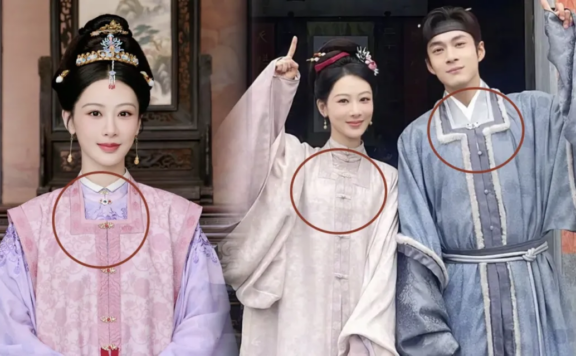
Yang Zi's Ming-style square collar in the ancient costume drama "Jia Ye (家业)" is truly eye - catching. Square collars are rare even today, so were they really popular in ancient times? Netizens are saying it's such a niche style! Let's start with the fact that similar rectangular and square collars already existed during the Shang and Zhou dynasties. However, the structure of these collars still requires further research, and they weren't very popular. Among traditional collars, the cross - collar was the most common. Rich Ming - style Collars By the Ming Dynasty, there was a wide variety of collars, including stand collars, round collars, square collars, and cross collars. While the front - opening collars popular in the Tang and Song Dynasties and classic cross collars were common, square collars were relatively rare. But they often appeared in Ming Dynasty portraits. You could wear a cross - collar or stand - collar inside a square collar, like Yang Zi wearing a stand - collar and Han Dongjun a cross - collar in the leaked photos of "Jia Ye" Artifacts with Square Collars Many clothing artifacts unearthed from the Ming Dingling Mausoleum feature square collar elements. Most of them… -
The Importance of Posture in Ancient Cdramas
Recently, the postures of actors in two popular ancient - costume dramas have once again become a hot topic. Why do people care so much about postures? Because postures are extremely important for both ancient - style actors and those who wear Hanfu. Let me state the conclusion first. What we often call posture is actually a person's figure and deportment, which are usually shown when walking, sitting, and standing. In the words of the older generation, it means sitting and standing properly. In current ancient - costume dramas, most characters have high social status, so the audience has higher requirements for them. After all, for a real gentlewoman from a prominent family, there are more constraints from etiquette, and the appearance presented should be more proper. However, in today's TV dramas, it's hard to see the so - called real 'gentlewomen from prominent families'. One reason is the poor postures. For example, the hunchback, the so - called 'rich and noble hump', and the forced standing postures can all reflect obvious posture problems. There are also details shown in expressions, such as the eyes and smiles. A good posture should at least be visually comfortable, natural, and aesthetically pleasing.… -
Why Is the Big Flower Hairdo Rarely Seen in Cdramas Now?
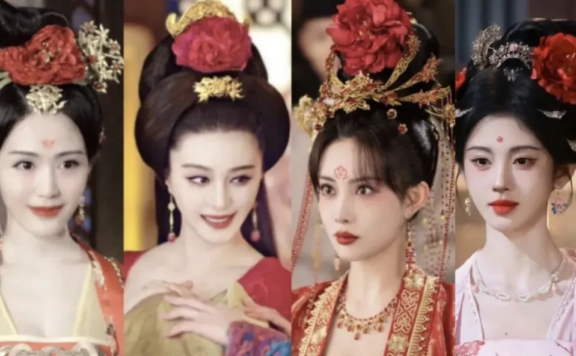
In early period cdramas, especially those with Tang-style costumes, this kind of big flower hairdo was often seen. But why is it less common today? Well, now there are more references from cultural relics, offering a wider range of options for hair and makeup styles. However, the association between the Tang Dynasty and wearing big flowers still persists as a stereotype in most people's minds. The Tang people's fondness for wearing peonies in their hair was closely linked to their love for these flowers. Peonies are so rich and magnificent, and some rare varieties are extremely precious. Only by wearing a whole peony could one show their status. Moreover, once a peony was worn, there was no room for other flowers, leading to the popular custom of wearing a single big flower on the head. Additionally, when the Tang people styled their hair in the 'big head style', there was some empty space on the head, so a big flower wouldn't look overly 'garish'. The most famous example is the Ladies with Head - flowers (簪花仕女图), which clearly shows this kind of adornment. This hair - flower - wearing custom reached the peak of fashion in the prosperous Tang Dynasty.… -
Why Are the Necklines Pulled So Low in Cdramas?
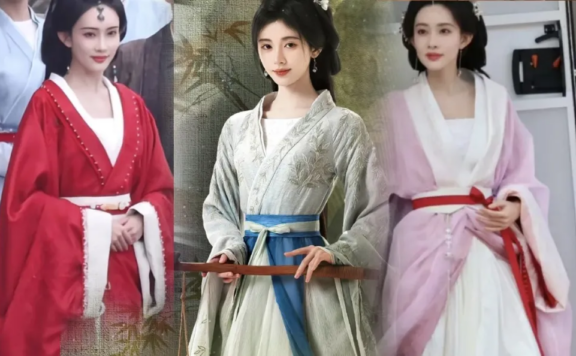
Recently, the new drama styling of Meng Ziyi has sparked quite a controversy. This large neckline design that reveals the collarbone, which we seemed to only see in early costume dramas, is popular again. In fact, this design isn't just in TV dramas but also in ancient - style photo studios everywhere. Some people even deliberately lower the collar to show their collarbones and camisoles. This somewhat revealing image is more like 'border - crossing' rather than creating an ancient - style atmosphere. Does this way of dressing really exist? First, there were indeed wide - necked robe designs in the Qin and Han dynasties, used as outerwear when layering. Later, during the Northern and Southern Dynasties, it was mainly applied to ruqun (a traditional Chinese women's clothing style), a transition from the shallow cross - collar to the front - closing collar similar to that in the Tang Dynasty. However, this way of dressing was revealing but not alluring, having nothing to do with border - crossing. How wide could the necklines be in the Qin and Han dynasties? The side width of the neckline of the straight - skirted robe N10 in the Mashan Chu Tomb was 43… -
Ren Min's Ming-style Costumes in New Cdrama
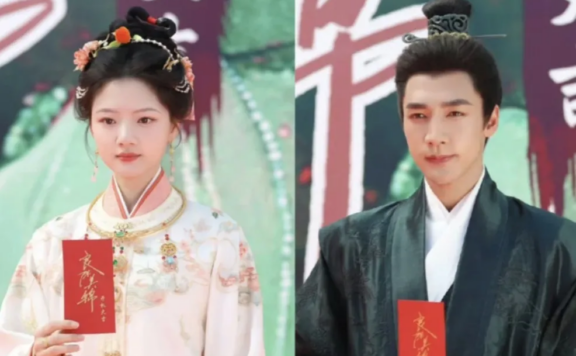
Recently, the new drama A Good Match for Chen and Jin starring Ren Min and Ci Sha started filming. Netizens directly called out the costumes they wore, saying, "These clothes are so bad. Change them quickly!" Why did netizens say so? The costume style of this drama is in the Ming Dynasty style. In Ming-style costumes, the most important aspects are the clothing pattern, texture, and the allowance. The pattern can only be seen when the clothes are laid flat, so the most obvious thing recognizable to the naked eye is the allowance issue, which directly affects the clothing pattern. The allowance here refers to the "total sleeve length". Some formal wear patterns pay attention to "the sleeve should reach beyond the wrist when the arm is bent back". That is, when cutting, there should be enough room for the arm to bend, so that the sleeve length won't be affected when the arm is bent. When the wearer bends their arm, this kind of sleeve will present a beautiful streamline. Previously, the costumes in The Ninth Purple were criticized by netizens. The clothes basically had no allowance, making the person look big-headed and small-bodied, with completely uncoordinated proportions. The… -
Do Female Characters in Ancient Cdramas Rarely Wear Pants?
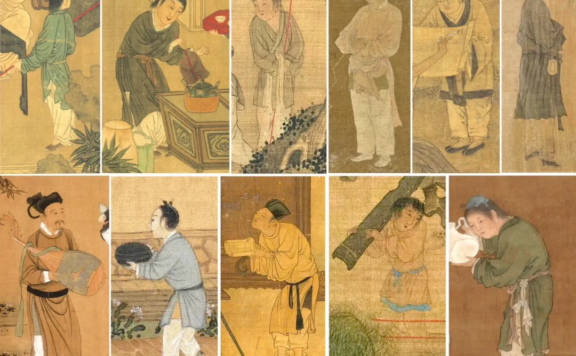
It turns out that there's not nothing under the skirts! In the ancient costume drama The Ferryman of Peace and Tranquility, the image of the puppet wearing pants is truly eye - catching. It seems that female characters rarely wear pants. After reading this, you can boldly say: Ancient women also wore leggings under their skirts, and they were even in the style of harem pants! Previously, in the drama The Splendid Life, there were scenes where the characters almost 'flashed' without leggings, which made many people mistakenly think that there were just bare legs under the skirts. This is really a big joke. Let's start with the conclusion. Pants have existed in ancient times for a long time. Crotch - sewn pants have been unearthed from the Shang and Zhou dynasties. In the Tang Dynasty, a kind of harem pants that could be worn outside even became popular. They had a design to cinch the cuffs, which was very fashionable and convenient for daily life. Similar harem pants appear in The Ferryman of Peace and Tranquility and The Gorgeous Empire. Don't they look exactly the same as the harem pants we wear now? This kind of pants appeared earlier… -
The Look of Xiao Zhan in Cdrama Zanghai Zhuan
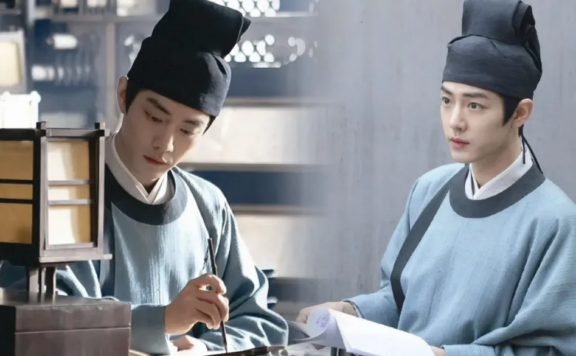
The trailer of the ancient - costumed TV drama "Zanghai Zhuan (藏海传)" has been released, and Xiao Zhan's looks in different periods are eye - catching. Netizens said, "This is what the costumes of Ming Dynasty scholars should look like!" First, the clothing Xiao Zhan wears in "Zanghai Zhuan" is a round - collar lanshan (襕衫). The round - collar refers to the collar style. Lanshan was particularly popular in the Song and Ming dynasties. Wearing a Confucian cap, it became the iconic clothing for the scholar - official class, Confucian scholars, and students at that time. Also, it was widely used in the Confucius worship ceremonies in local rural schools as the exclusive clothing for the dancers in the six - column dance. The lanshan in the Song and Ming dynasties had differences, but both had a horizontal hem. According to "History of the Song Dynasty: Records of Ritual Paraphernalia", "The lanshan is made of fine white cloth, with a round collar and large sleeves. A horizontal hem is added at the bottom as a skirt, and there are pleats around the waist. It is worn by Jinshi (successful candidates in the highest imperial examinations), students of the Imperial… -
Why Are Heroines in Cdramas Always Using Same Ponytails?
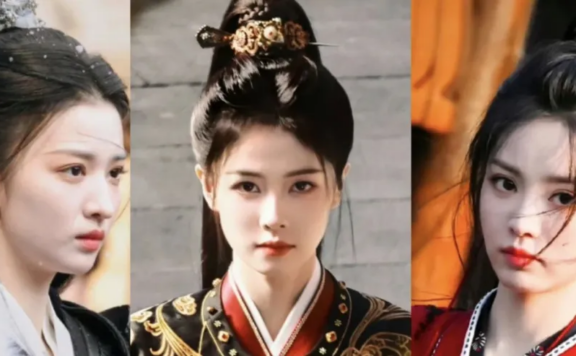
It's unclear when it started, but almost all heroines and heroes in ancient - costume dramas now sport high ponytails, and the 'armor battle - damaged makeup' trend has also become popular. Netizens point out that high ponytails can actually hit the face during martial arts practice, which is quite painful. The mass replication of high ponytails and battle - damaged makeup not only risks causing visual fatigue but also likely puts pressure on makeup artists and stylists to create unique variations. Let's revisit the costume drama styles of 50 years ago. The most classic is arguably the image from A Touch of Zen. In 1970, actress Xu Feng starred in A Touch of Zen, which catapulted her to fame and established her cold yet glamorous 'heroine' persona. Her character design featured a high bun, often paired with a headscarf or hat. Over her 15 - year screen career, she appeared in about 50 films, all as a heroine. This sleek attire and hairstyle conveyed an independent, self - reliant, and powerful image. Looking at other classic films, heroines rarely wore ponytails. Even with updos or half - updos adorned with accessories, the styling showcased distinct personalities while still emphasizing… -
Why Are There So Many White Lanterns in Cdramas?
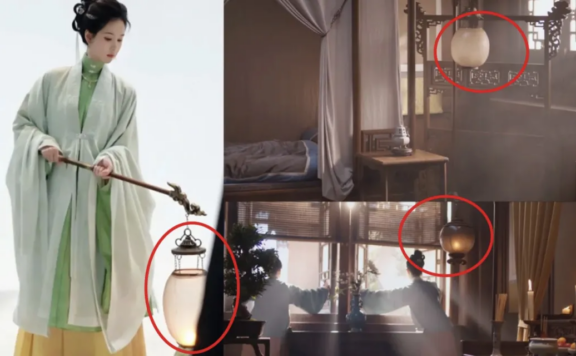
Why are there so many white lanterns in dramas like Yan Hui Shi, which references Ming Dynasty costumes? Even during festivals, white lanterns dominate. Isn't it considered unlucky to hang white lanterns at home? Let’s start with the conclusion. In traditional Chinese lantern culture, lanterns come in various colors, and white lanterns are one of them. Many ancient paintings depict white lanterns used in celebrations and rituals. People believed that lighting white lanterns at night could dispel darkness and convey blessings and good wishes. During festivals, households would hang white lanterns to express hopes for future happiness and prosperity. In daily life, white lanterns were also used for illumination, while other colored lanterns served as decorative accents. When lit, white lanterns emit a soft yellow glow, making them a common sight in ancient paintings. In Ming Dynasty-inspired dramas, aside from geometric-shaped lanterns (square, round, triangular) or those resembling animals and objects, we also see unique designs like horn lanterns, crimson gauze lanterns, and boneless lanterns. Among these, horn lanterns are one type of 'white lanterns' we often see. Similar lanterns include those made from sheep horn or the more expensive rhinoceros horn. Though they appear white, they are closer to… -
Why No Summer Hanfu Wear in Cdramas?
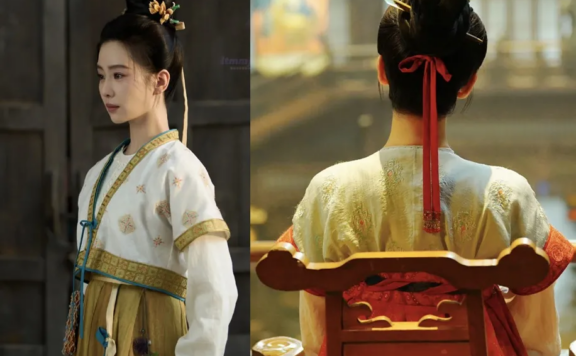
It's rare to see short sleeves in ancient costume dramas. Why is that? Did ancient people not have summer Hanfu? Wearing multiple layers must have been unbearably hot, right? Let's get straight to the point. How did ancient people stay cool and stylish? They weren't foolish enough to suffocate themselves in long - sleeved layers. Ancient vests came in short - sleeved, sleeveless, and even strappy designs. If you rummage through an ancient wardrobe, you’d find inspiration that defies our conservative stereotypes. For example, the 'vest' or 'Bijia' was a sleeveless, front - opening garment with slits reaching below the knees. Inherited from the Song Dynasty and popular during the Yuan and Ming dynasties, it usually reached the hips or knees, and some were even longer, less than a foot from the ground. It was often worn over other clothes, and could be worn alone at home when relaxing and enjoying the cool. In the Ming dynasty, such vests were also called 'Gua' or 'Bijia', referring to sleeveless tops of various collar styles. At home, without an undergarment and with lightweight fabric, 'wardrobe malfunctions' were common. No wonder outsiders were barred from the inner quarters! Short sleeves, known as 'Banxiu'… -
Why Are the Sleeves So Big in Cdramas
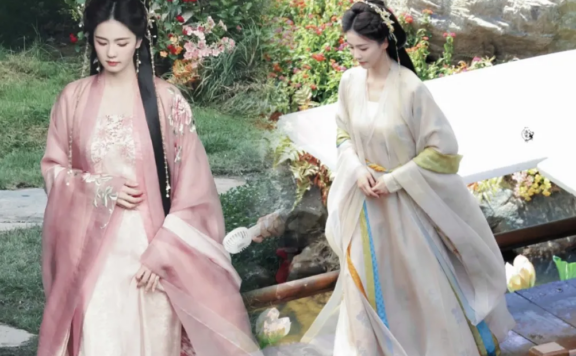
Sometimes, it feels awkward to see characters in TV dramas wearing large - sleeved outfits for outings, meals, dates, fights, or even sleeping. Were ancient clothes really all about big sleeves? How inconvenient would it be to use the restroom? Are historical drama sleeves getting even larger these days? One netizen joked: 'So big you could fit a person inside!' Let's get straight to the point. While we often describe Hanfu as 'wide robes and large sleeves', it's important to note that this is a characteristic of formal Hanfu, used to show the wearer's social status, like the historical Dashu Shan (大袖衫) or Gongfu (公服). People rarely wore such exaggerated sleeves outside ceremonial occasions. Let's break down Hanfu sleeve styles. There are many suitable for daily life. Narrow sleeves are practical for labor or martial arts; Chuihu sleeves (垂胡袖), Pipa sleeves (琵琶袖), and straight sleeves are for non - labor daily wear; short sleeves can be casual outer layers or summer homewear. For example, the Quju (曲裾) and Zhiju (直裾) unlined gauze robes, common in the Western Han Dynasty, had sleeve openings around 29 cm wide. Modern fashion sleeves average 10 cm, with looser ones at 15 cm. So, 30… -
Chen Duling's Cdrama Hairstyle - Marriage Look
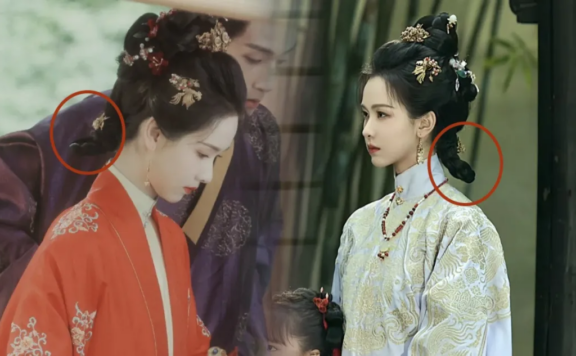
In the Cdrama When the Wild Geese Return, Chen Duling's post - marriage hairstyle surprised viewers: 'Why is this married hairstyle so odd? The ends just stick straight up!' In fact, this is the Sanlvtou (三绺头), a style popular among Han women in the late Ming Dynasty. The hairstyle features a 'wild goose tail' at the back, looking more dignified and steady. The Sanlvtou divides the hair into three sections: front, middle, and back. Each section is braided and gathered in a distinct way, thus getting the name 'Sanlvtou'. However, this hair - combing method can be traced back even earlier. For example, in the second act of The Box of Toiletries by an anonymous writer of the Yuan Dynasty, there is a line: 'Who would have thought that Kou Chengyu, a woman with the Sanlvtou hairstyle and two - piece clothing, has such loyalty.' Specifically, the Sanlvtou has two side strands called 'Lvebin (掠鬓)'. They frame the face like delicate clouds or cicada wings, so they are also poetically named 'Cloud - Like Hair' or 'Cicada - Wing Hair'. The front section of hair can be swept back, laid flat, or slightly raised, then tied with a red ribbon… -
Explore the Bathing in Historical Cdramas
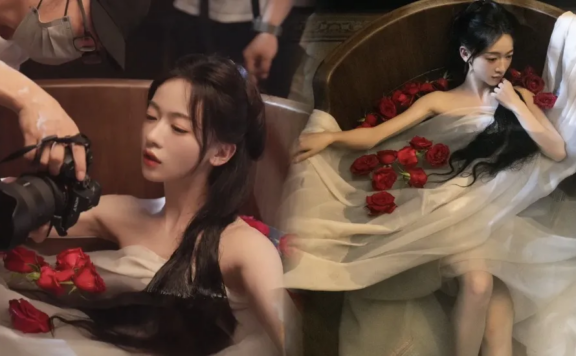
Who in Their Right Mind Takes a Bath with Clothes On? In current historical dramas, bathing scenes often show characters entering the bath fully clothed, with just a tub in sight. Does it mean ancient people just rinsed off? Netizens note that earlier films and TV shows depicted bathing more realistically, while modern ones seem overly reserved. It's not only about clothing; the bathing set - ups are also disappointingly simplistic. Let's clarify: bathing wasn't as basic as it's often shown. Besides the tub, ancient bathing rituals involved tools like scrubbing cloths and herbal cleansers. Cleanliness was more than a quick rinse. Earlier productions, whether ancient or modern, often followed visual logic. Actors wore undergarments and used petals or other coverings to maintain modesty. Though mocked, these scenes created many iconic moments. In ancient times, bathing was not just for hygiene; it was a sacred ritual. As the saying goes, "One who washes their hair must tidy their hat; one who bathes must freshen their clothes." The term "沐浴" (bathing) was divided into "沐" (washing hair) and "浴" (washing the body). According to "The Book of Rites", people washed their hair every three days and their bodies every five, though… -
Hairstyles for Kids in Historical Cdrama
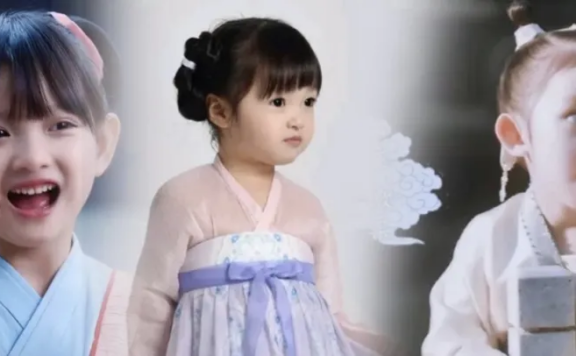
Finally, in historical dramas like 'Family Business,' 'National Beauty and Fragrance,' and 'Joy of Life,' the appearance of many child characters has sparked netizen discussions: 'So this is how ancient children looked!' Let's start with the conclusion. Ancient children generally went through stages of shaving, growing, and tying their hair. Their hairstyles varied, similar to how kids grow today. Parents, take note: children wearing Hanfu don't need adult hairstyles; it's not awkward at all. Did you also dream of dressing and styling like adults as a kid? But it was just a fantasy. Some historical dramas, for dramatic effect, often give children adult hairstyles and even add crowns, turning them into 'mini - adults' without childlike charm. Ancient children usually tied their hair into buns around ages 15 - 16, when boys reached 'weak crown' (coming - of - age) or girls 'hairpin' (adulthood). Before that, they mostly wrapped their hair in colorful cloth, showing their playfulness and cuteness. Let's explore further. At first, children's hair was mostly fine 'fetal hair.' They often shaved and regrew it, as seen in ancient paintings. The top hair was usually styled into an inverted triangle, called 'tiáo.' You can feel the scene of… -
Explore Qin Dynasty Through Epic Cdramas
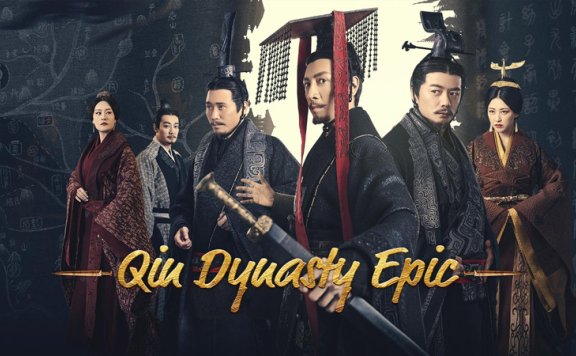
The Qin Dynasty (221–206 BCE), though lasting merely 15 years, revolutionized China. The first emperor of China, Qin Shi Huang (秦始皇), abolished feudalism, replacing it with a centralized bureaucracy. Standardized weights, measures, and script unified the realm, while massive projects—the Great Wall, Lingqu Canal, and the emperor's mausoleum with its Terracotta Army—showcased state power. However, harsh laws, forced labor, and censorship bred widespread resentment, leading to rebellions after the emperor's death. Join us in time travel: Explore Qin Dynasty epics where gripping storytelling meets historical truths, and discover why these cultural echoes still resonate today. The Qin Empire Series 大秦帝国系列 The Qin Empire series (2009–2020) stands as a towering achievement in historical television, offering a panoramic chronicle of the Qin state's evolution from a beleaguered frontier territory to the unifier of China under its first emperor, Qin Shi Huang. Spanning four seasons and over a decade of production, this epic saga combines meticulous historical research with gripping drama, illuminating the ideological, military, and cultural forces that forged imperial China. More than a mere retelling of events, the series grapples with profound questions about power, governance, and the human cost of progress, making it an essential watch for both history enthusiasts… -
Top 6 Song Dynasty Cdramas Recommendations
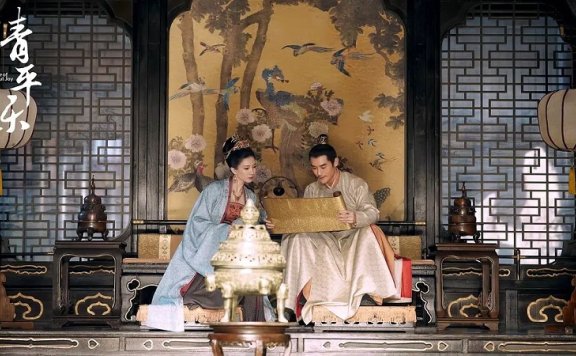
In 960 CE, as the fractured Five Dynasties and Ten Kingdoms period (五代十国时期) teetered toward collapse, a shrewd general named Zhao Kuangyin staged a bloodless coup, donning the imperial yellow robe to found the Song Dynasty (960–1279 CE). This era became a paradox of Chinese history—a golden age of artistic refinement and technological genius shadowed by relentless military threats. The Song split into the Northern Song, with its dazzling capital Bianjing, and the Southern Song, exiled to Hangzhou after the catastrophic Jingkang Incident of 1127, where Jurchen invaders shattered the court's complacency. Under the Song, China thrived as a cosmopolitan marvel: scholar-officials like Wang Anshi reimagined governance through bold reforms, poets such as Su Shi penned verses that still ache with beauty, and innovations like movable type printing ignited a knowledge revolution. Yet the dynasty's intellectual and economic zenith clashed with existential crises—Khitan horsemen, Xi Xia uprisings, and the Mongol storm looming on the horizon. Behind the serene ink-wash landscapes lay a world of cutthroat politics: literati factions warring over reform, emperors balancing Confucian ideals with pragmatism, and generals like Yue Fei sacrificing all to "serve the nation with utmost loyalty." Step into dramas where silk-clad scholars debate in lantern-lit… -
The Lotus Leaf Hats in Cdrama
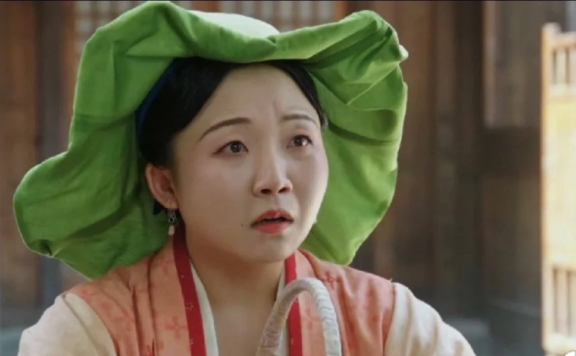
If you think lotus leaf hats are a modern trend, our ancestors would surely laugh at you: "You kids are so outdated and unfashionable!" This iconic headwear dates back much earlier than you might imagine, with roots tracing to the Northern and Southern Dynasties. Historical records like "The History of the Northern Dynasties" mention bearers wearing them in summer, while "Tales of the Hidden World" from the Liu Song Dynasty recounts a sorcerer tricking a governor into wearing a magical lotus hat that later revealed its true form, astonishing everyone. The most vivid depiction appears in Ming Dynasty painter Qiu Ying's "Assembly of the Immortals," showcasing an immortal wearing an identical lotus leaf hat. Nature has always been the muse for innovation. Later adaptations led to rounded hats with varying materials—felt caps from wool, blended silk - wool Diexiao hats, and pure silk variants. The key difference lay in "dyed silk replacing wool," as noted in historical texts. This accessory became a cinematic staple too, like Yang Fangbing's portrayal of Yang Guifei, whose hat dripped with pearl strands resembling dewdrops on lotus leaves. Among the Yi ethnic group in Sichuan's high - altitude Meigu County, married women wear similar hats… -

Why Are Off-Shoulder Outfits Rare in Historical Cdramas?
In the past, historical dramas often featured costumes with large necklines, resembling an ancient version of 'deep V-necks.' But were such off-shoulder outfits truly worn in history? And why are they less common in modern productions? There were indeed similar styles, at most revealing the neck. Historical artifacts like the murals from Xu Xianxiu's tomb and figurines from the Wei-Jin period might give the impression of off-shoulder outfits. However, these were typically layered with undergarments beneath the outer robe. For instance, during the Northern and Southern Dynasties, the 'Da Xiu Ru' (大袖襦) was popular. This style, often seen in figurines, featured wide sleeves, though only sleeve fragments have been unearthed so far. Based on these artifacts and the characteristics of 'Ru,' scholars have reconstructed how the Da Xiu Ru might have looked, with variations in neckline size. Notably, figurines wearing such large-neckline outfits invariably have a circular or horizontal line around the neck, representing the collar of an undergarment or 'Liang Dang' (裲裆). By the Southern Dynasties, waistlines of skirts rose to the chest, while some upper garments retained the Da Xiu Ru style. The necklines during this period resembled modern cinematic effects, barely revealing the collarbone. However, achieving the…