Article
Search results for the keyword [hanfu making]:
-
The Rebirth of Hanfu in Livestream Shopping
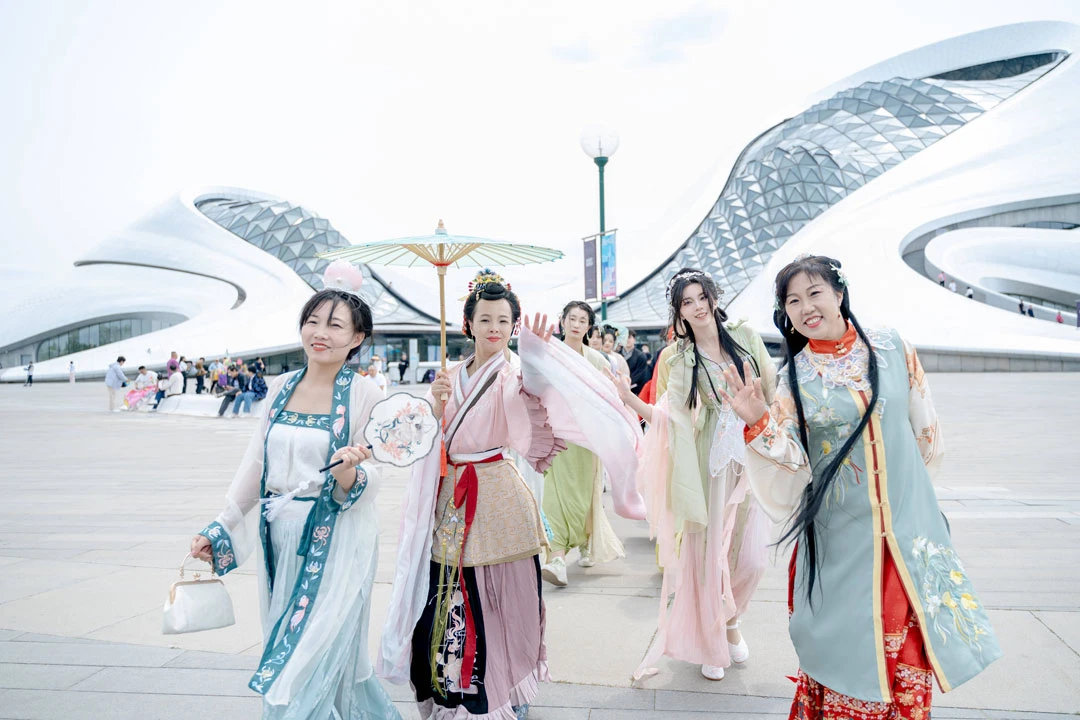
The Modern Hanfu Enthusiast Sensen, a Hanfu enthusiast born after 1995, regularly finds herself glued to her phone, watching Hanfu live shopping sessions on Douyin (the Chinese version of TikTok), even though her wardrobe is already bursting with various styles of Hanfu. "Last year, the Ma Mian skirt was in vogue, but this year, it's all about the new Chinese style," she says, making another purchase as a model twirls in her screen. In recent years, there has been a comprehensive revival of traditional Chinese culture, and Hanfu, which was once confined to niche circles, has become a new fashion trend. More young people, like Sensen, are being introduced to Hanfu through platforms like Douyin, experiencing a journey from unfamiliarity to curiosity, eventually embracing and promoting Hanfu culture. The Meteoric Rise of Hanfu A recent report by the Innovation and Entrepreneurship Center at Peking University HSBC Business School and the Zhiwei Research Institute highlights the explosive growth of Hanfu enthusiasts, with the number of aficionados expanding more than 30-fold over the past decade, reaching 9.98 million in 2023. The increasing demand has turned various e-commerce platforms into crucial venues for Hanfu purchases. By 2024, the market size for Hanfu in… -
The Rise of Hanfu Entrepreneurship in Rural China
In the heart of Cao County, a quiet revolution has been underway, transforming the fortunes of its youth through an unexpected avenue: Hanfu, traditional Chinese clothing. For decades, opportunities for young locals to break into wealth creation were limited without powerful connections or resorting to less savory means. However, against the odds, Qin Shuo carved out his path to success. From Factory Floors to Fashion In 2016, Qin Shuo, then 18, abandoned his studies and ventured to Beijing as a factory worker crafting paper boxes. The monotony pushed him to seek more fulfilling work, leading to a stint as a car salesman. Despite trying his hand at various roles, including selling Chery and Honda cars, he found himself dissatisfied and struggling financially. Returning home to Cao County in 2019, Qin Shuo stumbled upon an opportunity in Hanfu. Initially a sideline to earn extra cash, Qin Shuo quickly recognized the burgeoning demand for original Hanfu designs. His first attempt, albeit with a steep learning curve and initial setbacks, eventually paved the way for his entrepreneurial breakthrough. Seizing the Hanfu Market Qin Shuo’s early forays into selling Hanfu were modest, starting with a few designs sourced from friends. His persistence paid off… -
Finding the Right Mamian Skirt to Complement Your Hanfu
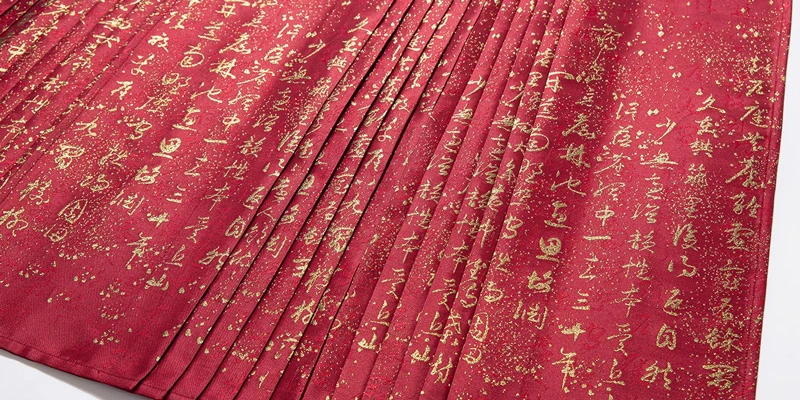
Nowadays, the Mamian skirt is increasingly integrated into our sight and life. Under such a trend, many people are eager to own their desired Mamian skirt. Let's follow Hanfu Shidai and take a look at the details to consider during the process of selecting and styling a Mamian skirt. 1 - Selection Stage Step 1: Size Firstly, choosing the right size that fits the body curves is crucial for the perfect outfit. Like a suit, a Mamian skirt can be chosen according to a size chart or customized. Whether you are selecting from a size chart or opting for customization, the main standards to measure are height, waist, and hips. These measurements will influence the choice of skirt length, waist length, and sweep circumference. If we choose to shop online, sellers often provide a size chart for customers to make their selection. By comparing the chart, you can choose according to your size information. If opting for customization, you can first provide the seller with your waist, hip, and height information for reference. Then, based on your needs, negotiate with the tailor to decide the width of the skirt door, the length of the skirt waist, and the skirt length. Generally,… -
From Dynasties to Daily Wear: The Resurgence of Hanfu Fashion
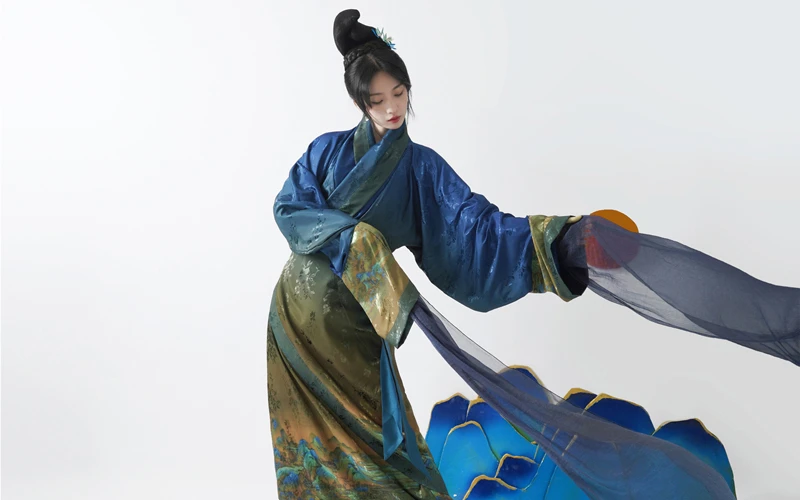
Mamian skirt, Qixiong dress, and the hundred-pleat skirt; wearing traditional Hanfu has become a new trend in public attire in recent years, whether it be for sightseeing, wedding ceremonies, shopping, friend gatherings, and various other occasions. The "Hanfu craze" continues to rise, blending tradition with modernity, activating cultural resources, igniting the consumer market, and driving industrial development. In recent years, Hanfu has gradually gained popularity among the younger generation, with their youthful expression and fashionable presentation bringing Chinese traditional culture into daily life in a tangible and palpable form. The long-standing Chinese traditional clothing culture embodies a blend of Chinese aesthetic interests, reflecting not only a consumer choice but also the Chinese people's love for outstanding traditional culture. Demand exceeds supply During the Spring Festival and Lantern Festival of the Year of the Dragon, the activity of "wearing Chinese costumes for free to visit the Confucian Temples" in Qufu City, Jining, Shandong, has been well received. Wang Chunling, a visitor from Liaoning, traveled a long distance with friends to play here, attracted by the lively atmosphere of night tours in the ancient city of Qufu and folk performances, and dressed in Hanfu to join the parade. This year, garments… -
Featuring 9 Classic Chinese Instruments in Hanfu Photo Shoots
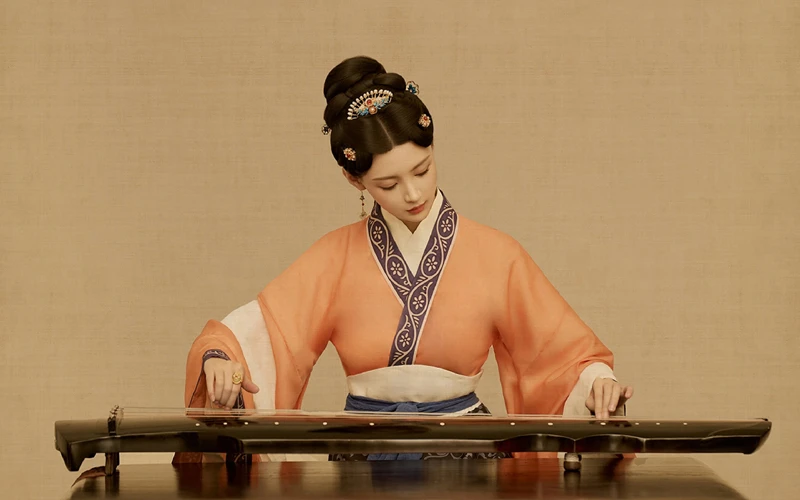
In the rich cultural heritage, Hanfu and traditional Chinese instruments are not just symbols of China's long history; they are also bridges that combine modern aesthetics with traditional charm. This article will guide you through how to integrate nine typical Chinese traditional musical instruments into the art of Hanfu photography, showcasing their unique cultural significance and visual impact. From the tranquil elegance of the Guqin to the flutes, each musical instrument can add a unique charm to Hanfu. 1 - Guqin The Guqin, also known as the Yaoqin, Yujin, or Seven-stringed zither, is a traditional Chinese plucked string instrument with a history of over three thousand years. The Guqin has a wide range of tones, deep timbre, and lingering resonance. It is recorded in ancient texts that Fu Xi made the qin, and there are legends of Shennong, the Yellow Emperor, Tang Yao, among others, being involved in the creation of the instrument. Emperor Shun set the qin to have five strings, King Wen added one string, and King Wu defeated King Zhou and added another string to make it seven strings. This demonstrates the long-standing and profound cultural heritage of the ancient Chinese Guqin. There are over 3360… -
The Challenges of Remaking Classic Cdrama: Exploring the Difficulties Faced by New Adaptations
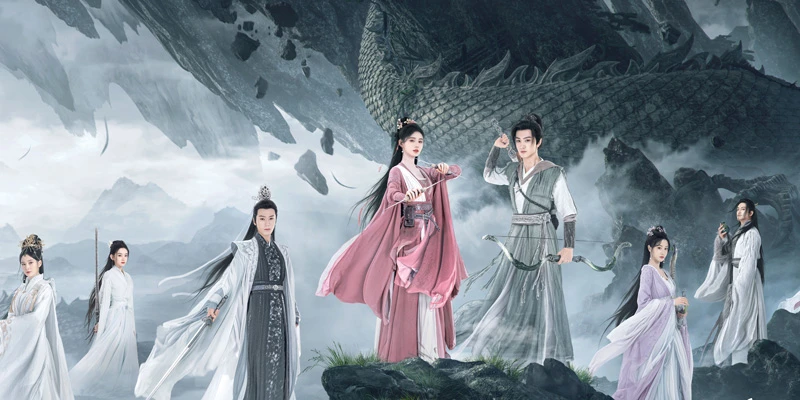
Before the Spring Festival, "Judge Dee's Mystery" officially premiered. This is the second series after 2010's "Detective Dee" to feature Di Renjie as the main character, vividly portraying his meticulous investigative abilities. While it may not have the original cast, it can be considered a revival of the classic IP of Di Renjie. However, audience data indicates that viewers seem somewhat unconvinced by this incarnation of Di Renjie. Currently, "Judge Dee's Mystery" has accumulated a total valid viewership of 287 million, which, for a series of this scale, can only be described as average. Coincidentally, "Sword and Fairy 4" and the adaptation of "Chinese Paladin 6" titled "Sword and Fairy" also premiered around the same time. Both are derived from the classic IP "Xian Jian Qi Xia Zhuan (Chinese Paladin)." As cherished memories for numerous viewers, "Chinese Paladin" and "Chinese Paladin 3" are untouchable classics. Naturally, viewers will scrutinize these two series with a critical eye. Presently, "Sword and Fairy 4" has a Douban rating of 4.3, while "Sword and Fairy" has a rating of 5.0, both receiving lukewarm reviews. In recent years, the revival and development of classic cdrama IPs (Intellectual Property) extend beyond Di Renjie and the Chinese… -
From Script to Screen: The Making of Invincible Stepmother and Its Standout Features
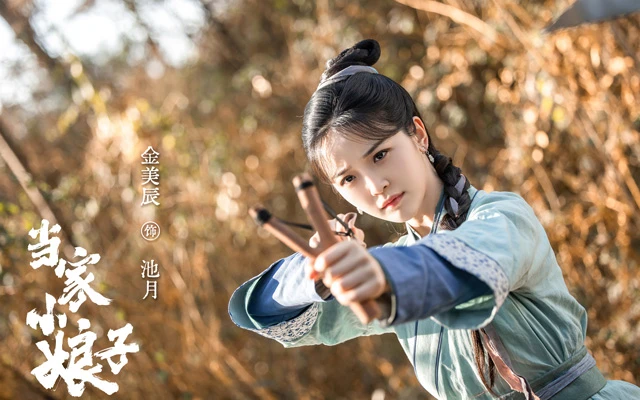
Novels with farming themes are common, but dramas with farming as the main theme are rare, especially in the realm of fast-paced and emotionally-driven micro dramas. The fast-paced nature of micro dramas distances them from traditional theater and brings them closer to short videos. Therefore, whether in landscape or portrait mode, revenge, suspenseful twists, and intense tragic love stories dominate, allowing viewers to quickly satisfy their dopamine cravings. However, for creators, it is easy to fall into the vortex of homogenization. Recently, a fresh and uniquely presented micro drama called "Invincible Stepmother" on Youku has caught the attention of many micro drama enthusiasts. As drama fans have said, for the first time in a micro drama, the female protagonist travels back to ancient times not to pursue love or engage in political machinations, but to earnestly raise children and make money through business ventures in the countryside. "Invincible Stepmother" is adapted from the novel "Chuan Cheng Si Ge Tuo You Ping De E Du Hou Niang" by Fanqie novel. It is also a key project of Youku's micro drama development plan. The female protagonist, Chi Yue (played by Jin Meichen), was originally a martial arts star who accidentally transmigrated into… -
Unveiling the Traditional Hanfu Warring States Robe
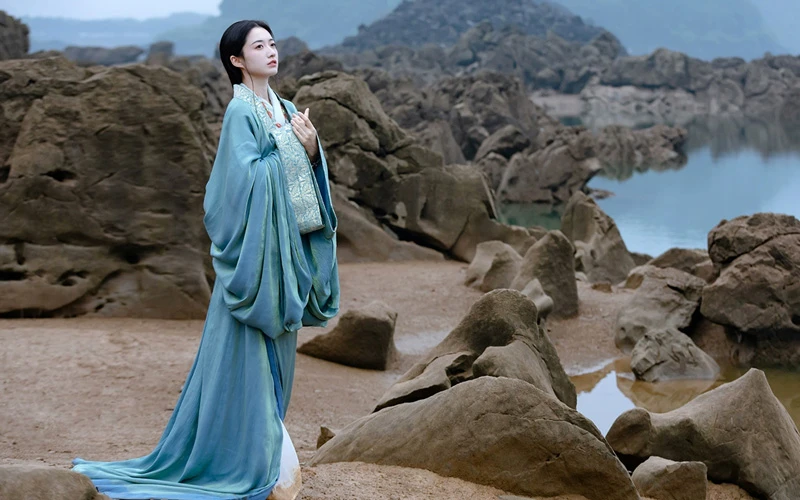
In the rich tapestry of Chinese history, traditional clothing is not just a matter of fabric and fashion; it's a vivid reflection of cultural values, social hierarchy, and artistic expression. Among these historical garments, the Hanfu Warring States Robe stands out as a symbol of elegance and a repository of stories from a time when China was divided yet culturally vibrant. This article delves into the mesmerizing world of the Hanfu Warring States Robe, a garment that encapsulates the essence of an era marked by turmoil, sophistication, and enduring legacies. In this journey through time, we will explore the origins and evolution of the Warring States Robe, its significance in the broader context of Hanfu and Chinese history, and how this ancient garment continues to influence modern fashion and cultural identity. Join us as we trace the golden threads of history, discovering the timeless elegance and profound symbolism embodied in the Warring States Robe. What is Warring States robe? The Warring States robe, literally speaking, refers to the robes and garments from the late Eastern Zhou Dynasty and the Warring States period. The main reference for the current Warring States robe on the market is the cultural relics from… -
Get the Perfect Winter Hanfu Look with These Mixing and Matching Tips
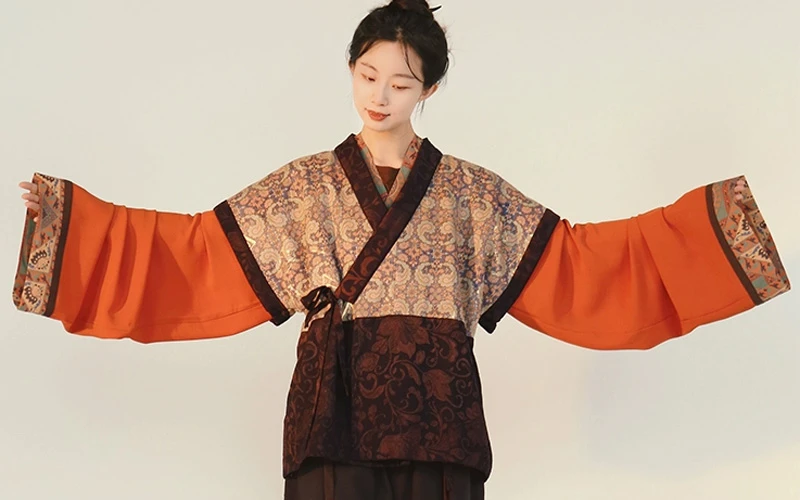
One of the most challenging seasons for dressing is undoubtedly autumn and winter. When facing cold weather, how can we cleverly match Hanfu or Han-style fashion, both beautiful and practical, without sacrificing warmth? In the ancient Chinese civilization, the ancients had already designed and paid attention to the colors, wearing methods, fabrics, and other aspects of winter clothing, forming a systematic traditional dress culture. Today, we can draw inspiration from the wisdom of our ancestors and skillfully apply it to modern winter Hanfu, adding a touch of classical elegance to the overall outfit. The most important secret about the color and wearing methods of ancient Chinese winter clothing is layering and matching from the inside out. If we take the five colors as the main palette, we generally follow the principle of darker on the outside and lighter on the inside or vice versa. Dark colors such as pomegranate red, deep purple, dark green, jet black, and yellowish brown are suitable for outerwear, while lighter colors such as rosy red, sky blue, emerald green, charcoal gray, and apricot yellow are suitable for the inner layers. If you want a more distinctive look, you can also choose more vibrant colors for… -
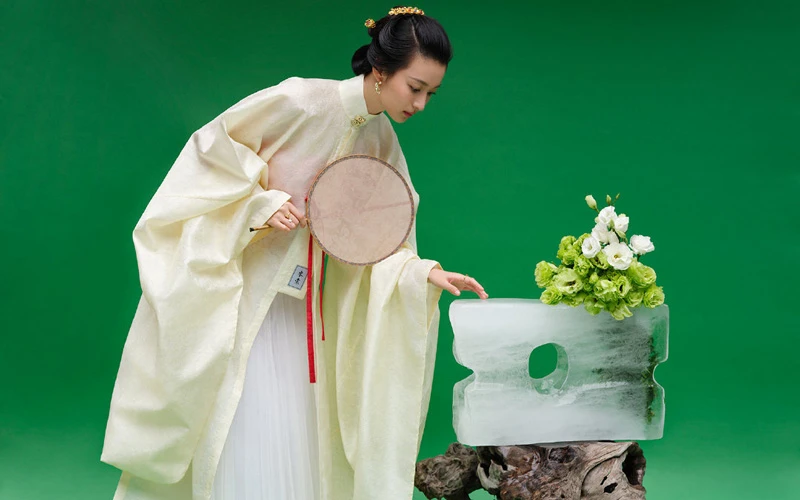
Stunning Hanfu Photography that Transports You into the Glamorous World of Ancient China
The hanfu culture is no longer just a celebration for a small group of people; an increasing number of ordinary individuals are now sharing their hanfu experiences through creative short videos, integrating hanfu into their daily lives. At the same time, the seemingly unrelated realms of hanfu and fashion have also begun to merge. Hanfu covers in fashion magazines have sparked discussions within the hanfu community, fashion circles, and academic circles alike. Among them, we can find replicas, traditional designs, and fusion styles of hanfu. Dongjin Shangyu has compiled a collection of fashionable magazine spreads featuring hanfu throughout the years for you. Hanfu in 2013 "FHM" Ten years ago, social networks were not as active as they are today. However, even at that time these three photos broke through the aesthetic norms of the hanfu community and even attracted attention from the media industry. One of these works was used as a cover photo in Issue 112 of "CHINESE HERITAGE" magazine. At that time, Yu Lingyuan was responsible for this photoshoot and said: "The structure of Western suits is similar to Western sculpture - it is very complex in terms of craftsmanship and has a three-dimensional quality. However, what… -
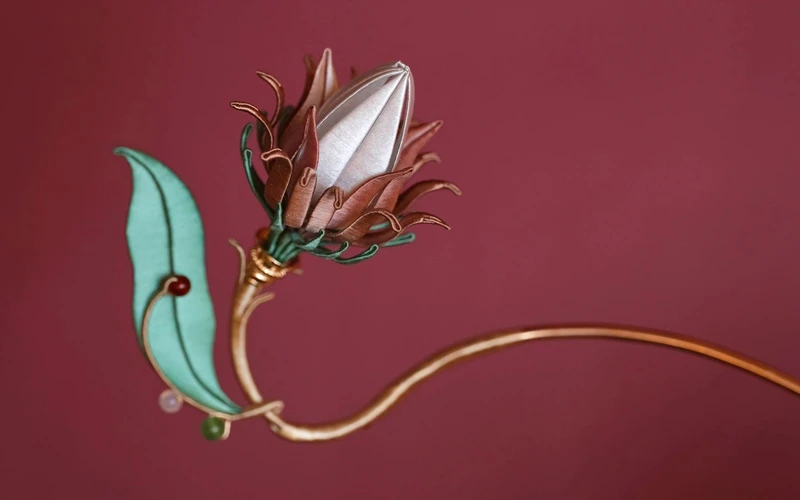
Hanfu Accessory: Wrapped Flower History and Chan Hua Basic DIY Steps
Vocab of Wrapped Flower Wrapped flower - 缠花 (chán huā) - a name used to called artificially made flower using the techniques of wrapping colored silk thread around cut-out pieces and combining each parts together to make flowers, animals, insects, etc. Spring Flower - 春仔花 (chūn zǐ huā) or 春花 (chūn huā). Used in this situation would mean various types of flower combined into a small batch each flower symbolize for different meanings in China. In this case, the flower would be a wrapped flower rather than a real flower. History of Wrapped Flower Through ancient China, people held a profound appreciation for nature, which manifested in their beliefs of deities who governed natural forces to their interest in making poetry, music, and artworks that represented the beauty they saw. One remarkable custom in ancient China were the flower hair-pinning practice known as "簪花的习俗 (zān huā de xí sú)," where both men and women adorned their hair or hat with flowers, either fresh or artificially made. Talking about flowers, there are many artificial flower craftsmen that have passed down for centuries, including "ronghua" and "wrapped flower." The art of wrapped flowers originated during the Ming Dynasty and arrived in the… -
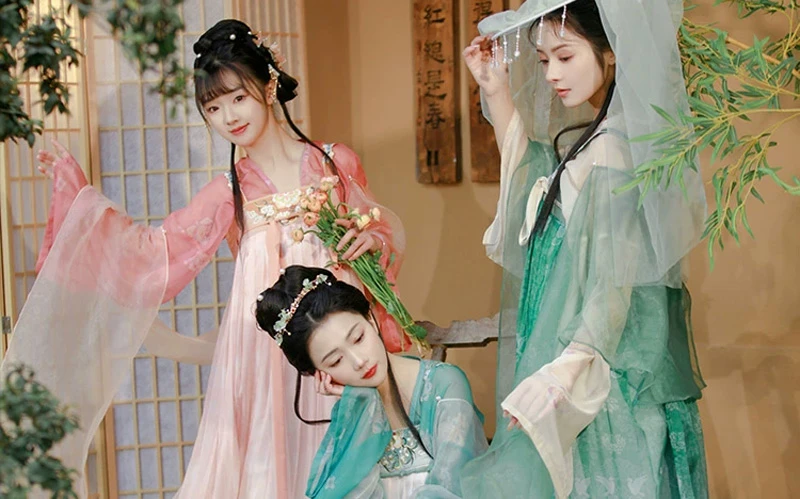
Discovering 8 Hanfu Color Styles: Timeless Elegance in Traditional Dress
Nowadays, hanfu is attracting more and more attention from enthusiasts due to its traditional charm. When choosing hanfu, enthusiasts no longer solely focus on the form, but also pay attention to style and color. This change in purchasing mindset has prompted hanfu designers to actively innovate and strive to provide a variety of styles. Today, let's explore the charm of different color schemes in hanfu. Red Color Hanfu In traditional symbolism, red not only represents auspiciousness and completeness but also signifies wealth and grandeur. If we want to create a luxurious style or participate in formal hanfu events, we can choose a hanfu with a deep red as the base color, paired with pink for transitions or adorned with gold thread embroidery. This combination showcases an elegant style while maintaining intricate craftsmanship. Furthermore, when paired with golden hairpins and waist ornaments, it exudes dignity and beauty. Blue Color Hanfu If we seek a fresh and casual dressing style, why not try the blue color scheme hanfu? Blue reminds us of clear skies and oceans; it is synonymous with freshness. Wearing blue-toned hanfu instantly transforms one into sprightly elves. For example, hanfu incorporates pink bows into the waist belt… -
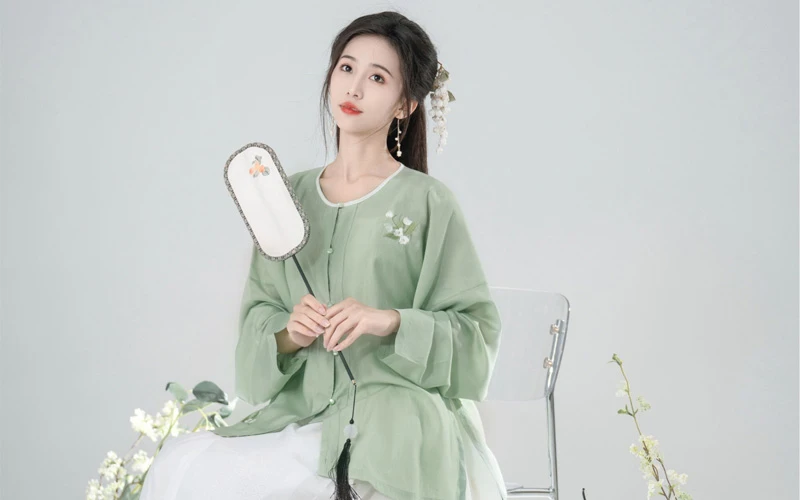
Embrace the Grace of Summer Hanfu Fabrics: The Perfect Blend of Tradition and Comfort
From the enchanting landscapes of ancient China to the modern fashion runways, the timeless elegance of Hanfu garments continues to captivate hearts across the globe. As we embrace the warmth of summer, it's time to dive into the fascinating world of fabrics that effortlessly blend tradition with comfort, bringing forth a refreshing sartorial experience. Still bothered by what fabric is cooler for hanfu? This article will introduce you some common fabrics for summer hanfu. 01 Preliminary introduction to modern clothing fabrics Modern clothing materials can generally be categorized into three types: natural fibers, artificial fibers, and synthetic fibers. Artificial and synthetic fibers can also be combined to form chemical fiber. Natural fiber mainly refers to animal or plant-based fibers such as cotton, linen, wool and silk. Cotton has excellent moisture absorption properties while being breathable and warm but is prone to wrinkling; linen fiber doesn't curl easily but wrinkles easily with a rougher texture. Artificial fiber (also known as regenerated fiber) is made from natural polymers. According to the shape and usage of artificial fibers, they are divided into three categories: rayon, viscose staple fiber, and artificial wool. Important varieties include viscose fibre, acetate fibre, cuprammonium rayon fibre etc.… -
Wear Red Hanfu Dress to Brighten Up Your Summer
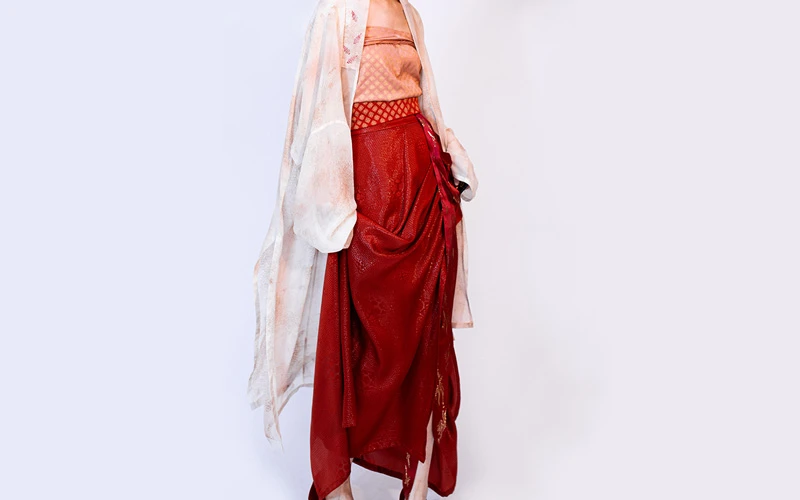
Summer is here, and what better way to celebrate the season than by brightening up your wardrobe with a stunning pomegranate red Hanfu dress. HAN TIME will use the combination of pomegranate color and hanfu as the starting point to recommend a series of suggestions for wearing red hanfu dress in summer. Pomegranate color refers to a slightly deeper shade of red, resembling the color of pomegranate fruit or bright orange-red like the color of pomegranate flowers. As summer approaches and greenery abounds, the blooming of pomegranate flowers marks the season's arrival. It is an ideal time to wear a flowing long skirt in a vibrant shade of pomegranate while standing under these blossoms with a radiant smile. When it comes to pomegranate skirts, people tend to lean towards the latter meaning as this hue is more charming and unique compared to other shades such as vermilion and pink. Have you ever heard of "kneeling under the pomegranate skirt"? The phrase has been passed down through generations related to Yang Guifei who had an affinity for both Pomegranates and dresses in that same rich hue. Emperor Xuanzong ordered widespread planting of Pomegranates within palace just for her love for them.… -
Motifs on the Lapel Edges of Traditional Chinese Hanfu Clothing
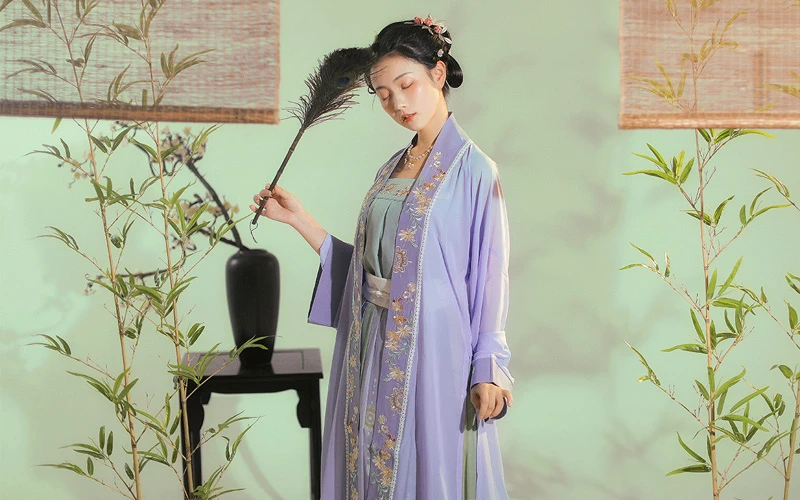
The development of Chinese motifs has a rich history, with each era having its own unique design themes and styles. Throughout history, it has been discovered that from the graphics and symbols that emerged during the primitive era of humanity, to the present day where we classify art into different categories, some commonly used themes such as floral motifs, dragon and phoenix motifs, cloud motifs, and geometric motifs have continued to exist from ancient times to the present day, and have even remained unchanged. What has changed is that the same theme has different characteristics in different eras due to differences in the expression of artificial craftsmanship. Traditional Chinese Hanfu clothing emphasizes a harmonious blend of temperament and style, and in order to not destroy the overall effect of the clothing while also making its style versatile, changes in the motifs along the lapel edges of the clothing have become an important means of decoration. From the perspective of artistic expression, motifs can be divided into abstract, figurative, and imagery forms. In the application of clothing edges, motifs are generally divided into geometric, animal, plant, and auspicious character motifs. Abstract form - geometric pattern The decorative motifs in the… -
Hanfu Accessory: Tuanshan History and Shapes
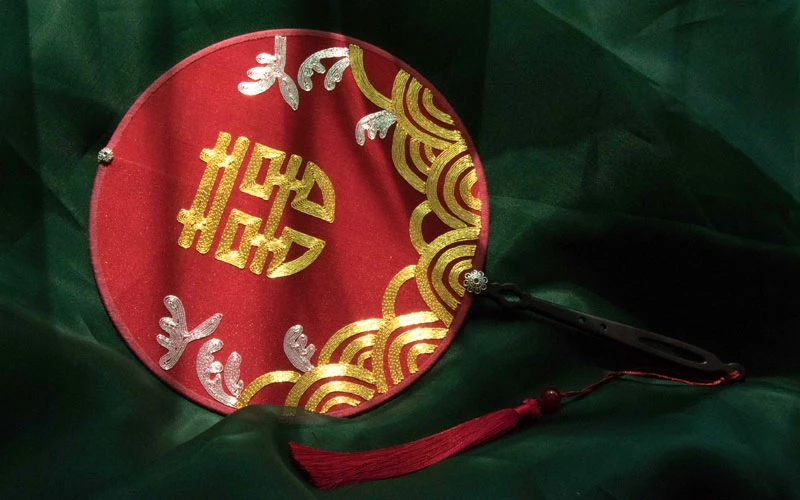
Vocabulary Moon-shaped fan; 团扇 (tuánshàn). Also called 宫扇(gōng shàn), 纨扇 (wánshàn), 合欢扇 (héhuān shàn), a fan that is made from silks, embroideries, golds, beads, etc. later on into the period. Barrier fan; 障扇 (zhàng shàn) - one of the earliest version of fan from ancestors. Made with pheasant’s feathers and has a long handle. Also known as 长扇 (Chǎng shàn)、掌扇 (zhǎng shàn)、五明扇 (wǔ míng shàn). It is under the category of moon-shaped fan (团扇). Imperial carriage; 辇 (niǎn). Also known as chariot. This is the earlier versions of traveling vehicles primarily used by prestigious people for ceremonial processes, imperial tours, and any other formal occasions. The usage of this is closely related to imperial court instead of public, such as for emperor, queen’s mother, empress, and imperial concubines. These types of carriage are still man-drawn, and are made of simple designs with either a cushion or a chair for the individual seating on it. History of Tuanshan The moon-shaped fan, also known as 团扇 (tuánshàn), is a traditional handicraft tool of the Han people from ancient China. It consists of four main components: the fan's frame, handles (usually short in length), the fan's surface (made of semi-transparent or opaque… -
Traditional Chinese Hanfu: Evolution and Inner Beauty
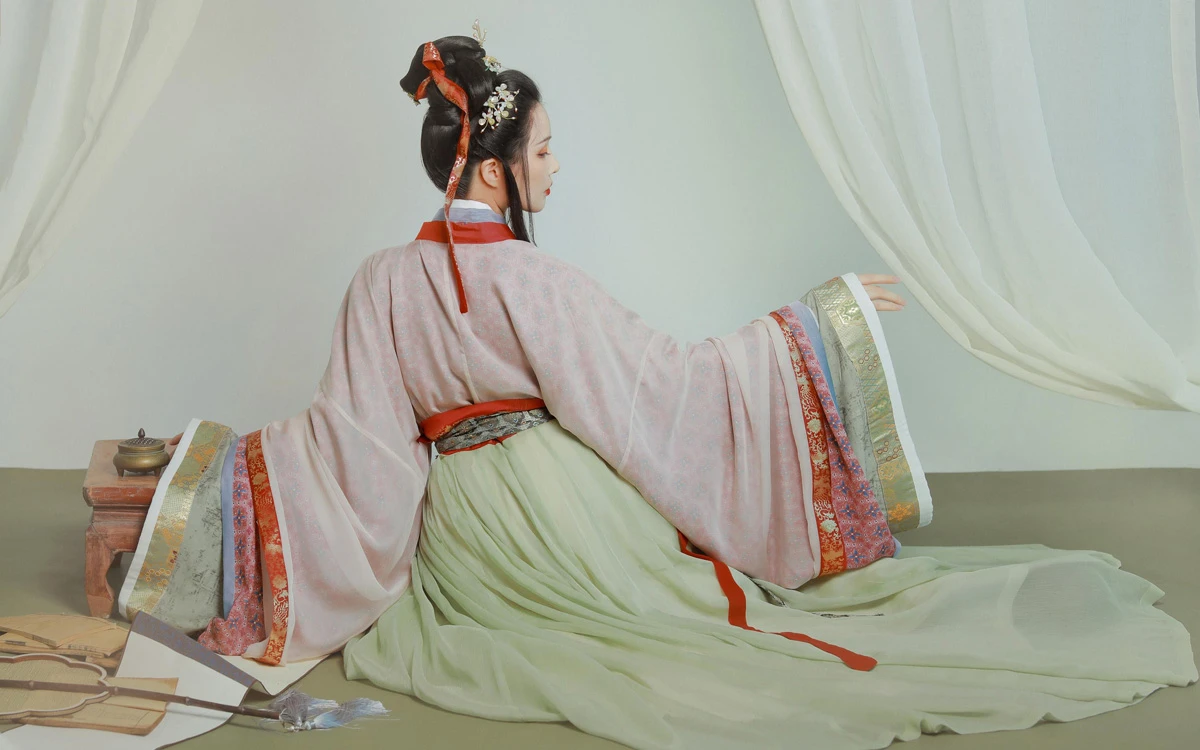
Traditional Chinese hanfu costumes has been pursued by many young people. The bustling streets and crowded scenic spots are often decorated with people’s figure in hanfu. Some enthusiasts even actively hold activities for traditional cultural communication. Chinese ancient clothing culture has a long history, from the top officials to the common people, there are corresponding clothing requirements according to different social status in ancient China. I. Classification of Traditional Chinese Hanfu Clothing Ancient Chinese women's hanfu clothing can be divided into three parts: Shou Fu (首服, headwear), Ti Fu (体服, main clothing), and Zu Fu (足服, footwear). Although the styles are varied, they can be generally divided into upper and lower garments or up-and-down-attached style. Before the Western Zhou Dynasty, clothing was mainly upper and lower garments. The upper garment was called "Yi (衣)", and the lower garment was called "Chang (裳)". During the Spring and Autumn and Warring States period, people combined the upper garment and lower garment into one piece of clothing, which was called "Shen Yi (深衣)". "Shenyi" has been the representative clothing of the Spring and Autumn and Warring States period. Many documents have recorded its characteristics. The annotation in The Book of Rites - Shenyi… -
The Popularity of Hanfu Culture: When Traditional Hanfu Dress Comes to Contemporary Life
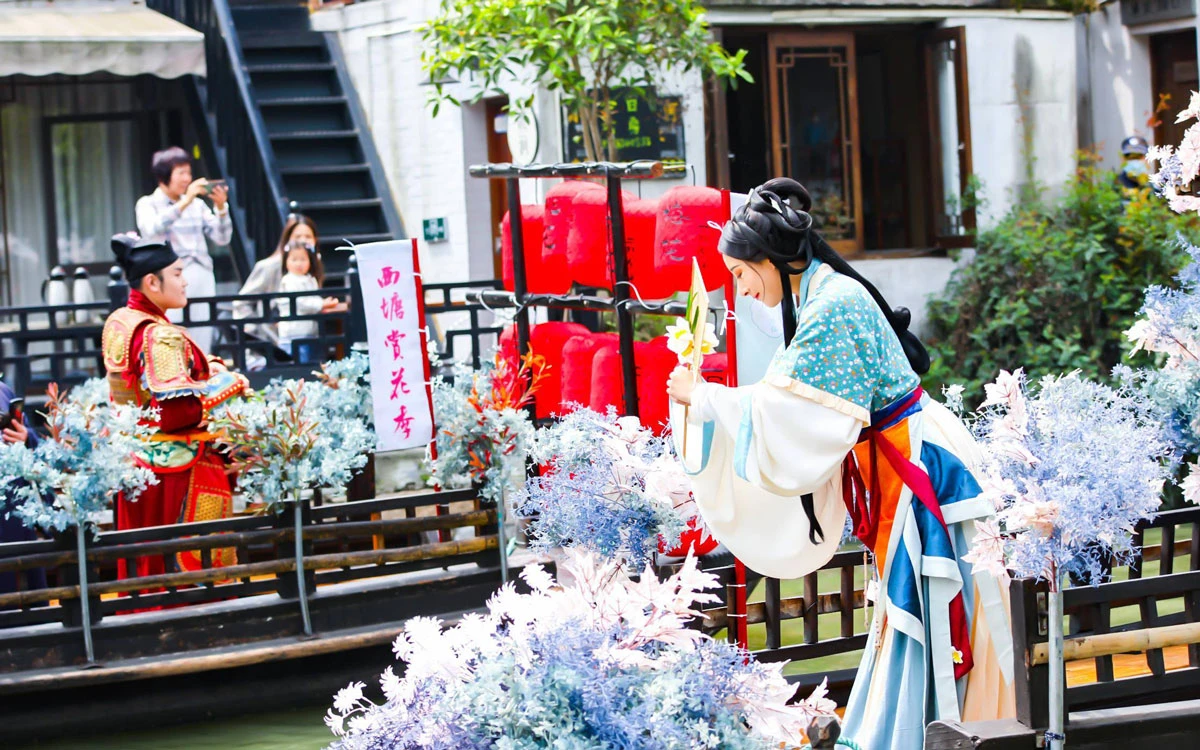
An increasing number of young people are beginning to experiment with wearing hanfu, these clothing styles, which were widely used in different historical dynasties in ancient China, are now being reintegrated into contemporary life and have become an important part of youth culture. The Origin of Hanfu Culture: From Niche to Popular Typically, the origin of the modern Hanfu culture is traced back to 2003. On November 22nd of that year, a power worker named Wang Letian from Zhengzhou, Henan, walked into a downtown commercial street wearing hanfu. This event was reported by Singapore's Lianhe Zaobao, making Wang Letian the first modern Chinese person wearing hanfu to appear in public. Wang Letian was introduced to hanfu culture through forums Han Wang, and around 2003, the first hanfu enthusiasts gathered around Han Wang and other online hanfu forums, gradually forming the Hanfu circle. At the same time, some offline Hanfu culture communities began to be established. Around 2011, the subculture of adolescent internet culture rapidly developed. With the successive rise of the Lolita and the JK uniform fashion subculture, as well as the development of the cosplay community, hanfu has found its place among various clothing subcultures and has gained… -
Hanfu Fashionization and Unique Tailoring System: Traditional Craftsmanship Meets Modernist
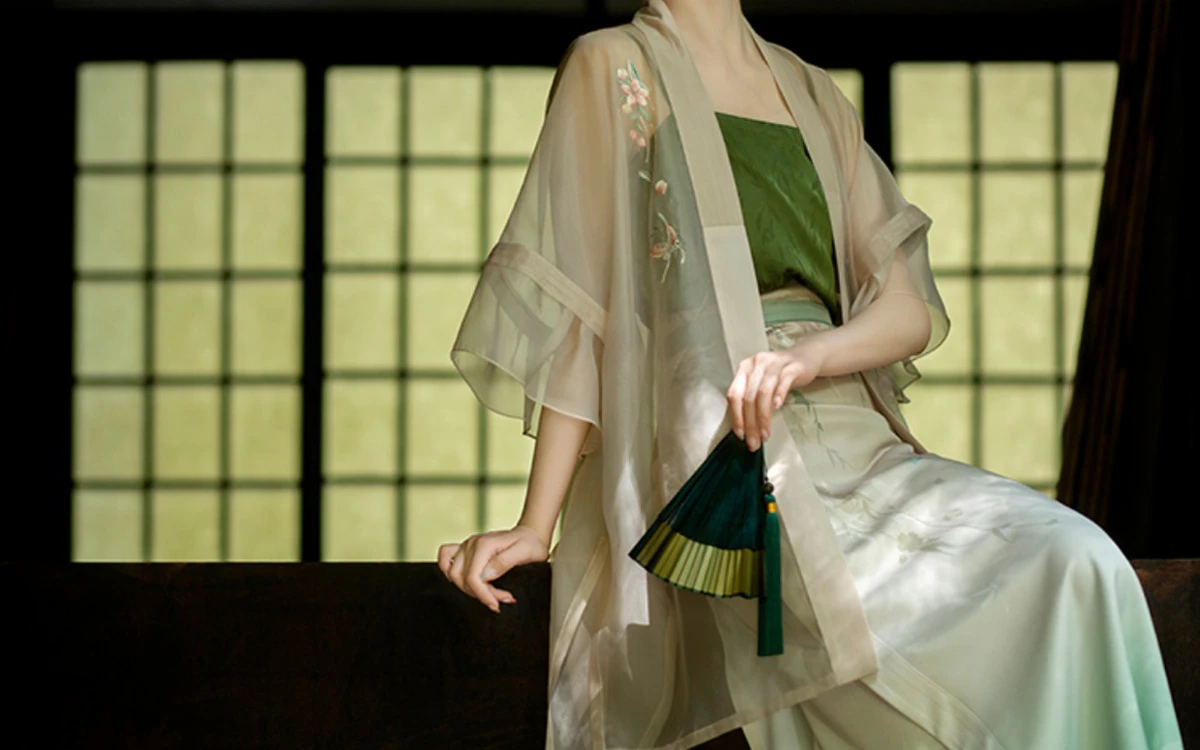
Chinese fashion has had an independent, complete, and comprehensive cutting system since ancient times. However, since modern society, it has gradually been replaced by Western cutting techniques. Even traditional and ethnic clothing has to use Western cutting structures in order to survive. This state persisted until the revival of Hanfu. As one of China's traditional clothing, Hanfu not only has considerable influence but also has a different cutting method from Western fashion. However, this did not stop Hanfu from exploring fashion. For the past 20 years, there have been roughly four stages of exploration. Traditional Shape · Daily Style - The First Exploration of Hanfu Fashionization In the 20 years since the revival of Hanfu, the road to fashionization has been difficult and challenging, but it has never given up moving forward. The audience of Hanfu continues to update, but there are always a group of people who are keen to explore the styles that are more suitable for modern daily life among the historical Hanfu styles. They make subtle adjustments to the size or structure based on the aspects where the wearing experience is not very good through daily wearing practice, making these styles more suitable for daily… -
The Allure of Hanfu: An Introduction to the Traditional Dress of China
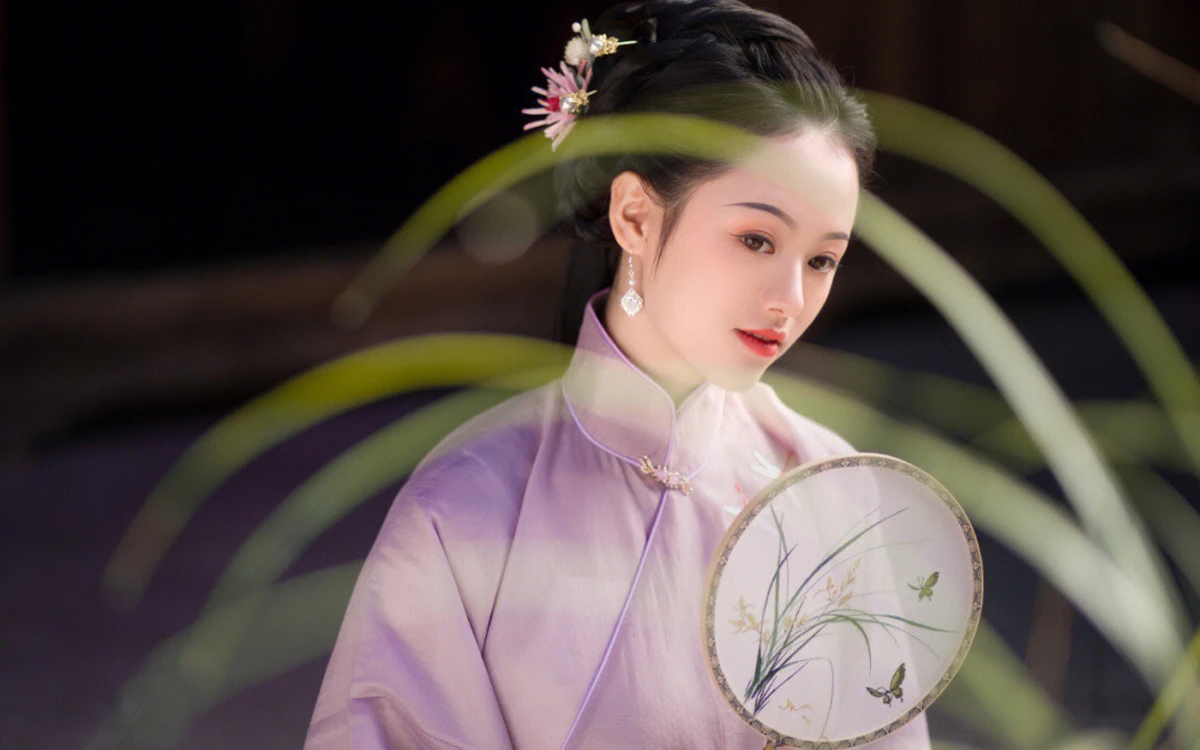
The ancient simplicity of Qin, the elegance of Han, the splendor of Tang, the gracefulness of Song, and the dignity of Ming, every pattern and design of Han clothing is engraved with the mark of China's history. With the help of professional research, this article will share some basic knowledge of Hanfu clothing, inviting everyone to appreciate the stunning attire of Chinese ancestors. 01 Hanfu Clothing: A Comprehensive Dressing System Hanfu clothing has undergone thousands of years of evolution. It originated as an important manifestation of social ranking, etiquette, and lifestyle, while also reflecting the characteristics of different times through displaying the state of textile technology, aesthetic consciousness, and daily customs. After thousands of years of cultural accumulation, Hanfu clothing has become an important cultural symbol. It is not entirely accurate to call Hanfu the traditional attire of the Han people. Based on today's concept, Hanfu clothing should be considered the traditional attire of the Chinese nation as a whole. The Han ethnicity is inclusive, throughout the changing dynasties, Han clothing continuously absorbed foreign styles and underwent multiple periods of integration among various ethnic groups to develop rich styles and unique aesthetics. Therefore, Hanfu clothing is not merely the…