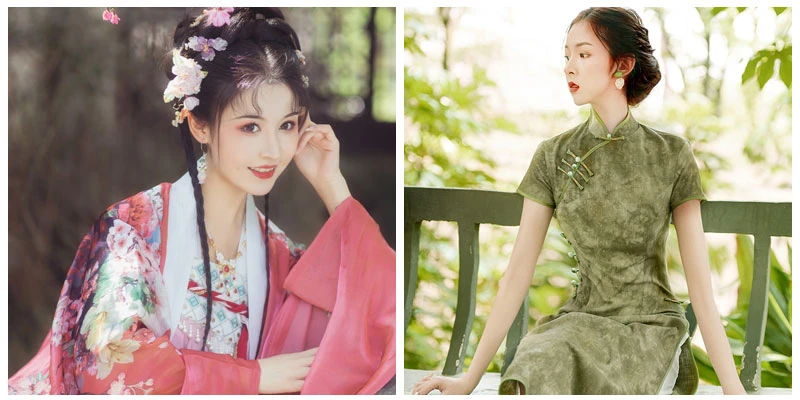
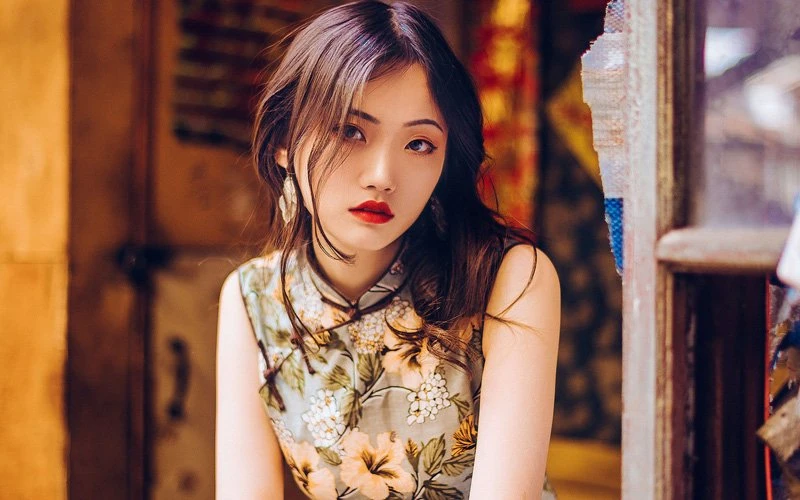
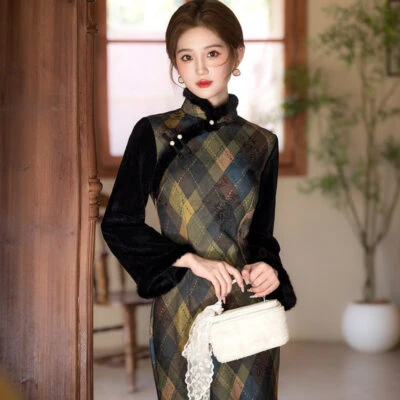
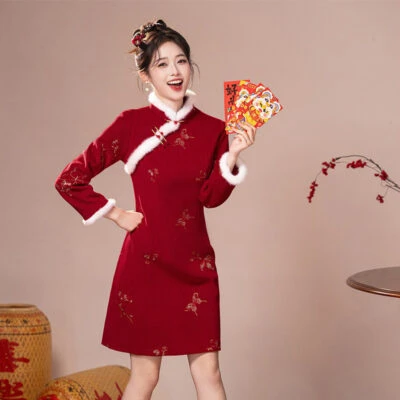
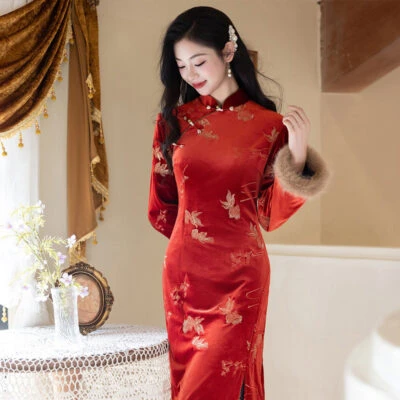
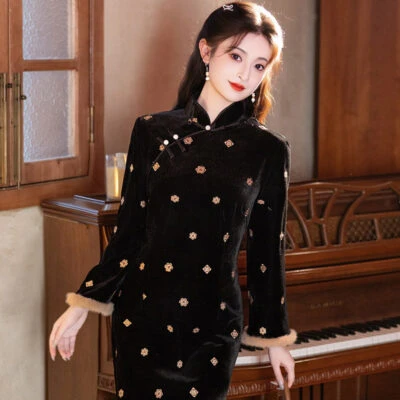
Qipao — or cheongsam — stands as one of China’s most internationally recognized garments. Yet the relationship between these two English names, the garment’s Manchu origins, and its dramatic transformation over the past century remains widely misunderstood. This article traces the qipao’s story across etymology, dynastic evolution, and contemporary revival.
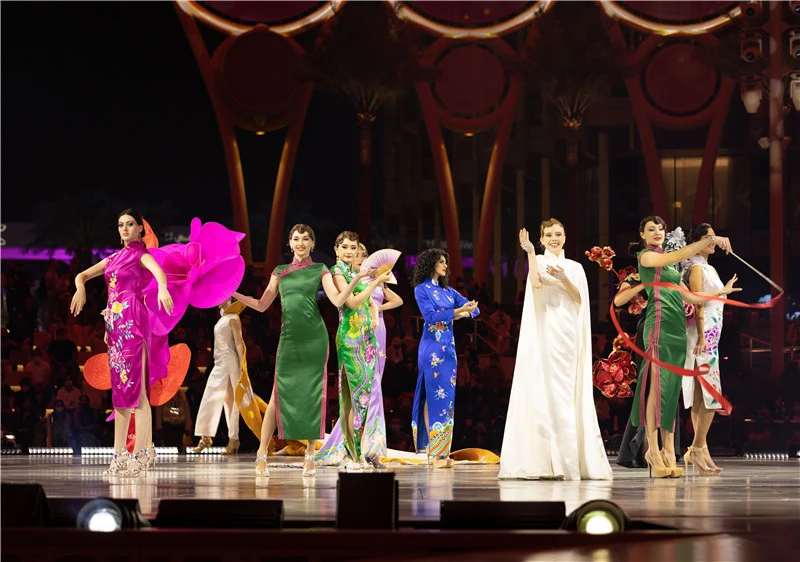
Two Names, One Garment
Although “qipao” and “cheongsam” refer to the same fitted dress in modern English, their origins differ. “Qipao” derives from Mandarin pinyin for “Banner people’s robe” — a direct reference to the Manchu Eight Banners system, which organized society under the Qing dynasty (1644–1912). Manchu women’s robes were called qipao, parallel to “qitou” (headwear) and “qixie” (platform shoes).
“Cheongsam,” by contrast, comes from Cantonese romanization of “long shirt” (chèuhngsāam). In Cantonese and Shanghainese usage, the term originally referred to men’s long robes and was later extended to the fitted women’s dress. After 1949, Shanghainese tailors who relocated to Hong Kong brought the Shanghai-style qipao to Southeast Asia and the West, and the Cantonese “cheongsam” became the dominant English term during the mid-20th century.
In essence: qipao emphasizes ethnic and historical roots via Mandarin; cheongsam highlights the garment’s geographic spread through Hong Kong’s Cantonese commercial networks. Both describe the same dress, but carry distinct cultural memory.
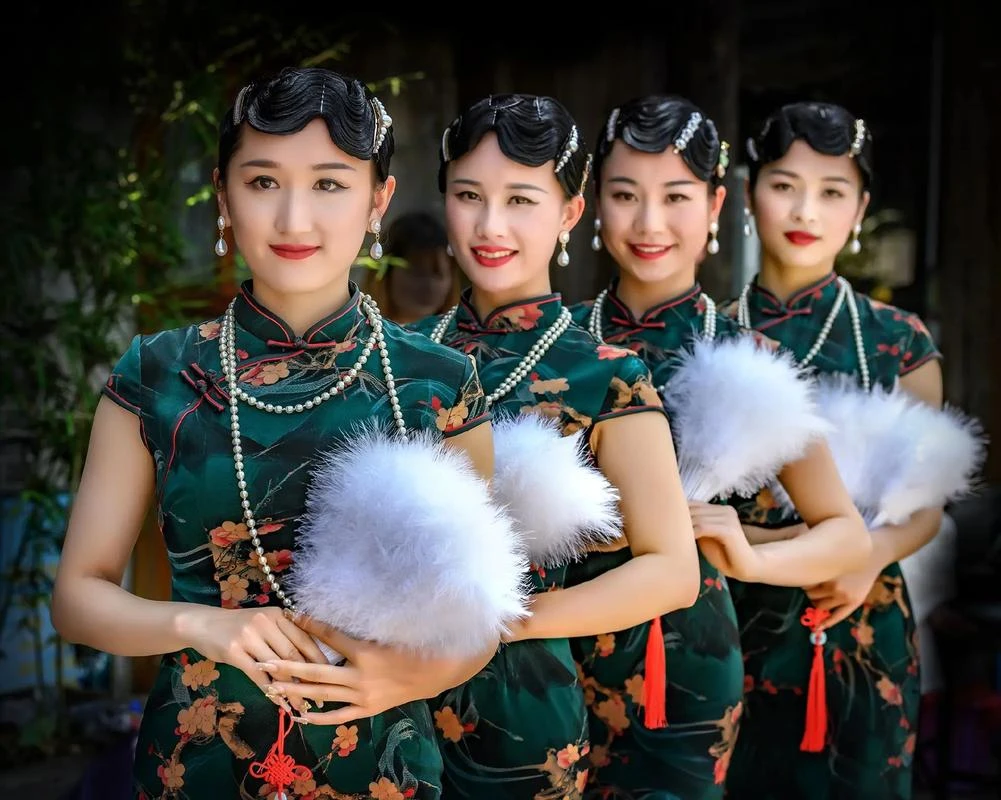
Manchu Origins: The Equestrian Robe
The qipao traces back to 1636, when Hong Taiji — the founding emperor of the Qing dynasty — established the Chongde Code in Shengjing (present-day Shenyang, Liaoning Province). The code mandated that Han Chinese officials and civilians adopt Manchu dress, making the robe a state garment. Shenyang still promotes itself as the “Qipao Capital.”
Early Manchu robes served the equestrian lifestyle: round collar, side-fastening front, narrow sleeves, four-side slits, left-lapel closure, and a waist sash. The silhouette was loose and rectangular, with minimal gender distinction. Fabrics emphasized fur and leather for the cold northeast climate.
During the mid-Qing period, as the Manchu adapted to central China’s environment, the robe shifted from utility to ornamentation. Collars evolved into standing collars, sleeves widened, and hemlines dropped to the ankle. Aristocratic women adorned their robes with dense embroidery — Panjin, Dazi, and layered decorative bands known as “three-tiers-three-rolls” or even “eighteen-tiers-eighteen-rolls.” Detachable collars allowed seasonal rotation. Accessories included “flowerpot-sole” shoes and elaborate “two-把头” or “big-wing” hairstyles. By the late Qing, the robe was boxy, flat, and completely concealed the female figure.
Notably, the Manchu robe system and Hanfu (Han Chinese traditional clothing) belong to different cultural lineages. Hanfu follows the “upper garment and lower skirt” or “shenyi” system, emphasizing crossed-collar right-lapel closure and cord fastenings — a ritual aesthetic rooted in agrarian civilization. The qipao descends from Manchu equestrian attire, yet both form part of China’s broader costume heritage.
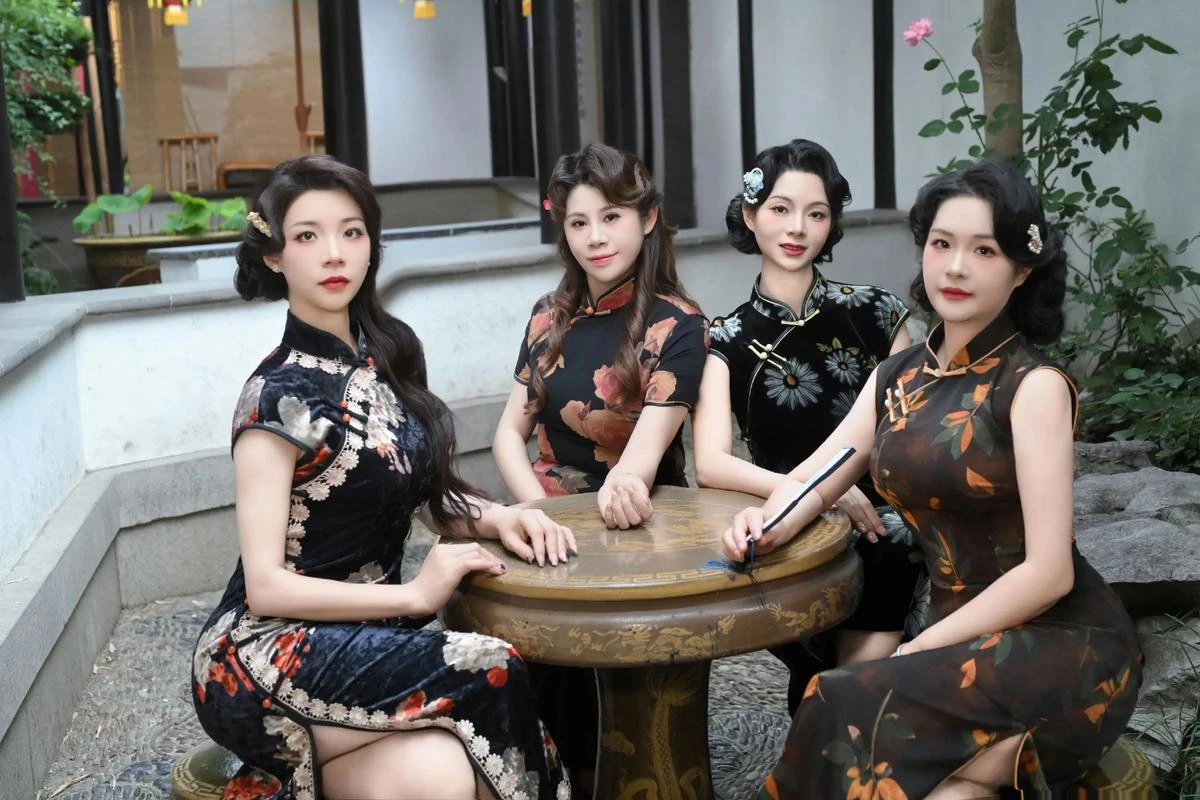
Republican Revolution: The Birth of the Modern Qipao
The qipao’s real transformation happened during the Republican era (1912–1949). After the 1911 Xinhai Revolution overthrew the Qing dynasty, the Manchu robe might have been discarded as a relic of the old regime. Instead, it underwent a radical reinvention in Shanghai.
In the 1920s, Shanghai schoolgirls began wearing modified qipaos — cinched waists, wider sleeves, simplified trims. By 1926, the “vest qipao” emerged, merging a vest with a short jacket to form a new silhouette. The 1927 Natural Breast Movement opposed chest binding and advocated bodily liberation, while Western short-skirt trends flowed into China. The qipao silhouette narrowed from straight to curve-hugging.
In 1929, the Nationalist government officially listed the qipao as a standard female formal dress in the Republic of China Dress Code, granting it state-recognized “national dress” status.
The 1930s marked the qipao’s golden age. Western tailoring techniques — darts, shoulder pads known as “Beauty Shoulder” and structured cutting — reshaped the garment. Length shortened to below the knee, sleeves narrowed, waistlines tightened, collars shifted from round to standing, and side slits appeared — sometimes reaching thigh height. Fabrics ranged from silk and satin in spring and autumn to lightweight gauze in summer and tweed in winter. Western printing techniques introduced botanical embroidery and geometric patterns. Early 1930s “floor-sweeping qipaos” touched the ground with high heels; after the Second Sino-Japanese War broke out, fabric rationing shortened hemlines to mid-calf.
By the 1940s, the qipao had simplified further: low or no collar, shortened or sleeveless arms, and understated decoration. By the 1940s, the garment stood as a modern streamlined dress — radically different from its Manchu predecessor.
Qipao’s Diplomatic Return and Global Stage
After the founding of the People’s Republic in 1949, the qipao gradually faded from daily wear in mainland China. During the 1950s–1970s, it survived only in performing arts and diplomatic settings. In 1984, Chinese authorities formally designated the qipao as formal attire for female diplomats. In 2007, “Manchu qipao craftsmanship” was inscribed on Jilin Province’s intangible cultural heritage list.
The 2014 APEC summit in Beijing featured leaders’ spouses in custom qipaos, reinforcing the garment’s state-dress status. The 2008 Beijing Olympics and 2022 Winter Olympics also incorporated qipao-inspired designs for ceremony attendants and guides.
In the 21st century, the qipao saw a broader revival. 2017 saw “Hangzhou Global Qipao Day,” with synchronized runway shows and cultural displays in Hangzhou, Hamburg, Madrid, London, Sydney, and New York. By 2026, the qipao haute couture market was growing at 18.7% annually, with handcrafted custom orders reaching 71% of demand and the Yangtze River Delta region hosting 62% of high-end qipao studios. Shenyang, as the “Qipao Capital,” has held its annual Qipao Cultural Season for ten consecutive years, expanding in 2026 to venues across the city.
Internationally, qipao elements — standing collar, Pankou knots, curved hem, side slit — have been widely adopted by Western designers. Pierre Carton has cited the qipao as a major inspiration for his evening wear. Hollywood stars Grace Kelly and Elizabeth Taylor both wore Chinese qipaos on significant occasions.
The qipao’s 300-year journey reflects ethnic fusion, the women’s liberation movement, and cross-cultural fashion exchange — a living garment whose story continues to unfold.