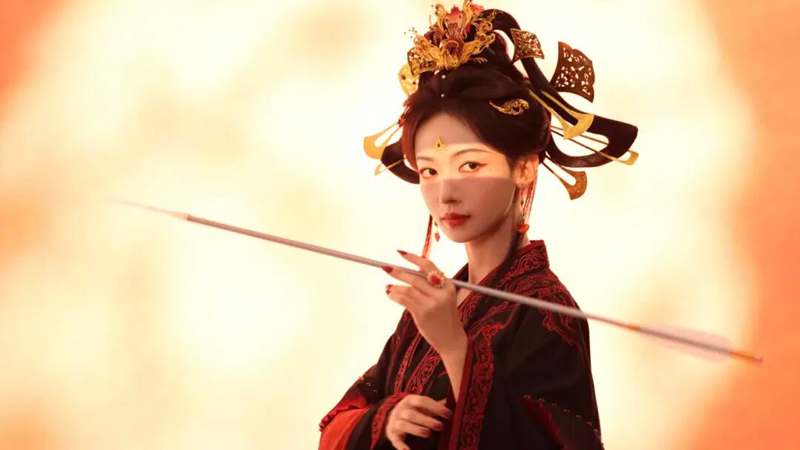
Wu Jinyan (吴谨言) recently appeared in a new costume drama Feng Bu Qi (凤不栖) with a hairstyle that looks like butterfly wings. Viewers quickly noticed how rare this “butterfly bun” is in mainstream Chinese period shows. Where did it come from? The answer lies in one of the most chaotic yet creative eras of Chinese history: the Wei-Jin (魏晋) and Northern and Southern Dynasties. Constant wars, regime changes, and mass migrations made that time a tragedy on paper. But paradoxically, when old rules collapse, fashion often finds strange new freedom. Stone relief murals and portrait bricks from that period show women with hair spread wide like butterfly wings, sometimes even exaggerated into triangular shapes.
Later, during the Five Dynasties period, similar styles appeared but with heavier, less ethereal lines. This butterfly bun did not emerge from nowhere. Its direct ancestor was likely the “Xiezi Ji (撷子髻)”, a cross-shaped bun described in Records of Spirits (搜神记) from the Jin Dynasty. That book mentions women tying their finished hair with silk ribbons to create two small loops around a larger bun. The description fits the butterfly shape perfectly. Wu Jinyan’s team clearly dug deep into historical sources, but they also mixed elements from different centuries. That mixture creates an intriguing visual conversation between authenticity and artistic license.
Origins Unearthed
The butterfly bun’s earliest evidence appears on tomb bricks from the Wei-Jin period. These carvings show female figures with hair extensions that open sideways like insect wings. Archaeologists call this the “spread-wing” style. It looks almost theatrical, not something for daily labor. But during the Northern and Southern Dynasties, aristocratic women competed over elaborate hair arrangements as a form of social identity. The more complex the bun, the higher the status. Some murals even show servants helping their mistresses hold up oversized hair structures with thin sticks.
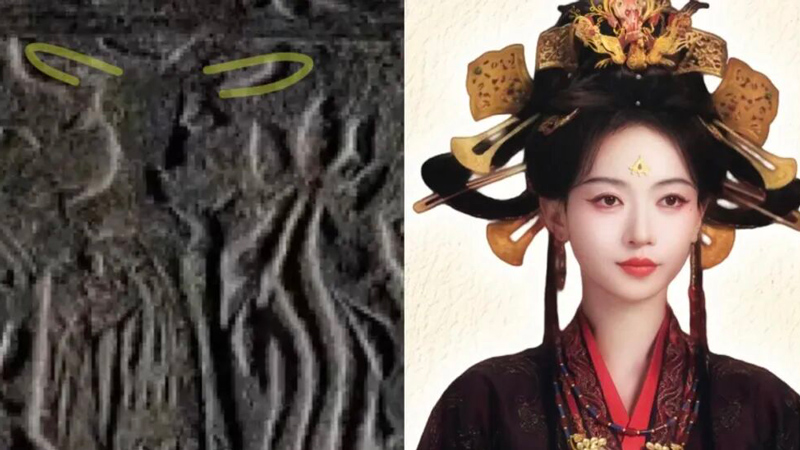
By the Five Dynasties era, triangular buns still existed but changed in texture. Instead of light, floating lines, hair became thicker and more compact. Compare a Wei-Jin portrait brick with a later painting. The difference is clear: early versions emphasize airiness, almost like the hair might fly off; later versions feel solid, like carved wood. Wu Jinyan’s stylists chose the earlier, more ethereal look. That choice matches the character’s supposed background in Feng Bu Qi, where she plays a woman navigating court intrigue with a rebellious streak.
The Xiezi Ji bun from the Jin Dynasty offers a missing link. Records of Spirits says it started in the imperial palace and then spread across the country. Women would tie their hair into a large bun, then wrap two smaller loops with silk bands. Those loops naturally angled outward, creating the butterfly silhouette. Wu Jinyan’s version enlarges the loops and adds decorative pins, but the structural DNA remains the same. That continuity across centuries shows how one hairstyle can travel through war and peace, changing shape but never fully disappearing.
Hybrid Details
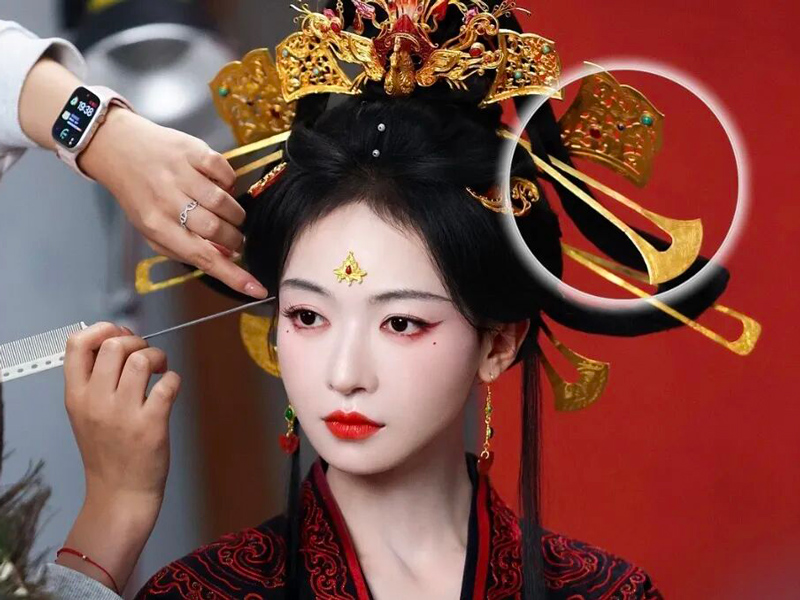
Look closer at Wu Jinyan’s complete headdress. The butterfly bun is only half the story. She also wears a “Bo Xing Zan (拨型簪)” – a hairpin shaped like a traditional Chinese plectrum for string instruments. This pin has a wide, fan-like top and a long thin stem. Archaeological finds from the Eastern Han to the Northern and Southern Dynasties show early plectrum-shaped pins, but those were simple, without much decoration. The pin on Wu Jinyan’s head, however, features intricate hollow-out patterns and silver-gilt work. That level of craftsmanship only appeared after the High Tang dynasty, especially in the late Tang period. So the stylists combined a pre-Tang hairstyle with a post-Tang accessory. Is that a mistake? Not necessarily. Drama costumes are not museum replicas. They aim for a feeling, not a carbon copy.
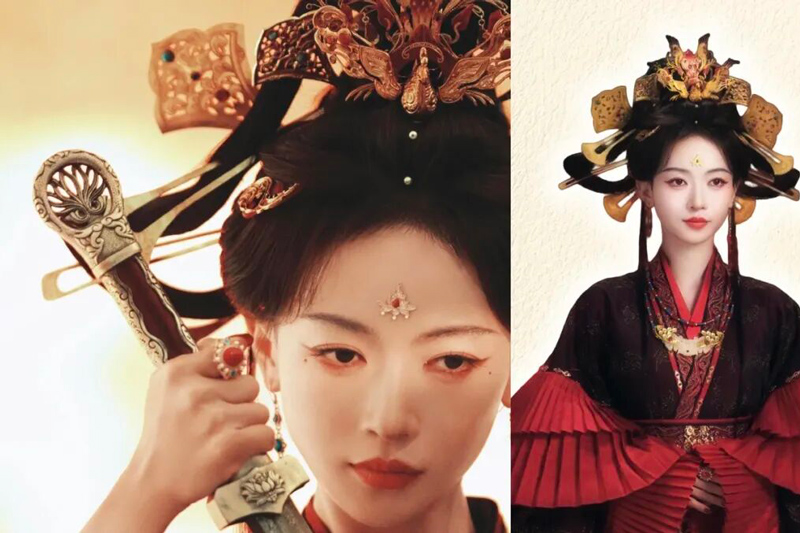
Her outfit follows a similar hybrid logic. She wears a “half-sleeve ru (襦) skirt” – a traditional garment with crossed collars, wide sleeves, and a shorter half-sleeve layer on top. Historical texts confirm that women in the Wei-Jin period did wear such layered looks. But the designers added ruffled hemlines to the sleeves, which do not appear in any mural or painting from that era. The skirt is a wrap-around waist style made of trapezoidal fabric pieces sewn at an angle. When she walks, the fabric lifts softly, creating a drifting effect. That walking aesthetic is pure stagecraft. It makes her look like a celestial being from an old scroll painting, yet the tailoring borrows from later dynasties’ techniques.
So why mix so many periods? The answer lies in how we perceive “ancient” beauty. Audiences today have no direct memory of the Wei-Jin period. They respond to visual cues that feel old but not alien. By blending authentic butterfly buns with later decorative pins and ruffled sleeves, the costume team creates a dream version of history – one that whispers “this came from the past” without screaming “this is a museum label.” It is a delicate balance. Too much accuracy and the character looks strange to modern eyes. Too little and she becomes a generic fantasy figure. Wu Jinyan’s styling lands somewhere in the middle, and that middle ground is where most successful period dramas live.
Defiant Beauty
The Wei-Jin and Northern-Southern Dynasties period produced some of the most extravagant female hairstyles in Chinese history. That creativity was not random. It was a direct response to the collapse of Confucian orthodoxy from the Han Dynasty. When traditional authority breaks down, fashion becomes a weapon. Women built their hair into towering, wing-like shapes as if to say: “The old rules no longer bind us.” Those buns absorbed influences from nomadic tribes in the north, Buddhist art from Central Asia, and the softer aesthetics of the southern Yangtze region. The butterfly bun is thus a visual archive of cultural collision.
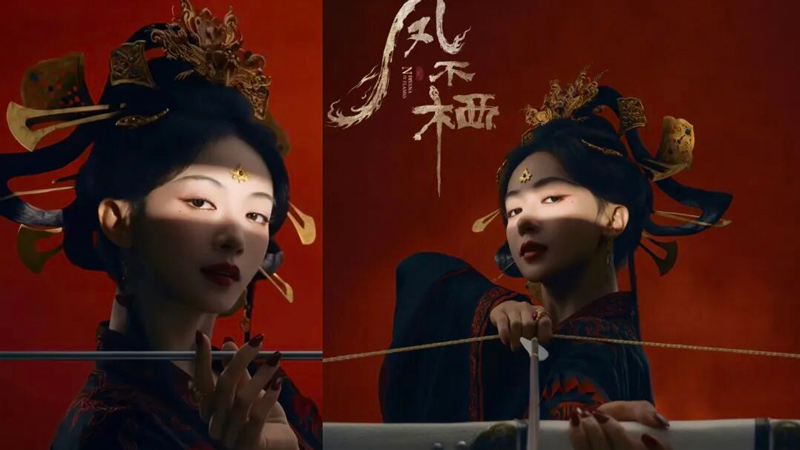
Today, as Chinese historical dramas reach wider global audiences, costumes based on real artifacts serve an unexpected role. They become bridges between academic research and popular entertainment. A viewer who sees Wu Jinyan’s butterfly bun might search online, find a portrait brick from the Wei-Jin period, and learn about the woman who carved it, or the society that produced it. That chain of curiosity is far more valuable than any lecture. The bun stops being a mere decoration. It becomes a door. When costume designers respect historical sources – even when they mix them – they give modern audiences permission to care about ancient threads and pins and fabric cuts.
Would you want to wear this butterfly bun yourself? Probably not for a grocery run. But that is not the point. These styles are not meant to be practical. They are meant to startle, to question, to celebrate the strange beauty of broken eras. The Wei-Jin period was a time of famine and war, yet its surviving art radiates playful, almost reckless creativity. That contradiction is exactly what makes it so magnetic. Wu Jinyan’s Feng Bu Qi look captures that spirit: a butterfly bun that defies gravity, a silver-gilt pin from a later century, a skirt that floats like smoke. None of it is strictly “correct.” But all of it feels alive. And for a drama costume, being alive matters more than being accurate.
