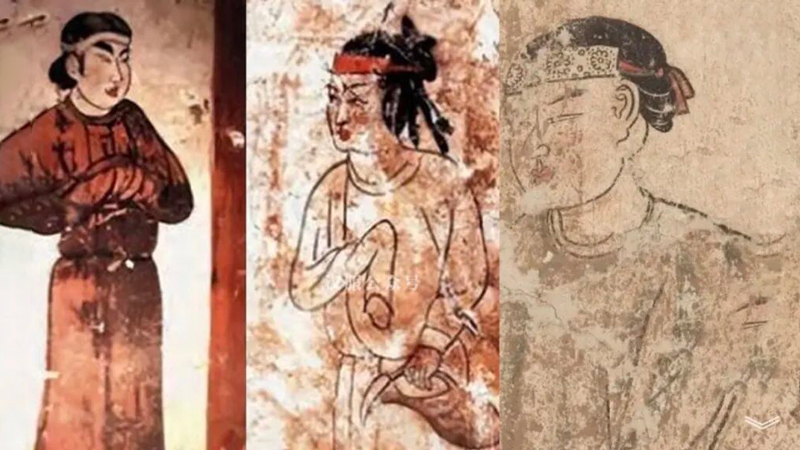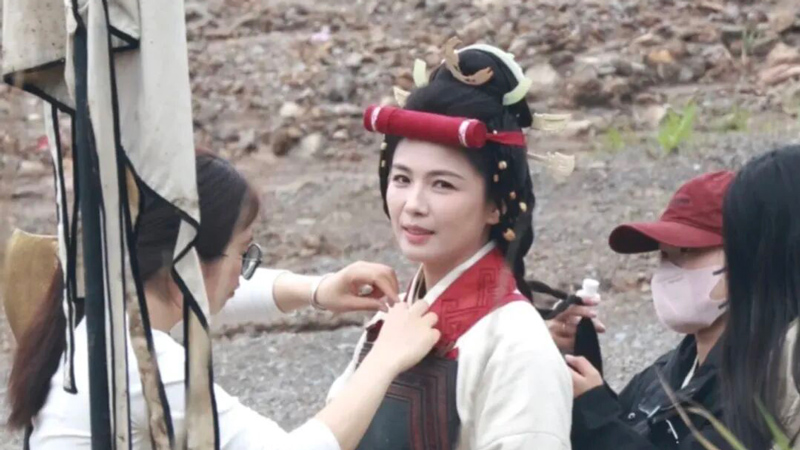
When a recent behind-the-scenes photo from Liu Tao’s (刘涛) latest show surfaced online, viewers were baffled. Why was the actress wearing what looked like a small pillow strapped to her forehead? The image quickly sparked jokes and confusion. But history offers a surprising answer. That “pillow” is actually an ancient Chinese headpiece called Kui (頍), a simple yet significant accessory that dates back thousands of years. Far from a fashion mistake, it connects to royal warriors, ancient tombs, and even the origin of a familiar headband seen in later dynasties. Let’s untangle this curious look and discover why a strip of cloth on the forehead tells a much bigger story.
The Strange Headband with a Royal Name
Kui is not a pillow. It is an early form of forehead binding, used to hold hair or secure a larger crown. In the Shang (商) and Zhou (周) dynasties, people made it from cloth or leather strips. They wrapped it around the hairline, just above the eyebrows. Some say it dates back to prehistoric times, long before written records. The name Kui appears in ancient texts like Shuowen Jiezi (说文解字), where it is defined as “lifting the head” – a gesture of dignity or readiness.
Excavations at Yin Xu (殷墟), the ruins of the late Shang capital, uncovered a kneeling jade figurine from Fu Hao’s (妇好) tomb. Fu Hao was a powerful military leader and queen. The jade figure wears a flat ornament on its forehead, almost exactly matching descriptions of Kui. Scholars identified it as the real object. So when Liu Tao appeared with a similar piece, she was likely channeling this very queen or another high-ranking figure from the same era.
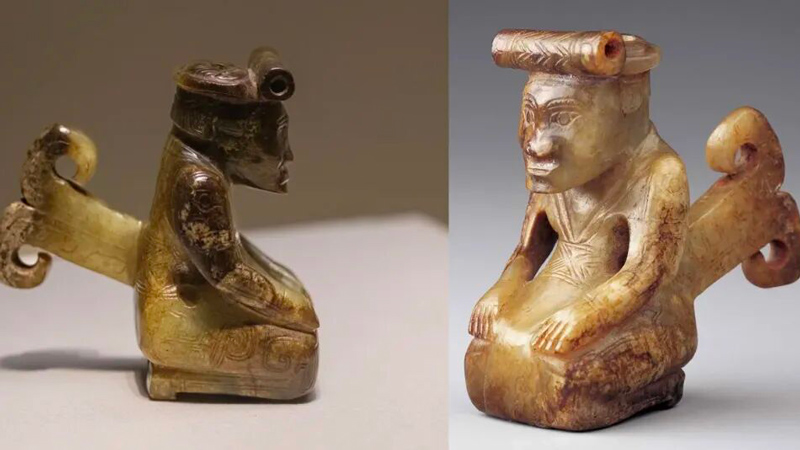
Why does it look so odd to modern eyes? Because we are used to elaborate crowns or bare foreheads. Kui seems minimal, even clumsy. But in its time, it was a practical tool. The Book of the Later Han (续汉书) explains that ancient people had crowns but no under-caps. They used Kui to keep the crown steady. A simple strip of leather could transform a loose hat into a stable symbol of authority.
Royal Courts to Cozy Winters
By the Qin (秦) and Han (汉) dynasties, Kui had evolved. Men began filling cloth strips with cotton or silk fluff to keep warm in cold weather. This padded version was called Mao Xu (冒絮) or Mo'e Xu (陌额絮). A Han official named Hu Guang (胡广) noted that northerners used sable fur to warm their foreheads, attaching it under their caps. Over time, this became a decorative habit. Women also adopted the practice. They wound silk around their heads, tied it at the back, and let the ends hang down. Some added round ornament pieces.
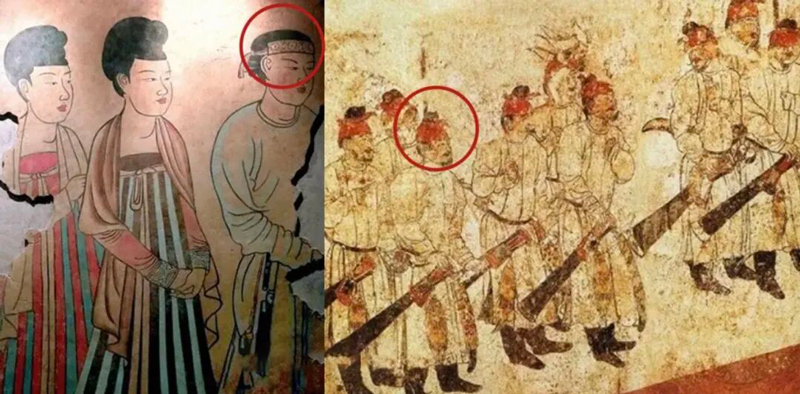
The military gave Kui a different life. The Chinese Ancient Notes (中华古今注) records that Emperor Qin Shihuang (秦始皇), while touring the coast, saw sea gods appearing before him – all wearing red Me'e (抹额) and wide trousers as a ceremonial uniform. The emperor kept the style as part of military courtesy. Armies used color-coded forehead cloths to identify units. In the Tang (唐) dynasty, guards and palace warriors still wore similar bands. It was called “military appearance Me'e.”
Tang dynasty ladies also wore Me'e, but mostly when dressing as men. They paired it with round-collared robes, creating a sharp, heroic look. That style might seem strange today, but it was a bold fashion statement back then. Instead of jewelry or flowers, a simple band on the forehead signaled confidence and freedom. So while Liu Tao’s “pillow” headpiece made us laugh at first, it actually carries the weight of queens, soldiers, and winter nights from thousands of years ago.
Your Forehead, Your Story
Would you wear a Kui or Me'e today? Probably not as daily gear. But small echoes of this ancient band still appear. Think of sweatbands worn by athletes, or the decorative ribbons at costume parties. Even the famous “war paint” in movies borrows from the idea of marking the forehead for identity or power. Kui never really disappeared – it just changed clothes.
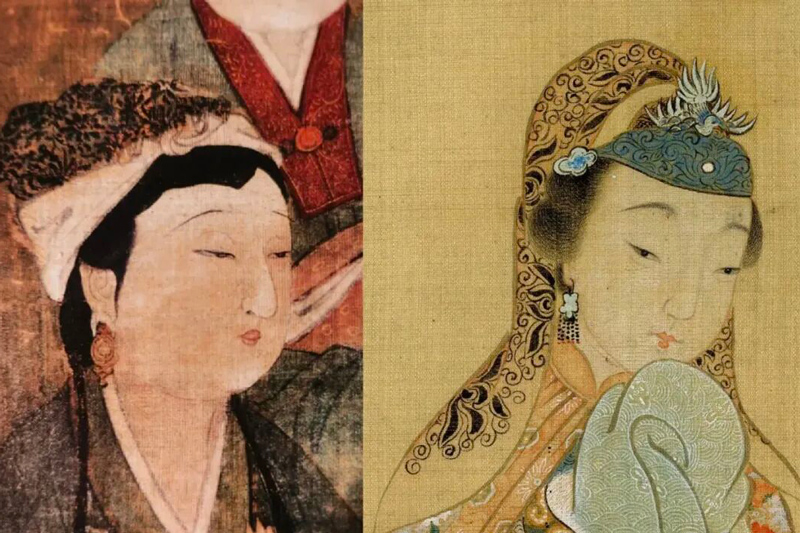
What makes this story so charming is the mix of irony and respect. A piece of cloth that once helped a queen keep her crown steady later became a soldier’s badge and a villager’s winter helper. And in a modern photo, it became a laughingstock. But that only proves how much history we forget. Every time we see a strange old costume, we have a chance to ask: what did this mean to the person who wore it first?
Liu Tao’s “pillow” is not a mistake. It is a time machine. It reminds us that fashion is never just about looking good – it is about staying warm, showing rank, fighting battles, and honoring ancestors. So next time you see a weird headpiece in a historical drama, don’t just laugh. Lean in. There might be a queen or a general hiding underneath.