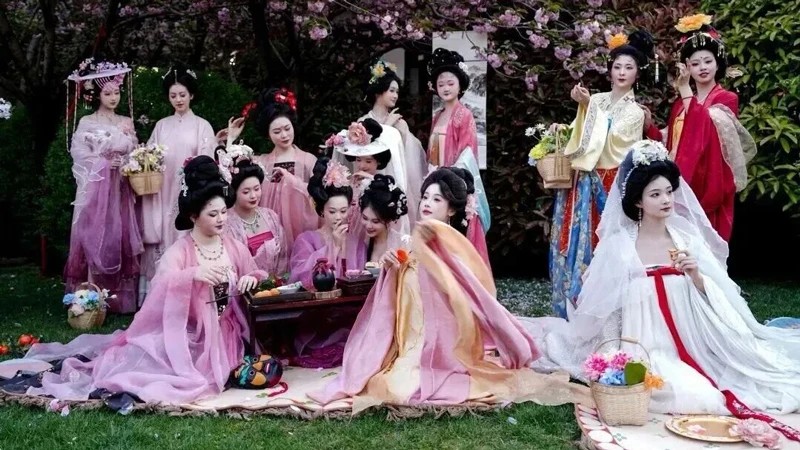
Every year when the third month of the lunar calendar arrives, a forgotten spring festival quietly passes in many modern homes. But in ancient China, the Shang Si Festival (上巳节)— falling on the third day of the third month — was a day of wild joy, deep cleansing, and quiet romance. Imagine young women coming of age by having their hair pinned up for the first time. Imagine poets sitting by a winding stream, drinking wine as cups floated past them.
Imagine entire families washing away winter’s gloom in icy river waters. This festival, which began before the Qin dynasty and peaked during the Tang, carries a unique blend of ritual, nature, and human connection. Today, while many have forgotten it, a new wave of Hanfu enthusiasts and cultural revivalists are bringing it back. So what exactly happened on March 3rd in old China? And why should we care today? Let’s step into the spring breeze of the ancient world.
Historic Roots
The Shang Si Festival was originally celebrated on the first Si day of the third lunar month, but after the Wei and Jin dynasties, it fixed permanently on the third day of the third month. Why this date? Legend holds that it is the birthday of Xuanyuan Huangdi (轩辕黄帝), the Yellow Emperor, a mythical ancestor of the Chinese people. An old saying goes: “On the second day of the second month, the dragon raises its head; on the third day of the third month, the Yellow Emperor is born.” In Taoist tradition, the double-three day is also considered a lucky time to thank the gods, dispel disasters, and pray for blessings. So the festival earned other names like Xiu Xi Ri (修禊日), meaning “bathing and cleansing day,” and Chunyu Ri (春浴日), or “spring bath day.”
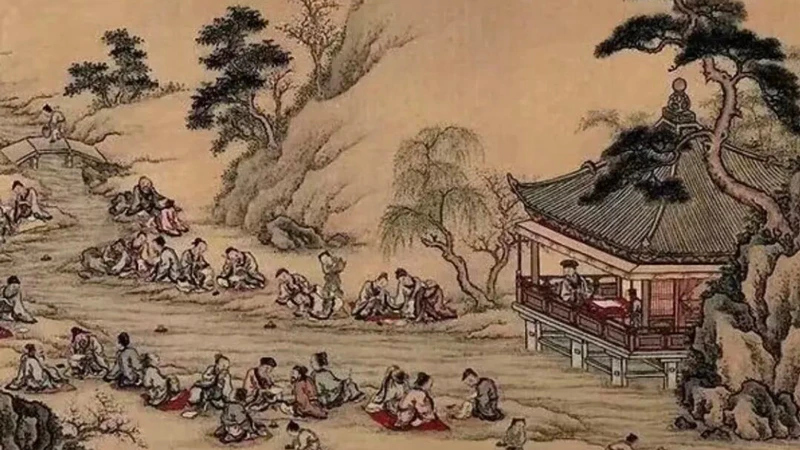
For the ancients, spring wasn’t just about pretty flowers. It was a season of transition — from the chill and stagnation of winter to the warmth and vitality of new life. They believed that winter left behind not only cold but also spiritual dirt. Washing in river water, especially with fragrant herbs like orchid, was thought to scrub away bad luck and illness. This belief gave birth to the festival’s oldest and most important ritual: Fu Xi (祓禊). People would gather along riverbanks, dip willow branches into the flowing water, and gently flick it over their bodies. It was a public act of renewal, a collective sigh of relief as the sun grew warmer.
Unlike many solemn religious ceremonies, Fu Xi was joyful. Young and old, rich and poor — all stood at the water’s edge together. Some even fully immersed themselves, laughing and splashing. The atmosphere was less about fear and more about hope. This wasn’t a stern temple rite; it was a spring picnic with a spiritual twist. And that spirit of accessible, community-centered celebration would color every other activity of the Shang Si Festival.
Rites of Passage
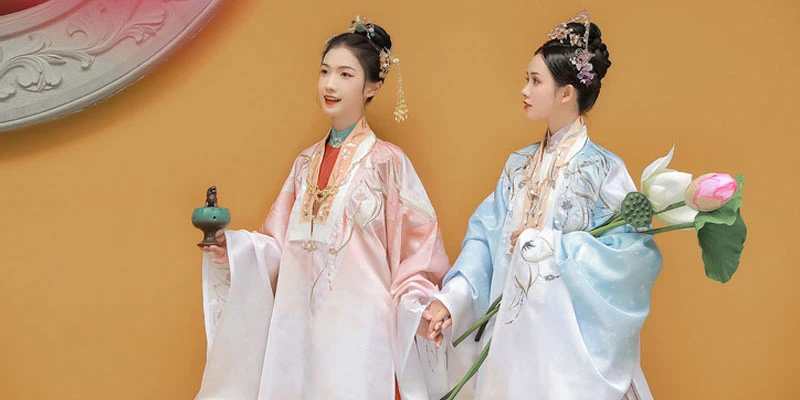
For young girls in ancient China, the third day of the third month held special significance. It was known as Nü’er Jie (女儿节), or Daughters’ Day. According to the Book of Rites (礼记), a girl at age fifteen was ready for her coming-of-age ceremony, called Ji Li (笄礼). The ji is a hairpin, and the ceremony involved an older female relative carefully combing the girl’s hair into an elegant bun and securing it with the pin. This was no small family affair. The full ritual followed three steps: first, a simple hairpin and plain clothes; second, a more ornate hairpin and deeper robes; third, a jeweled coronet and grand ceremonial dress. Along with each change of attire came a bow — first to parents, then to the officiating elder and teachers, finally to heaven and earth.
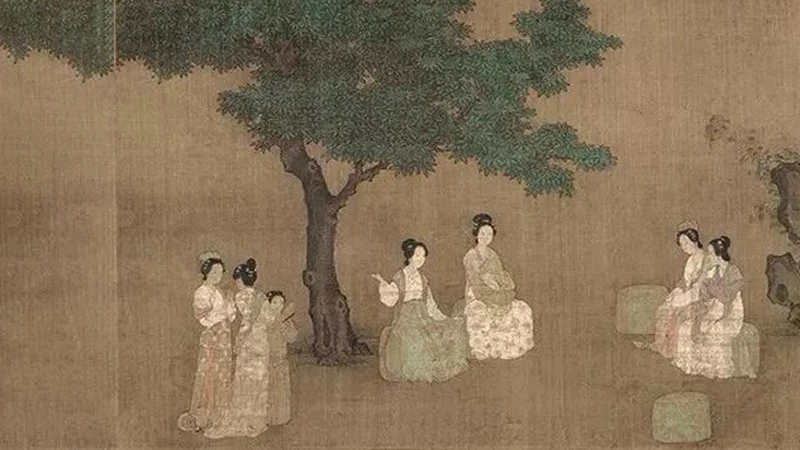
Why March 3rd for this rite of passage? Because spring symbolizes growth and new beginnings. A girl leaving childhood behind mirrored nature bursting into bloom. The ceremony marked her readiness for marriage, though if she remained unmarried, the ritual could wait until age twenty. But more than a marriage marker, the Ji Li taught responsibility. The girl learned that adulthood meant caring for others, managing a household, and contributing to her community. It was a gentle but firm bridge between two stages of life. One can imagine a fifteen-year-old, heart pounding, as the cold metal of the hairpin first touched her scalp. That small weight on her head carried the weight of a new identity.
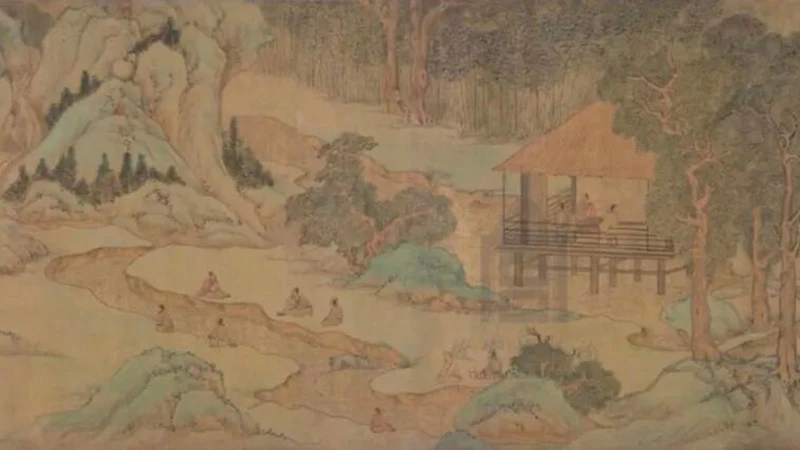
Interestingly, the Shang Si Festival also had a parallel for boys, though less formalized. Young men would go on outings, practice archery, and compete in games of strength and wit. But the most famous male activity was far more refined. Qu Shui Liu Shang (曲水流觞), or “floating wine cups along a winding stream,” became the hallmark of the literati. A group of scholars would sit by a meandering creek. A cup of wine would be set afloat. Wherever it stopped, that person had to drink and then compose a poem on the spot. This game combined chance, wit, and camaraderie. No one was forced to write a masterpiece, but the social pressure to perform added to the thrill.
Modern Echoes
The most legendary floating wine party happened in 353 AD at Lanting (兰亭) in what is now Shaoxing, Zhejiang. The calligrapher Wang Xizhi (王羲之) invited 41 literary friends, including the famous general Xie An (谢安), to celebrate Shang Si. They produced 37 poems that day. Wang was so moved that he wrote a preface in his unrivaled cursive script. That preface, known as the Lanting Collection Preface (兰亭集序), became the most revered piece of calligraphy in Chinese history. The original may have been lost, but its copies have been studied for over a thousand years. So a spring drinking game gave birth to an immortal artwork. That is the magic of Shang Si: ordinary pleasures — bathing, playing, eating — could rise to the level of high culture without losing their down-to-earth joy.
Besides poetry and wine, Shang Si was a day for outdoor fun of all kinds. People flew kites, fought hundred-grass battles (a game where two people hook grass stems and pull), rowed boats on lakes, and rode horses through fields. Women, especially during the Tang dynasty, invented the Qunwo Yan (裙幄宴), or “skirt tent banquet.” They would tie their long red skirts together to form colorful canopies, set up food and wine underneath, and spend the day appreciating flowers, playing games, singing, and chatting. It was perhaps ancient China’s most romantic girls’ spring picnic. No men allowed, no formal etiquette — just sisterhood and sunshine. The poet Du Fu captured the scene perfectly: “On the third day of the third month, the weather is fresh; by the Chang’an River, many beauties walk.”
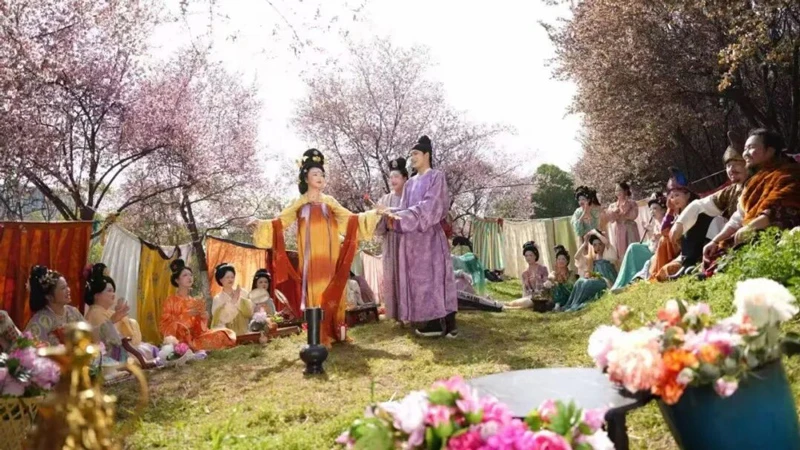
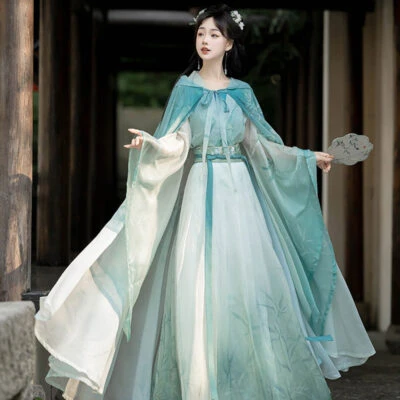
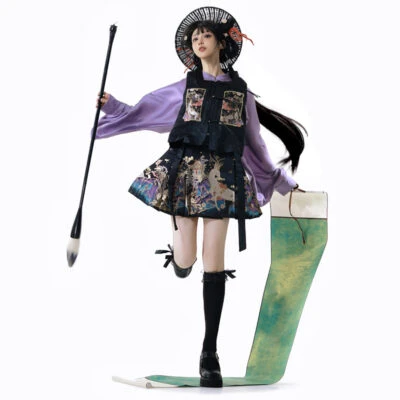
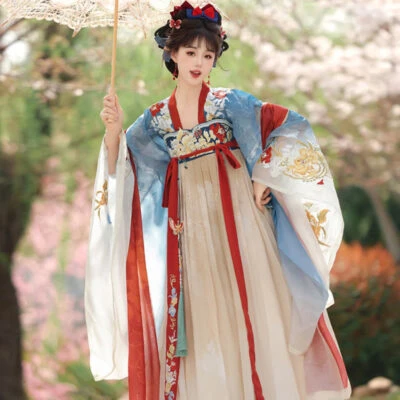
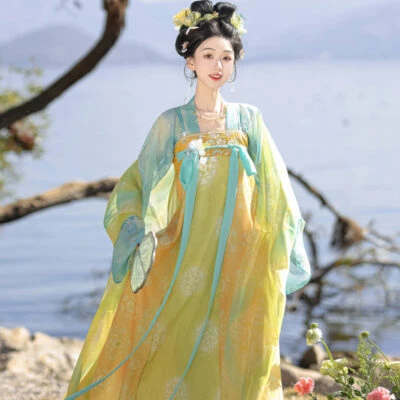
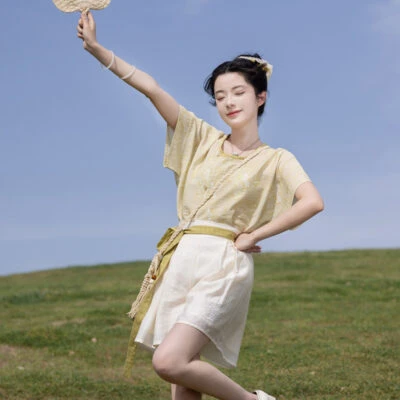
Today, the Shang Si Festival is experiencing a quiet revival. In cities like Xi’an, Hangzhou, and Beijing, young people in Hanfu gather at parks on March 3rd. They reenact the floating wine cups, hold fake Ji Li ceremonies for fun, and even organize large-scale riverbank cleansings. Social media spreads photos of these events, tagging them with nostalgic captions. It’s not about superstition anymore. It’s about reconnecting with a slower, more poetic way of celebrating seasons. And perhaps that’s exactly what our high-speed, screen-filled lives need: a day to touch water, write a bad poem, and let a hairpin remind us that growing up and growing old are not curses but chapters. So next spring, when you see the third moon rise, remember the ancient Chinese who washed, drank, and danced by the river. They knew something we’ve almost forgotten — that joy is a form of prayer.