Was He Truly Alive? The Bitter Sacrifice in Renegade Immortal’s (仙逆) Second Mortal Journey
In the animated series Renegade Immortal, the protagonist Wang Lin faces a heart-wrenching choice during his second mortal transformation, or Hua Fan (化凡). After his blood soul is turned into a vengeful spirit by an enemy, Wang Lin rescues it and gives it a human form. He names the boy Wang Ping, hoping for a plain and peaceful life. They settle in a small village on Ran Yun (冉云) Star, a place that reminds Wang Lin of his own lost hometown. Here, he hopes to experience the full range of human emotions—joy, sorrow, bitterness, and sweetness—without the interference of cultivation. But this quiet life hides a secret so painful that even a powerful cultivator struggles to face it. What Wang Lin knows, and what Wang Ping slowly discovers, will change both of them forever.
The Bitter Cup
Young Wang Ping grows up drinking a foul, bitter medicine every day. His father, Wang Lin, insists on it, claiming it keeps the boy healthy. In truth, the potion suppresses the resentful energy inside Wang Ping’s body. The taste is so terrible that any child would complain, but Wang Ping never does. He swallows every drop without a word, because he trusts his father completely. He also notices that his father never speaks of his mother, and he never asks. Such obedience makes him the perfect son, yet it also breaks the heart of another resident in the village.
That resident is Sun Tai (孙泰), an old cultivator who treats Wang Ping like his own grandson. Sun Tai sees something special in the boy—a natural talent for the Dao. He secretly teaches Wang Ping cultivation methods, ignoring Wang Lin’s silent disapproval. But Sun Tai does not know the truth. He believes Wang Ping is just a normal child with extraordinary potential. In his kindness, he rushes to pass on his knowledge, unaware that each secret lesson brings Wang Ping closer to an irreversible end.
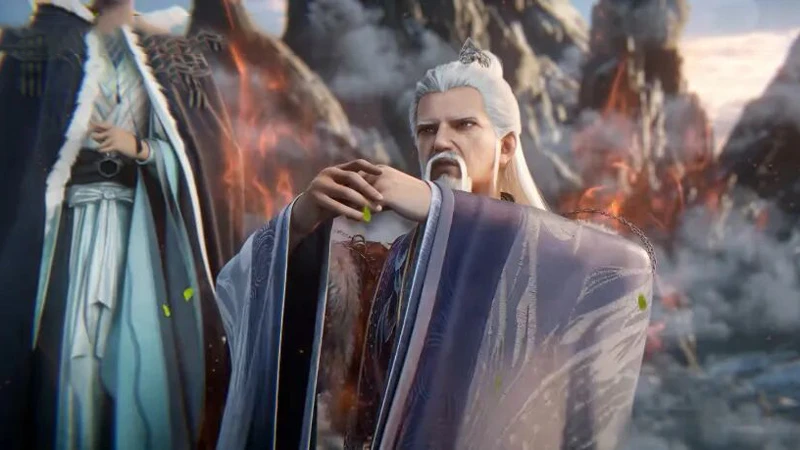
Wang Lin watches all of this from a distance. He could stop Sun Tai at any moment, but he chooses not to. Why? Because he knows that no amount of cultivation can save Wang Ping. The boy is already dead. His body moves, his heart beats, and his eyes shine with curiosity—but he is a living corpse, kept animated only by Wang Lin’s power and the medicine. Every day that Wang Ping practices cultivation, he consumes his own fragile existence faster. Sun Tai’s well-meaning lessons actually shorten the boy’s remaining time.
A Life Denied
As decades pass in the blink of an eye for Wang Lin, Wang Ping ages from a child into an old man. His life, contrary to his father’s wish, is anything but ordinary. After leaving the village, Wang Ping becomes a general, then a warlord, and finally an emperor. He conquers lands, rules over millions, and tastes the ultimate power that humans crave. Yet, sitting on the dragon throne, he feels an emptiness he cannot name. The glory and wealth mean nothing to him. What he truly wants is to cultivate the Dao—to live long enough to stay by his father’s side forever.
He asks Wang Lin repeatedly for permission to begin formal cultivation. Each time, his father refuses without explanation. “No,” Wang Lin says flatly. No argument, no compromise. Wang Ping feels frustrated and confused. He sees other cultivators flying on swords and living for centuries. Why can’t he have that? Sun Tai, too, urges Wang Lin to reconsider. But Wang Lin remains as immovable as a mountain. He would rather have his son hate him than watch him crumble into dust after one failed breakthrough.
Eventually, Wang Ping abdicates the throne and returns to his father’s side. His hair has turned white, his skin is wrinkled, and his steps are slow. He is a dying old man. Yet he still harbors that innocent childhood wish: to become a cultivator. Only now, when he has almost no time left, does Wang Lin finally decide to speak the truth. The father looks into his son’s tired eyes and begins a story that stretches back to Zhu Que (朱雀) Star, to a woman named Liu Mei (柳眉), and to the moment Wang Ping ceased to be truly alive.
The Awakening Truth
“You cannot cultivate because you are already dead,” Wang Lin says. The words fall like stones into still water. Wang Ping stares at his father, unable to comprehend. How can a dead man walk, talk, and rule an empire? Wang Lin explains everything—how the blood soul was stolen, how it was turned into a vengeful spirit, and how he gave it a human shape out of pity and love. The boy he raised, the son he named, is not a real person. He is a remnant, a shadow, a being that should have dissolved long ago. The medicine kept the shadow intact, but it could never give him a true life.
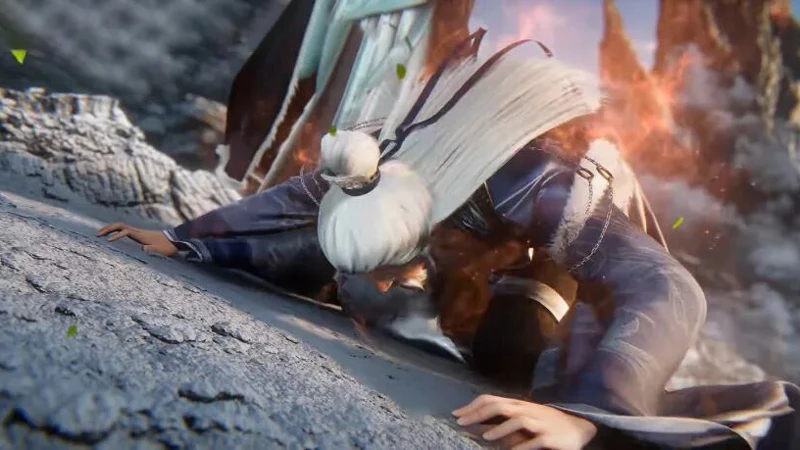
Wang Ping struggles to accept this reality. He remembers every laugh, every tear, every battle he fought. Were those all illusions? He looks at his wrinkled hands and finally understands why his father never let him cultivate. A real cultivator needs a real foundation of life force, energy, and soul. Wang Ping has none of those. If he had ever attempted to form a golden core or condense his spirit, he would have shattered instantly—like a porcelain cup falling onto stone.
In the original novel, this revelation brings Wang Ping both pain and peace. He realizes that Wang Lin’s repeated refusals were not cruelty but mercy. The father sacrificed his own chance to have a true heir in order to give a dead boy a few extra decades of borrowed happiness. Through this journey of mortal life, Wang Lin finally comprehends the law of cause and effect. His spiritual realm deepens, not through fighting or meditating, but through loving and losing. The village on Ran Yun Star becomes a sacred ground in his memory—a place where a false son taught a true immortal what it means to be human.