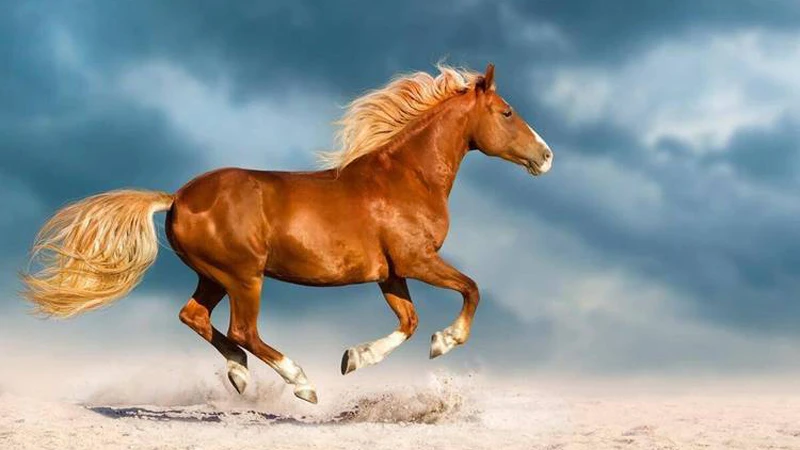
As 2026 gallops in, it brings with it the Year of the Horse, a creature whose bond with China is as ancient as the civilization itself. While the world knows this animal simply as “horse,” the Chinese language reveals a stunningly detailed portrait of this animal, one painted over millennia.
From the humble farm animal to a celestial dragon, the horse has been known by dozens of names, each reflecting a specific age, ability, or status. This rich vocabulary isn’t just about an animal; it’s a living archive of China’s military conquests, agricultural roots, and poetic soul. As we enter this new year, let’s saddle up and explore the many identities of the horse, uncovering stories that have shaped the nation’s character.
The Basics of Breeding and Age
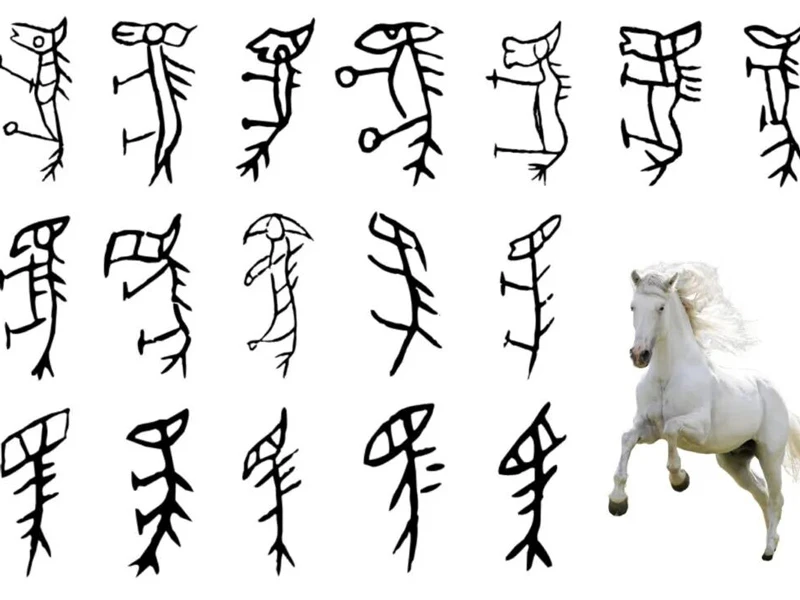
The most fundamental term is, of course, “Ma” (马). Its earliest form, found etched on oracle bones, is a pictograph—a simple, elegant drawing capturing the creature’s mane, legs, and tail. The ancient dictionary Shuowen Jiezi (说文解字) defined it with a dual nature: “Nu (怒),” meaning vigorous and majestic, and “Wu (武),” meaning martial and strong. This wasn’t just a label; it was an observation of the animal’s very essence, a recognition of its power that would define its role in Chinese society. This basic name, however, was just the starting point for a far more elaborate system of identification.
Just as we distinguish between a foal and a stallion, the ancients had precise terms for a horse’s life stage. A newborn was one thing, but a two-year-old was specifically called a “Ju (驹).” The Shuowen Jiezi even details a chronological scale: a one-year-old horse had one name, a three-year-old another. This wasn’t mere pedantry; for a society that relied on horses for farming, transport, and war, knowing a horse’s exact age was crucial for training, work allocation, and understanding its value. This linguistic precision highlights how deeply integrated these animals were in the daily management of life.
The highest honor, however, was reserved for the most magnificent specimens. A truly great horse, especially one standing over eight feet tall, was not called a horse at all. According to the Rites of Zhou (周官), it was elevated to the status of “Long (龙),” or dragon. In a culture where the dragon is the ultimate symbol of power and good fortune, this was the supreme compliment. It wasn’t just a metaphor; it was a reclassification. To call a horse a dragon was to acknowledge it as a creature of mythic quality, a being that transcended the earthly realm and touched the divine.
Emperors and Their ‘Eight-Dragon Steeds’
Nowhere is this reverence more visible than in the royal stables. Emperors, the Sons of Heaven, didn’t just ride horses; they formed legendary partnerships with them. The most famous example is King Mu of Zhou (周穆王), whose eight finest horses were given names like “Hualiu (骅骝)” and “Lü’er (绿耳),” immortalizing them as the “Eight-Dragon Steeds.” This wasn’t just a list of pets; it was a roster of trusted companions, each with a distinct personality and name that spoke of their speed, color, or mythical aura, elevating them to the status of heroes in their own right.
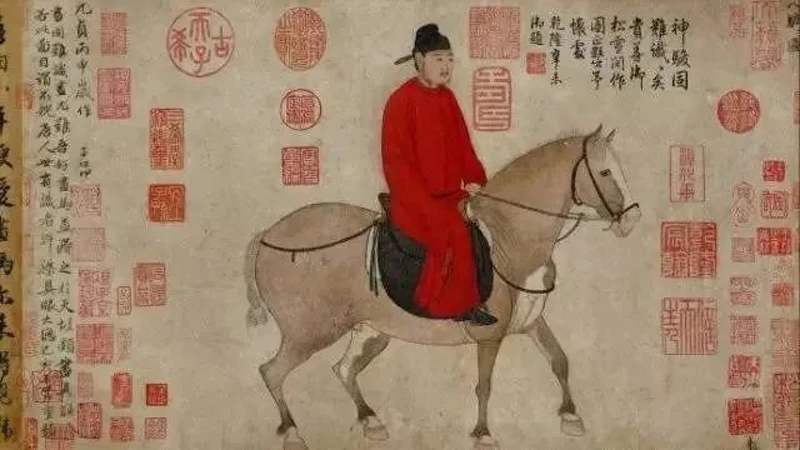
This tradition reached its artistic and emotional peak under Emperor Taizong of Tang. To honor the loyal steeds that carried him through countless battles and helped found the dynasty, he commissioned the “Six Steeds of the Zhao Mausoleum (昭陵六骏).” Each horse—”Sa Lu Zi (飒露紫),” “Quan Mao Gua (拳毛䯄),” and the others—was carved in stone relief, their names forever etched in history. These weren’t just warhorses; they were comrades-in-arms, and their stone images became national treasures, a testament to the profound bond between a ruler and his mounts.
Beyond the battlefield, emperors curated stables filled with horses bearing evocative names. Qin Shi Huang (秦始皇) had his “Seven Dragons,” while Emperor Wen of Han (汉文帝) kept the “Nine Yi (九逸),” with names like “Fuyun (浮云),” meaning “Floating Cloud,” and “Zi Dian (赤电),” or “Red Lightning.” These names were poems in themselves, capturing the animal’s spirit and beauty. They show that the relationship was not purely utilitarian; it was aesthetic and spiritual. A horse with a name like “Purple Swallow” was an object of admiration, a living work of art that graced the imperial court.
War Horses and Literary Pegasus
The rise of the state of Qin, which would eventually unify China, was built on its powerful cavalry. The thousands of life-sized terracotta horses and chariots buried with the First Emperor are a silent, powerful army, a permanent reminder that horses were the tanks and artillery of the ancient world. They were strategic assets, and their names in military contexts—like “Yima (驿马)” for post horses—reflect their critical role in communication and logistics.
This powerful image naturally galloped into the realm of art and literature. Poets like Su Shi (苏轼) couldn’t resist their allure. When he wrote of a “Yuchi (玉螭),” or “Jade Dragon,” or an “Eight-foot Dragon” in his verses, his audience instantly understood he was speaking of a horse. The animal became a powerful symbol, its grace and strength a perfect metaphor for human ambition. The term “Yuma (玉马),” or “Jade Horse,” could refer to a carved figurine, but in the hands of a skilled writer, it became a symbol for a virtuous and talented court official.
Perhaps the most enduring linguistic legacy is the idiom “Feihuang Tengda (飞黄腾达).” Today, it means a meteoric rise in one’s career, but its origin lies with “Feihuang,” one of King Mu’s legendary eight steeds. So, every time someone wishes for rapid success, they are unconsciously invoking the name of an ancient, mythical horse. It’s a testament to how these creatures have galloped from the battlefield and the stable straight into the very fabric of the Chinese language, carrying with them the hopes and aspirations of a culture that has always admired their spirit and strength.