
Chinese cinema often uses time travel as a narrative shortcut to nostalgia or simple comedy. However, the 2025 summer release The Adventure (奇遇), directed by Ma Duo (马多), attempts something more complex. It leverages a unique "self-swap" premise to explore a midlife crisis and the values we lose while growing up. With compelling performances from Jia Bing (贾冰) and Wang Hao (王浩), the film delivers laughs while prompting a genuine look in the mirror.
A Two-Way Street Through Time
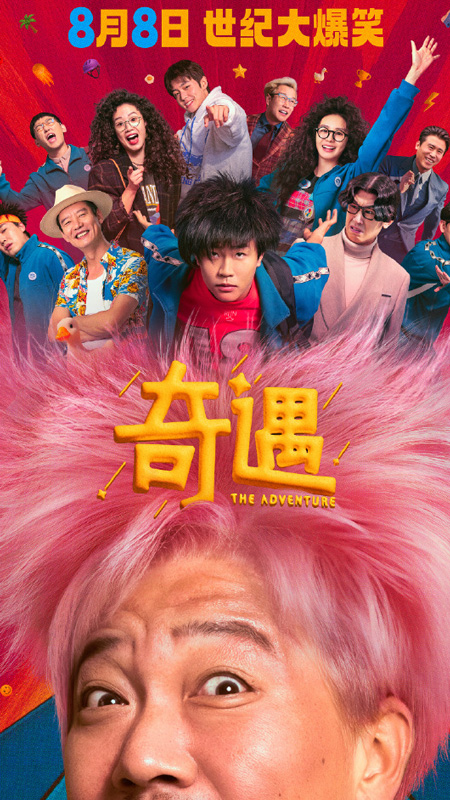
The film introduces us to Huang Yuqi (黄宇奇), a 43-year-old man stuck in a rut. His body aches, his career is stagnant under a condescending former classmate, and his family life is unfulfilling. A chance accident during a rare meteor shower triggers an extraordinary event: he swaps bodies with his 18-year-old self from the year 1999.
This is not a one-way trip. The twist is that the teenage Huang's consciousness simultaneously travels forward into the middle-aged body. This setup creates a dual narrative. The adult mind, burdened with the disappointments of 2024, gets a second chance in the vibrant, hopeful world of 1999. Meanwhile, the youthful spirit experiences the freedoms and complexities of adulthood firsthand. This mechanism moves beyond gimmickry to fuel the film's core thematic engine: a conversation between two versions of the same person.
Performance and Perspective
The success of this concept rests heavily on the shoulders of its lead actors. Jia Bing, known for broader comedic roles, delivers a nuanced performance. He first embodies the defeated posture of a man life has passed by. After the swap, he masterfully portrays a teenager's bewildered energy trapped in an unfamiliar, aching body. His physical comedy, particularly the awkwardness and sudden bursts of youthfulness, is both hilarious and poignant.
Wang Hao, as the young Huang, faces the opposite challenge. He captures the initial shock and then the cunning adaptability of a teen who suddenly has adult agency. He navigates the corporate world of 2024 with a refreshing, irreverent honesty that contrasts sharply with the office cynicism. The two actors avoid a simple clash of personalities. Instead, they develop a cooperative relationship, communicating across time using a period-appropriate QQ (an instant messaging platform) account to untangle their shared destiny.
Confronting Lost Values

The Adventure uses its premise to examine how adulthood can erode our core principles. The middle-aged Huang has become pragmatic and cynical. When he returns to 1999, he applies his 2024 mindset to youthful problems with disastrous results. He accepts hush money from a hit-and-run driver, a move his younger self would have found morally repulsive. He tries to formalize friendships with immediate cash payments for help, alienating his friends who value camaraderie over transactions.
Conversely, the young Huang's presence in 2024 acts as a catalyst. He dyes his hair, leaves work on time, and speaks bluntly to superiors. This behavior, which defies corporate norms, unexpectedly makes him more visible and likable. The film suggests that the conformity we learn as adults often comes at the cost of the authenticity we possessed in youth. It poses a direct question to the audience: have we become the kind of person our younger self would respect?
Breaking the Cycle

The narrative is anchored by a pivotal event from Huang's past: a high-stakes running race. He was a talented athlete, but an injury, orchestrated by a rival's father who offered a bribe to throw the race, shattered his dream. This failure defined his subsequent disillusionment. The man who won that race, Ren Ritian (任日天), is now his smug boss in 2024, running a dubious pharmaceutical company.
The film's climax involves the two Huangs collaborating across time to rectify this past injustice. The adult Huang, back in his youthful body, finally wins the race. Simultaneously, the young Huang helps expose the boss's corrupt business. A key symbol is the boss's racing trophy, shaped like a Möbius strip, representing the frustrating loop of failure Huang has been trapped in. Breaking free requires not just changing a single event, but rejecting the cynical worldview that event instilled in him.
Final Thoughts
The Adventure stands out in the crowded field of comedy films by using its fantastical premise for sincere purpose. It argues that holding onto the positive traits of our younger selves, such as our sense of justice, passion, and sincerity, is crucial for a fulfilling adult life. It is a comedy that earns its laughs while leaving room for self-reflection, offering a fresh and relatable story for a global audience.
