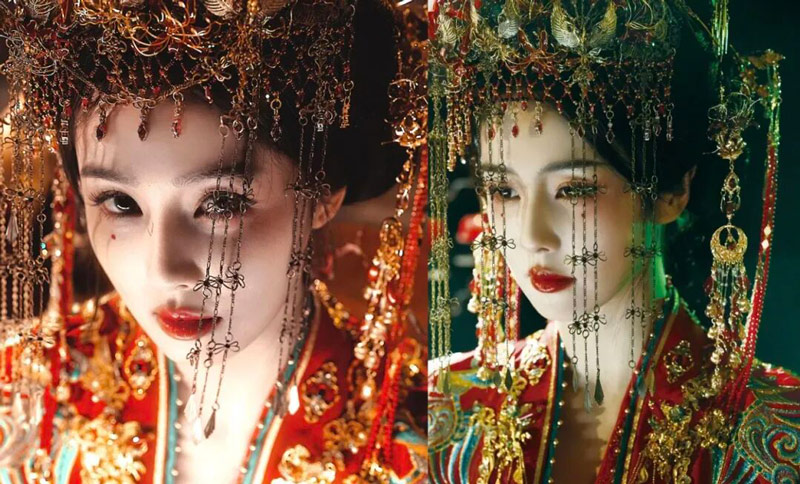
Bai Lu’s (白鹿) latest promotional images for the costume drama Unveil: Jadewind (唐宫奇案之青雾风鸣) have ignited a firestorm of discussion online. Dressed as a spectral bride, she presents an image that is both captivating and deeply unsettling. The elaborate headpiece, with its curtain of beads obscuring her face, has left many viewers asking a single, chilling question: why does this particular style of wedding attire evoke such a strong sense of Chinese gothic horror?
A Headpiece Lost in Time
The answer lies not in the Tang Dynasty setting of the show, but in a much later period of Chinese history. The crown worn by Bai Lu is a stylistic echo of the phoenix crowns popular during the late Qing Dynasty and the early Republican era. Unlike the strictly regulated imperial crowns of earlier dynasties, these later versions became accessible to common women for their wedding day. This period saw a flourishing of craftsmanship, but also a tendency to blend various decorative elements, resulting in a style that felt less restrained and more eclectic than its predecessors.
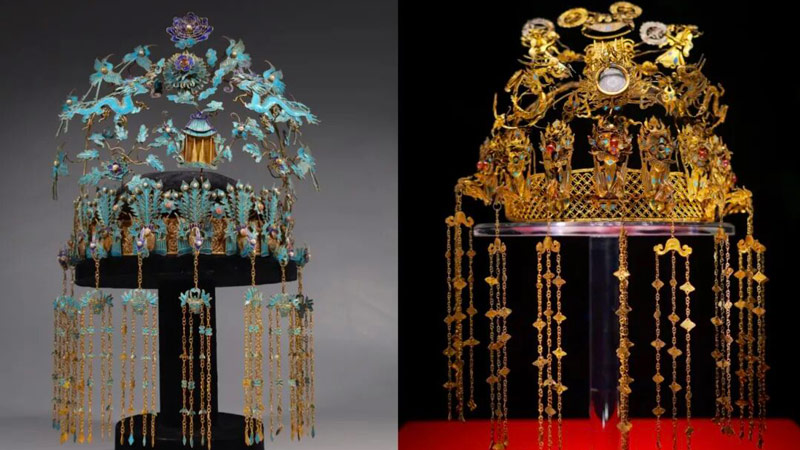
It was a time when the phoenix crown, once a symbol of elite status, became democratized, leading to regional variations and a profusion of folk interpretations. Artifacts from museums like the Dingzhou (定州) Museum show crowns with long tassels hanging down to the chin, a feature sometimes referred to as “Zhu Liu” (珠旒) or “Pai Zi” (排子). This evolution marked a significant departure from the cleaner, more elegant lines of earlier dynasties, creating a visual language that feels heavier and more enigmatic.
The Haunting Legacy of Cinema
Why does this particular aesthetic trigger a sense of dread? A large part of it is due to the power of cinema. For decades, these very same late-Qing style wedding crowns have been a staple in Chinese ghost stories and horror films. The image of a “gui xin niang” (鬼新娘), or ghost bride, is a deeply ingrained cultural trope, and the visual shorthand for it is almost always this dense, face-veiling headpiece. Bai Lu’s portrayal in Unveil: Jadewind directly taps into this collective cinematic memory . The promotional images, with their cold lighting, flickering candles, and the stark red of the wedding dress, are a masterclass in building a “zhong shi kong bu” (中式恐怖), or Chinese gothic horror, atmosphere .
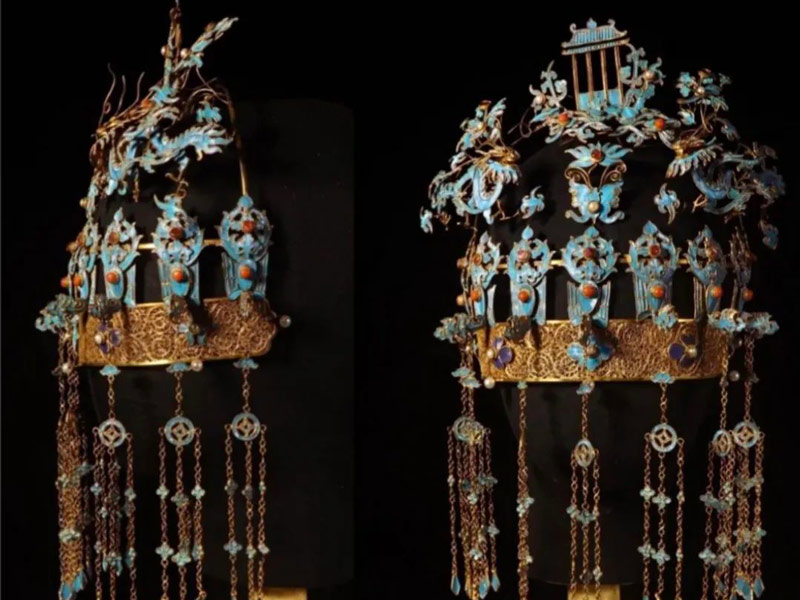
This isn’t just about a scary picture; it’s about the stories we’ve been told. The ghost bride is a recurring figure in folklore, often a wronged woman seeking vengeance from beyond the grave. The wedding attire, a symbol of joy and union, becomes a shroud, a garment worn for a funeral instead of a marriage. When the tassels are so long and dense that they completely shroud the face, they create a barrier, erasing the individual’s expression and turning her into an unknowable, and therefore terrifying, symbol. This visual anonymity is a powerful tool in horror, stripping away humanity and leaving only a spectral presence.
A Tang Dynasty Tale with Qing Dynasty Threads?
This brings us to the central contradiction that has sharp-eyed historical drama fans scratching their heads. Unveil: Jadewind is explicitly set during the Tang Dynasty, an era renowned for its vibrant culture, cosmopolitan flair, and distinctive aesthetic. The makeup, clothing, and overall artistic sensibility of the Tang were markedly different from the Qing Dynasty. So, why is a Tang Dynasty character dressed in a style that peaked nearly a thousand years later? It’s a clear anachronism that pulls the attentive viewer out of the story.
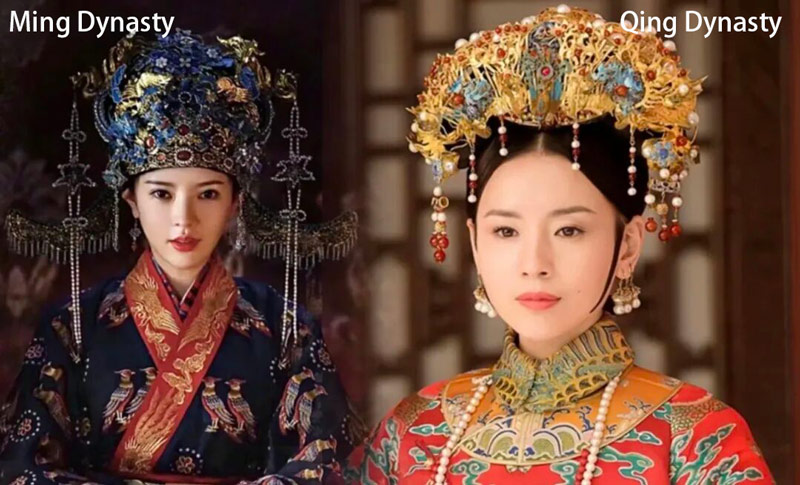
Earlier iterations of the Feng Guan (凤冠), during the Tang, Song, and Ming dynasties, featured tassels and side ornaments, but they were far more restrained. They framed the face, adding a touch of elegance without obscuring it. The practice of covering the face with a heavy curtain of beads was not the norm. Some historians even speculate that the extreme density of the late Qing style may have evolved to serve a practical purpose, partly replacing the traditional red wedding veil. In its attempt to create the ultimate “grand” look, folk tradition may have inadvertently created an aesthetic that feels funereal and claustrophobic, a far cry from the open, confident beauty of the Tang.