
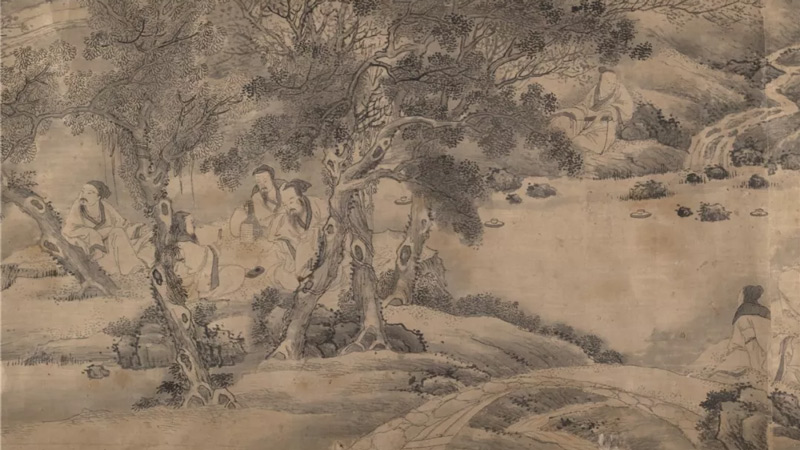
Modern holidays come with familiar routines, but ancient Chinese celebrations wove together deeper threads of romance, artistry, and community. Beyond the well-known dragon boats and mooncakes lies a forgotten calendar of occasions where young lovers sought fate, poets found inspiration in floating cups, and villages erupted in gratitude for the earth's bounty. These were not mere dates on a calendar; they were vibrant, participatory events that gave form to human hopes and connections. Let's step back into a world where seasonal rhythms dictated social life and discover the captivating customs that once defined the year's turning points.
Knotting Wishes
In the crisp air following the Lantern Festival, a unique ritual unfolded in northern households. Unmarried young women would take strips of colorful silk or even old almanac paper, meticulously knotting them together into a long, connected chain. This practice, known as Jie Yangchang (结羊肠), was a physical manifestation of their deepest desires. Each knot represented a silent prayer, a hope that their own romantic paths would be smooth and lead to a fortunate union.
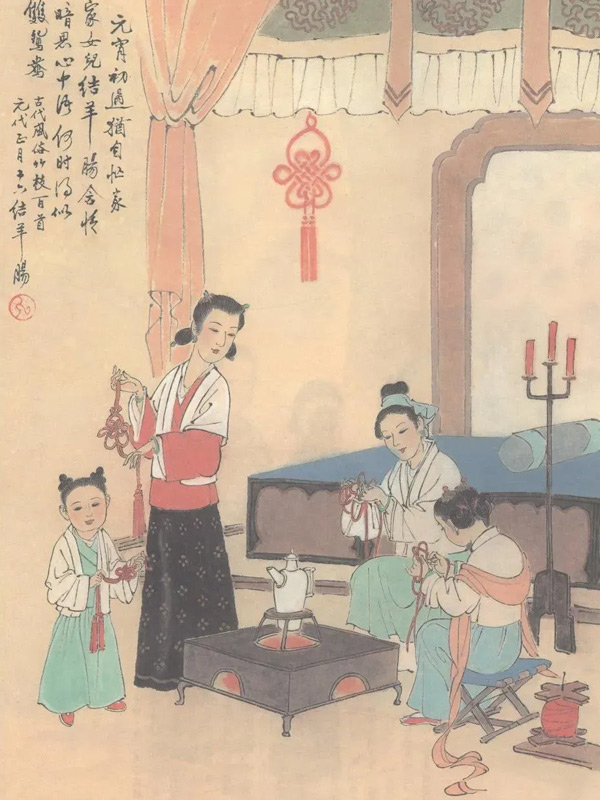
The process was both a personal meditation and a social activity. With focused intention, they would intertwine the separate strands, their private thoughts and aspirations weaving into the very fabric of the colorful cord. A poem from the era captures the mood: "On the sixteenth, the Lantern Festival passed, every daughter knots the 'sheep's intestines.' With secret feelings, they silently divine, whispering, 'When will I resemble a pair of mandarin ducks?'" The act was a quiet but powerful expression of yearning in a society where such matters were rarely spoken aloud.
The final step was an act of divination. After the knotting was complete, the young woman would hold the coiled cord in her hands, offer a final prayer, and then cast it onto the ground. The resulting shape was carefully interpreted. A smooth, untangled form promised good luck and a happy marriage in the coming year, while any knots or snags were read as potential obstacles. It was a simple, heartfelt game of chance, blending craft with faith to navigate the uncertainties of the heart.
Floating Poems
Imagine a gentle stream winding through a shaded grove, with scholars and poets seated along its banks. This was the setting for Liushang Fushi (流觞赋诗), or "Flowing Cup Poetry," a custom that transformed a river into a source of artistic inspiration. During the late spring Fuxi (祓禊) purification ceremony, participants would gather by a winding waterway. A wooden cup filled with wine was set afloat from upstream and allowed to drift freely with the current.
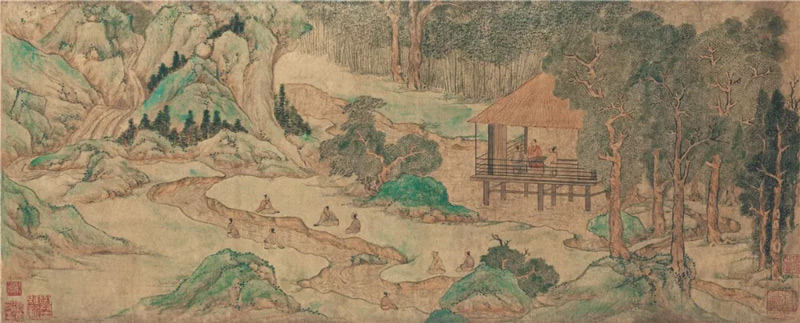
All eyes would follow the cup's journey. The moment it slowed and came to rest before one of the guests, that person was obliged to retrieve it, drain the contents in one go, and immediately compose an original poem. This elegant game combined the joy of drinking with the challenge of spontaneous creation, ensuring a lively and intellectually stimulating gathering. It was a test of wit, composure, and literary skill, all set to the soothing soundtrack of flowing water.
The most famous instance occurred in the year 353, when the revered calligrapher Wang Xizhi (王羲之) hosted such a gathering at the Orchid Pavilion. As the cup meandered down the serpentine stream, it prompted a cascade of verse. The event produced thirty-seven poems, which were later compiled into a collection. For this anthology, Wang Xizhi wrote a legendary preface, the Preface to the Poems Composed at the Orchid Pavilion, a masterpiece of calligraphy still celebrated today as the greatest work of running script in history. A single, floating cup thus became the catalyst for an enduring cultural monument.
Harvest Thanks
As summer's heat faded and the autumn harvest was safely gathered, communities turned their attention to a vital, yet often overlooked, celebration: the Qiuse (秋社), or Autumn Earth Spirit Festival. This was a day dedicated to gratitude, specifically thanking the Earth God for a successful harvest. The date was calculated from the first day of autumn, falling on the fifth Wu day (戊日) thereafter, typically around the Autumn Equinox. It was a pragmatic and joyous thanks-giving for the year's provisions.
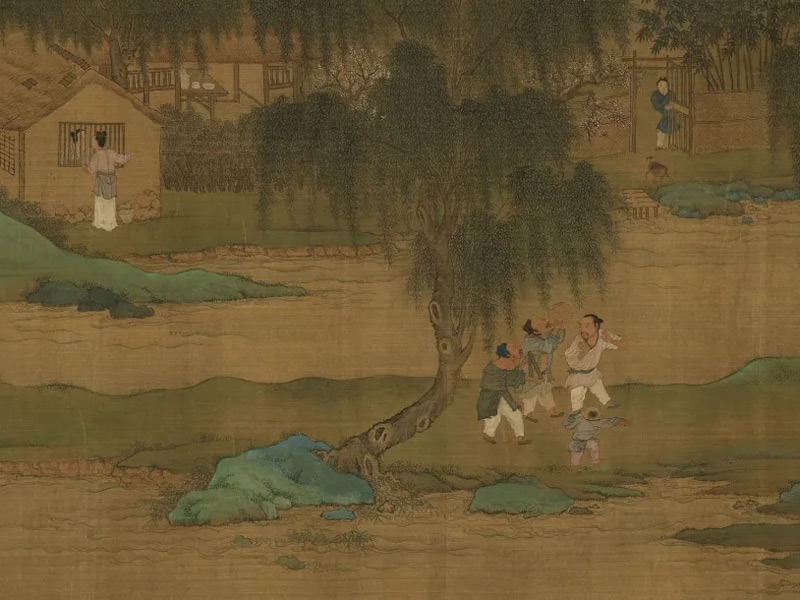
The core of the festival was a communal feast and sacrifice. Villagers would prepare sumptuous offerings from the newly harvested crops—rice, fruits, and vegetables—to present at the local earth shrine. This was not a somber affair but a vibrant village-wide party. After the rites were performed, the offerings were shared among everyone, accompanied by special Shejiu (社酒), a festival ale, and Shegao (社糕), a ceremonial cake. The air filled with the sounds of celebration as people enjoyed the fruits of their labor.
This festival also strengthened social and familial bonds. With the hard work of farming complete, people had time to visit. Married daughters would make a special trip back to their parental homes, often bringing their children along. In return, their mothers would gift them symbolic produce from the harvest, such as fresh gourds and dates. Recorded in texts like Dreams of Splendor of the Eastern Capital (东京梦华录), this custom of family reunion and gift-giving wove the practicalities of harvest into the enduring fabric of kinship, closing the agricultural year with warmth and connection.
Do you have any more information, or could you share your sources about the Jie Yangchang (结羊肠) knotting and divination practice? I am very curious for what knots might have been used, so any text or images would be helpful. Search attempts with my cut and paste only Chinese language abilities have been unfruitful. 8-(
Jie Yangchang, a Yuan - era northern folk custom, had no fixed knot styles. Recorded in "Feixue Lu" (霏雪录), people made nine old calendar paper ropes to tie randomly on the 16th of the first lunar month; connected ends meant good omens.